
Paradox of Democracy and Civil Society
Scribbles from Political Science Literature
Roaming the Orb of Democracy
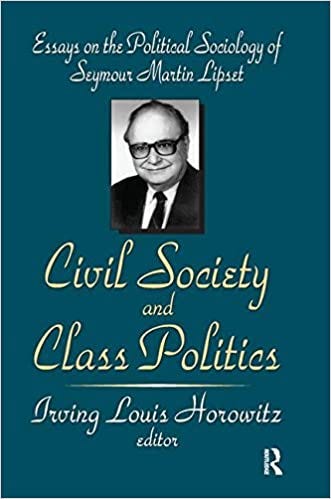
Seymour Martin Lipset defines democracy as political system consisting of constitutional opportunities and social mechanism to enable the largest possible population to influence major decisions by choosing among contenders for political office (Lispet 1981). Lipset suggests a positive linear relationship between level of socioeconomic development and development of democracy (Lipset 1959; Arat 1988; Sahoo 2013).
All of Lipset’s thinking are aptly gripped by Professor Pippa Norris in her chapter contribution (Wealth and Democracy) in a book titled under the rubric of ‘Driving Democracy: Do Power-Sharing Institutions Work?’
Pippa Norris explains the theory of Lipset in illustrative way that ‘development’ consolidates democracy by spreading the levels of literacy, schooling, media access, broadening the middle classes, reducing the extremes of poverty, facilitating the intermediary organization (i.e, labor unions or trade unions), and promoting values of legitimacy and social tolerance (Norris 2008).
However, the essential point to make here is that ‘democracy’ is not a ‘one-way ladder’ that countries climb as their economy and social structure develop (Arat 1988). Democratization does not occur automatically. As prerequisite, it requires someone to take action to launch movement to install and protect democratic institutions (Teorell 2010).
Samuel Huntington indicates six factors that are vital as preconditions for emergence of democracy. These factors can be stratified under the rubric of : (a) higher economic well-being; (b) no presence of extreme inequalities in wealth and income; (c ) presence of social pluralism; (d) market-oriented economy; (e) less monistic culture and (f) tolerance to diversity and compromise (Huntington 1984, 214).
Absence of any of the above referred factors would only pave the avenue to full retreat from democracy.

However, in the orb of political science, the field of comparative democratization studies is not uniform. There is still a huge gulf. Therefore, Jan Teorell comments in his book, ‘Determinants of Democratization: Explaining Regime Change in the World, 1972–2006’, that neither the structural, strategic nor social forces tradition have succeeded in stating a generally acceptable theory of democratization (Teorell 2010).
Therefore, it would be a requisite to roam the vast range of theoretical predictions stemming from several approaches (Teorell 2010, 29).
Defining Civil Society: A View from the Top
Civil society is viewed as the basis of democracy (Zubaida 2001). Scholars define the concept ‘civil society’ from different perceptions. Therefore, through their definitions, various features of civil society emerge (Cheema 2010).
Olga Onuch refers Civil Society to be understood as basis of key networks for social mobilizations and as a criteria to measure the development of participatory public sphere (Onuch 2014). Foley and Edwards consider civil society as essential ingredient in both democratization and for the development of established democracies (Foley & Edwards 1996). Larry Diamond refers civil society as the realm of organized social life which is voluntary, self-generating, self-supporting, autonomous from state mechanism and bound by legal orders (Diamond 1994; Cheema 2010).
In the literature of ‘civil society’, no one would disagree with the views of American Political Scientist Professor Robert David Putnam.

Professor Robert Putnam credits civil society’s contribution to strengthened governance and democracy construction (Putnam 1993; Seligson 1999; Foley & Edwards 1996; Foley 1996). For governance and democracy, Professor Putnam values vibrancy of ‘association life’ as an independent variable (Putnam 1993; Seligson 1999). He regards the foundation of civic community as seeds for theory of democratic governance (Putnam 1999; Sahoo 2013).
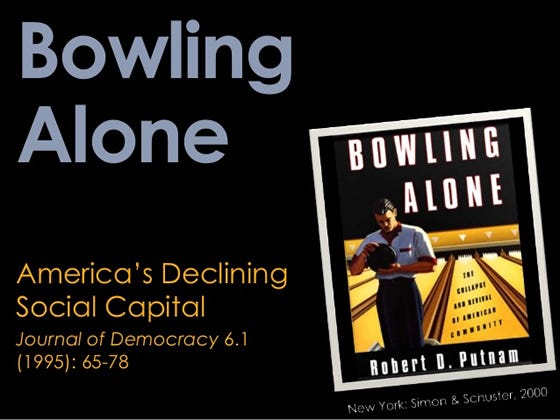
Professor Putnam suggests that civil associations contribute to the effectiveness and stability as (civil) associations instill in the members the habit of cooperation, solidarity and public spiritedness (Putnam 1993; Foley and Edwards 1996). To Putnam, civil society is consisted of norms and networks through which social actors learn to trust one another and networks of communication and exchange (Putnam 1993; Foley 1996).
Civil Society as Ladder to Democratization
In contemporary literature, civil society is regarded as the basis of democracy (Zubaida 2001). Sami Zubaida, a reader in Sociology, observes that classic western conceptions of civil society, from Adam Smith to Hegel and to Marx, have at their core the notion of a historically emergent economic sphere such as ‘commercial society’ or capitalism (Zubaida 2001). Civil society delivers the potentials for democratic transformation (Chandhoke 2003). Civil society has been associated with the norms of democracy, accessibility, participation, publicity, and accountability (Chandhoke 2003). Contemporary literature portrays the role of civil society as obstacle to tyranny and refers it as school for training of democratic citizens (Bermeo 2003). From that point of view, civil society is doing a positive function for democratization (Bermeo 2003).
Outlining (Ambiguous?) Literature on Civil Society and Democracy

In preceding decades, especially in Europe as well as in Latin America, it has been observed that Civil Society is quite effective in the path of resistance to authoritarian regime; and also in democratizing the countries and pressuring state mechanism for change (Edwards and Foley 1996).
After the scourge of Second World War and during the time span of ‘second wave of democracy’, the roles of Civil Society, both in failure and success of democracy, came into focus through social scientists like Hannah Arendt and William Kornhauser (Sheri 1997). The social scientists of 1950's and 1960's deemed Civil Society as medicine to the ailment of democracy. They couched on the insights of ‘Tocquevillian’ in championing their arguments regarding the significance of Civil Society for vibrant democracy.
Professor Putnam argues that peoples’ participation in associations like Civil Society would dilute the social cleavages and would consequently pave the options to make society more governable. However, social scientists like Sheri Berman, conceive different viewpoint. From that perspective, the neo-Tocquevillian type emphasis on Civil Society is flawed.
To bolster their argument and also to hurl questions as to the function of Civil Society in shaping government performance (Booth and Richard 1998), they point their finger towards the erstwhile ‘Weimer Republic’ where there had been existence of vigorous Civil Society (Sheri 1997). Advocates of neo-Tocquevillian theory, though explain repeatedly how group association and participation would give rise and facilitate coordination to pressure state mechanisms (Putnam 1993), they remain somehow introvert to explain ‘how the process’ affect on influencing the prospect or construction of Democracy.

In the erstwhile Weimer Republic, the civic associations were abundant and vibrant; nevertheless, the Weimer Republic dragged the German society to the brink of fragmentation. Sheri Berman, observing this, contends that the track of flourished Civil Society may not be in the same parallel track with the prospects of liberal democracy. Critics of Neo-Tocquevillian theorist argue that they are not completely right about emphasizing the predictions that lack of Civil Society associations is responsible for fragile democracy.
The case of Weimer Republic reveals that Civil Society cannot alone tackle the crisis of democracy and risk of totalitarianism. Along with such civic associations, the existence of strong as well as flexible political parties would be required (Sheri 1997). Booth and Richard further add to the appraisal that people’s engagement in formal associations and increased formal activism of civil society (other than communal level) would play greater role to higher levels of Democracy (Booth and Richard 1998).
There is no doubt that Civil Society paves the options to peoples’ involvement and movements against authoritarian rule and national political conflict. However, how does such civic association and peoples’ involvement shape government is complex to explain and yet remained unanswered. Furthermore, due to diverse definitions of Civil Society, it is difficult to identify proper measurements/variables to appraise the contribution of Civil Society as an actor (Onuch 2014). For that reason, discussions on civil society and promotion of democracy generate some important inquires regarding: role of Civil Society in a state where political representation is in vacuum; a border line between ‘interests’ of Civil Society and ‘public interest’ of democracy; role of Civil Society in larger political setting; peoples’ motivations to join activities of Civil Society to restore democracy; and most importantly, whether the ability of Civil Society to criticize and oppose a democratic state would be similar and robust like it (Civil Society) does to a tyrannical one, or would it reveal a polarized standing.
Any attempt to answer these queries about influence and role of Civil Society in functioning and sustaining democracy only from the source of political philosophy, won’t help us comprehend it practically. Further research studies are required (from empirical and methodological perspective) to understand the dynamics and potentials of Civil Society.
Important:
This write up aims to provide concise outline to civil society & democracy for Readers. It hopes that Readers might get inspiration from here to pursue the discussed issues in greater depth.
It is recommended that the Readers have correct understanding of the referred literature (see the Reading List mentioned below) under discussion. A prior reading of the papers under review would enable enthusiastic Readers to get a fair and reasonable evaluation of this write up.

Suggested Reading List
Almond, Gabriel, and Sydney Verba. 1963. The Civic Culture. Princeton University Press.
Anckar, Carsten. 2012. Religion and Democracy: A Worldwide Comparison. Routledge .
Arat, Zehra F. 1988. “Democracy and Economic Development: Modernization Theory Revisited.” Comparative Politics 21 (1): 21–36.
Booth, John A, and Patricia Bayer Richard. 1998. “Civil Society, Political Capital, and Democratization in Central America.” Journal of Politics 60 (3): 780–800.
Boulding, Carew E. 2010. “NGOs and Political Participation in Weak Democracies: Subnational Evidence on Protest and Voter Turnout from Bolivia.” Journal of Politics 72 (2): 456–68.
— — — . 2014. NGOs, Political Protest and Civil Society. Cambridge University Press.
Diamond, Larry. 1994. “Rethinking Civil Society: Toward Democratic Consolidation.” Journal of Democracy 5 (3): 4–17.
Herbert, David. 2012. “Civil Society.” In Routledge Handboook of Democratization. Routledge.
Howard, Marc Morje. 2003. The Weakness of Civil Society in Post-Communist Europe. Cambridge University Press.
Huntington, Samuel P. 1984. “Will More Countries Become Democratic?” Political Science Quarterly 99 (2): 193–218.
Linz, Juan. 2000. Totalitarian and Authoritarian Regimes. Lynne Rienner Publishers.
Lipset, Seymour Martin. 1981. Political Man: The Social Bases of Politics. Johns Hopkins University Press.
— — — . 1994. “The Social Requisites of Democracy Revisited: 1993 Presidential Address.” American Sociological Review 59 (1): 1–22.
Norris, Pippa. 2008. “Wealth and Democracy.” In Driving Democracy: Do Power-Sharing Institutions Work? Cambridge University Press.
Onuch, Olga. 2014. Mapping Mass Mobilizations: Understanding Revolutionary Moments in Argentina and Ukraine. Palgrave MacMillan.
Przeworski, Adam, Michael Alvarez, Jose Antonio Cheibub, and Fernando Limongi. 1996. “What Makes Democracies Endure.” Journal of Democracy 7 (1): 39–49.
Przeworski, Adam, and Fernando Limongi. 1997. “Modernization Theory and Facts.” World Politics 49 (2): 155–83.
Putnam, Robert D. 1993. Making Democracy Work: Civic Traditions in Modern Italy. Princeton: Princeton University Press.
Putnam, Robert D. 2000. Bowling Alone: The Collapse and Revival of American Community. Simon and Schuster.
Sheri, Berman. 1997. “Civil Society and the Collapse of the Weimer Republic.” World Politics 49 (3): 401–29.


