
Paradox of Choice: Why Too Many Options Make Us Miserable
Finding Contentment in a Sea of Options
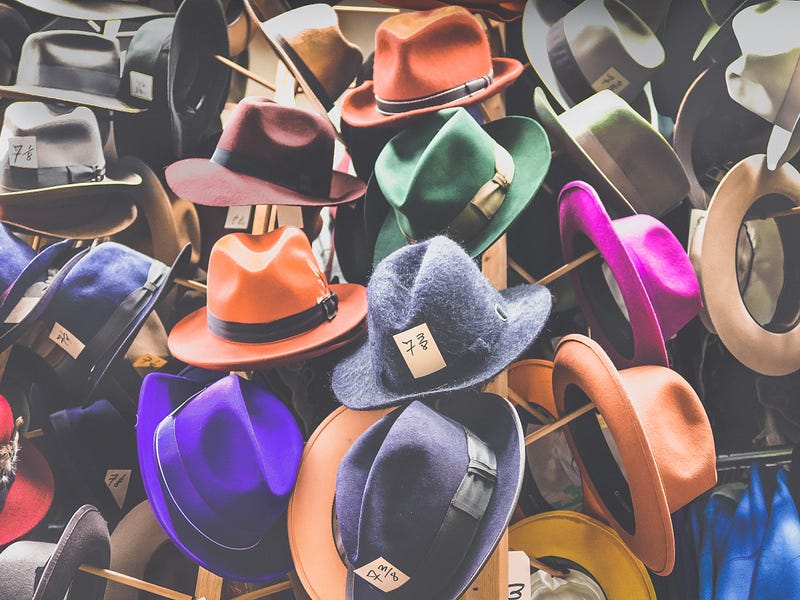
Let me just say it straight— we’ve got too many choices. Seriously, life’s menu is more bloated than a hedge fund manager’s expense account. We’re constantly bombarded with the mantra that more is always better — like having a bazillion types of toothpaste will somehow revolutionize our dental hygiene experience.
But here’s the punchline: with every new flavor of Ben & Jerry’s that drops and each extra cable channel that promises to fill the void in our souls, we don’t get more stoked about life. Nope. We freeze like a deer in the headlights of an oncoming semi of possibilities.
That, my friends, is the paradox of choice — a psychological headlock that makes us feel about as empowered as a limp noodle in a bodybuilding contest.
Understanding the Paradox of Choice
Imagine walking into a store, ready to buy a pair of jeans. You’re met with an arsenal of cuts, colors, and styles. Slim fit, boot cut, stonewashed, raw denim… it’s exhilarating at first. But as the minutes tick by, the choices don’t seem like a luxury anymore; they feel like a damn burden.
The paradox of choice is a concept that while a degree of variety can be beneficial, there is a tipping point where more choices make us less happy. It’s a kinda suffocating liberty that we’re grappling with, where every decision is less about the joy of choosing and more about the dread of choosing wrong.
Psychologist Barry Schwartz threw the spotlight on this conundrum, revealing that our consumerist belief in the almighty power of choice is fundamentally flawed. As the shelves of life grow ever more cluttered, our satisfaction doesn’t scale with the abundance of options. It plateaus and, often, plummets.
The irony is rich — in seeking to avail ourselves of every possible avenue, we’ve handcuffed our happiness to an ever-spinning wheel of possibilities.
Decisions in Abundance: The Mental Cost of Variety
Making decisions is like running a mental marathon with no finish line in sight. Each little “eeny, meeny, miny, moe” moment sucks out your brain juice like a vampire at a blood bank. And let’s face it, in this candy store of a world where the shelves are stocked to the ceiling with every kind of everything, our gray matter is doing overtime on the daily.
Paying the price for this smorgasbord of options isn’t just about losing a few brain cells. It’s mixing up a wicked cocktail of “what-the-hell-do-I-do” jitters, flip-flopping like a fish out of water, and that ever-nagging FOMO.
You know the drill: each time you make a choice, there’s a haunting chorus of “But what about…?” playing in the back of your mind. Snagged a new phone? Great, but what if there’s one out there that could practically read your mind? Jumped at a job offer? Fantastic, but what if there’s a gig around the corner that’s got your dream title written all over it?
This whole circus makes every crossroad in life a game of second-guessing. You’re playing mental Twister, reaching for happiness but somehow always winding up one step behind, tangled in the “what if” vines.

Maximizers vs. Satisficers: Personality’s Role
Dive a bit deeper, and you’ll see that not everyone is equally handcuffed by the paradox of choice. Schwartz distinguishes between two types of decision-makers:
Maximizers and satisficers.
Maximizers are perfectionists, those who hunt down the best option every single time. Every decision is a mission to land the cream of the crop.
Satisficers, on the other hand, have a threshold of quality. Once they find something that meets their standards, they’re content.
The twist? Maximizers might snag the objectively better choice, but satisficers are the ones skipping away happier. The maximizer’s quest for perfection breeds chronic dissatisfaction, for the horizon of ‘better’ is endlessly receding.
Analysis Paralysis: When Choices Overwhelm
With a buffet of options comes paralysis, a psychological gridlock that stalls the decision-making engine. It’s not just about picking an item off a menu; it’s about digesting the fact that every damn choice might be the wrong one.
This analysis paralysis isn’t just a personal crisis; it’s a cultural one.
In a society that champions the ‘big decision’, we’ve lost sight of the joy in the ‘small choice’. We’re conditioned to believe that there’s a right choice for everything, from our cereal to our life partners, and the pressure to get it right every time is immense.
The Quality of Decisions: Quantity vs. Quality
Here’s a kicker — more choices don’t necessarily lead to better decisions. In fact, they often lead to decisions that suck. As the number of options increases, the quality of our decision-making decreases.
It’s a cognitive overload, a point where the brain buckles under the weight of possibilities. It’s not just the decision that suffers; it’s the subsequent satisfaction.
When the world is your oyster, why does every choice feel like a compromise?
Social Media and Choice Overload: The New Dilemma
Social media platforms, with their endless streams of content, have become a new frontier in the paradox of choice. Every scroll presents a fork in the digital road: to like, comment, share, or keep scrolling.
This digital age has catapulted the paradox of choice into hyperdrive. The once-simple bloody act of connecting with friends has morphed into a complex web of decisions. The result? A muted joy and a heightened sense of missing out on the ‘right’ interactions. Damn shame if you ask me.

Consumer Culture: How Markets Exploit the Paradox
Markets are keenly aware of the paradox of choice, and they exploit it mercilessly. Every shiny thing on the shelf isn’t just a thing; it’s sold as your golden ticket to Awesomeville. So, we’re all on this hamster wheel, huffing and puffing after the “buy of a lifetime” that’ll sprinkle fairy dust on our lives.
What’s the marketplace doing? Turning choice into its favorite cash cow, getting us hooked on the hit of the new. And the price tag on this? Us.
A whole society of headless chickens, betting our bottom dollar on the next swipe, click, or checkout, hoping that this time — maybe, just maybe — we’ll catch that “elusive butterfly” called happiness.
Simplifying Life: Strategies to Combat Choice Fatigue
The good news? There are ways to combat choice fatigue. Think of it as the life equivalent of tossing out all the crap you don’t need and keeping just the killer vinyl collection.
This, my dear reader, is about getting down with your bad minimalist self. It’s a straight-up ninja move where you chop the endless buffet of “meh” to get to the prime rib of what rocks your world. We’re talking about tuning your inner radio away from the static of “Should I or shouldn’t I?” and onto the sweet tunes of “Hell yeah, this is it!”

So how do you start slaying the choice dragon?
You set your own bar.
Forget “the best” and get tight with “the best for me.” Learn to high-five “good enough” and give it a bear hug. This isn’t settling; it’s customizing your life. And cut down on the consumer merry-go-round. Buy less, choose more wisely, and watch your happiness account get some serious compounding interest.
Walking this less crowded path is like bringing a machete to the jungle of modern life. It’s not what the billboards are selling, but those who hike it? They’re the ones grinning at the end of the day, sipping the good stuff from the cup of life. Contentment? They’ve got it in spades, and it’s the kind that doesn’t whisper, “But hey, what if?” It’s the kind that shouts, “This is the shit!”
The Role of Regret in the Paradox of Choice
Regret is that annoying backseat driver of life who just loves to pipe up after every damn decision you make. It’s like a crappy sidekick to choice, the kind that whispers all spooky-like in your ear about the road not taken.
It’s not just the face-palm moments after we screw up that sting, it’s the whole horror show of ‘what-ifs’ that we torture ourselves with before we even make a move.
When we stand at life’s crossroads, we’re not just picking A or B. We’re not flipping a coin between this gadget or that one, this job or the other. Nah, we’re duking it out with potential future regrets.
It’s like we’re playing chess with our future selves, trying to outsmart sorrow.
And let me tell you, in the big ol’ emotional stock market, regret is like lead — it’s heavy, it sinks, and it sure as hell ain’t buoying up your happiness boat.
So, here’s the real kicker: we’re all walking tightropes over a pit of “what ifs,” trying not to fall in. But the thing about regret is, that it’s gonna be there whether you choose left, right, or upside down.
The trick, then, is to make your choices with a bit more “screw it” and a little less “oh, shit.” Because at the end of the day, you want to look back at the crazy tapestry of your life and say, “Well, that was a hell of a ride,” instead of, “Damn, what if I had…?”
Reclaiming Happiness in the Age of Options
Getting your ‘happy’ back in this age of buffet-style living isn’t about throwing up your hands and living like a monk. Nah, it’s about remixing your relationship with choice. It’s about getting that not everything on the menu is worth tasting. Sometimes you just need that one dish that makes you do a happy dance.

It’s figuring out that while life’s a game stuffed with choices, that’s not the whole point. The secret sauce to joy isn’t slathering your life with options. It’s about the way you tango with the ones you pick.
Quality beats quantity every damn time.
That’s where the magic happens, where you’re so into what you’re doing that you forget to check your phone every five seconds.
Here’s the mic drop: the paradox of choice is one helluva con artist, selling us the lie that more equals better. Spoiler alert: it’s not. It’s just shackles with a shiny coat of paint.
The real deal, the escape plan, is all about simplifying — back to basics, where choice is your trusty Swiss Army knife, not a chainsaw out for your peace of mind.
In the wild jungle of could-haves and should-haves, real freedom is figuring out that sometimes, the champ move is to just not play the game.