
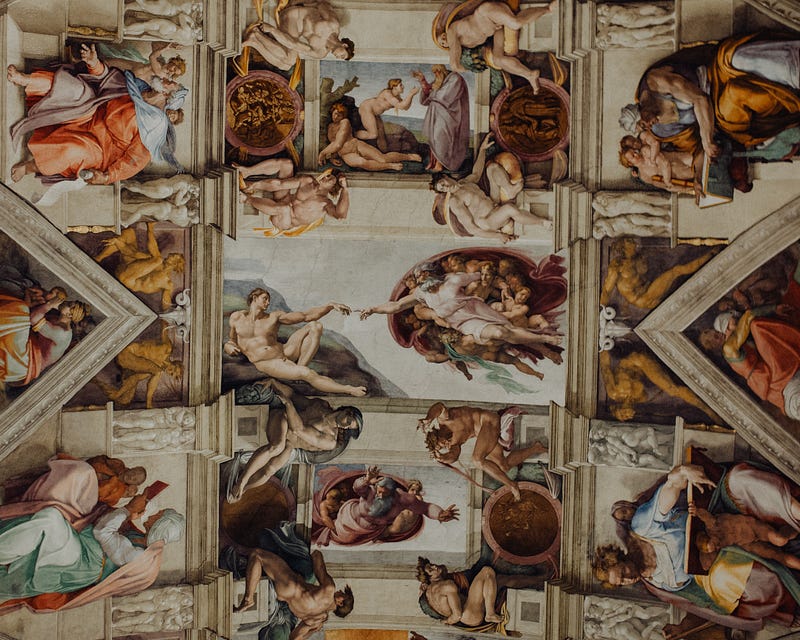
God was quite comfortable with Himself: male, pure, unmixed, straightforward, and righteous.
He knew what He was about. He made His simple garden with His simple Adam and Eve.
In fact, He fashioned Eve from one of Adam’s small rib bones. I guess he had one to spare.
God — God knows why — added a cunning, pretty, mixed, duplicitous, deceitful, delicious little serpent to the scene.
(At last, even God could not stand homogeny!) Perhaps even Righteous Straight-laced God got bored with innocence.
Whereas simple blockheaded Adam — much less his little rib — were mere things of clay, the serpent was God’s favorite angel.
Unfortunately, God made his little serpent so gifted, so utterly intriguing, that God Himself began to feel, well, insecure.
And so God demoted him, exiled him, alienated him, pretended He didn’t know him, pitted Adam and Eve against him.
Now, stunningly, Adam’s rib turned out to be more curious, more intelligent, more brilliant, than all of Adam.
Never underestimate a rib. Eve met the alienated, exiled genius in the garden, who generously offered her red delicious apples.
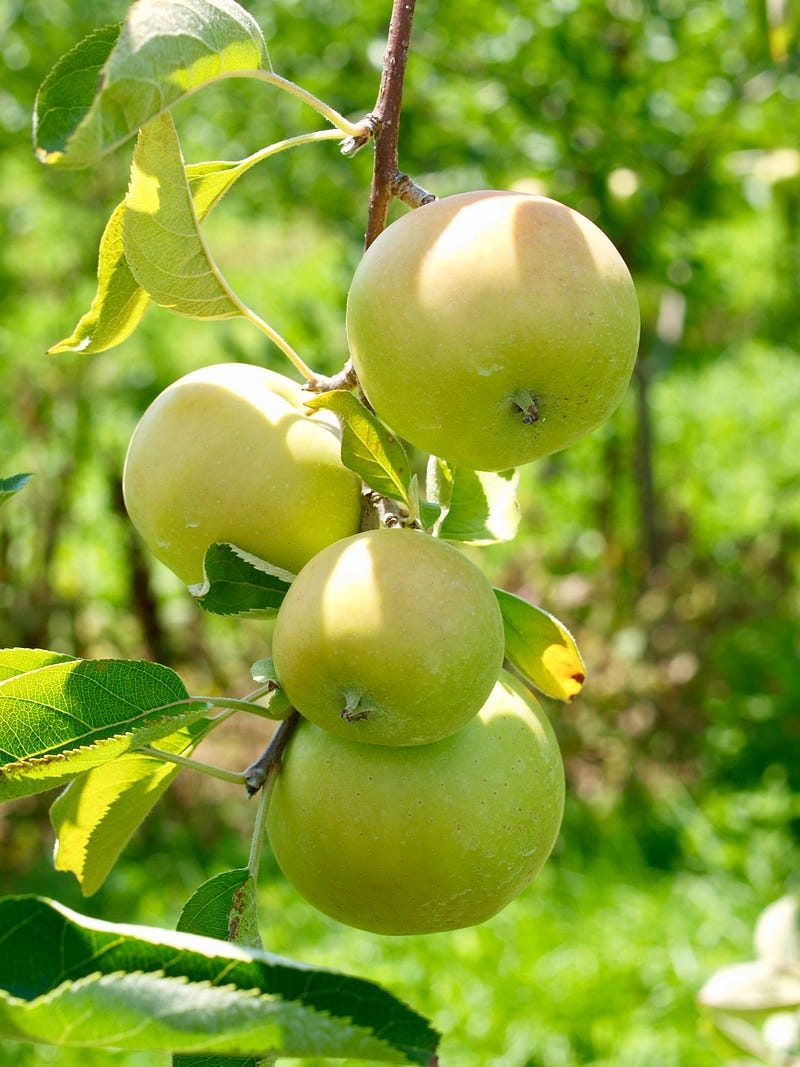
These apples were poetic pearls of knowledge and wisdom, that God had strictly forbidden without reason.
Forbidden without reason, like women forbidden a vote, or black people forbidden a seat on the bus, or a provocative book forbidden publication.
Now, while Adam’s limited intelligence had no reason to question this command, Eve doubted, danced, questioned, probed, pursued with a genius that equaled the serpent’s own.
Eve and the serpent, alone at last, in that wild luscious garden, just oozing with exotic curious fruits.
If Eve was more intelligent than Adam, she became even more so after finishing that sweet curious apple.
She now had the gift of language thanks to the sly, clever, expat serpent — she could speak and differentiate and see!
Should she tell Adam? Adam was quite comfortable in his homogenous ignorance and undifferentiated nudity.
He was as happy as a cow. What did he need language for? Better, he felt, to remain mute, like an innocent babe.
Admittedly, this irked Eve, who thought Adam could use a few adjectives to enliven his spirit a bit.
But when she broached the subject with him with her attractive body language, he coldly nodded, outdoing God Himself in his prudence.
Oh hell (she liked that word — hell), she thought, how does one turn a blissed out cow on to poetry? The serpent suggested dancing.
So Eve, with blood red apple in hand, danced for Adam, like Salome dancing before Herod, tantalizingly, seductively.

Adam was feeling uncomfortable, strange, unfamiliar, provoked — his blissfully undifferentiated unity threatened by distinctive diversity.
Even God noticed, and He wasn’t pleased, figuring the devil got inside her, despite his being kicked out of the heavens.
But God was a complicated One, and despite Himself, He derived a secret pleasure watching the drama play out.
Would Adam yield to Eve’s dance of temptation, or would he stick to his unruffled transcendental meditation?
Adam did not look like he was in neutral, serene contemplation. As he watched Eve, he was bewitched, inspired.
Eve took a bite from the apple, and Adam seized her with a kiss, tasting the flesh, juice, and pulp. She took another bite.
Adam, somewhat impatiently, took the rest of the apple and devoured it. His head reeled with descriptive images and symbols.
Adam was introduced to language. While Eve was an old pro at this point, Adam became like Columbus when he thought he discovered America.
He loved words so much he wanted to crystalize them, frame them, dogmatize them, own them, literalize them, control them.

Well, God, who had seen enough, kept His word, and booted the two out of Paradise, or so He fancied.
Individuated, differentiated, dual, diverse, and richly complex, Eve and Adam began to make clothes, cultivate art, garden, cook, and write poetry.
Well, Eve and the serpent wrote poetry anyway; Adam, with his enthusiastic tendency to dogmatize and literalize, founded philosophy and religion.
© Carlo Zeno 2022


