
Parabellum | Themes of John Wick Chapter 3
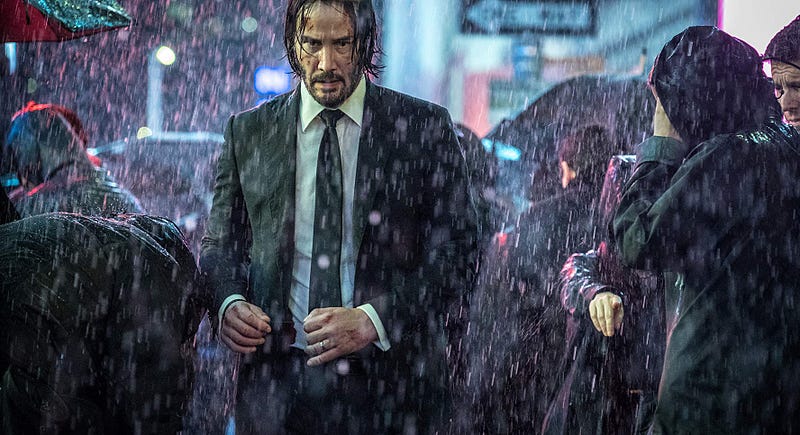
Warning, the following article contains spoilers for John Wick 3 — Parabellum (2019). Proceed at your own risk.
“These violent delights, have violent ends.” — Romeo and Juliet
When John Wick entered theaters in 2014, almost no one would have imagined it would become the incredible action franchise it is today. Thanks in no small way to Keanu Reeves incredible performance as the title character, and the director’s vision for the world.
Each film manages to build upon the last, teasing out the story of a man forced back into a world he left behind, who’s heart is broken for the wife he lost, and searching for who he is.
Themes Of The Film
There are three principle themes of the film. While suggested by the previous installments, they are more exceptionally observed in the third chapter. Each are potent reflections of the world of John Wick and the consequences of his actions.
- Order
- Authority
- Identity
Order
The conflict of all three films is order set against violence. Despite the violent underworld in which these assassins exist, they are shown to have rules and regulations to keep one another accountable. In the first film, we are introduced to the world of the Continental, where business cannot be conducted on the grounds of the hotel (similar to Highlander’s “Holy ground”).
In the first film, we see what happens when Ms. Perkins attacks John Wick and violates this order and is executed for trespassing upon the rules. In Chapter 2, we see John Wick take the life of Santonio, his enemy, at the end on Continental grounds, breaking the unbreakable rule himself.
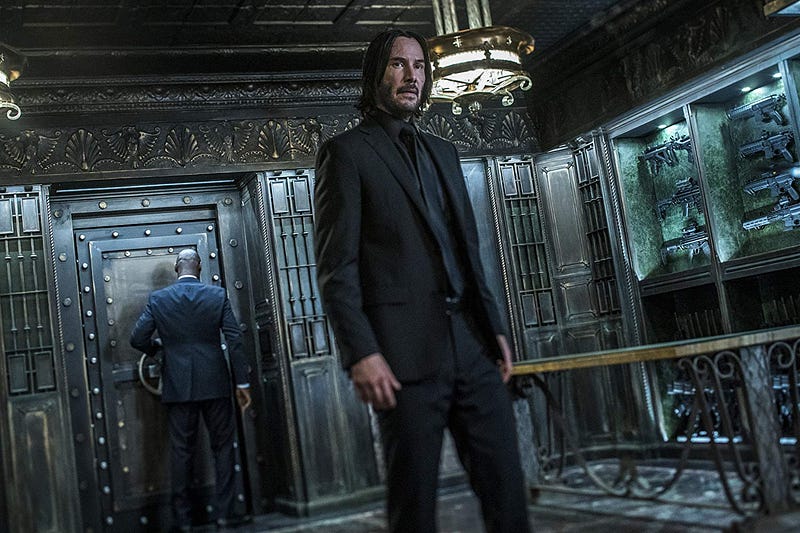
The third chapter gives us direct exposition explaining the nature of the coins, passed to principle agents throughout the series, as symbols of the social contract these men of violence live in. The coins are tokens of this contract, traded as proof of your membership in the society. John, by breaking the rules, violated the contract and is forfeit from their society and protection.
His role as the man of violence echos Western themes of order requiring violence to create it, but becomes a danger to that order when established. The Man Who Shot Liberty Valance (1962), demonstrates this with John Wayne as the archetype cowboy who forged the west, but loses both his sweetheart and the glory to Jimmy Stewart who represents the progress and hope of a settled country.
Authority
To create the order within this world not only requires men like John Wick, but authority to enforce and maintain the order. This authority comes from the High Table, and is represented in Chapter 3 as the Judicator, a bureaucrat who has come to investigate and punish those who aided John Wick in Chapter 2.
The Judicator decides to strip Winston and the Bowery King of their authority, asking them to step down so they may be replaced by more willing subjects. They both refuse, with the Bowery King earning seven cuts from a katana and Winston having the the New York Continental “deconsecrated.”
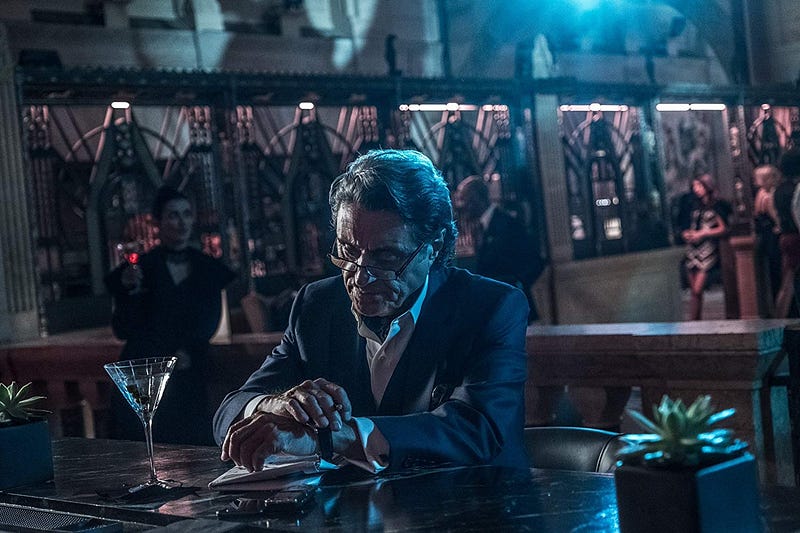
The Deconsecration of the NY Continental is similar to the threat of the Catholic Church in Medieval times to maintain control over royals and nobility, particularly kings and emperors, with the threat of excommunication from the Church.
Attempting to hold control over rulers, the Church would threaten the entire kingdom with the religious powers at their disposal. Taking away their blessing from a kingdom, similar to how the High Table takes it blessing from the grounds of the Continental.
It is not the only similarity to Medieval history evident. The disagreement between Winston and the Bowery King with the High Table echos the disagreements of Kings and their Barons or Earls, the land owners of a realm. The most famous of which was between John I and the Barons of England, resulting in the creation of the Magna Carta, which limited the power of the King as an absolute ruler and recognized the authority of the Barons as counselors to the King.
As managers of estates proper and improper, the Bowery and NY Continental, they make the claim they were within their bounds to do as they saw fit without having to answer to the High Table for their actions. Within their domains, they are the rulers and policy makers, not to be held responsible by others for their actions. The High Table sees it differently.
The power struggle results in Winston employing John Wick to help defend the NY Continental from the assaults of the High Table’s assassins. Successfully repelling two assaults, the Judicator and Winston decide to reach a mutual agreement, which comes at the cost of Winston sacrificing John Wick.
Another illusion of history, as it was not uncommon for Mercenaries to be employed to do the actual fighting between nobles in disputes over authority and domains, only to find themselves the ones executed when the dust settled and fences were mended.
Identity
Since the first film, we have seen John Wick struggle against the past he left behind, a past of violence. Another trope of Westerns, we see the man of violence forced back into a former life of violence to protect and revenge himself.
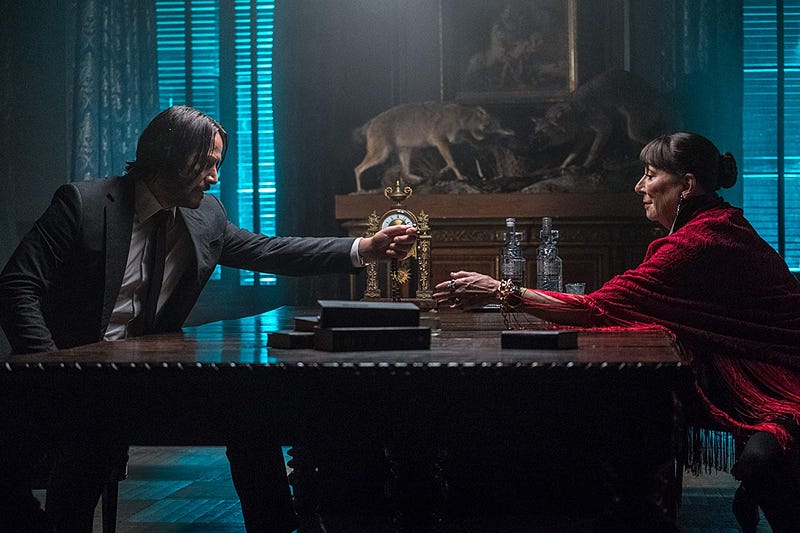
In the first movie, John takes revenge which opens him up to being called back to pay a debt in the second film the consequences of which he is fighting in the third chapter. Like falling dominos, each choice leads to the next, dragging him farther and farther away from the man he was with his wife and the love they had and back into the Baba Yaga, the boogeyman he was in his old life.
Winston warned him repeatedly the old life would try to reclaim him for its own. In the second film, he warns Santonio (the villain of the feature) of the danger he has invited to himself by attacking John Wick, “You stabbed the devil in the back and forced him back into the life that he had just left. You incinerated the priest’s temple. Burned it to the ground. Now he’s free of the marker, what do you think he’ll do? He had a glimpse of the other side and he embraced it. But you, Signor D’Antonio… took it away from him.”
As a devil, the boogey man, John Wick is a bringer of death. His skill is great enough the Elder offers him absolution and restoration if he will agree to become the personal hit man of the High Table.
Life, at the cost of living to bring death.
When he is at the point of either killing Winston or defying the High Table, Winston asks John an important question which brings the identity crisis to a head: “Who do you wish to die as?”
Death, he observes, will come for John one way or another. He can either die as Baba Yaga, tied to the High Table and doing their dirty work, or as a man who once loved his wife.
It is a potent question which extends beyond merely the plot of the movie, reminding us we each will face the same query. Our deaths are inevitable, what identity will we have when we die ourselves?
It appears John will fight to life as a man, and it is as such he trusts Winston and defends the Continental only to be betrayed by his friend. When the body “disappears,” Winston mutters under his breath, “Baba Yaga.” Perhaps to insinuate John’s choice has been made for him, though he is not tied to the Table, his destiny has been cast and the fourth film will remind us why you send John Wick to “kill the f*cking boogeyman.”
Prepare For War
For anyone who didn’t expect to see John Wick 3 end on a cliff hanger (such as myself), we should have looked at the title more closely. Pararbellum means roughly, “Prepare for war.” Which may imply the next film will be the war itself, and the violence and action of Chapter 3 will be topped by further exploration of the world of John Wick.
As a trilogy, John Wick has continued to expound upon themes first teased in the original and it is remarkable to see how they continue to flesh out the ideas and concepts with each continuation of the narrative. Delivering every gut punching piece of action you never knew you wanted, it is a series worth the price of a gold coin.


