
Pamukkale: Turkey’s Snow White Landscape
Leave the snowsuit at home
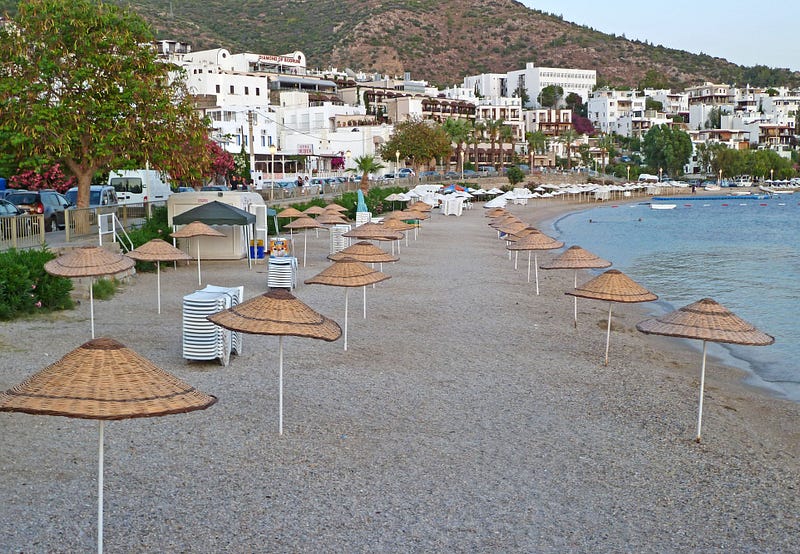
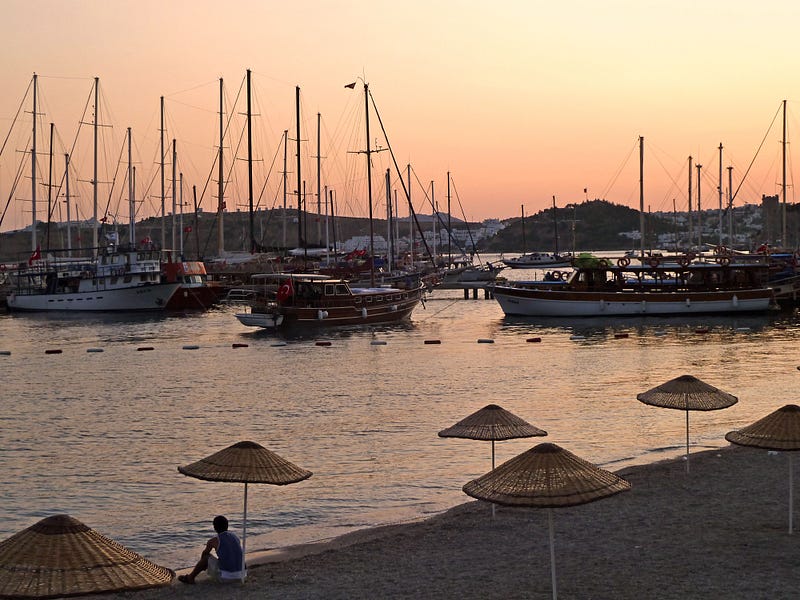
After three days just chillin’ in Bodrum, Turkey — no touring, no hiking, just lying by the pool, strolling along the Mediterranean shore, and enjoying the tropical scenery, I was ready for an adventure. And Pamukkale was it!
I tried to book a tour from Bodrum but was told that they only operate on Mondays and Fridays and I didn’t have a lot of room to pick another date. I asked about a private tour but was told it would be 150 Euros/day for two days or 300 Euros total, still a little more than I wanted to spend. I decided to go to the bus station and checked out the bus fares myself. It turned out that it would be about 40 Turkish Lira (about $25USD) for a return ticket for the 5.5-hour road trip from Bodrum to Pamukkale. Sold!
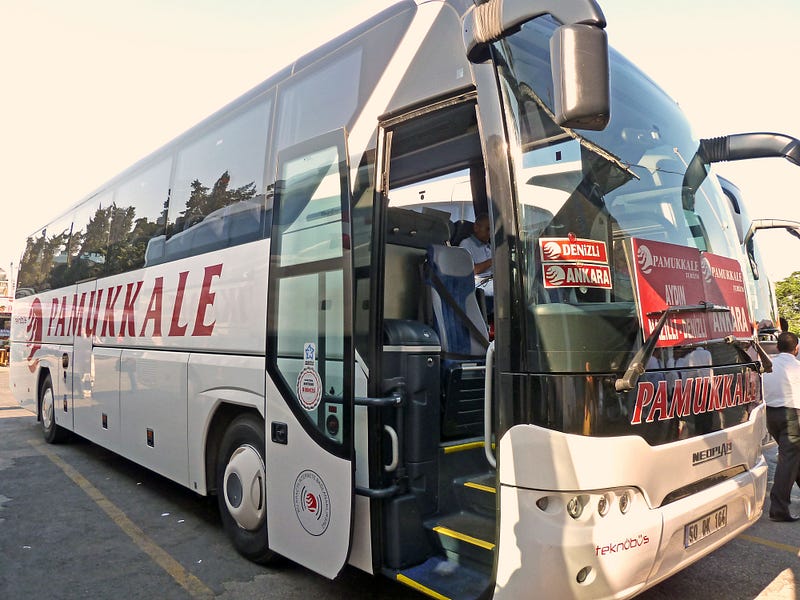
It would be about two hours longer than by car but well worth the money. It was also a luxurious bus; comfortable seats, air-conditioned, with an entertainment system for each seat and an attendant handing out drinks and snacks along the way.
We were scheduled to depart from Bodrum at 9 am and we were on the road at 9:03… more prompt than Turkish Airlines.
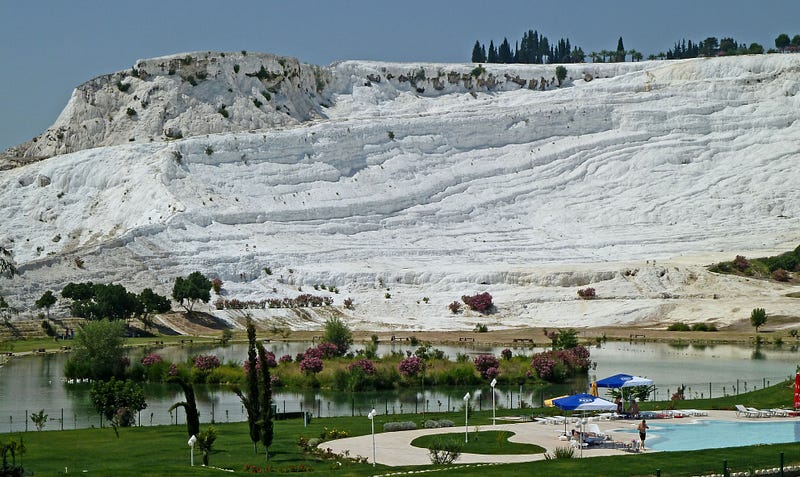
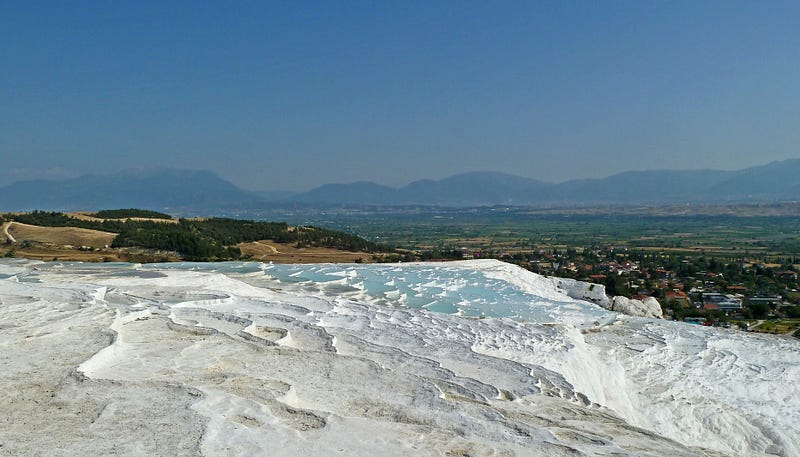
Pamukkale, which means Cotton Palace in Turkish, is a small town made famous for its’ hot springs and limestone and deposits. It’s in the Meander River Valley (Buyuk Menderes), in southwestern Turkey.
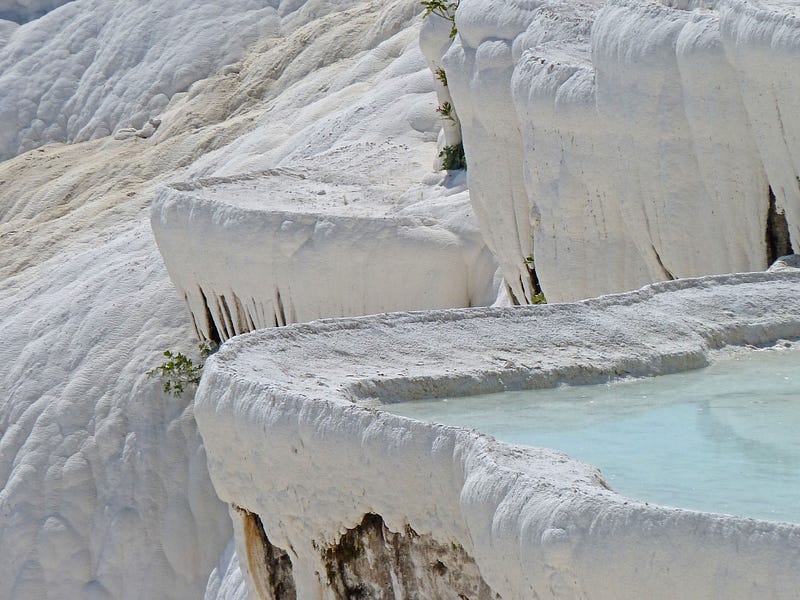
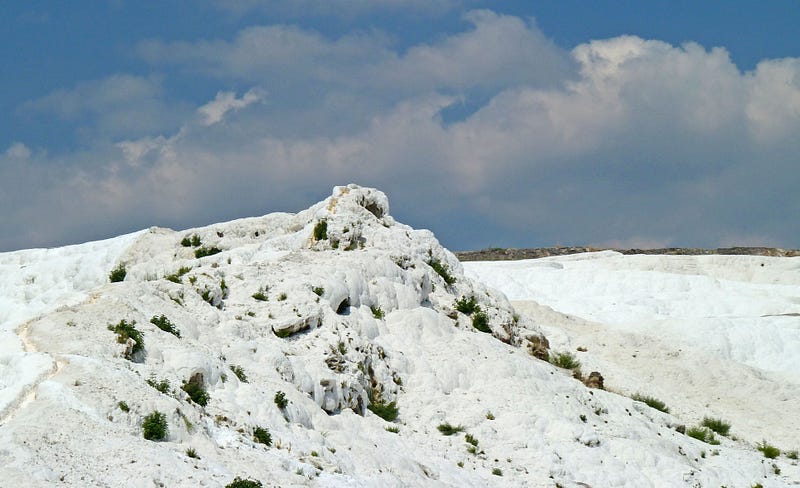
As the water gurgles up from the hot springs it cascades down the small mountain leaving behind travertine limestone deposits that have hardened over time. After 2-millennia the hillside is completely covered in the white mineral, giving the appearance of a snow-covered mountain.
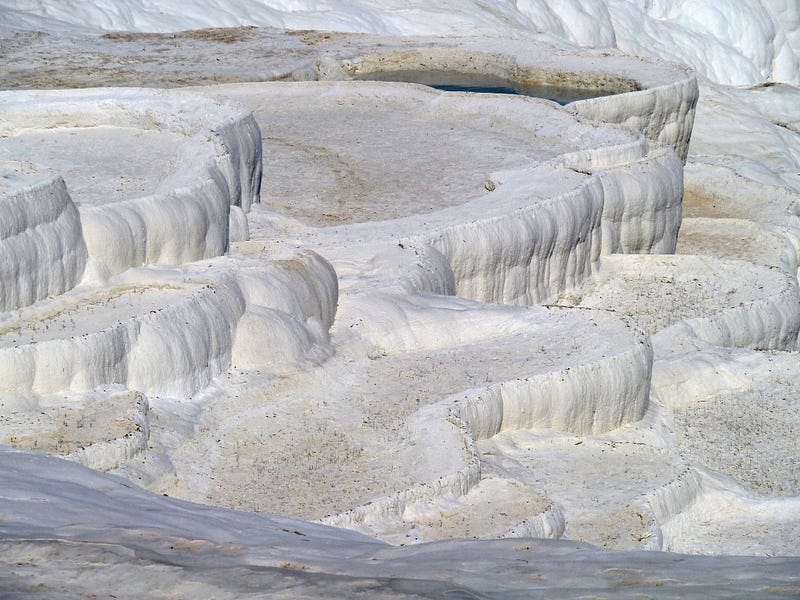
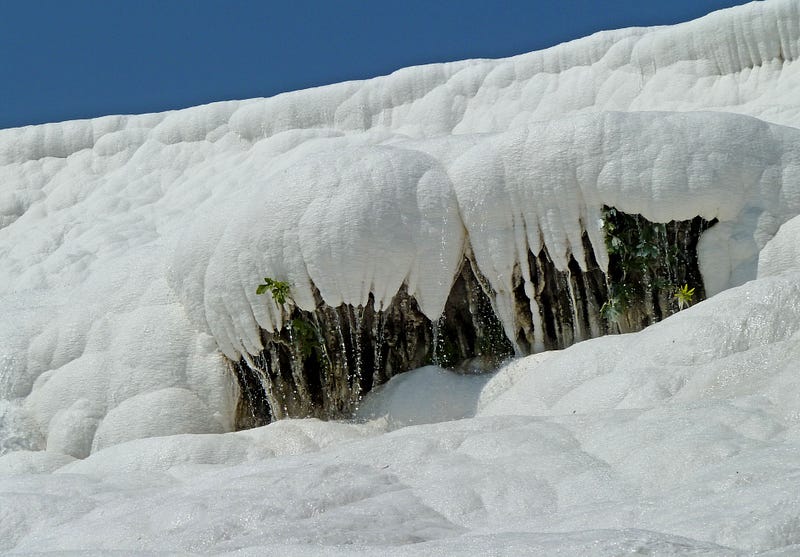
As you climb up, the travertine rocks are terraced like steps carved out of snow and ice all up the side of the mountain.
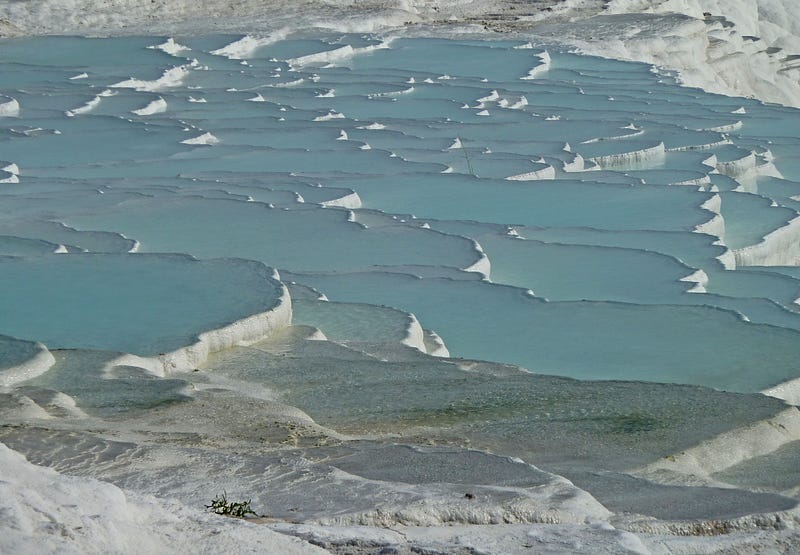
There are pools of water, a beautiful turquoise blue, that spill out across the landscape. It is hard to believe this wasn’t created by artists and designers.
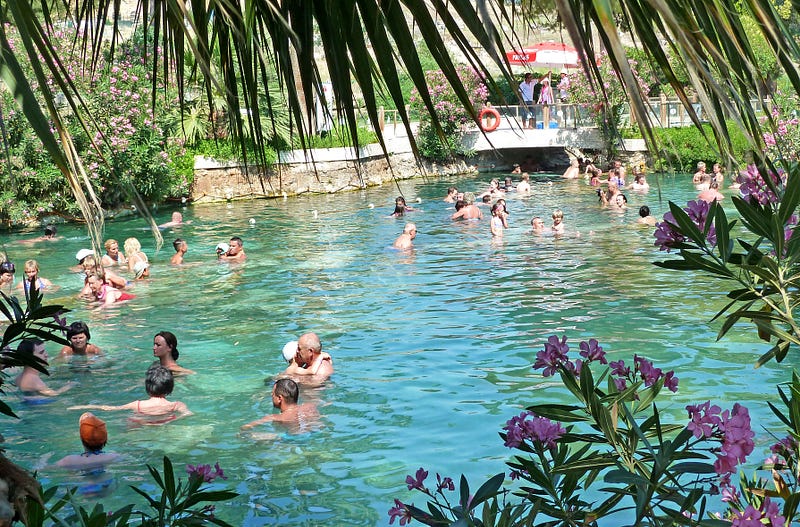
When you get to the top of the hill there is a large hot spring-fed public swimming area called the Ancient Pool. The water isn’t as hot as I’ve felt in other hot springs, which is a good thing with 30C + temperatures under the blazing Turkish sun.
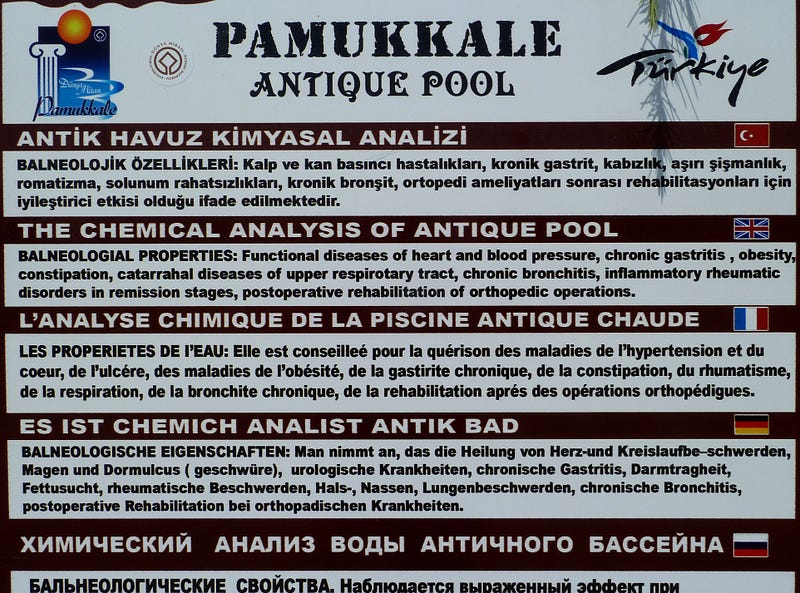
For 17 Turkish Lira (about $10 USD), you can spend two hours soaking in the warm crystal blue waters, soaking up the healing minerals which some people believe are a gift from God.
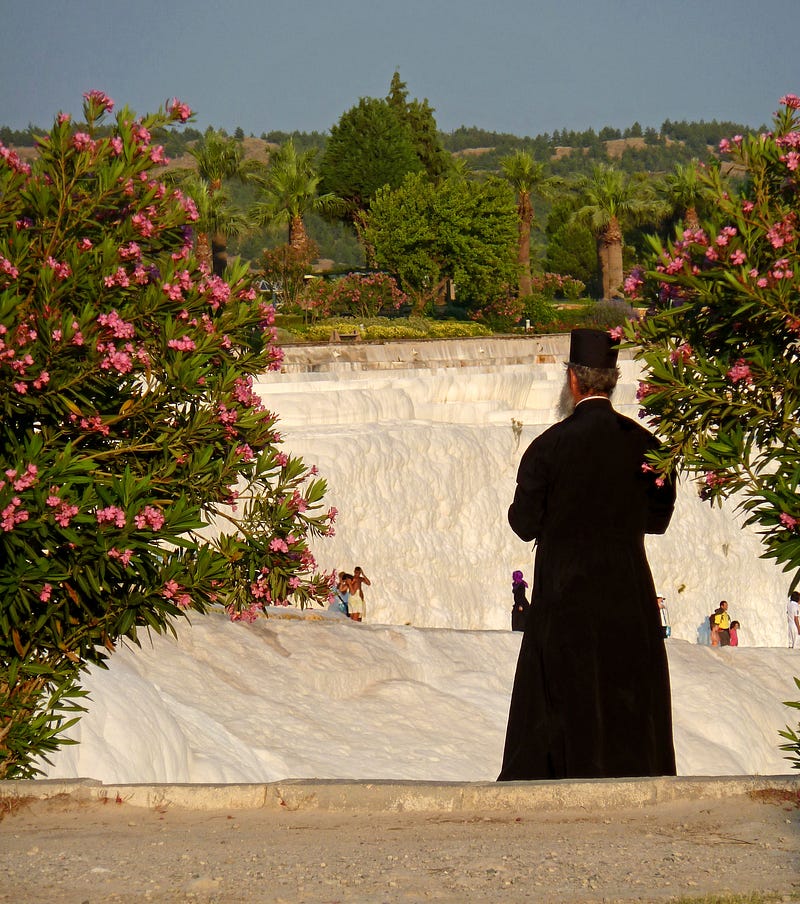
There are 3 entrances to the entire park but the best and easiest is the south entrance. When you arrive at the front gate to Pamukkale you pay the 20 Turkish Lira fee, take off your shoes (they are watching) and begin the hike up across the white rocks, wet from the constant cascade of water. There are a few slippery sections but the rocks are very textured with bumps and waves from the calcium so it’s fairly easy to walk on, just be careful of sharp rocks.
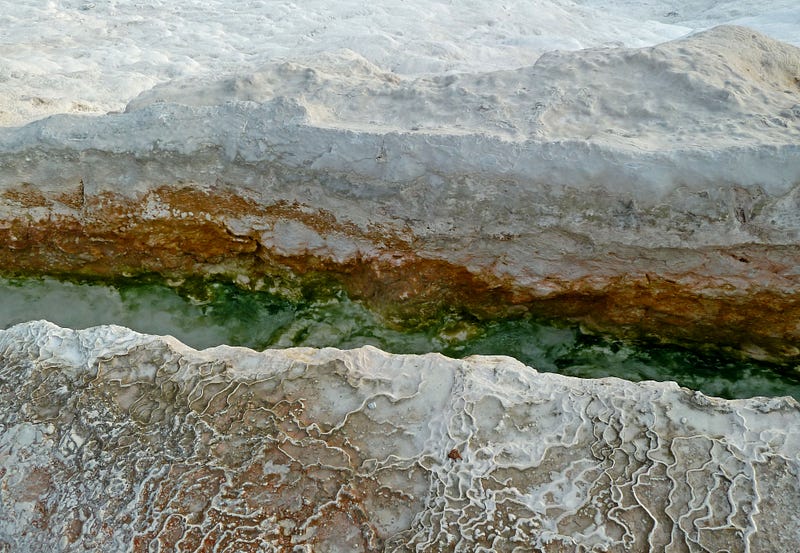
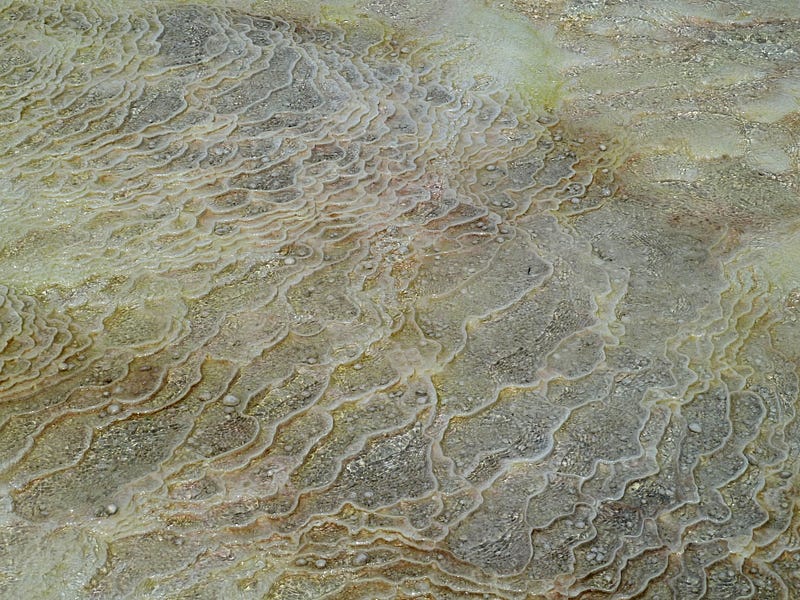
In some areas, there are other colors mixed among the brilliant white, caused by the different minerals in the water; golden yellow, rust red, and deep green from algae. There are also stalactites where the water has been dripping for centuries.
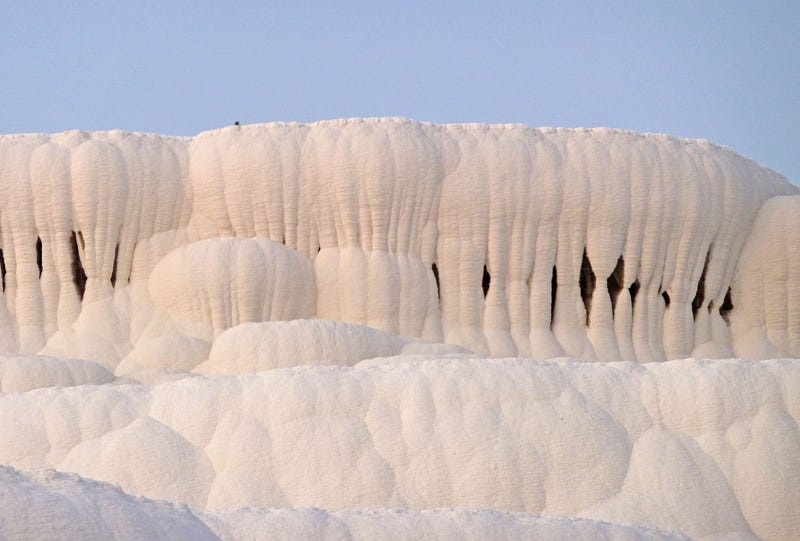
Some of the pools have dried up, leaving tiny cave-like compartments along the hillside, while other pools are constantly fed by the underground stream.
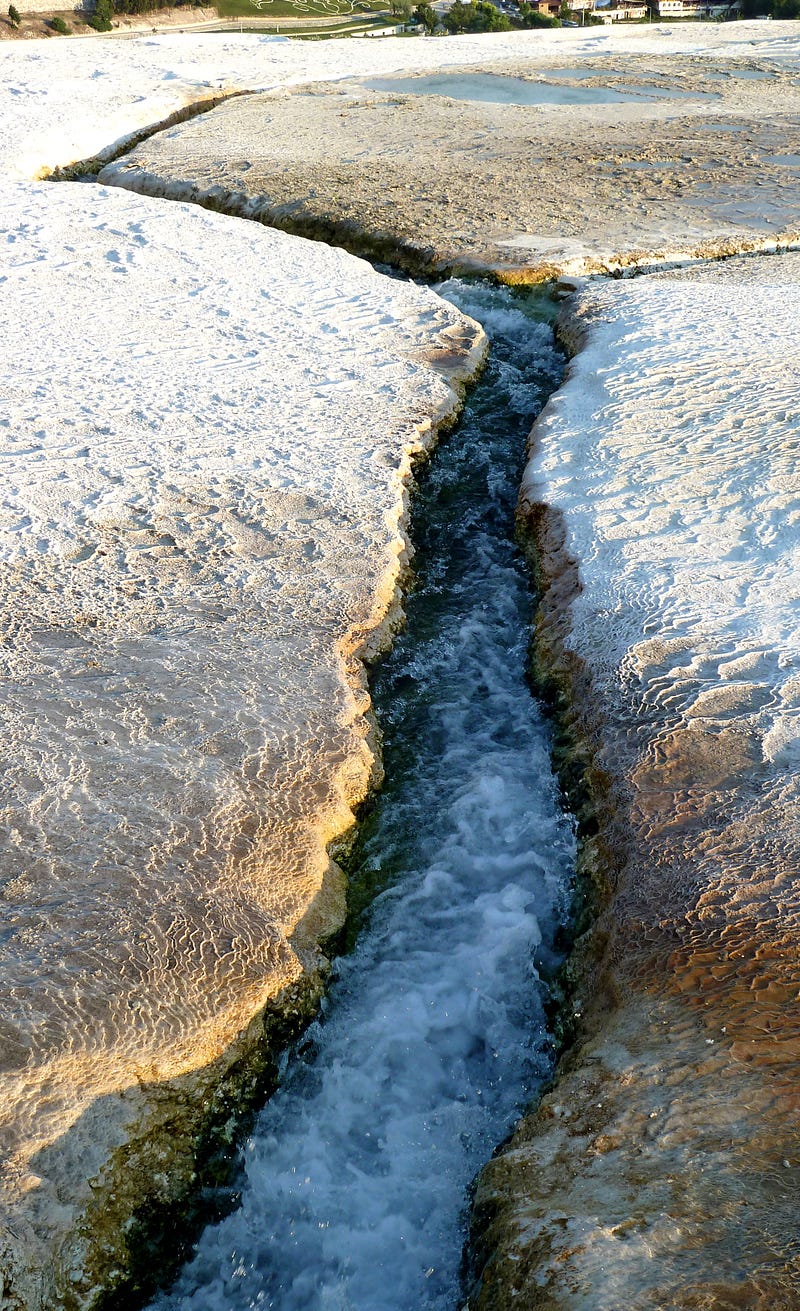
In the areas that drained of water, only the calcified forms remain. There is a wooden sidewalk and signs telling you to “not walk on the Travertines.”
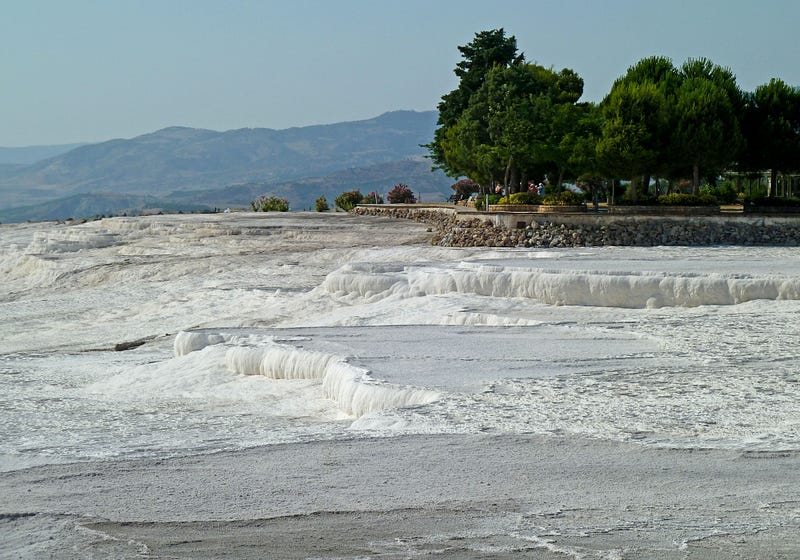
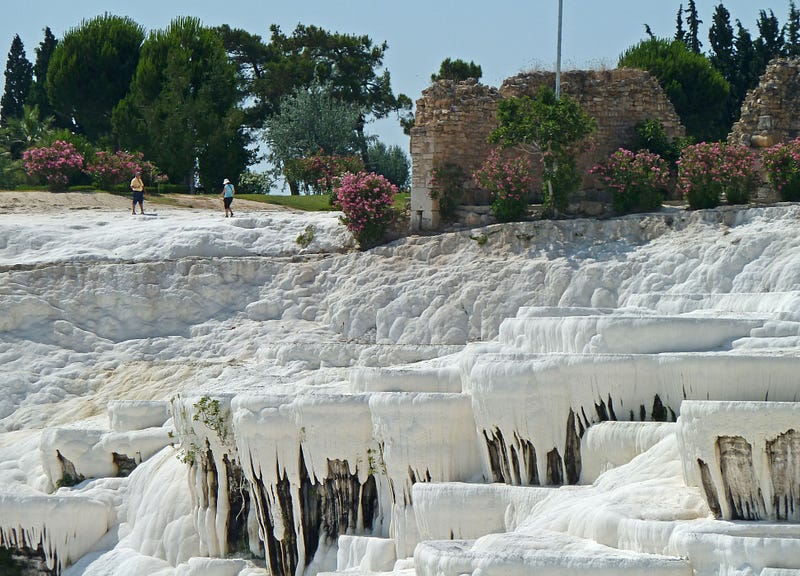
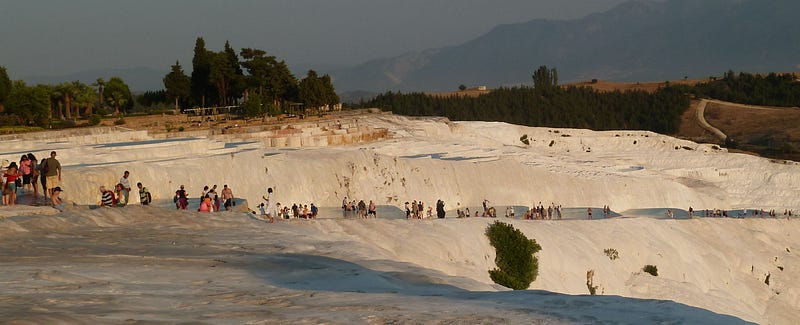
Some pools have been carved by humans to catch the water for people to wade in or take a dip on their trek up the hillside. You think your eyes are playing tricks on you when you see a steady stream of people hiking up the snow-white hill dressed only in skimpy bathing suits.
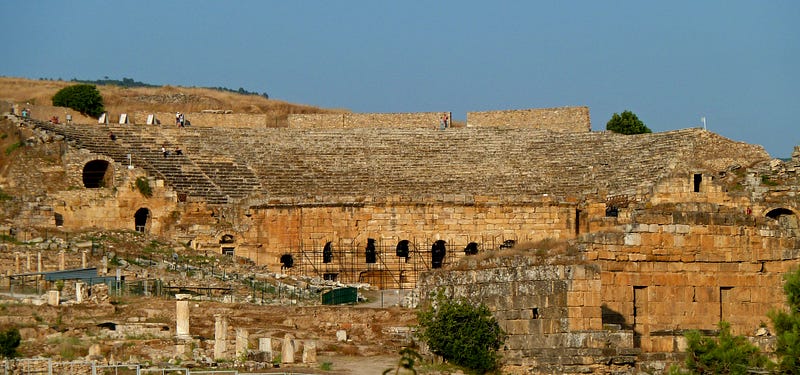
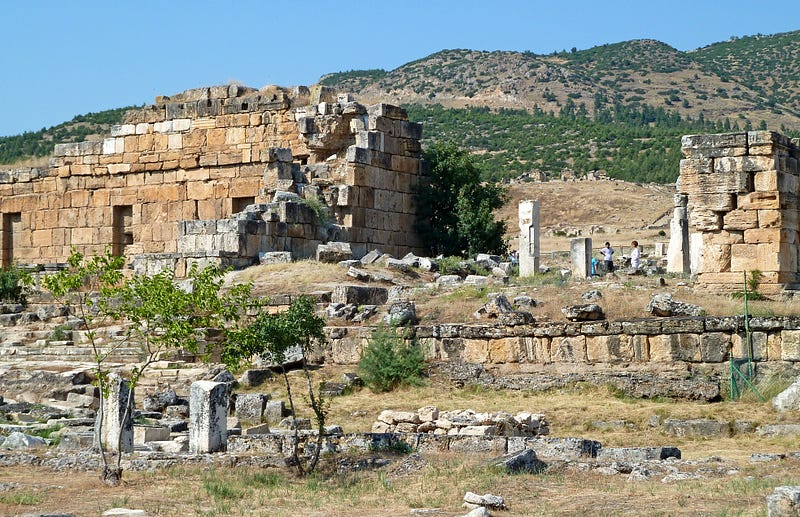
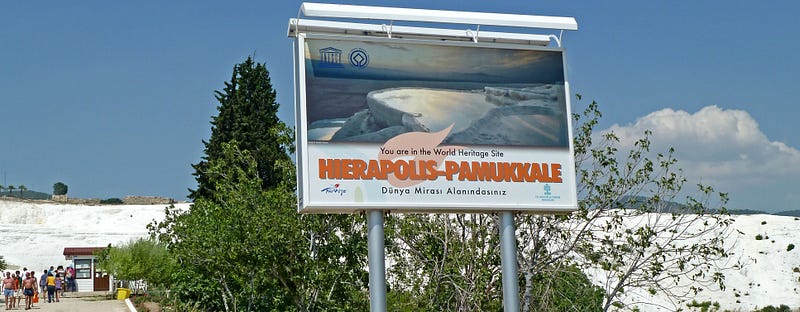
At the hill’s summit are the ruins of the ancient Greek city of Hierapolis, which have the remains of Philip the Apostle. The ruins are scattered around the area including a huge amphitheater that overlooks the Ancient Pool. It is all surrounded by beautiful gardens and ponds.
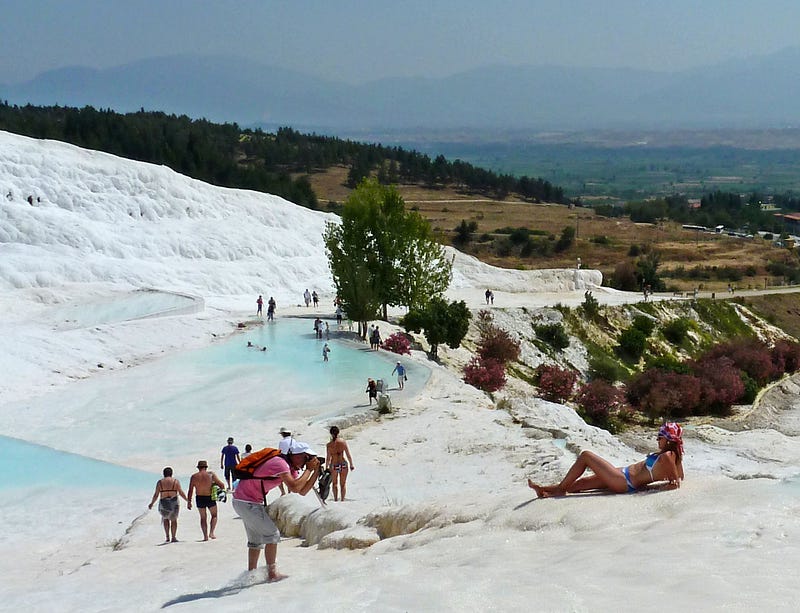
But it is the pristine white landscape that draws the tourists to Pamukkale, not to mention the purported healing powers of the water.
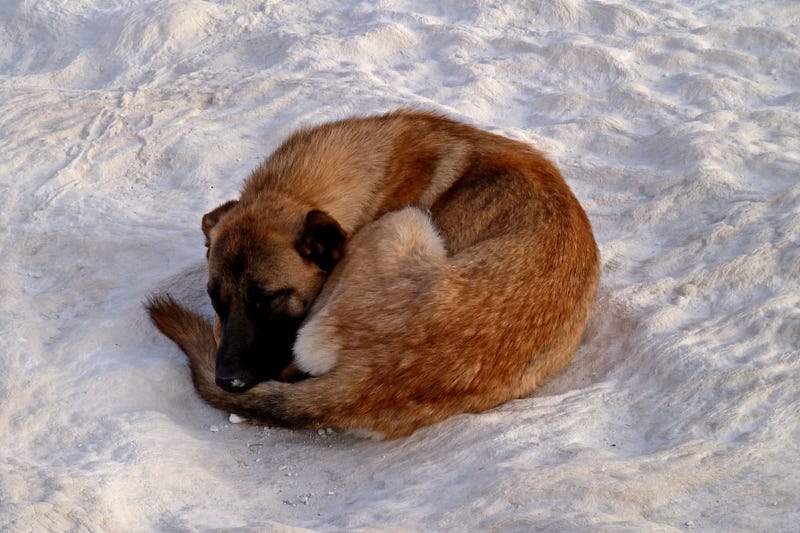
For those who stay late into the afternoon, the crowds thin out while some 4-legged visitors settle in on the cool rocks for the night.
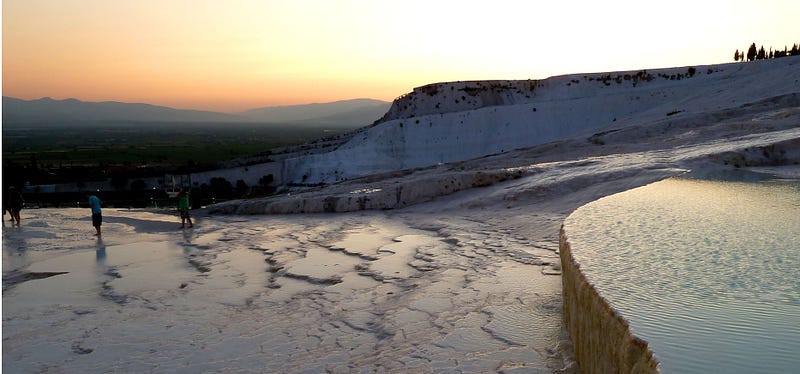
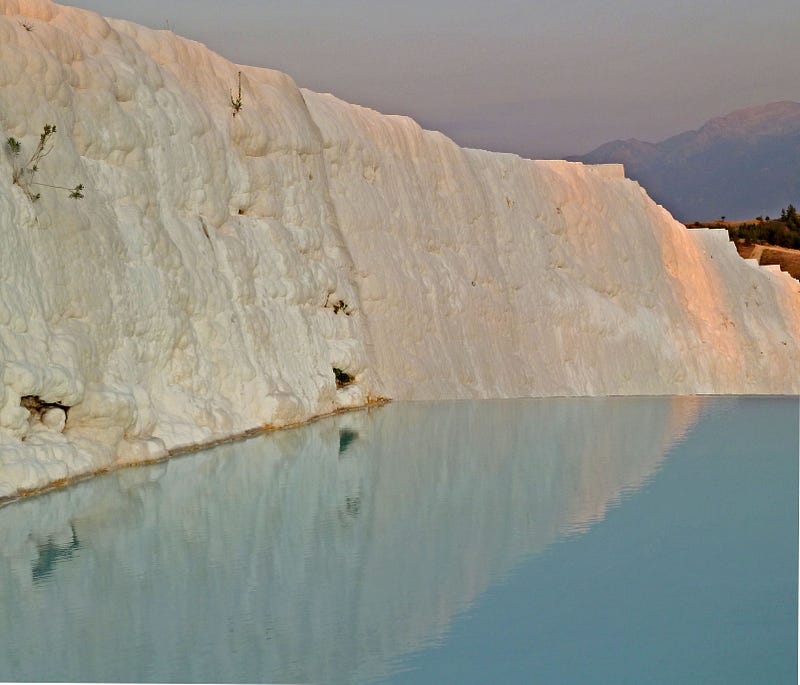
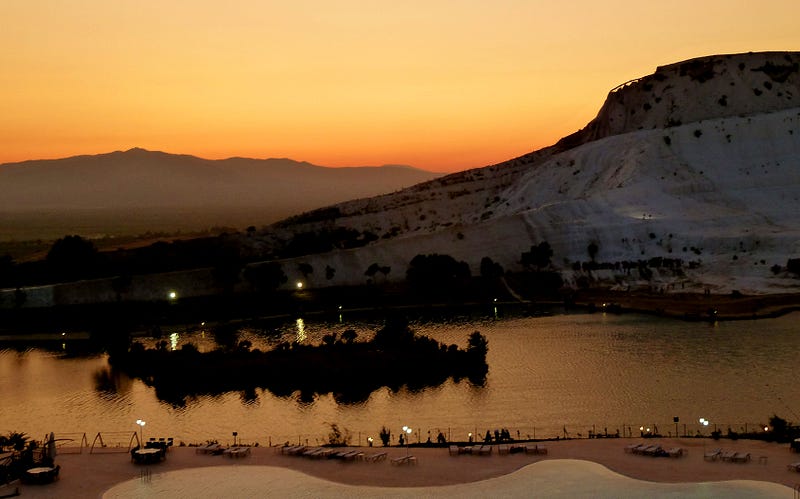
And the hill takes on a golden hue as the sun begins to set. Everything glows with Golden Hour reflections in all the pools.
While other, parts of Turkey get more attention, like Istanbul and Cappadocia, Pamukkale is definitely a must-see for anyone traveling through Turkey.
___________________________________________________________________
You could read so much amazing content on Medium for just $ 5 USD per month and it could be your next step in becoming a writer. And if you sign up with this link you will also be supporting my writing.


