
Palantir, a company that probably knows more about you than you’d like
Palantir is one of the most sinister companies in the world. Founded in May 2003 by ultra-conservative Peter Thiel after his departure from PayPal, the company has been under his leadership for 17 years, during which it has amassed the largest collection of personal data worldwide on behalf of governments, immigration agencies and police departments around the world, even collaborating with the United Nations on projects that usually impacted negatively on those subjected to its spying.
The company, which embodies all that is wrong and unethical about data science, has never turned a profit, despite signing multi-million dollar contracts with all kinds of entities giving it access to citizens’ data, in what appears to be the largest attempt in history to create a global macro-database a private company. In October 2020, Palantir went public, finishing the day 31% above its reference price, and is currently valued at around $45 billion dollars. The IPO revealed a few more things about a company that has always tried to keep its activities top secret, including the fact that contracts with governments and government agencies (CIA, DoD, ICE, etc.) make up 53% of its turnover.
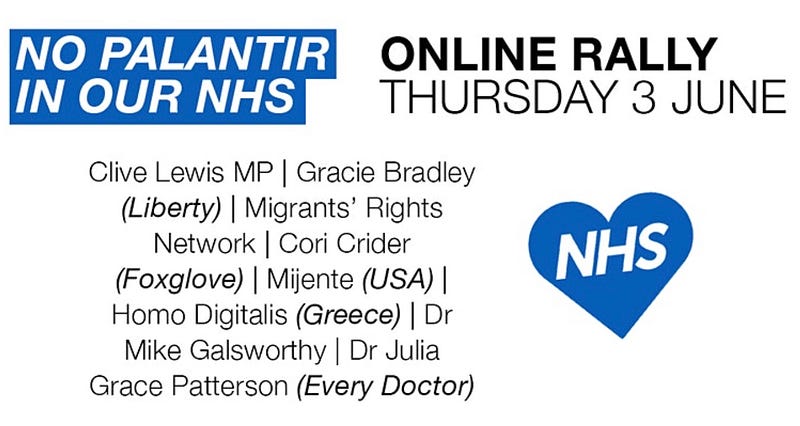
One of the company’s biggest clients is Britain’s National Health Service (NHS), thanks to a contract for which it charged only a symbolic pound, but that gives it growing involvement in the exploitation of pandemic and vaccination campaign data, which has led to the NHS being the subject of litigation. Now, some groups have organized a protest, “No Palantir in our NHS”, calling for its role to be cancelled, something that by now would probably serve little purpose. This is by no means the first protest the company has faced: at the end of 2019, after the scandal involving the company’s in expelling thousands of immigrants from the United States and the separation of children from their families, leading figures from the technology sector filled GitHub forums with messages aimed at its workers.
What happens when a government gives a company with a reputation like Palantir access the data it holds on its citizens without any consultation? How does this square with our right to privacy? How can we halt the erosion of privacy that this obviously entails, beyond protests, which governments tend to ignore? How much does a company like Palantir know about you, and what is it using that information for?
UPDATE (11/09/2021): The British government announces the end of its contract with Palantir alleging lack of transparence.
(En español, aquí)


