avatarMax Green

Free AI web copilot to create summaries, insights and extended knowledge, download it at here

2308

Abstract

l identity along racial lines.</p><p id="9b85"><b>So Phibun went</b> <b>woke</b>.</p><p id="497c">He quite literally made racism and slurs illegal:</p><blockquote id="b8b1"><p>“Use the name 'Thai' to refer to all Thai people, without subdividing them.” — Cultural Mandate 3</p></blockquote><blockquote id="1946"><p>“Thai people must not consider place of birth, residence, or regional accent as a marker of division. Everyone must hold it to be true that all born as Thai people have the same Thai blood and speak the same Thai language. Place of birth or accent makes no difference” — Cultural Mandate 9</p></blockquote><p id="eb38">Terms like “<i>northern Thai</i>,” “<i>southern Thai</i>,” or “<i>Muslim Thai</i>” were strictly forbidden. Everyone was just Thai or not Thai.</p><p id="6360">Through his cultural mandates, Phibun demanded tolerance, politeness, and culinary excellence. Instead of railing against the Jews, he got up there like, <i>“uhh… you need to eat with a fork!”</i></p><p id="6060"><i>crowd goes nuts</i></p><p id="92c8"><i>“And eat well-rounded meals!”</i></p><p id="c88f"><i>frenzied crowd turns into mosh pit</i></p><p id="3ad9"><b><i>“We are the Italy of the East!”</i></b></p><figure id="cdd6"><img src="https://cdn-images-1.readmedium.com/v2/resize:fit:800/1*1WhPh0AH_S2ft8czG_C4dQ.jpeg"><figcaption>Siamese Revolution of 1932, Wikipedia</figcaption></figure><p id="5d25">Phibun’s fascist regime is best known for these sorts of culinary-cultural reforms, each of which succeeded beyond all expectations. His vision of a modern, Thai identity, centered on its social unity and unique cuisine, would manifest almost <i>exactly</i> as he described it. Thailand indeed became “<i>Oriental Italy.</i></p><p id="6953">Phibun idolized Mussolini and Hitler as statesmen, but clearly he wasn’t interested in all that <i>ethnic cleansing</i> bullshit… He just wanted social modernization for his people, respect from the international community, and <i>something</i> to eat other than rice every day.</p><p id="ab01">To that end, Phibun requested a ‘national dish’ be invented for Thailand, using <i>noodles; a</i> new food which had just been introduced to Thailand through its other big brother, Italy.</p><p id="469e">When n

Options

oodles hit a culture with centuries of experience dressing up <i>rice</i> to be appetizing… <b>a star was born, </b>ladies and gentlemen.</p><p id="a5c8">The dictator requested a dish, and his people brought him a franchise: <b>Pad Thai</b>.</p><figure id="3a5c"><img src="https://cdn-images-1.readmedium.com/v2/resize:fit:800/1*nF7UcC7pr528ZVzNxmHGOg.jpeg"><figcaption>https://vs.co/in3onc4a<a href="https://vs.co/in3onc4a"></a></figcaption></figure><p id="1a2c">It was the perfect social and economic foundation for a fledgling Thai nation.</p><p id="e2c2">Every ingredient of Pad Thai was carefully selected from foods that were <i>already</i> produced in Thailand. As Pad Thai grew in popularity, domestically and abroad, it boosted demand for Thai agriculture in the process. The flavor profile is uniquely Thai, and it is no wonder why tourism to Thailand is growing in lock-step with the Thai food industry.</p><p id="1adf">In his second term, having succeeded in defining the contours of Thai national identity, Phibun turned his focus back to the political: building a <b>democracy</b>.</p><p id="5815">And wouldn’t you know it: Phibun hit another home-run here too.</p><p id="6ac6">He honestly didn’t even put much work into it. He just declared Thailand was a democracy now, and everyone was like “cool.”</p><p id="b930">By the end of his reign, Thailand had completely shed its fascist feathers. Yet it retained many of Phibun’s cultural mandates, if not legally, then in the mind and spirit.</p><p id="c3e9">The Thai state <i>still</i> strictly regulates and subsidizes the Global Thai industry. It carefully curates the menu, furniture, decorations and even the workers you & I see at our local Thai restaurants.</p><figure id="d6dd"><img src="https://cdn-images-1.readmedium.com/v2/resize:fit:800/1*nGPdjOS23WQNo4QgIUdzOA.jpeg"><figcaption><a href="https://vs.co/gb7c3cs7">https://vs.co/gb7c3cs7</a></figcaption></figure><p id="3a49">It sounds a little creepy, but it is <i>all the rage</i> among countries with ambitious PR goals, like Israel and Taiwan. They call it <i>gastro-diplomacy.</i></p><p id="ff90">That is all I’m at liberty to say without risking a visit from Global Thai’s censorship ninjas.</p><p id="ba2b">Love y’all 💚 Peace ✌️</p></article></body>

HISTORY | FOOD | WORLD

Pad Thai is Fascist Food

How a woke Siamese Nazi invented Thai cuisine

What if I told you there was a good fascist leader?

One man solved racism, installed democracy, and invented Pad Thai… with fascism.
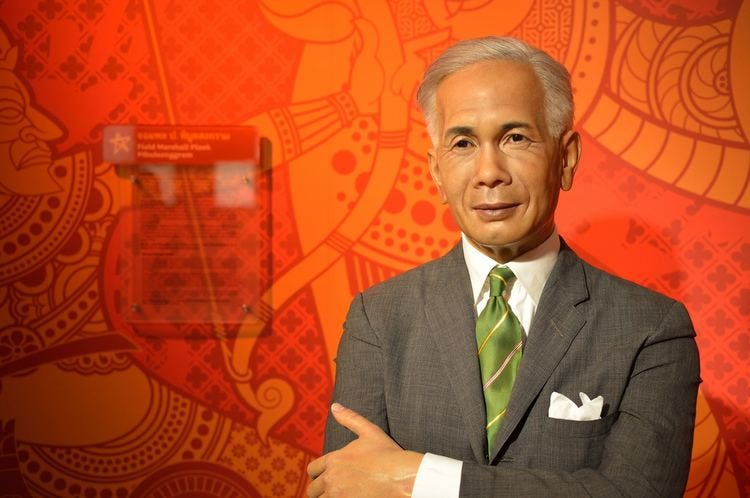
https://alchetron.com/Plaek-Phibunsongkhram

Meet the most successful progressive fascist in history: Plaek Phibunsongkhram.

Or “Phibun,” for the lazy foreign palette.

Phibun took power in the wake of the Siamese Revolution of 1932. A movement which he led militarily, toppling the centuries-old reign of an absolute monarchy.

In its place, Plaek installed a fascist military dictatorship in the image of Hitler’s Germany. He promptly joined WW2 as a junior partner of the Axis Powers. Then, he got to work building his modern state project…

Politically and militarily, Phibun inherited unilateral control from the Siamese royalty. Combine that with his popular support from the revolution, and Phibun’s supreme authority was virtually unquestioned.

Thus, he set his goals in cultural terms.

He was obsessed with building a new national identity around his new state project, which had to be done mostly from scratch. He started with renaming Siam to Thailand; combining an existing word for national culture, Ayutthaya, with the name of the state’s inspiration, Deutschland.

Ayut-thaya + Deutch-land = thaya-land = Thailand.

So Thailand had a name. However, it lacked one critical ingredient Phibun would need to continue following the fascist playbook: the Jews.

Thailand did not have the racial minority/majority tension necessary for him to galvanize a national identity along racial lines.

So Phibun went woke.

He quite literally made racism and slurs illegal:

“Use the name 'Thai' to refer to all Thai people, without subdividing them.” — Cultural Mandate 3

“Thai people must not consider place of birth, residence, or regional accent as a marker of division. Everyone must hold it to be true that all born as Thai people have the same Thai blood and speak the same Thai language. Place of birth or accent makes no difference” — Cultural Mandate 9

Terms like “northern Thai,” “southern Thai,” or “Muslim Thai” were strictly forbidden. Everyone was just Thai or not Thai.

Through his cultural mandates, Phibun demanded tolerance, politeness, and culinary excellence. Instead of railing against the Jews, he got up there like, “uhh… you need to eat with a fork!”

*crowd goes nuts*

“And eat well-rounded meals!”

*frenzied crowd turns into mosh pit*

“We are the Italy of the East!”
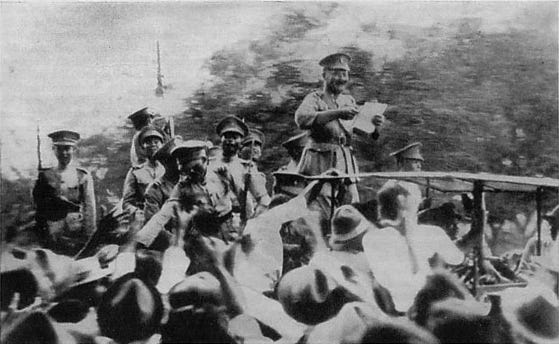
Siamese Revolution of 1932, Wikipedia

Phibun’s fascist regime is best known for these sorts of culinary-cultural reforms, each of which succeeded beyond all expectations. His vision of a modern, Thai identity, centered on its social unity and unique cuisine, would manifest almost exactly as he described it. Thailand indeed became “Oriental Italy.

Phibun idolized Mussolini and Hitler as statesmen, but clearly he wasn’t interested in all that ethnic cleansing bullshit… He just wanted social modernization for his people, respect from the international community, and something to eat other than rice every day.

To that end, Phibun requested a ‘national dish’ be invented for Thailand, using noodles; a new food which had just been introduced to Thailand through its other big brother, Italy.

When noodles hit a culture with centuries of experience dressing up rice to be appetizing… a star was born, ladies and gentlemen.

The dictator requested a dish, and his people brought him a franchise: Pad Thai.
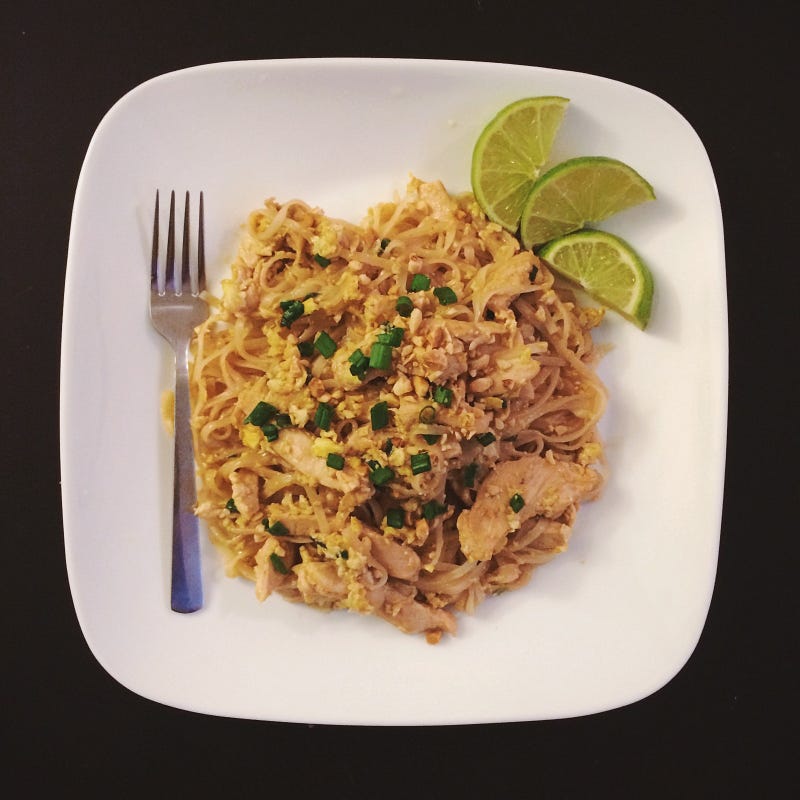
https://vs.co/in3onc4a

It was the perfect social and economic foundation for a fledgling Thai nation.

Every ingredient of Pad Thai was carefully selected from foods that were already produced in Thailand. As Pad Thai grew in popularity, domestically and abroad, it boosted demand for Thai agriculture in the process. The flavor profile is uniquely Thai, and it is no wonder why tourism to Thailand is growing in lock-step with the Thai food industry.

In his second term, having succeeded in defining the contours of Thai national identity, Phibun turned his focus back to the political: building a democracy.

And wouldn’t you know it: Phibun hit another home-run here too.

He honestly didn’t even put much work into it. He just declared Thailand was a democracy now, and everyone was like “cool.”

By the end of his reign, Thailand had completely shed its fascist feathers. Yet it retained many of Phibun’s cultural mandates, if not legally, then in the mind and spirit.

The Thai state still strictly regulates and subsidizes the Global Thai industry. It carefully curates the menu, furniture, decorations and even the workers you & I see at our local Thai restaurants.
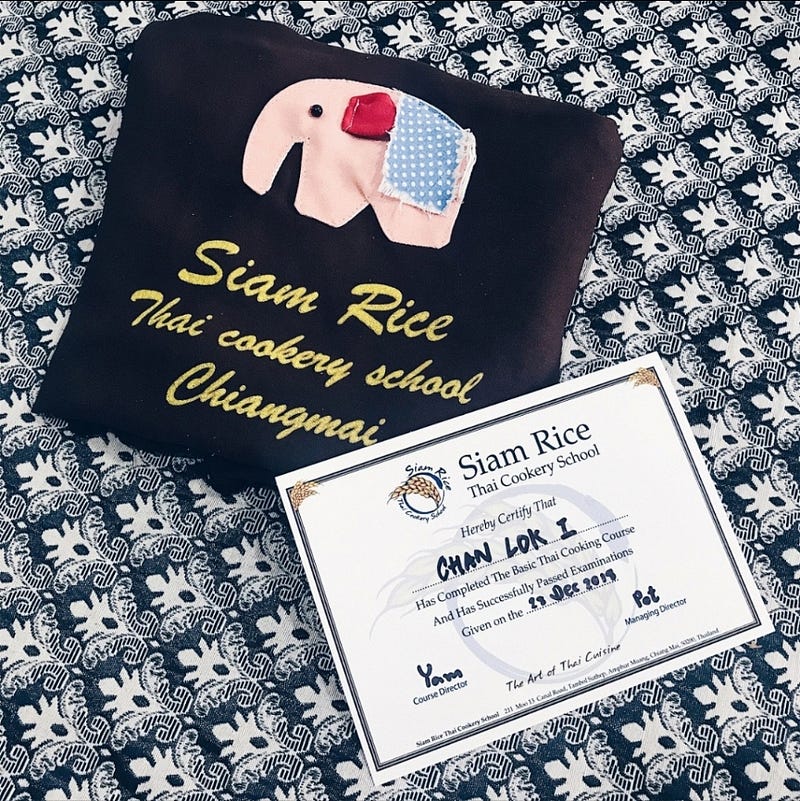
https://vs.co/gb7c3cs7

It sounds a little creepy, but it is all the rage among countries with ambitious PR goals, like Israel and Taiwan. They call it gastro-diplomacy.

That is all I’m at liberty to say without risking a visit from Global Thai’s censorship ninjas.

Love y’all 💚 Peace ✌️

Food
History
Culture
Travel
Unpopular Opinion
Recommended from ReadMedium