
Packing My Library with Walter Benjamin
My life in books
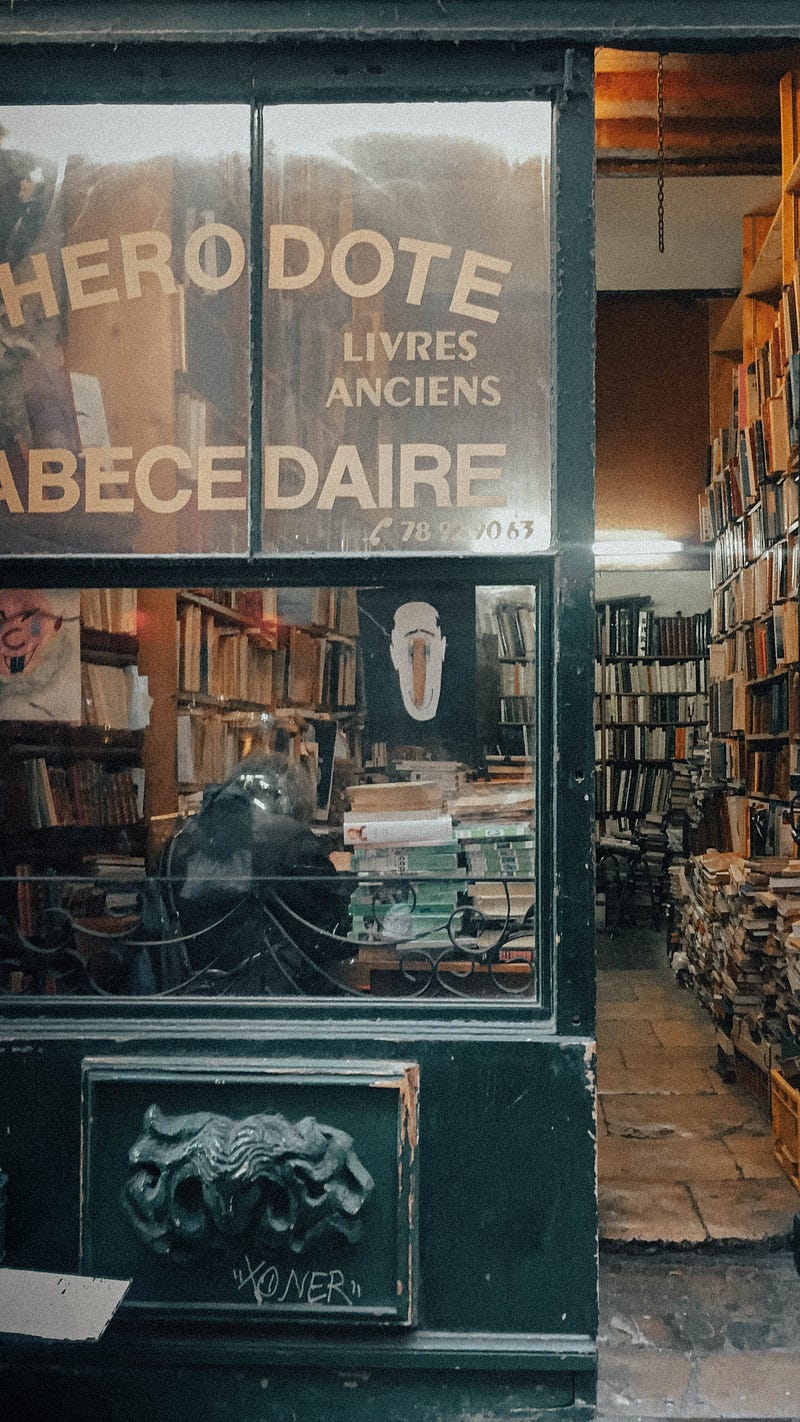
“I have made the most memorable purchases on trips, as a transient,” wrote Walter Benjamin in his 1931 essay, “Unpacking My Library.”
In this essay, Benjamin imagines the book collector as a spy on a literary reconnaissance mission. “Collectors are gifted with tactical instincts,” he writes, “their experience teaches them that when they capture a foreign city, the smallest antique shop can be a fortress, the most remote stationary store a strategic position.”¹ Benjamin’s book collection condenses his nomadic life, traversing Riga, Naples, Munich, Danzig, Moscow, Florence, Basel, and Paris.
“How many cities have revealed themselves to me in the marches I undertook in the pursuit of books!”
the collector exclaims nostalgically, imagining how the books salvaged from antiquarian shops could patch together a life ravaged by wars. Gathered together on the shelves of a single collector, Benjamin believed that books stood for more than their contents: inscribed with their collector’s mortality, they are marked by every way station through which the reader’s life has passed.
Benjamin’s Riga, Naples, Munich, Danzig, Moscow, Florence, Basel, and Paris are my Tbilisi, Dushanbe, Delhi, Hyderabad, Tehran, Damascus, Yerevan, and Grozny. In each of these cities, so far off the beaten path of the European metropolises that housed Benjamin’s nomadic soul, I have acquired the books that have come to constitute my life. And now the time has come to part with my collections, too large and various for any library to house.
Taken separately, these volumes — the Grimm Brothers in Chechen, full-color illustrations of Old Javanese Gold, the architecture of al-Andalus, the first feminist tract in Urdu — do not amount to coherent vision. Viewed collectively, these books are way stations for my soul. Although books with such diverse origins speak across their shelves as rarely as their subjects speak to each other, in my home they abide together like their authors, siblings of one womb.
Will our final farewell come in the form of selling, donating, or recycling? That their days with me are numbered. After having passed a year longing for my books, their caretaker is moving across the world, possibly for the remainder of her life. When she returns home, it will only be for visits.
And so she must relinquish her box of a house and that town called Yonkers on the edge of New York City. Her literary hero Richard Yates wrote his best novels here, but the authors who fill her shelves could not have conjured, let alone inhabited, this strangely quiet domicile.
Heidegger insists that our dwelling is in language, which is “at once the house of being and the home of human beings.”² This means that my books are the sum total of my existence.
Even when I have not enjoyed their physical proximity, my books have given me the stability that in former lifetimes was conferred by the concept of home. During my travels across Palestine, Iran, and India, remembering the locations of my books on their Yonkers shelves organized my life and gave it direction. The past lives in the present more lucidly thanks to visual memory. When I returned, I could still regard my abandoned home as a repository for my absent soul thanks to the order observed by my books.
These books are soldiers of a bloodless war. I have inhabited the mental spaces their spines have etched on my memory for the better part of a decade, a decade that has seen me through my PhD, my first job, a failed marriage, and the gestation and ultimately birth of the manuscript that will soon apply for admission to their community of words.
I have always been a stranger here, in Yonkers, crouched within my cramped apartment that awakens in the middle of the night to swells of speeding cars — teenagers enjoying the weekend away from school — booming across the asphalt like ocean waves against the rocks. I rejoice in the anonymity my paper companions afford, as they shelter me from dissolution, and furnish a moveable home amid my internal homelessness.
Assembled together on the shelves of a Yonkers apartment, these books have witnessed more middle passages than any single human is fated to see. Notwithstanding their venerable age, I have not always honoured their antiquity. Instead of holding them at a distance, like a disengaged bookseller who views his merchandise with an eye to its market value, or an interior designed who thinks only of how books look on the shelf, I have abused my books with too much affection.
I have suffocated them by reading intensively, by underlining, highlighting, annotating, by marking and bending covers backwards against the spine. By an excess of intimacy. Unlike in many libraries, my books exist not for display but in order to be consumed. As I inscribe their words on my soul, I brand my brain onto their flesh. So many of my adolescent annotations are illegible today, and yet they stare at me from beyond the grave of my former selves. Are erased inscriptions legible?
A kindred lover of books once told me of how, after she submitted her PhD dissertation, she ripped to shreds her copy of Plato’s Republic, hoping to purge herself of the Greek philosopher to whom she had dedicated the better part of her life in graduate school. When she awoke the next day from her nocturnal raging, my friend immediately sought out a bookseller who agreed to mend her shredded Republic, for a hefty fee. She then resumed her life’s work of interpreting the Republic, eventually publishing her first book on the very text she tried to destroy. After repenting of her initial rebellion, this fanatical book lover has not wavered from her dedication to the Greek philosopher.
To compensate for my violence, I bandage my children’s broken limbs with tape, and hope that the paper will soon mend the gaps and paste over the open wounds. In this intimacy that alternates between tenderness and abuse, I have merged more fully with my books than with any other object that has passed through my life. I caress their brittle leaves with fanatical affection.
Childless as I am, the books I have owned have become lives I never lived. I am a mother who gives birth to texts, hoping to give her children opportunities she never had as they navigate imagined futures that someday may become real. I am an overprotective mother.
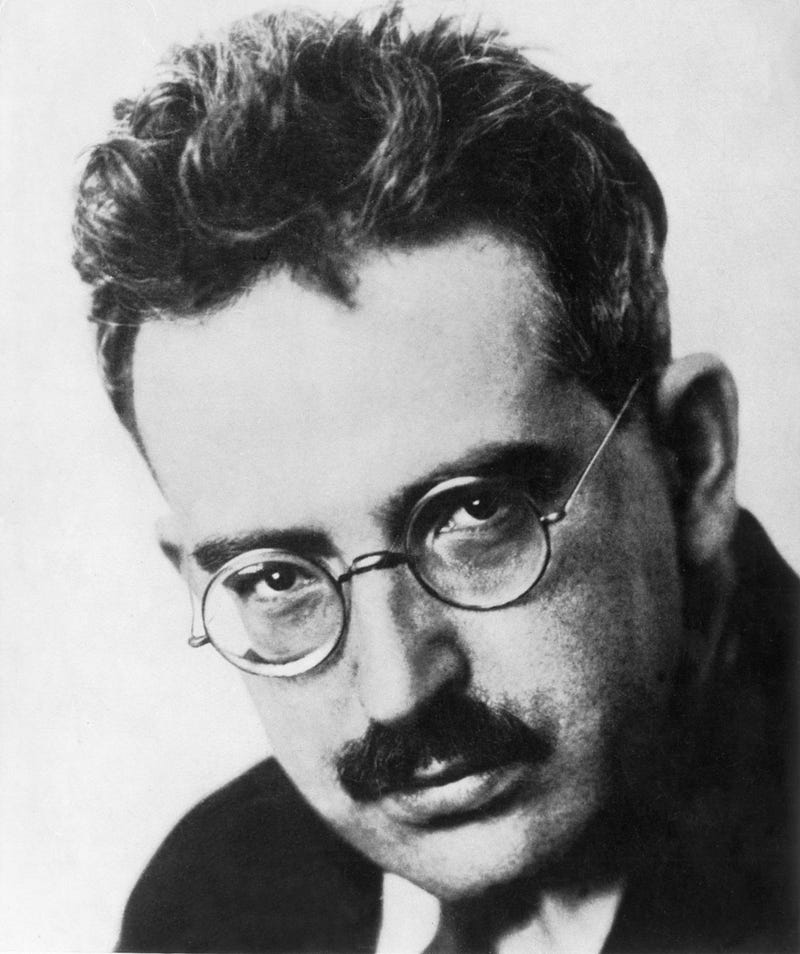
“Ownership is the most profound relation that one can have to objects,” Benjamin declares. Benjamin’s dictum might seem an uncharacteristic disavowal of the Marxist critique of consumption, were it not for the qualification of the possessor-possessed relation that concludes his thesis on ownership: “Not that they come to life in him; it is he who lives in them.”
Referencing himself in the third person, as though he had already become a book by virtue of having loved and collected them, Benjamin addresses his reader: “I have erected one of his dwellings, with books as the building stones, before you, and now he is going to disappear inside.” This declaration merges Benjamin’s essay into the book that would (in English) become Illuminations, the posthumous assemblage of his essays collected by Hannah Arendt. In the years since Benjamin’s death, Illuminations has achieved a fame more prodigious that any that Benjamin could have envisioned for himself. Like the paper assemblages in which my wandering soul has found refuge, Benjamin’s books could never have foretold their author’s posthumous lives.
Benjamin defines writers as people who write books because they are “dissatisfied with the books they could buy but do not like.” Critic though he was of everything that crossed his path, Benjamin’s writing is better suited for the essay than the monograph. By the time he wrote “Unpacking My Library,” Benjamin had in effect ceased to publish books. His turn to genres that could not be confined within the covers of a single book was one consequence of his aesthetic predilection for the fragment, as contrasted to the spurious whole.
Neither of Benjamin’s two published academic monographs — The Concept of Criticism in German Romanticism (1920) and The Origins of German Tragic Drama (1928) — served their author well during his lifetime. Notoriously, The Origins of German Tragic Drama was rejected when Benjamin submitted it as the most important element in his application in 1925 for the position of Privatdozent in the German Department at the University of Frankfurt.
“We cannot tenure Geist” (the philosophical principle that guided Benjamin and his predecessor, Hegel), explained the professor who rejected this work, which acquires greater influence every year. Like Benjamin, ideas like Geist may be more inclined to roan the world than to become entrenched in institutions, but they have longer shelf lives than their more established counterparts.
The minutiae that captured the book collector’s imagination are the peripatetic philosopher’s saving grace. Enraptured by minute objects others have discarded, by the detritus of mechanical reproductions, by second, third, fourth, and fifth editions, water-soaked paperbacks, and dog-eared hardcovers, the book collector is modernity’s archetypical antiquarian, bringing order to chaos and chaos to life. His “disreputable” existence is redeemed, not unlike civilization itself, when his collecting confers new futures on long-discarded pasts.
Benjamin’s specter of the collector’s ramblings through besieged cities — be they his Paris or my Grozny and Damascus — in search of the material artefacts of eras past suggests that a life sewn together from fragments may find an anchor for its restlessness in a world made of books.


Notes
¹ Walter Benjamin, “Ich packe meine Bibliothek aus,” Gesammelte Schriften, Ed. Rolf Tiedemann and Hermann Schweppenhäuser (Frankfurt: Suhrkamp, 1972), 4: 391. All quotations are from this essay. Translations are my own. For an English version, see Walter Benjamin, Illuminations, ed. Hannah Arendt (New York: Schocken Books, 1969), 59–67.
² Martin Heidegger, “Letter on Humanism,” in Basic Writings, ed. David Farrell Krell (London: Harper Perennial, 1993), 262.
Thanks for reading! You can find out more about me and my work here: