
Overhyped Ideas and Medical Advancements We Will Not Get to See
Cancer, Immorality, and Genetically Modified Humans
UCSF Magazine asked its alumni and faculty whether a medical advancement will be a possibility or fiction by the year 2050. They listed the following as fiction:
· End of cancer
· The rich will stay young forever
· Gene editing will create a new kind of humans
But I don’t think they will happen within our lifetimes.
Do these ideas sound cool? Sure. Am I being a killjoy? You bet! But if you believe they can happen, you are not far off either; our current advances give hope.
Here is the complicated answer as to why we won’t get to see all that.
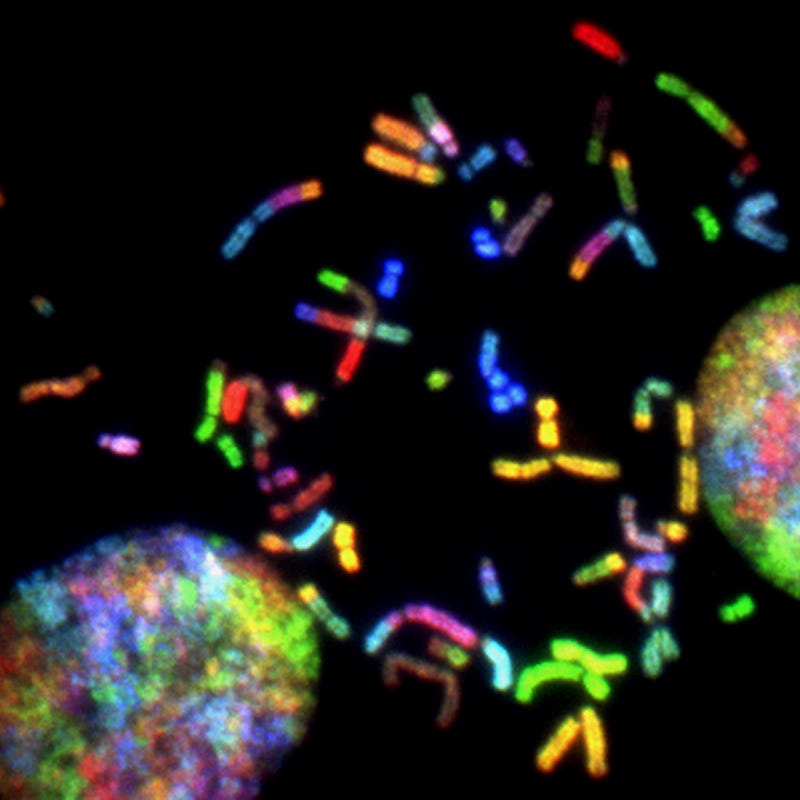
End of Cancer
Deciphering cancer is a labyrinthian task. Since it is born out of us, it is just as complex as us.
Cancer begins when a cell goes haywire due to a mutation. Some mutations are acquired; others we are born with, waiting to be expressed.
Once the cell has turned rogue, it evades the immune system. The cell starts multiplying unnoticed. Then it starts invading surrounding tissue and creates new vessels to feed itself.
By the time cancer is diagnosed, it had silently mustered an army. You target a specific mutation, it has other soldiers who don’t have it. If the main tumor is extirpated, it may have already made a base somewhere else. You throw a chemical bomb and decimate it and a mere 1% survives, it may finish what its predecessor couldn’t.
Cancer is nasty and relentless. It has beaten us at our own game. It can become immortal at the expense of our mortality.
How do you attack something that is constantly adapting, evolving, and changing? How do you attack something so unique, variegated, and complex? Most importantly, how do we target it without targeting ourselves?
The Rich Will Stay Young Forever
In the year 1951, a woman named Henrietta Lacks went to the hospital because of vaginal bleeding. Doctors performed a biopsy, and she was diagnosed with cervical cancer.
In the biopsy, the doctors discovered something unique in her cells: the cells kept dividing, and they wouldn’t die. In fact, her cancer cells are alive up to this day.
Cancer may hold a clue, or the secret even, to a longer life.
But before we can make centennials of us all, there is something we cannot yet understand: why and how do we age?
Advancements have been made and there are theories, but we are far from discovering the fountain of youth.
One such theory is that we are programmed to age. Without aging, it would be hard to improve as species. We would be evolutionarily static. So, as we age some genes are turned on so that we may give way to future generations.
A second theory is that we accumulate damage over time. Cell organelles wear out with time. The very act of breathing is noxious. Radiation (from the sun, for example) creates free radicals which end up damaging our DNA. To add insult to injury, literally, cell division is error-prone.
Additionally, as we age, our stem cells stop functioning.
Finally, our chromosomes are protected by caps called telomeres. After each cell division, they shorten and shorten until the cell just stops dividing.
In a study, mice with longer telomeres lived longer and showed less aging; additionally, they had less fat accumulation.
As we have seen, there are many factors contributing to our aging. If we solve one contributing factor, we may live longer, but staying forever young will not happen any time soon.
Gene Editing Will Create a New Kind of Human
The hype of gene editing started after CRISPR found new uses.
CRISPR is the immune system of bacteria. After a bacterium survives a virus attack, it incorporates the virus’ DNA into its own DNA. If the same virus attacks again, the bacteria will recognize it and eliminate it.
By editing their own DNA, bacteria create a database.
The amazing part is that CRISPR works in human cells too. Through this technology, the first pair of genetically modified humans were born in China. The twins were made immune to HIV.
The scientist who did this thought he would be given the Nobel prize. Instead, there was outrage and a backlash. This practice was premature, unjustified, and unethical. He was sentenced to jail.
Immunity to HIV was achieved by deleting the CCR5 gene of the embryos. This gene codes for a co-receptor on the cell membrane. HIV exploits this receptor to enter the cell and multiply. If the gene is deleted, no receptor is made, so no entrance can be made. It renders the person immune to HIV.
Curiously, deletion of this gene also accelerates learning in mice and improves neuroplasticity.
Humans have created the first genetically modified human. It is fascinating and terrifying. But before you think that we are on our way to getting rid of all of our imperfections, there are limitations: not all genes can be edited.
According to the Broad Institute, scientists can insert, remove, or substitute up to 800 base pairs of DNA. Not all genes are that small, some genes have up to millions of base pairs.
In order to save space, our DNA uses a mechanism called gene splicing. This results in many genes in the same space. To know how to express a specific gene, instructions are also saved.
The base pairs are cut and pasted into different combinations to create different proteins.
Some cells are uneditable. According to the Jackson Laboratory, some cells don’t have the CRISPR machinery.
Finally, CRISPR is not 100% accurate. It may edit other unintended cells. And although this rarely happens, the consequences can be devastating.
Conclusion
As with all new medications and technologies, they must meet rigorous requirements before they can be tried on humans.
The whole process takes years. New therapies must be tried in cells, animals, and then more complex animals. Every step of the process is peer-reviewed.
Science advances fast, but these checkpoints slow the progress. This is for a good reason, to make sure that no one is cheating or doing anything ethically dubious.
Genetics is a complex field. I hope that this article gives you a glimpse of the complexity of our bodies.
Bibliography
https://magazine.ucsf.edu/what-will-health-and-medicine-look-2050