
Overconsumption, Overconvenience, and Overstimulation
How media companies keep us engaged and how to break free

For many of us in the Western world, our days probably look eerily similar: we wake up, we check our phones. We eat breakfast, we scroll through our rotation of apps, usually social media or the news. We get ready for work, we check our phones again. We get to work, and depending on the nature of our days, we may check our phones between a couple to a few hundred times before lunch. We eat lunch, we again scroll through our rotation of apps.
To an outsider, it would be fairly obvious: we’re all either in love with or addicted to the bricks we keep in our pockets. Probably both. And while it’s true that today, U.S. adults are more connected than we’ve ever been with a whopping 97% of us owning cell phones (and 90% own smartphones) compared to just 35% in 2011, in other ways, we’re more disconnected than ever.
Through TikTok’s influence on consumption trends, Amazon’s ability to bring you new products without you having to so much as stand up, and digital media keeping you stimulated at all costs, we’ve entered a stage in our society where giant companies make money off of convincing us to buy things we don’t need and keeping our attention for as long as possible. It’s terrifying.
Overconsumption

The latest craze in overconsumption has to be the Stanley Cup. Videos of people scrambling for newly-dropped designs keep going viral, emulating early 2000’s Black Friday hysteria. People are showing off their cabinets, decked out in dozens of these cups originally designed to be an alternative solution to single-use plastic bottles for users to bring outdoors and last a lifetime. Children, too, have succumbed to the trend, vilifying those who haven’t yet convinced their parents to buy into the latest cultural obsession.
And for what?
It’s a cup. It’s a durable, colorful cup that keeps drinks hot or cold for several hours at a time, not significantly different than the dozens of other cups on the market created by brands such as Yeti, HydroFlask, and Owala.
But before it was the Stanley Cup, it was the Dyson Air Wrap, then $2,000 Shein hauls, then jade rollers and gua shas, then whatever product influencers were hawking with the #tiktokmademebuyit tag.
Some say it’s a product of the pandemic. When we were all stuck at home, unable to spend our money on experiences and activities with others, we turned to objects.
In fact, some research shows that the pandemic caused an uptick in material goods as people turned to collecting more of the items that brought them joy. If one colorful cup brings you any amount of joy in a world that’s slowing inching more toward societal collapse each day, why not own 50?
When Stanley started doing project drops, those events typically reserved for high-end brands like Supreme and sneakerheads (or so I thought), they leaned into the scarcity mindset that makes something even more valuable.
Peter Danzig, a researcher and psychotherapist described it well when he said: “There is something so thrilling when somebody is waiting.” And once people see the item they’ve been waiting for and thinking about for so long, it “brings a rush of adrenaline and if they are able to get it — that’s dopamine.”
This scarcity mindset is an inherent aspect of capitalism. It comes in the form of supply and demand–when supply is low, demand is high; when demand is high, supply is low.
Overconsumption thrives when the supply, whether perceived or actual, is low. People always want to feel special and important, but especially now, after years of feeling stagnant, do they want that thing that no one else has.
But despite some material goods being hidden behind engineered scarcity, most other things are easier to get than ever. Thanks to services like Amazon and Uber Eats, we now get to live in a world of overconsumption and overconvenience.
Overconvenience
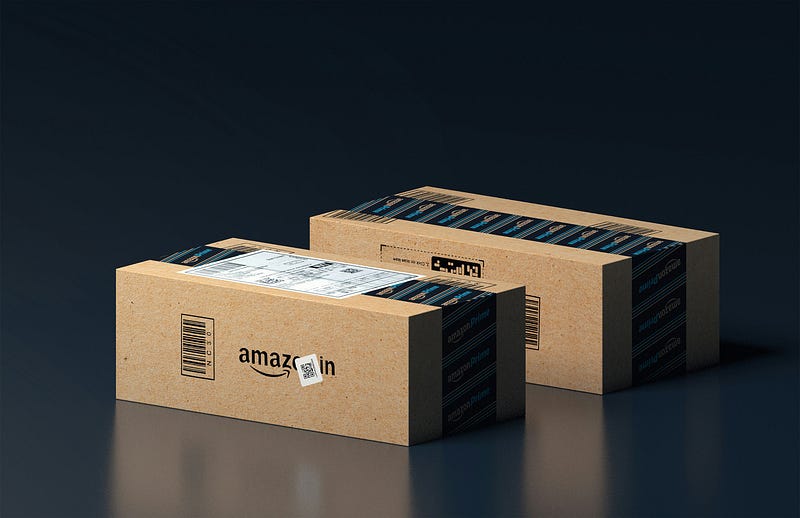
Evidence of humans buying and selling goods at markets dates back to the Babylonian era. However, this evidence is primarily archaeological, and written records on markets don’t start until eleventh-century Europe. Either way, for thousands of years, humans have been traveling (or sending a slave or servant) to separate locations to purchase food and other goods. In many places, this was part of a daily routine, and it certainly was more convenient than growing all of your own food. But convenience, especially paying others to do tasks that save you time, is and always has been reserved for the wealthy.
In 1916, the first supermarket in the US opened in Memphis, Tennessee. Now, people didn’t need to go to five separate locations for meat, dairy, fruits, vegetables, and grains. It was all in one place. The convenience factor levels up, and material goods become more accessible to the poor.
Fast forward to today, and another iteration of shopping has made obtaining material goods more convenient than ever: delivery services such as Amazon Prime, Uber Eats, and Postmates.
Now, at the click of a button from the comfort of your couch, you could have essentially anything you desire (and can afford) to your door sometimes within two hours, without ever leaving your couch. It’s an enticing idea, one that seems like it would be a great answer if it was 1990 and someone asked you “What would you do with a million dollars?” But you don’t need a million dollars to afford this convenience. In fact, you only need about twelve bucks a month.
Even with Amazon Prime’s new price point of $139 per year, many low to middle-income families consider it to be a necessary expense. And if you qualify for EBT, Medicaid, or other governmental assistance, you can get Prime for half price, which equates to just $6.99 a month. For families or those with mental or physical disabilities who genuinely don’t have the time, energy, or means to shop for necessary goods like food or baby supplies, Amazon Prime can be a positive and essential service.
For those who do have the means, it’s a convenient cop-out. Of the millions of Prime users, 49% order more than four times a month. So, half of Prime users summon a delivery truck to their houses more than once per week. And 13% of them order more than 11 times a month. That’s every third day.
It’s never been easier to consume. And with the new standard for delivery ETAs, it’s also never been easier for an individual to increase their carbon footprint without even standing up. In 2022, Amazon’s activities emitted 71.27 million metric tons of carbon dioxide. In 2017, it was 19 million.
When people are summoning Amazon delivery trucks to their homes two, three, four times a week just because they can, I start to wonder if we’ve gone too far down the convenience hole.
When we can have (almost) anything we want at our fingertips, we become conditioned to instant gratification. Studies show that those who opt for delayed gratification, such as the children who participated in the Marshmallow Test, are better off in the long run.
In the test, psychologists offered children a choice between one small reward immediately or two small rewards if they waited for a period of time. The kids who resisted the temptation to take the immediate reward, opting to delay their gratification and double their prize, were able to “achieve higher academic success, have better social skills, and exhibit greater self-control in their adult years.”
When children choose to delay their gratification, they’re more likely to be able to engage in sustained focus (which may impact their study habits), have greater time management skills, manage their impulses and emotions, exhibit patience and empathy, and set and achieve goals. All of these traits make forming relationships, engaging in healthy diets and exercise, and excelling in fields such as entrepreneurship, athletics, and the arts more likely to happen.
If we approach the convenience of services such as Amazon Prime through the lens of delayed gratification, it’s ruining us. The more often we opt for the quicker, cheaper, usually lower-quality item in the short term rather than waiting for an opportunity to get a higher-quality but more expensive item in the longer term, the more we may lose the grasp of our self-control, impulsive tendencies, and time management skills.
It’s ironic, isn’t it, that products and services marketed as “convenient” are meant to save us time, to help us with our time management? And yet what do we do with all of this extra time? Watch another episode on Netflix while we eat our Ubered dinner? Rotate between the Amazon app to Instagram to TikTok to X for a couple of hours as we wait for yet another unnecessary purchase to magically make its way right to our doorstep? Playing video games for hours on end since the grocery shopping is done and on its way to us in refrigerated bags?
Yes, the Western world is easier and more comfortable, but in many ways it’s overconvenient. Many people don’t stop to ask why or how a product they clicked on a few hours ago is now in their hands, or if they even wanted or needed it. As Jussi Pasanen says: “Convenience reduces us to automatons, repeating learned patterns of behaviour, without questioning them.”
Overstimulation
Remember the days of movie stores? Now, I don’t want to sound like a grouchy Boomer (I’m barely 26), but there was something special about the trip to the store, your mom telling you to pick out just one movie, watching the movie on Friday or Saturday night, and returning it by Sunday morning.
The effort to get it made it special.
And sure, it was a lot of effort. But to go through all of it to end up snuggling into the biggest blanket you own on the couch with popcorn and hot chocolate on hand, pressing play on the DVD player remote, was sweet, sweet bliss. And then the way we consumed media changed.
First, Redbox came along. Now, you didn’t need to go all the way to the video store. There was one in our local supermarket. Watching movies got more convenient.
Soon after, Netflix rose to popularity. DVDs were mailed directly to your door. Watching movies got more convenient.
Now, we have a dozen plus streaming services making any movie or TV show watchable at any time. No more waiting, no more returning DVDs, just instant access whenever and wherever you want it.
On one hand, it’s nice to be able to think of a movie and watch it within seconds. If I have a hankering to watch Clueless in the middle of the afternoon, I can and I will. But there’s a downside to instant access to content. It’s called digital overload, or overstimulation, and it happens when we spend too much time consuming media and information.
With any movie, song, video, or other piece of media at our fingertips at a moment’s notice, it makes us more likely to turn on a screen and consume it. It satiates that itch then and there, and gives us a hit of dopamine. But when we’re spending 13 hours a day, on average, on our devices, it can leave us feeling overstimulated, which can come in the form of irritability, anxiety, mood swings, poor sleep, and vision problems.
Not to mention the fact that the software we use is built to encourage us to stay on our devices. Think of the new algorithmic order of content as opposed to its former chronological order, the autoplay feature on streaming services, and the endless scroll on social media. (Ironically, the inventor of the endless scroll now regrets it.)
We’re spending more time on social media, and yet, we’re lonelier than ever. We’ve started binge-watching our favorite shows because it’s convenient and familiar, but we’re experiencing “behavioral addictions, sleep problems, sedentary behaviors, and psychological distress (e.g., depression, anxiety, loneliness, and stress).” We’re “doomscrolling” and consuming information at rates never seen before because it simply wasn’t accessible before, and it’s making us fearful, regretful, and struggle to make decisions.
When any content is available at any time, and media companies are making it easier than ever to keep consuming content, we have to wonder: at what point is it too much? And at what point are we strong enough to stop?
The solution

I can admit, this all sounds pretty bleak. The world will only get more convenient, there will only be more content to consume, and media companies are getting better and better at keeping you stimulated. But there is hope.
The antithesis to overconsumption, overconvenience, and overstimulation is simple: creation.
Ever wonder why your best ideas always come to you in the shower, or when you’re driving? It’s because your brain is, for maybe the first time in your day, not consuming information or content or media. When we’re away from our phones, even if it’s for a ten-minute commute, our brains can breathe again, our minds start to wander, and new ideas abound. (Just having your phone within reach, let alone actually using it, can significantly reduce your cognitive capacity.)
So, when you’re feeling irritable after doomscrolling on social media for two hours, or realize you haven’t left your couch all evening for several days in a row, start by distancing yourself from digital media.
Leave your phone at home and go for a walk. Do some yoga. Stare at a wall for five minutes. Anything to give your brain a break from the constant deluge of convenience and content.
Then, create.
Hopefully, when you allow yourself to be bored again, you’ll start to remember the things that brought you joy as a child. Maybe it’s your love for painting. Maybe it’s doing a puzzle. Maybe it’s baking cookies.
It doesn’t matter what it is, as long as you’re creating something just for the sake of creating it. Don’t care about the final product, just enjoy the process. It’s this idea that cements creation as the antithesis of overconsumption.
So much of our current culture is focused on being productive for the sake of capitalism. To be productive is to be worthy of social praise (how many times have you heard someone brag about how busy they are?), to make money, and to “be good” at work. But what if you created something just to say you made it? Not to turn it into a side hustle or to complete a project at your job. What if it existed because it makes you happy?
Paint that picture, and make it imperfect. Do that puzzle, but take forever to complete it. Bake those cookies, and let yourself not care if they don’t turn out that great.
What matters isn’t the final product. In a world forcing products and content down your throat, it’s the fact that you gently, lovingly offered something in return.


