
Overcoming Decision Fatigue. The Secret to a Focused and Successful Mind
How to Decide with Confidence in a World Overflowing with Options

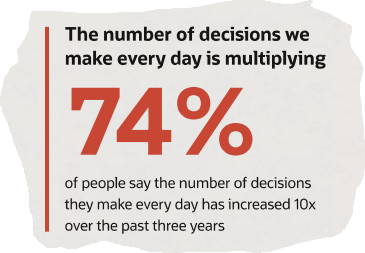
Have you ever felt overwhelmed by the number of decisions you face every day?
They're everywhere. In our work. In our homes.
Overwhelming, right?
That's what I thought too!
The noise in our heads?
It's getting in the way. It's messing with our decisions.
And gaining mental clarity isn't just something nice to have — it's a must.
According to Barry Schwartz in 'The Paradox of Choice,' having too many options can make choosing tougher — and, weirdly enough, less fulfilling.
He articulates this perfectly:
Learning to choose is hard. Learning to choose well is harder. And learning to choose well in a world of unlimited possibilities is harder still, perhaps too hard.
We live in a fast-paced, data-driven world.
Here, endless choices can feel liberating at times but also — ironically — trap us in indecision and regret.
Imagine standing at a crossroads with way too many paths before you.
We've all been there, right?
Too many paths, too many possibilities, too many potential unfulfilled promises.
Feeling stuck already?
So, how do we get through this hurdle?
How do we define a clear direction in our lives, both personally and professionally?
Some real talk and practical steps.
Simplify your choices
Just start simple.
Take Steve Jobs and Barack Obama; they chose to wear similar outfits daily — simplifying frees up mental energy.
What did I do?
I copied them.
A personal uniform. Tee shirts, sweaters, pants. Same stuff, different colors.
What I'm going to wear is no longer a decision I make in the morning.
And I'm loving it.
Exercising? I love running but sometimes struggle to get going.
Solution: leave my running gear ready. No overthinking; just get up and go.
Simplifying is about removing friction.
It's about clearing up mental clutter.
It’s about creating space for more important decisions.
Prioritize and Delegate
Time is precious. It's so precious.
It feels like we're always running out.
The key? Prioritize and delegate.
Great decision-making starts with great prioritization.
It's not just about making choices; it's knowing what to choose.
Cooper.ai gets it — they transform data into a decision-making tool, helping businesses figure out what's crucial.
But what about your personal life? Staying healthy, friends, family, significant others?
That's where being mindful comes in.
As Psychology Today points out, being in the moment and aligning each decision with your big-picture goal is critical.
So what's your big-picture goal?
Your big-picture goal is like a roadmap helping you navigate life's twists and turns.
Don't have everything figured out yet?
Well — join the club. Neither do I. And it's perfectly fine.
It's okay to ponder your goals. No pressure.
Goals are supposed to evolve as you grow.
Embrace the journey.
I found that insightful quote in a blog and thought it appropriate.
Do not prioritize your schedule; schedule your priorities.
Build Resilience and Agility
Life's tough.
It's about understanding what is at stake for each decision. That's the essence of resilience and agility.
How do you build these, you ask?
Well — You step out of your comfort zone. Try new stuff.
Sometimes, it's as bold as moving to a new country.
I took that leap, moving from France to the U.S. with my husband, and, trust me, it was a game-changer.
Harvard Business School Online says it best — it means staying solid and adaptable in uncertainty.
They are not just fancy words.
This is how you survive in this wild world.
Now, let's talk decisions.
Some are like switching lanes on a highway — reversible, easy.
Don't like your new coffee flavor?
No biggie, switch back.
But then, there are those decisions that are — heavier, leaving a mark, irreversible.
These are the choices that really shape our lives.
Take moving to a new country — heavy, scary, yet transformative but somewhat irreversible.
It shows us just how impactful these hefty choices can be and how tough it is to backtrack once you're deep into a life-altering decision.
Resilience is the key in persisting through decisions that have long-term consequences.
Agility is crucial in adapting to the outcomes of more flexible, reversible decisions.
When stuff gets tough, do you fold or do you find a way to make it work?
Wrapping up
In the end, it's not just about decision strategies or mental clarity.
It's a mindset game.
We can achieve this in many ways:
- By simplifying our choices
- By figuring out what matters most through prioritizing and delegating
- By staying strong and flexible with resilience and agility, adapting to life's constant changes and demands
Barry Schwartz's wisdom in 'The Paradox of Choice' echoes through our discussions.
Stop chasing the best. Sometimes, good enough is — well — good enough.
Because, most likely, it really will.
So, what small step can you take today to combat decision fatigue?
Whatever it is, start small, but start now.