
How to Overcome Anxiety Sustainably
Awareness of the amygdala and neocortex functions, use them creatively to cope with anxiety

In this article, I want to share my personal experience for understanding the anxiety creating situations and highlighting a framework and a pragmatic approach to reduce symptoms and prevent the causes. I used this framework and approach successfully in my life. Therefore, an awareness of this framework and its approach may worth consideration.
Anxiety is a natural human condition. It is created by the amygdala, which is an embedded component of the limbic (emotional) brain. The primary function of the amygdala is to maintain survival for life.
Understanding the primary function of the amygdala is essential to cope with anxiety. The following illustration provide the location and bidirectional connection of Amygdala to other critical brain regions at a high level.
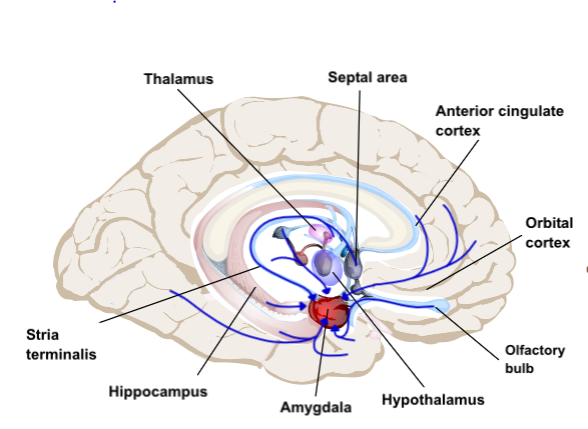
Even though the amygdala has many functions such as dealing with fear, in this article, I’d like to discuss the anxiety creating aspect of the amygdala. It is useful to distinguish fear and anxiety.
Fear and anxiety are two different conditions. For example, fear is created for known dangerous situations; however, anxiety can occur in the absence of real life-threatening situations when no fear is associated. Anxiety can occur when there is no danger. Therefore it is paradoxical situation for human life.
Let me emphasize upfront, amygdala is not in our conscious control. This constraint makes it even more paradoxical for our lives.
Amygdala is not a cognitive system. It is an alert system.
In other words, we cannot control the amygdala directly with our thoughts. It is not part of our thinking brain. However, knowing the function of the amygdala, its mechanism, and the anxiety symptoms it manifests, can be empowering.
Having said that, and to further complicate the situation, Amygdala can also be triggered by the alerts from the neocortex. This is a topic for another article. To stay within the scope of this article and give you my key message, my focus is on the amygdala initiated anxiety.
The amygdala observes and senses the risky situations and perceptual danger which may affect our survival. I am not referring the real danger here. The possibilities coded in the fabric of amygdala. This point refers that each person’s amygdala code can be different based on their life experiences.
The amygdala is a hard coded system in our limbic part of the brain with common life threats such as a sudden noise, extreme physical conditions, or sufferings.
The amygdala has strong and fast neural connections to our nervous system, endocrine system, and the vital organs. Amygdala acts much faster than the neocortex does.
By the way, the neocortex is a specific part of the cerebral cortex. It is the most recently evolved thinking part of the cortex. For the rest of the article, I use the word cortex to abbreviate the term.
We are only able to experience the symptoms after the amygdala is activated for some conditions and reasons. The cortex has no clue during the activation period. Our cortex runs much slower than the amygdala. Therefore, we don’t have direct control over the amygdala.
On the other hand, our cortex, which is part of our cerebral (cognitive) system, is within our control. By using the capabilities of the cortex, we think, rationalize, plan, and execute actions.
Ironically, our valuable cortex has no idea about the working mechanism of the amygdala. There is no direct connection between cortex and amygdala. The amygdala overwrites the rules and had no time to wait for the context to come up with some solution. Our thinking brain only knows the amygdala generated alerts when our anxiety symptoms start manifesting.
Therefore it is not always possible to control our anxiety when it is being triggered. Without knowing this biological fact, anxiety can be seen mysteries. In reality and simplest terms, anxiety is a feeling generated by activation of the amygdala alerts.
The good news is that we can tame the overactive amygdala to some extent. This is within our control and there are proven techniques.
A well-known technique to tame the amygdala is gradual exposure to the anxiety creating conditions and situations. For example, if driving in heavy traffic creates anxiety for us, we need to continue driving at least in a short period of time by being aware of the symptoms. Being aware of these feelings and using our thinking brain to rationalize the situations can start re-wiring the amygdala.
The repetitive exposure approach can help us continuously re-wire the amygdala by creating new neural pathways over a period of time and result in reducing the over-activation in those conditions and situations.
Even though the cortex (our thinking brain part) cannot stop the amygdala from generating anxiety instantly, the repetitive exposure approach can be a powerful tool to tame the amygdala.
One practical way to use our thinking brain is observing our anxiety patterns, recording them, and address the symptoms with a mindfulness plan. This procedure can help re-write amygdala to an anxiety preventative state.
Let’s be aware that the causes of anxiety can be illogical because our amygdala does not operate based on logic. The amygdala works on images, sounds, and biological reactions which can pose a risk or danger to our survival.
For example, a sudden scary sound or an appearance of a hazardous object out of our awareness can activate the amygdala instantly. As soon as the amygdala senses a dangerous situation, it releases neurotransmitters and potent hormones to run, to fight, or to freeze.
These high volume of hormones in our blood stream are the root causes of our anxiety.
For example, excessive adrenaline, epinephrine, and cortisol in the bloodstream can be the leading causes of our anxiety. These hormones energize us to be alert, ready for run and fight.
When we are aware of the anxiety-producing hormones increasing in our bloodstream, we can use our thinking brain to take the actions.
For example, physical exercise can burn excessive adrenaline and provide us with temporary relief. Therefore, physical exercise, especially in aerobic form, can be an effective strategy to cope with anxiety to some extent.
Mindful muscle relaxation especially with visualization techniques can also help us reduce and balance these hormones hence can be effective to deal with anxiety.
These practical techniques can help us to move from the run and fight mode to a stable state.
The most useful technique from my experience is taming the amygdala by using capabilities of our cerebral system.
To this end, gradual exposure to the anxiety creating situations with cognitive skills such as mindfulness, positive self-talk, questioning the perceptions, and living in the moment with full attention and focus is a proven approach.
This pragmatic anxiety coping technique is commonly used by the CBT (Cognitive Behavioral Therapy) practitioners successfully. Many studies proved that the use of CBT could be as effective as anxiety medications. In my view, CBT can be more important as it addresses the root causes, whereas medication only addresses the symptoms.
By taking personal responsibility and using these practical techniques, we can be our own therapist for coping with the anxiety to some extent.
Of course, anxiety is a broad, serious, and complex phenomenon with still many unknowns; hence the chronic and overwhelming conditions certainly require assistance from professionals.
However, knowing the root causes of anxiety and taking personal responsibility to tame our amygdala, and address the symptoms by creatively using our neocortex can be very effective to cope with mild anxiety.
Reducing anxiety can alleviate stress and increase the quality of our lives. With reduced anxiety, we can taste the sustainable joy and experience a meaningful life.