
Over 65 Looking for Work Experience
Welcome to my first story on Medium. I am more nervous than I imagined I would be. Until now, I have been enjoying reading and responding to different articles and trying to understand how to write something interesting — both to me and to the reader. Many of you have clapped or written kind replies to my short posts and I now have nearly 100 followers, so I am encouraged to move to the next stage and try to tell you a story of my own.
This story is about why, after ten years being retired, I took a part-time job and then three months later, I was very happy to resign. I don’t yet know what lessons I might learn from my experience that I could pass on, but for now it is enough for me if you just enjoy the story.
You might think that at my age (68) I should know better but I am always looking to try something new. Having done the morning dog walks

and enjoyed a sunny breakfast on the terrace,
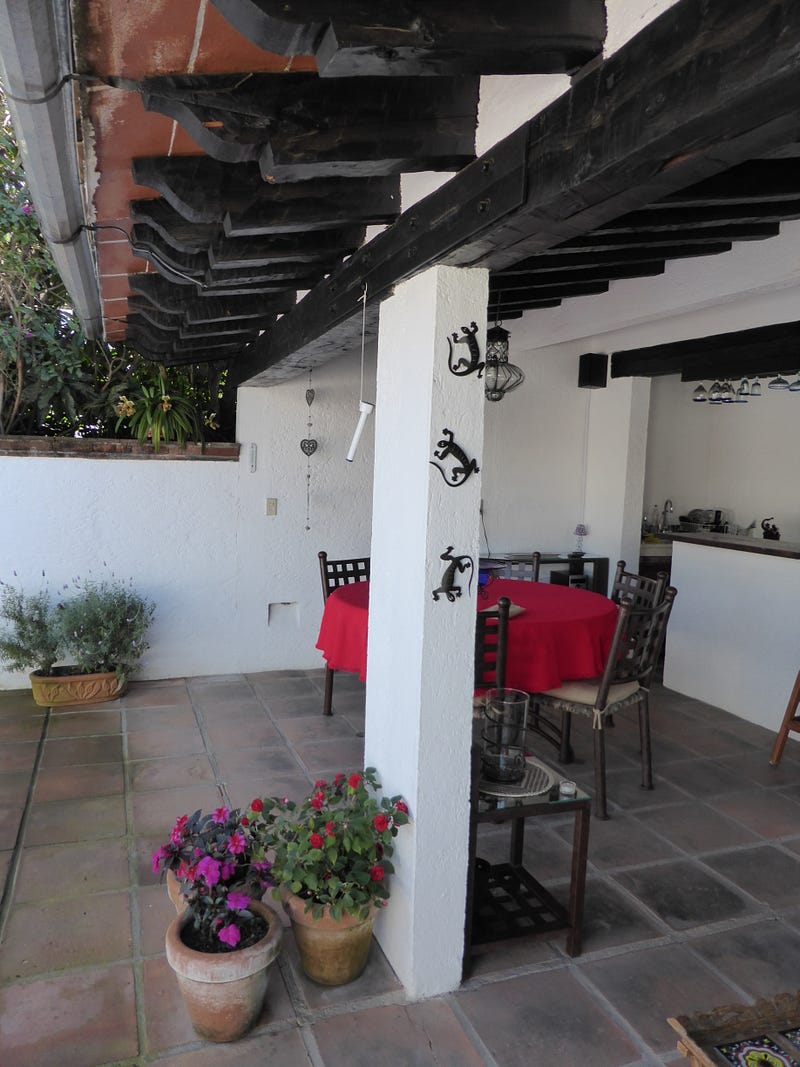
I was checking emails and that was when I saw the advert. Did I have
· A computer (✔︎)
· A reliable internet connection (✔︎)
· A suitable quiet space to work (✔︎) …(well, doggies permitting)
· Time available (✔︎)
· A good knowledge of English and another language (✔︎)
· A wish to earn money working from home (✔︎)
Well, yes! And so it was, almost before I knew it, that I became a translator of academic course materials from Spanish to English.
I was full of optimism and energy. After two stagnant years of Covid and another year dealing with family health issues, I was finally going to do something new that I enjoy.
Translating is fun! I like playing with words and exploring meanings. I also like puzzles and intellectual challenges. Translating combines these perfectly. Reading an author’s words and trying to understand all of what they want to communicate is fascinating. Why this word or that phrase? Why this image, this metaphor or that particular verb? As writers know, the words that end up on the page are at best an approximation of the thoughts and feelings they are intended to communicate. And, interestingly, some authors of academic course materials seem not to be entirely sure themselves of exactly what they wish to communicate to their readers.
But there’s more. Having understood as much as possible of the author’s intentions, the real fun is trying to find appropriate words in English to convey that same meaning. Other than for simple phrases, there is perhaps no such thing as a “correct” translation, only “worse” or “better” translations. A good translation is clear, unambiguous and easy to understand, even if, as in the work I was doing, some of the concepts being taught were inherently complex. As well meeting professional standards, I was also thinking of the students around the world who might be studying my English translations, perhaps with English as their second or third language. I felt I owed it to them to produce course material in correct, clear English that communicated the intended meaning as well as (or sometimes even better than) the original.
Now, those of you who are still with me will probably have realized that my vision of paid translation work, as outlined above, is hopelessly idealistic compared with the reality that I was soon to encounter. I was dismayed but not particularly surprised to discover that the organization I was working for had no interest whatever in the subtleties of English nor in my carefully crafted paragraphs. What they wanted was fast delivery, preferably by yesterday. While my contract said that I would be “offered work” with deadlines to “be agreed”, the reality was that I was assigned work with fixed deadlines, some of which had already passed. Needless to say, this was not good for me. As a Brit, I hate being late for anything and cannot abide missing deadlines. As a retired Brit looking for interesting work in my spare time, the last thing I needed was to be put under time pressure. This threatened to turn an enjoyable activity into a race against the clock, a triumph of quantity over quality. My guiding question in retirement so far has been to ask of any new idea: “Will this simplify or complicate my life?” and to accept only those things that simplify. My new translation job was clearly going to fail this test.
Nevertheless, I persevered (Brits don’t like to give up, either!) and between April and June translated 16 units. A unit is a course booklet of 8–12 pages, plus two slide presentations, some audios and two multiple choice tests. This isa lot of material and I was working long days and weekends to meet the tight deadlines. But I was enjoying myself and learning interesting things until, that is, I thought about the question of payment. Fortunately as it turned out, I was not doing this job primarily for the money, even though these days some extra would certainly come in useful. Nevertheless, as Thomas Carlyle said:
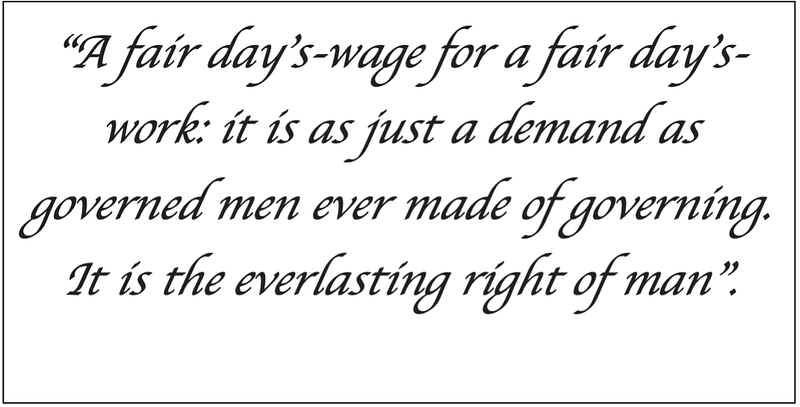
And, I might add, of retirees looking to use their skills and give a boost to their pension.
In June, I stood back from the work long enough to register that I had not been paid anything for the previous two months. This is because this employer pays translators for every 25 units completed and, by that time, I was still 9 units short. At my current pace, I realized, l would need another two months to reach the magic 25 units and trigger a payment. But then I made a short calculation.
The rate of payment was around US$35 per unit so 25 units would pay US$875. But, if I needed 5 months to complete 25 units, I would earn only US$175 per month. My hourly pay looked even worse. Translating one unit took me, on average, 20 hours and that meant an hourly rate of US$1.75. Here in Mexico where I live, that is just about the minimum wage. Surely this could not be right. What was going on? I needed to know more.
The employer was reluctant to give me any information about how they calculate rates of pay. Finally, however, I was told that most translators finish 25 units each month, quite a lot finish 25 units in two weeks and the slowest in 6 weeks. My problem (this was never said explicitly of course) was that I am far too slow.
Was this a case of ‘never mind the quality, just deliver!’ I think so. Although it is hard to imagine and therefore difficult to believe, completing 25 units in two weeks would mean, on average, two units per day or one unit in 4 hours. It takes an hour or so to locate, download and check the materials to be translated, another hour to find audios, translate them and send them for recording, leaving only two hours for an 8–12-page booklet and a complicated presentation of 80+ slides. If (and it’s a big ‘if’) it could be done at all, it could only be done by robot, AI or machine translation with little or no human intervention. Maybe so. Maybe translators are also destined to be replaced by machines.
And that is why I resigned. Not simply because I would be unable to earn anything reasonable from this job. More important than that, I cannot identify with nor work in an environment where quantity is so blatantly incentivised over quality. For me, good translation is a question of judgement, of emphasis and of empathy, seeing your work through the eyes of a student in a far-off country and making whatever adjustments you can to simplify their task. That is, I suggest, a far cry from mechanically delivering 8 pages per hour and leaving the reader to make whatever sense of them they can.
What have I learned? I am sad not to have been able to succeed at my first paid job since 2012. It was, I suppose, a kind of fitness test for me. While I fully subscribe to the view that age is no barrier, I now know that I am very different from other, presumably much younger translators, who work at speeds that I find impossible, never mind undesirable.
If we in the older generation have anything useful to offer, it is not speed of delivery or rapid turnaround. Perspective, reflection, patience, insight, experience, a nose for quality — these are, perhaps, areas where we have a competitive advantage. I wonder whether there might be a job somewhere that requires these talents. I’ll keep looking and let you know.
Thanks for reading and, if you made it this far, thanks for persevering. Please let me know what you think in the comments below. I’d like to keep writing and I’ll enjoy it all the more if I know that there is an audience out there with whom I can engage and from whom I can learn. Until the next time.