
Over 2 Million Women Were Assaulted During the Battle of Berlin
The unheard struggles of women during WW2
During the World War II, women in Berlin took on roles that were crucial for keeping the city functioning. They worked in factories, making weapons and ammunition. Some also served as nurses and looked after the wounded soldiers and civilians.
These women also managed households, looked after children, and dealt with the constant threat of air raids. They made shelters in basements and cared for their families in these dire conditions.
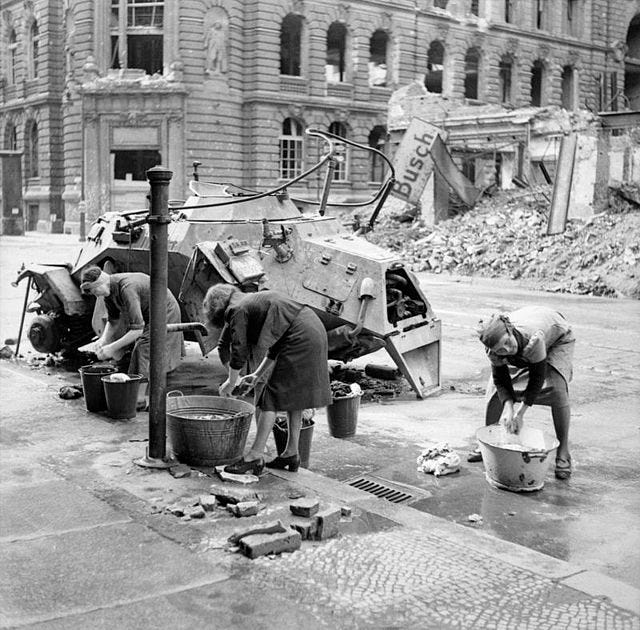
The Siege of Berlin
As World War II drew to a close, Berlin found itself at the heart of a fierce conflict. The Battle of Berlin began in April 1945 which was among the last major battles in Europe during WWII. Soviet forces from the east and other Allied forces from the west converged on Berlin.
The streets of Berlin turned into a battleground. Bombings became more frequent, and buildings crumbled under the constant attacks. The noise of artillery and explosions filled the air. During this siege, the situation for women in Berlin grew desperate. The danger was not just from the bombings but also from the soldiers who were closing in on the city.
Atrocities and Hardships Faced
One of the most horrific realities was the widespread sexual violence committed by soldiers. Many women, from the age 8 to 80, endured sexual assault and rape. This violence left deep physical and emotional scars.
It is believed that over 2 million women had been subject to horrific ordeals at the hands of the intoxicated Red Army soldiers. The women of Berlin were being treated as spoils of war, who the soldiers took their anger and rage out on.
What Did The Women Do?
Many women had to disappear during what they deemed was the ‘hunting hours,’ where there Soviets would look for any woman. They saw the safer hours as the early morning when they were hungover and sleeping, and many mothers gave themselves up to save their daughters.
A number of women were forced to try and become friendly with one Soviet soldier so that they would protect them from other members of the red army. For example Magda Wieland a 24 year old actress was dragged from a cupboard where she hid, and a soldier from Central Asia found her. She offered to be his girlfriend if he would protect her from other Russians, but instead he boasted to his friends and they then assaulted her.
Men who tried to defend women against soviet attackers were shot dead and were killed in brutal ways. Besides this, women also faced the constant fear of losing their loved ones and their homes. The psychological toll of living under such conditions was immense, with many struggling to cope with the trauma and fear that filled their daily lives.
Rebuilding Lives and Memories
After the Battle of Berlin ended, women faced the enormous task of rebuilding their lives from the ruins. The city lay in devastation, with many homes destroyed and families torn apart. Women had to pick up the pieces, both literally and figuratively.
In the years following the war, these women played a key role in reshaping Berlin. They shared stories of their experiences, preserving the memories of what they and the city had endured. Many women who live in Berlin still today can recall the horror and the screams of those nights.


