
Our Tribal Ancestors Were Peace Loving Vegan Gods of Creation
Only relatively recently — around 10,000 years ago between the Tigris and Euphrates rivers in what is now modern Iraq — people commenced what anthropologist Jared Diamond describes as ‘the worst mistake in the history of the human race’: the advent of agriculture. Agriculture with its thirst for land and its expansionist propensity for war, slavery and oppression spread like a pandemic across the globe, causing displacement of populations from invaded tribal lands, which generated a domino effect of exodus and conflict with communities residing in other tribal lands, creating even more displacement. An outcome of this population upheaval was the loss of detailed localised knowledge of the land (particularly in relation to regional flora), knowledge previously diligently passed by tribal communities from generation to generation over eons of time. Tribal displacement disrupted the autochthonous ‘spirit of place’ that grounded tribal consciousness to particular, intimate regions of geography. Once physically removed from the spirit of place, the human psyche became estranged from the deep sense of belonging that had previously rooted it to the land and to all the diverse marvels of life the land contained. Detailed anthropological documentation of the Australian Aboriginal tribes — the last great continent-wide network of tribes to be dismantled by European colonization — grants us an insight into the Wikipedic-type knowledge of localized ecosystems held in the vaults of the tribal human memory. Not one sub-genus of shrub or miniscule insect or innocuous fungi went unnamed and unconnected to the human narrative. Much of this immense knowledge has now been lost. The global ancestral chain of oral wisdom stretching back tens — possible hundreds — of thousands of years has been broken by the realpolitik of European imperialism. A great dumbing down of human awareness of the natural world was one of the tragic implications of global tribal dispossession, a dumbing down we only now through concerted efforts to re-classify the natural world, are attempting to recover from.
Irrespective of when, where and to what extent principally egalitarian, matriarchal tribal communities across the world were impacted by the violent expansionism of hierarchical, patriarchal, agricultural/pastoral cultures, we all share a tribal ancestry whose antiquity dwarfs any other manner of existence. Humans have been living as the complex homo sapien sapien for a minimum of 60 000 years. It would be remiss of us not to explore our deep-rooted tribal past that dominates those 60 000 years to try and work out who we are and how we have behaved for the majority of our existence.
One means of gaining information on our tribal past is to observe those who have managed to retain a semblance of their tribal social organisation and lifestyle into the present. It is however, also important to acknowledge the limitations of extrapolating a picture of the past only from contemporary tribal communities. One reason why certain tribal communities have been able to survive with cultures somewhat intact is the remoteness and harshness of their location. Thus we have Arctic and desert tribes being among the few in situ survivors of European colonisation. The lands these tribes occupy/ied invariably were/are isolated and/or low resource regions and the least sought after by colonisers…unless of course there was gold found there, in which case mammon-fevered Europeans would be swarming the place like flies over shit. The archetypal minimalist tribe living in specialized regions such as deserts and polar tundras became accepted as the norm for how all tribal communities once existed. This has contributed to the skewing of our understanding of our tribal past.
In contrast to the least sought after land, pre-colonial tribal communities flourishing in resource rich areas were usually the first to be dispossessed of their lands and their social order rapidly, violently and comprehensively dismantled by European invaders. In these circumstances, the opportunity for any detailed record made of their culture and society was limited. Information which did survive the colonial firestorm was often deliberately distorted and/or destroyed in an attempt to justify invasion, dispossession, slavery and theft.
If we look to areas rich in resources where tribal communities have been able to retain their indigenous structure, we see a different picture to the stoic arctic and desert tribes. In tribal Asia for instance, people have thrived for tens of thousands of years in fertile, resource-plentiful, equatorial and sub-equatorial regions. In these areas, religious belief systems specifically forbade the killing of animals, defining animals — via the standard tribal belief of animism in which animals reincarnate into humans and vice versa — as the moral and ethical equal of humans. Minimizing unnecessary harm to any living entity and respecting the sacred right of beings to live without oppression and pain was a critical aspect of the spiritual and behavioural landscape of our tribal forebears.
The practice of ahimsic non-harm toward animals is not restricted to the cultures of Asia. There is an ahimsic theme running through the entire global tribal realm, even in times and in areas of scarcity where the hunting and eating of animals was required. Where hunting was relied on out of necessity in low-yield regions, the act of taking the life of an animal was enmeshed in profuse spiritual and religious appeasement. Tribal hunters for instance would be horrified by the wanton cruelty and indignity of slaughterhouses. They would also be horrified by the Faroe Island slaughter of pilot whales, the Japanese butchering of dolphins and the Canadian clubbing to death of baby arctic seals, all of which hide behind expedient reference to bastardized or simply invented tribal ‘traditions’. The taking of a life of an animal was not an act engaged in lightly anywhere in the tribal realm. Each and every animal under animist tribal belief, was regarded as a spiritual being demanding of respect, a being — an individual…a person — who may previously have been a deceased family member now reincarnated into the form of an animal. Each individual living entity according to global, tribal animist belief is a complex soul pulsing with the magic and dignity of life, making their way along the great karmic continuum just as the human is. Each animal is seen as a kindred spirit to the human and residing on an equal moral footing.
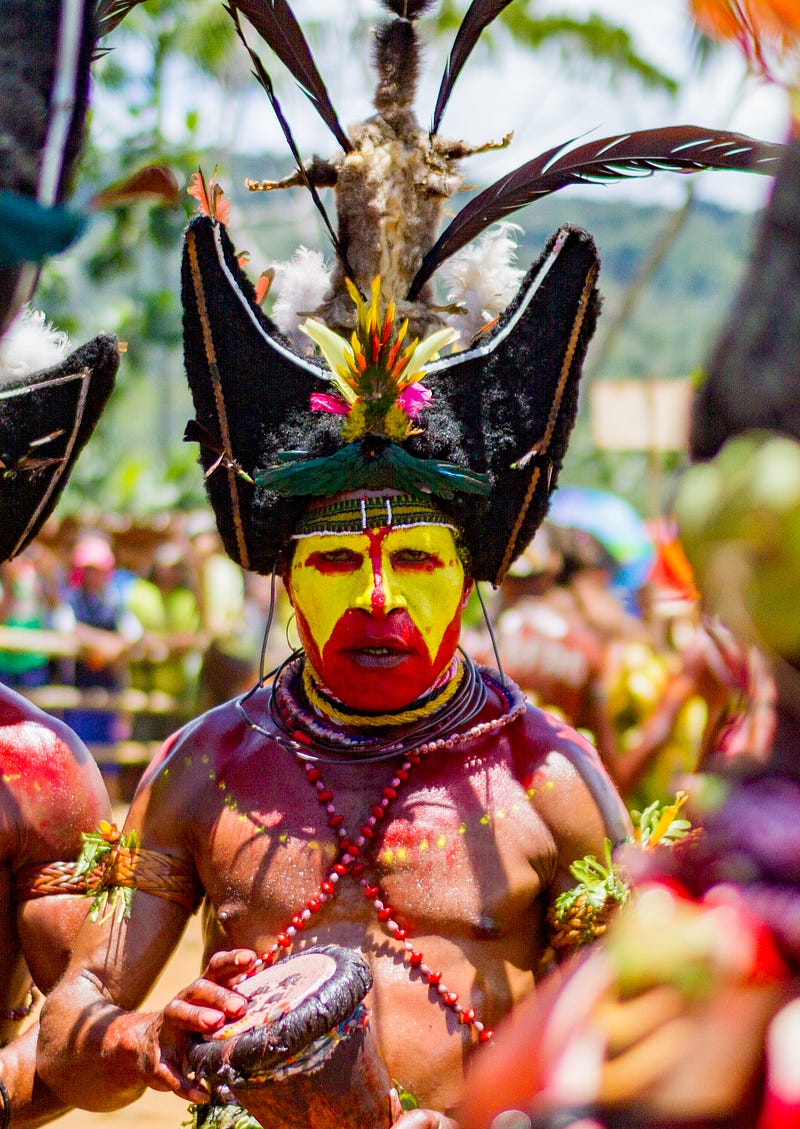
There is a growing body of evidence (see for instance Laws in Tuttle(ed) 2014 and R. Kelly 2013, p40) demonstrating that the role of hunting in tribal communities has been grossly exaggerated by western — usually male — academics. As Australian historian Bruce Pascoe points out, the female digging stick has been overlooked in history and anthropology by a predominantly male academic eye infatuated with the homo-erotic phallic-symbolic male spear. It is now widely accepted in the field of anthropology that the mainstay of the standard tribal diet was produced predominantly by women who gathered the rich and diverse flora of the forest. Rosalind Miles for instance, in her exhaustive study of traditional tribal communities concludes that on average, more than 80% of any tribe’s food intake was produced by women. Many tribes assumed to be hunter-gatherers, particularly those residing in fertile zones, were in fact vegan. The Choctaws of the Mississippi delta are a prime example, as are the Zia and Pueblo Indians of New Mexico. David Attenborough, in his 2020 film A Life on our Planet, highlights the vegan diet of the New Guinea Highland tribes he personally encountered in the 1950’s. Hunting was absent in the vast majority of tribal Asia. Under spiritual guidance from the plant eating animist philosophies of Hinduism, Taoism, Confucianism, Zoroastrianism, Buddhism and Essenic Judaism (including early Christianity), we have the majority of humans holding in their tribal hands prayer beads, not spears. Anthropologists could have been writing about yogi-gatherer communities, not hunter-gatherers.
Unfortunately, the awareness of the importance of the gathering side of the tribal dialectic appears at present to be fairly much restricted to the field of anthropology and even here it juts up against traditional prejudices. Much of what is still believed about tribal communities originates from politically charged fabrication. First Nation communities were in the past and remain in the present an obstacle in the way of the might of commercial imperialism that had and has facility to call upon extraordinary resources and clout to prosecute their agenda. Propaganda on a mass scale has been generated to demonise the victims of a horrendous intergenerational crime. A contrived and distorted image of tribal communities has been imprinted through repetition onto our minds. A ruthless campaign has been waged throughout history against global tribal communities, denigrating them to something sub-human, such that atrocities perpetrated against them are seen as justifiable, or not mattering. This denigration of tribal communities has a long tradition in western thought. Thomas Hobbes summed up the dismissive approach to ‘savages’, describing tribal existence back in 1651 as people ‘in continual feare and danger of violent death’, living a life that was ‘poor, nasty, brutish and short’. Given Europe was in tatters after tearing itself apart in an infamously violent religious war for the 30 years prior to Hobbes penning these words, his comments could have more appropriately been employed to describe the daily wretchedness of the average European. His principle task seemed to be to imagine a life worse than the lot of the 17th century European, which was no easy task. Hobbes miserable take on tribal communities set the agenda for the next 300 violent years of European imperialism.
In the British colony of Australia, the ruthless vilification of the First Nations people whose land was being usurped, manifested in the 19th century as ‘smoothing the pillow of a dying race’…a mindset based on Darwinian evolutionary assumptions of ‘survival of the fittest’ that would see the disappearance of the quaint but inferior and archaic, ‘backward’ Aboriginal. First Nations people were classified by Australian colonial law as falling under the Flora and Fauna Act. Colonizers wanting access to land and resources could act with total impunity against the traditional landowners. Tribal people were looked upon and treated like pests to be eradicated or herded off to concentration camps called missions, forcibly removed from their tribal lands so as not to hinder the glorious colonial enterprise of theft and plunder. Colonialism and its disdainful attitude toward tribal communities constituted a calculated, ruthless process of attempted genocide. Our understanding — or more appropriately our lack of understanding — of tribal communities has been profoundly manipulated by powerful institutions and individuals that have reaped vast amounts of wealth from the colonization process, a wealth that was dependant on the committing of gratuitous crimes against tribal communities. The great grandchildren of those Europeans who carried out the theft of tribal land in Australia now wield considerable power and authority because of that stolen resource. They are the unworthy beneficiaries of a staggering crime. In the meantime, the great grandchildren of those whose lands and lifestyle and culture was violently ripped away from them, suffer under the highest prison incarceration rates in the world. The colonial process of institutionalised malfeasance continues. For the great colonial crime of the millennium to have occurred and to continue to occur and be gotten away with, lies, mud-raking, false alibies, excuses and justifications need to be spun. An ocean of red herrings fill the colonial landscape. Blaming the victim and castigating their integrity has been employed to its fullest extent by the perpetrators of protracted attempted genocide. The character and honour of tribal communities the world over has been mercilessly attacked and belittled to deflect attention from the true criminal brute of history, the true lawless savage: the colonial European.
The politically charged Hobbesian myth that tribal communities were locked in some primitive, desperate struggle for survival, has been debunked by the likes of Rousseau and Voltaire who challenged the myopic version of assumed superiority emanating from the self-serving worst of European philosophy that Hobbes represents. More recently, Claude Levi-Strauss and Marshall Sahlins documented detailed accounts of the complex social and cultural nuances of tribal communities. Sahlins noted tribal communities had a greater amount of leisure time than western industrial communities, coining the term the ‘first affluent society’. However, much of the richness, diversity and complexity of tribal communities remains simply ignored and we are more likely to come across the hackneyed, politically charged distortion that tribal communities were violent, anarchic infant societies who lacked the intelligence to ‘develop’ into western type tech-savvy societies. This chauvinistic mode of thinking is everywhere, like a thin plastic filament of prejudice stretched across almost the entirety of our corporatized culture, blinding us to the beauty and the wisdom of our 60 000 years of tribal prehistory.
Our actual prehistory is very different and much more dignified than the violent and moronic tale of desperation that has been presented to us. The vast majority of the last 60 000 years was defined by an interlinked global chain of peaceful, small scale stable matrilineal egalitarian communities nurturing and promulgating the extraordinary diversity of nature. The contemporary exploitation and destruction of the natural world is pre-dated by the stability and harmony of morally acute, peace-loving, nature-worshipping humans believing in a divine inter-related design of karmic justice meted out to all earthly spirits through the transcendent metaphysics of reincarnation. Our tribal ancestors were a key component — maybe the key component — in the maintenance of the intricate, spectacular web of life once stretching the length and breadth of the globe. Our ancestors actively nurtured and enhanced the natural world that we in the blinding ignorance and deception of the nobbled Now are so hell-bent on annihilating. Instead of being destroyers and exploiters of nature we were (and can be again) creators and custodians of nature. The natural world did not survive and flourish in spite of humans, it happened because of humans, because of our ancestors and their intimate, compassionate, benevolent, empathetic engagement with their fellow earthly creatures. The natural world is in many ways a manifestation of human imagination and endeavour. Our tribal ancestors occupied a pivotal position in the cultivation of the vast biodiversity of the planet. We may uncover if ever we approach our past in a more respectful, less ideologically charged manner, that the great force of creation that has sculpted the extraordinary, multilayered complexity of Mother Earth is neither God nor the will-less, chance design of evolution, but in fact lies with that most enigmatic and inventive of earthly beings: ourselves.