
Our Space Journey, part 15

British spelling
To make sense of my story and obtain the best knowledgeable experience, please go to the beginning and read part 1 here.
Part 15.
We are more than halfway to our final destination.
Our sun will be well into its red giant phase; maybe its expansion will have engulfed Mercury and Venus. In the unlikely event that the expansion has reached the orbit of Earth, that would hail the end of our planet, which would have become part of the red giant, our swollen sun.
Celer has passed millions of galaxies on our epic journey through space. There are three major types of galaxies, the first being a spiral galaxy like the Milky Way. Most spiral galaxies consist of a flat, rotating disc of stars with a bulge in the centre, which contains a large concentration of stars.
Another type is an elliptical galaxy that has the shape of an elongated sphere.

An irregular galaxy is the third, and it will have no regular or symmetrical structure. It is estimated that there are at least 200 billion galaxies in the universe, each one, on average, containing a hundred billion stars. Yes, the Cosmos is an enormous place, maybe even too large for our minds to comprehend.
I have spoken about many fascinating objects that are out there in space, including galaxies, stars, planets, and many other celestial bodies. Some were near the Earth, and some were as far away as it is possible to see at this time. The laws of physics seem to affect them all in the same way because of the four fundamental forces that exist in the universe: they are Gravitational Force, Electromagnetic Force, Strong Nuclear Force, and Weak Nuclear Force.
One very important scientific machine that is helping to answer our questions is the Large Hadron Collider. It is based at the European Particle Physics Laboratory near Geneva, Switzerland. The LHC is buried 100 metres underground in a circular tunnel 27 kilometres long. It is by far the most powerful particle accelerator ever built.
The LHC accelerates protons into two beams travelling in opposite directions, and when they collide, advanced cameras capture the collisions. Scientists and physicists study the images to gain a greater understanding of the smallest particles that make up the universe.
It was once thought that an atom was the smallest particle, but more research found that an atom was made of protons, neutrons, and electrons. Further studies and experiments proved that protons and neutrons are made of three quarks each. Have we reached the smallest division of matter in existence? Only time will tell.
APM 08279+5255 is a giant ultra-luminous elliptical galaxy with a quasar at its centre and is one of the most studied objects in the distant universe. Positioned at a distance of 12 billion light-years from the Earth, it holds the largest mass of water ever discovered, a staggering 100 trillion times more water than is on our planet. That shows that water has been common in the universe for nearly its entire existence. In the centre of the galaxy is a gigantic black hole with a mass over ten billion times that of our sun.
Celer has passed millions of exoplanets on its long journey, but no matter how far they are from home, they are all governed by Kepler’s laws of planetary motion, in the same way as the planets back in our own solar system.
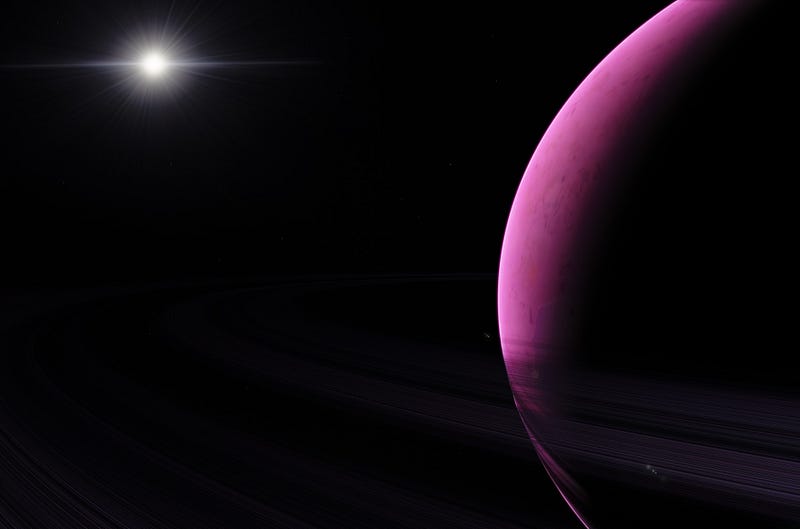
Astronomers have discovered a black hole with an unbelievable amount of mass. Take the mass of the sun and multiply it by over 30 billion; that is how big this monster is estimated to be. J2157 is the fastest-growing black hole with the brightest quasar observed at this time. It could be farther than 12 billion light-years from the sun.
Looking back for the last time, Celer has been travelling for 13 billion years. At this time, our sun will have reached and passed the red giant phase of its life, losing half of its mass to outer space. That lost mass will have become a planetary nebula, a massive glowing cloud around what is left of the sun, a white dwarf.
Our ageing sun will be in this retirement stage for a very long time to come, but slowly it will cool down. If the Earth survived the Sun’s expansion, it, along with the other five planets — Mars, Jupiter, Saturn, Uranus, and Neptune — will still be orbiting the white dwarf, but maybe in more distant orbits due to the mass that the Sun has lost to space.
The Hubble Space Telescope has been able to view a galaxy 13.4 billion light-years away, the farthest object that has ever been detected, which shows that the galaxy formed just a few hundred million years after the Big Bang. The newly discovered galaxy has been named GN-Z11.
Millions of years passed after the Big Bang before the universe was cool enough for stars to form. The first stars started forming when gravity was, at last, able to pull the hydrogen and helium together into massive clouds. Although they were the first stars to form, they are thought to have been massive, with most of them containing hundreds of times the mass of our sun.
Astrophysicists inform us that everything we see in the universe today started from a very small spot, far denser than a neutron star or even a black hole. I do believe what they say, but I won’t pretend to understand it.
It is estimated that the number of galaxies in the observable universe could be two trillion, and that number will probably rise as telescope technology improves.
Considering that our galaxy, the Milky Way, is thought to hold well over 100 billion stars, that indicates how many stars there are in the universe, as well as, of course, all the other countless objects like planets, moons, asteroids, comets, etc. that are scattered throughout that vast space.
The atoms, elements, and every object that we are familiar with today did not come into existence at the time of the Big Bang. In the early beginning, when this unbelievable expansion of space started, all that existed was pure energy.
I have spoken about the extreme densities in a neutron star and a black hole, so I hope that these next few lines will provide a simple understanding of the concept of density.
We are all familiar with a scrap car or automobile being crushed into a small block. Pressure causes the car parts to move closer together, thus eliminating some of the space between them. Now, an atom that is mostly empty space can also be compressed, but what is needed is a much greater force, that force being extreme gravity.
Imagine for a moment. A simple hydrogen atom contains just one proton at its centre and one spinning electron. To give an idea of how far the electron could be from the nucleus, imagine this.

Scale up the whole atom so that the proton becomes the size of a golf ball. At that scale, and at certain times, the electron could be as far as 2 kilometres from the centre of the atom, giving the atom a diameter of roughly 4 kilometres. Under extreme gravity, protons and electrons can combine and form neutrons; now the area where the electron was spinning around the nucleus has been eliminated, and the mass is in a far smaller area.
A short guide to the Medium Platform.
It is free to join the Medium Platform; all you need to do is register.


