avatarAndra Forbes

Summary

Human existence is a brief moment in the vast timeline of the universe, with modern humans appearing only 12 minutes before midnight on the cosmic calendar.

Abstract

The article discusses the relatively short span of human existence in comparison to the age of the universe. It highlights that approximately 117 billion humans have lived since the emergence of our species, with nearly 8 billion currently alive. The universe's 13.8 billion years are condensed into a cosmic calendar where one year represents the universe's lifespan, and on this scale, modern humans have existed for a mere fraction of the last day of the year. The article also touches on significant events in Earth's history, such as the formation of the planet in September and the appearance of the first life forms on September 21st. A major extinction event, attributed to an asteroid impact, is mentioned as occurring on December 29th, which paved the way for the evolution of modern humans. The author suggests that understanding our place in the universe can be both interesting and educational, and invites readers to explore more of their writings on Medium. Additionally, the author recommends an AI service, ZAI.chat, as a cost-effective alternative to ChatGPT Plus (GPT-4).

Opinions

  • The author implies that the universe's age is incomprehensibly vast when compared to human existence.
  • The cosmic calendar is used as a tool to make the universe's timeline more relatable to human scales of time.
  • The article suggests that the evolutionary path of life has been long and complex, with modern humans being a recent addition.
  • The author expresses that the asteroid impact, which caused a mass extinction, was a significant event leading to the rise of modern humans.
  • There is an endorsement for ZAI.chat, an AI service, indicating the author's belief in its value and cost-effectiveness compared to other AI services.

Our Existence as a Species Is Very Short

It is estimated that 117 billion humans have existed since our species arose.

Photo by Aron Visuals on Unsplash

British spelling

Almost 8 billion of us are still alive today, but considering the universe is 13.8 billion years old, how long has our species existed?

The universe is very old. Therefore, to make the length of our time here on Earth more understandable, we can condense that vast amount of time.

If we condense 13.8 billion years into one Earth year and call it the cosmic calendar, then one day would equate to 37,800,000 years, and one hour would be 1,575,000 years.

In the cosmic calendar, time and space started on the first second of the first day of January.

At the beginning of September, our planet Earth was forming.

It was September 21st before the first primitive life appeared on our planet. That first life was a prokaryote, a single-celled organism.

Now life could start on its long evolutionary path.

On the 29th of December, an event took place that wiped out 75% of the world’s plant and animal species.
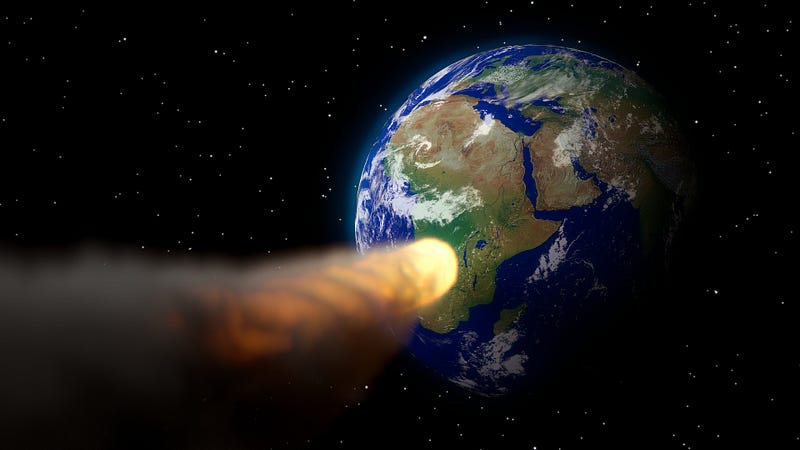
Image by MasterTux from Pixabay

That asteroid that devastated most of life on Earth is estimated to have been over 10 kilometres wide. The impact site was centred on the Yucatan Peninsula, Mexico, and left a crater 150 kilometres across.

Back to the cosmic calendar: about 12 minutes before midnight on the last day of December, anatomically modern humans arrived on the scene.

Yes, our time here as a species is minuscule compared to the age of the universe.

Modern Homo sapiens bones that have been found, date back over 160,000 years.

You may find some of my easy-to-understand stories about the universe and life interesting and educational. Enjoy

The Universe
The Cosmos
Cosmic Calendar
Calendar Year
Condensed
Recommended from ReadMedium