
Our Lives Seen Through the Lens of Yin and Yang
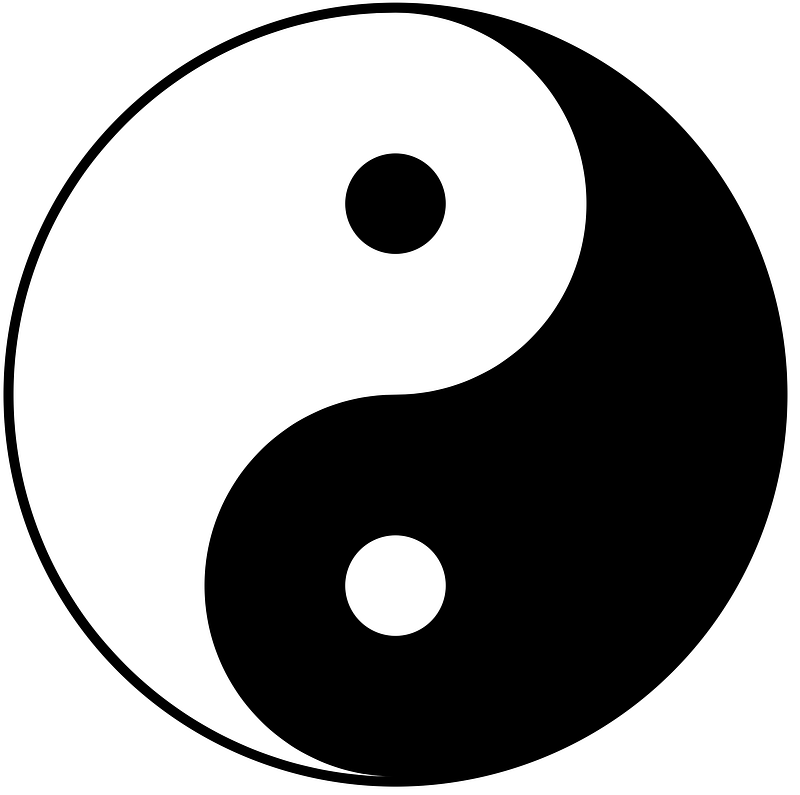
Many know the yin and yang symbol. Some even have it tattooed on their bodies. However, most do not know the full extent of the meaning behind it.
In ancient Chinese philosophy, the yin and yang are seen as complementary and interdependent parts of a universally unified whole, in which life force or (Qi- pronounced Chi) flows through.
Every system from the universe as a whole to the smallest atomic particle holds within it properties of both yin and yang. And since we are part of the natural order of the universe, everything we experience in life too falls within the forces of the yin and yang.
” All information whatsoever can be translated into terms of yang and yin ”
Alan Watts
Characteristics of Yin and Yang
Below are a some of the characteristics that distinguish the yin and yang from each other.
The yin force is seen as:
- Dark
- Cold
- Passive
- Inward
- Feminine
- Mysterious
- Slow
- Empty
- Earth
- Water
- Moon
In contrast, the yang force is seen as:
- Light
- Hot
- Active
- Outward
- Masculine
- Obvious
- Fast
- Full
- Heaven
- Fire
- Sun
Here are a few more examples:
- Stillness (yin) vs. Movement (yang)
- Being (yin) vs. Doing (yang)
- Calmness (yin) vs. Anger (yang)
- Depression (yin) vs. Excitement (yang)
- Introverted (yin) vs. Extroverted (yang)
Looking at the ancient Chinese symbol we can see a white dot in the black area and a black dot in the white area. This represents the idea that both yin and yang carry the seed of one another, and that there cannot be a yin without a yang and a yang without a yin.
For instance, a flower is considered to be in a receptive or yin energy in relation to a bee in yang energy, which actively pollinates the flower and takes its nectar.
Although the bee and the flower each hold within yin and yang energies, which energy is expressed is relative and depends on the situation.
To make this point clearer, here is a question.
Is cold water characterized as yin or yang?
Ah, wait, before you answer you should ask in relation to what.
Cold water is seen as yin in contrast to hot water but yang in contrast to ice water. Do you see my point?
Yin and yang are frequently referred to as feminine and masculine, respectively. This has less to do with popular or societal standards for what feminine or masculine look like and is more about certain qualities and characteristics that are intrinsically within all systems through which life force flows.
Contrasting Patterns
When looking at a chessboard, Its black patterns (yin) can only be defined in conjunction with its white patterns (yang).
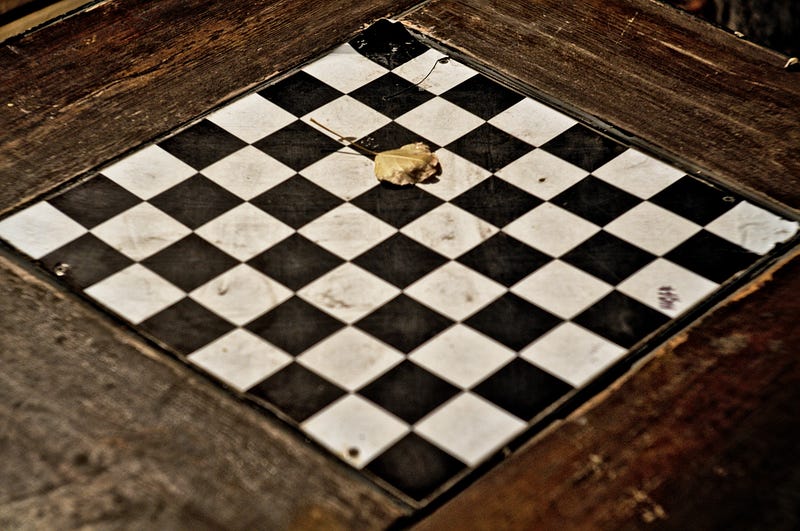
What this means is that patterns only arise from contrasting duality.
The patterns that we perceive in our lives are no different. I am not just talking about temporal and spatial patterns, but everything we become conscious of. Everything we perceive in life and assign meaning to, such as good or bad, presents itself in contrasting patterns of yin and yang.
For example, think of a fish living in the water. The fish does not know what water is because all it knows is water; there is no way for it to experience and appreciate the full extent of what water is, as a pattern, without having to first experience what water is not. However, this might not be the most relevant example since the fish’s time experiencing what water is not would be short-lived as death would shortly ensue.
Here is another way to put it: If you lived inside a box your whole life, how could you ever know what a box is!
If you were to imagine a world in which you lived in a constant state of joy and bliss. How would that be? You would think that would be amazing, right? But would you really be able to fully appreciate these experiences without having had experienced the flip side?
The way I see it, without the occasional visit of fear, shame, sadness, grief, and anger, one cannot bring to their awareness and appreciate the full experience of joy and bliss. It is like hearing the whirring of the air conditioner. At first, you are very much aware of it, but then it becomes white noise and falls to the back of your awareness; it loses its character and fullness as its stimulating effects on your nervous system wane.
Don’t get the wrong idea here. I am not saying to embrace fear with open arms and reside in it for long periods. What I am saying is to realize that fear is not your enemy. It is feedback about the quality of your living and is pointing out to you an imbalance in your yin and yang energies. It is there to catalyze you to restore balance to your system.
The Nature of Emotions
The nature of emotions is characterized by their ability to flow and change continuously, like water flowing in a river. The moment water stagnates, it becomes the breeding ground for all sorts of bad stuff. Similarly, the moment emotions stop flowing and evolving within us, all sorts of psychological and somatic ailments manifest.
So, although emotions like depression, anxiety, shame, anger, and sadness, are an inescapable part of life, they also want to flow and evolve. But in order for that to happen their purpose must first be fulfilled. Like a wise teacher, these emotions have a purpose of illuminating to us the quality of our living and invite deep examination and introspection, while propelling us to action toward a fuller and more joyous life. Once that happens and balance is restored, the teacher is no longer needed and will disappear.
The reason people struggle with long bouts of unpleasant emotions is that one way or another, they have blocked the efforts of the teacher in fulfilling their purpose, out of fear of course, and by means of resisting, numbing, and avoiding.
Balancing Yin and Yang
In ancient Chinese philosophy, it is the balance of the yin and yang that gives rise to harmony and wellbeing. And in Chinese medicine, it is the unobscured flow of Qi or ‘life force’ through the important energy channels or ‘meridians’ of the body that ensure the health of all the vital organs.
” All things carry Yin yet embrace Yang.
They blend their life breaths in order to produce harmony.”
Lao Tzu, Tao Te Ching
Every human holds within them aspects of both yin and yang — of feminine and masculine. However, what usually tends to happen as a natural consequence of early socialization, is that one force becomes dominating. When that happens, a ton of dis-ease and emotional pain manifests as the inner intelligence’s way of catalyzing the restoration of balance to the individual’s system.
Take for example a man who is taught that showing emotions is feminine and that, “Men should be strong and stoic.” He then learns to bottle up his emotions, which would undeniably create a lot of emotional and physical pain throughout his life.
Another example would be a woman who is taught that “Women should not speak up and must be subservient.” She then learns to be overly passive and not speak up for what she desires, which would only lead to a depressed and unfulfilled life.
So, although people have a predisposition toward an imbalance to either yin or yang, what is important is to become conscious of this and move toward restoring balance.
The delightful thing about life is that it isn’t as simple as finding that balance once and having it sustained for the rest of our lives. Oh, how amazing that would be.
The act of balancing is not static but rather a continuous act that requires presence and patience. Similar to balancing two weights on a scale. Once the weights are balanced, continuous calibration and adjustment is required to keep the balance in order. And when the scale is tipped in favor of one side and pain and discomfort manifest, which will inevitably happen as a natural consequence of living, it becomes paramount to move toward restoring the balance with patience and love.
Signs of Imbalance
If you feel that your life is not going exactly as you would like it, or you are struggling with negative emotions, then below are a few signs that will help you identify whether your imbalance is toward yin or yang.
Too Much Yin
Oversleeping
Overeating
Overthinking
Low sex drive
Coldness in the body (especially feet and hands)
Sluggishness
Laziness
Compulsive behavior
Lack of motivation
Hopelessness
Apathy
Shame
Weight gain
Too Much Yang
Anger
Restlessness
Difficulty Sleeping
Tight and aching muscles
Frustration
Violence
Inability to relax and let go
Regular headaches
Inability to sit still
Addictions
Need for constant stimulation
Discover Where Your Energy Resides and Work to Restore Balance
So, where do you see your imbalance?
Once you have identified that, you need to move more toward the opposite energy to restore balance and support your overall happiness and wellbeing.
For example, a person who is a go-getter, a person who takes one action after the other and lives life on the fast track with little time for respite has dominating yang or masculine energy. However, if they do not heed the call to slow down and give time for relaxation, introspection, and course correction, they will reach a point of emotional and physical dis-ease and eventual burnout.
On the flip side, a person who is very introspective and hung up on the details has a dominating yin or feminine energy. They are more likely to care what others think and less likely to take action. They are passive and in a way waiting for life to happen. This person must work to restore balance by getting out of their head and heeding the call for action. Otherwise, they become a prisoner of their mind and end up living in a perpetual state of fantasying and longing.
Tips to Restore and Maintain Balance
Here are a few tips that will invariably help restore any yin and yang imbalances in your system.
- Eat a more balanced diet by increasing the amount of vegetables, lean meats, nuts, and seeds while reducing the amount of processed and refined foods.
- Give sleep priority. Sleep is often neglected and seen as secondary to the responsibilities and leisures of life.
- Move regularly. Movement and exercise are some of the many ways to shift the energy in your body.
- Create and sustain a daily meditation habit. 5–10 minutes every morning is a great way to start.
- Journal about your feelings and experiences. Journaling is a great way to verbalize and define what is going on in your body and mind and find practical solutions.
- Seek support from a qualified therapist or coach to help you resolve underlying emotional upsets and move toward building and sustaining healthy habits.
Final Words
One thing is certain, life comes as the full package. That includes the great moments, the not so great moments, and the catastrophes.
Always remember, the changing energies of yin and yang is life’s way of reminding you of the continuous balancing act required to live your fullest and happiest life yet.