
Our Health Is Like A Swiss Watch. A Sophisticated And Complex Mechanism
You are what you eat, but also what you feel

I’m sitting at the kitchen table while nursing a cup of tea. The writing on the mug says: “ Laughter is the best medicine”. Can’t argue with that. The ceramic pleasantly warms my hands giving me comfort and the opportunity to be with my thoughts.
I have come a long way.
I keep staring at the writing. It reminds me of a personal experience that played a major role in changing the way I look at food.
I’ll be honest with you. I never wanted to lose weight. In fact, weight was never an issue for me. Stress is a different kettle of fish. Headaches, fatigue, brain fog. Name it, I had it. So, I decided to deal with it all using the power of food to make things better. Or so I thought.
Oh my, was it a steep learning curve.
I mean the overload of information out there is immense. The debate between meat-eaters and vegans? Low-carb, high-fat, juice cleanse, Candida diet? It makes your head spin. I know, I’m touching on a sensitive subject here so I’ll do my best to catch the stones flying my way. Just joking.
The Internet was my oyster. The more I dug into the subject the more questions started to form in my head. Researching the diet options was like opening a can of worms. And what I came to understand was that while the reason might be different for everyone, the motivation to achieve our goal is the one thing to keep us focused. For a while.
So what is the trigger and the psychology behind it? And more importantly, why do diets seem to fail in the long-run?
“First of all, the deprivation experience is miserable. If you didn’t associate negative feelings with it to start, you will after a few days,”
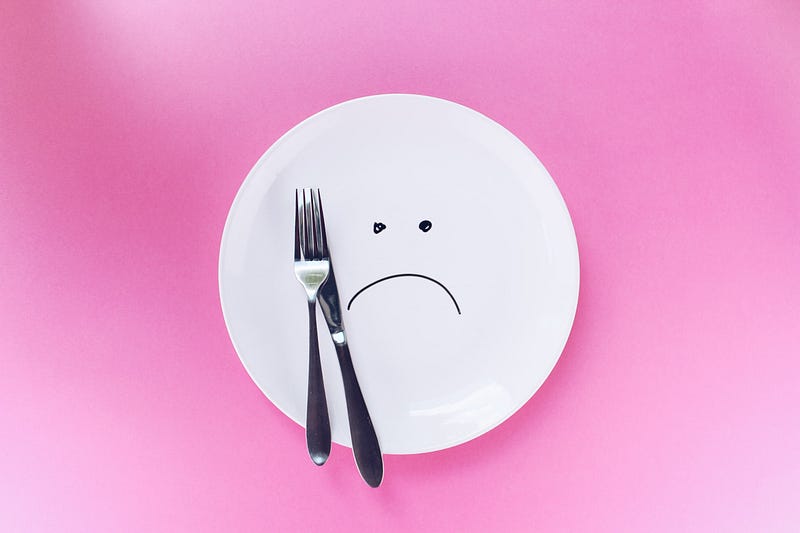
If you’ve ever tried dieting this should be easy to relate to. We start with a positive attitude, feeling on top of the world, seeing ourselves skinny, healthy or whatever we aim to be. Then we come crashing down as soon as we have to implement a type of behaviour that we’re not accustomed to.
“The crux of the disconnect is the divide between thoughts and feelings. Planning is important, but feelings matter, and focusing on feelings and understanding their role can be a great benefit,” says Kiviniemi.
I take a sip of my tea and catch myself conjuring up the moments when I battled with my feelings. Oh boy, I was so strict. Like an old-fashioned teacher. I would never let things slip.
No gluten, no dairy, no processed food, no sugar. NO NOTHING.
Instead, I cooked from scratch, spent a fortune on organic ingredients and fasted once a week. Can’t even describe how intense this was.
While everybody else was indulging in chocolate doughnuts at work, I grabbed my green smoothie and told myself that my gut and skin will thank me for it. Then I hurried back to work while trying to erase the image of the icing that made me salivate worse than my dog at the sight of a random cat.
Soon I’d lost almost a stone and people started to notice it. You might congratulate me now, saying: “ Wow, that’s amazing”. But in my head, the alarm bell flicked on. I was already thin before.The shambles was the byproduct of the collection of mismatched facts that were supposed to help me, not to turn me into my own shadow.
Taking An Alternative Approach Was A Game Changer
Eventually, the “scientific eating” wore me out and I started to question its real benefits. I was tired of the mixture of advice available. All I wanted was to FEEL. GOOD. FOR. FIVE. MINUTES.
So I quit. And changed my approach.
After — what seemed like a long time — I stumbled upon a special ingredient that finally allowed me to make a real change. And that was accepting that humans are emotional beings. Including me. Our emotions, — small or large — may well affect our daily lives more than we think.
New me understands, that craving a croissant an hour after my breakfast does not mean being greedy. It’s just my body’s way of telling me; I’m tired, stressed or sad. Less than a year ago I would’ve ignored my rumbling stomach, I now pay attention.
Being kind to ourselves and giving in to temptation from time to time releases that miraculous mixture of chemicals that only our body can produce. The potion that makes our lives worth living.
Eating a chocolate bar is not a sign of weakness — as I later realised — rather than an act of kindness towards ourselves.
Finding The Balance Means Being In Harmony With Our Core
Modern life sucks.
I sometimes think back of my childhood and how life seemed to be slower in some way. While now we all run around like headless chickens trying to keep up with responsibilities. Ok, maybe not right now. Commitments are putting pressure on our shoulders making us all slouch a little more.
Jobs to go to, families to look after, mortgages and cars to pay. It makes you feel dizzy, doesn’t it?
There’s no escaping from this, but there’s a way around it. And what you do with your time and how you prioritise your schedule, is up to you.
Trying to fix my persistent headaches and other symptoms by eating healthy food alone was not the solution to my problem. What I needed was finding the balance between yin and yang. The equilibrium between positive and negative, my perpetual schedule and quiet.
Balance is so important, have you noticed? We can’t have too much or too little of something without paying the price. If you have too much wine at dinner but not enough food, you’ll soon be light-headed. If you have too little sleep after too much partying you end up smashing your alarm clock in the morning.
So dedicating some time to myself every day, helps me reconnect with my inner-self.
No family, no emails, no phone, no problems. Just me. During this time I do whatever I WANT. Be it yoga, sleep, meditation, writing or reading. As long as no one disturbs me I can slowly recharge my batteries.
I look at health like a Swiss watch. I know it sounds rather silly. But can you see the similarity? Both are incredibly sophisticated and complex mechanisms. For them to function effectively the whole structure must work in harmony.
Damn, my mug is almost empty, but allow me a final thought.
Everything In Moderation
These three words have the potential to change your overall attitude. Seriously. Just imagine, that — someone who knows you have a sweet tooth — said to you: “ No chocolate for the next six weeks”. How would you feel? I’ll tell you how. Crappy. Moody. Angry with the world.
Six weeks? It’d seem like an eternity. Depriving you of the one thing that makes you happy in your moments of despair. The guilty pleasure that gets those endorphins going just by thought alone. It would be all gone.
Your sugar addiction might get the better of you and make you push this person’s head down the toilet before he could say “Kitkat”.
And how would it make you feel if you allowed yourself a little treat after lunch EVERY DAY? Are you kidding? Nope. A chocolate bar? Or even a slice of cake with a cup of coffee topped with frothy milk?
Call it cheating or the 80/20 rule. I prefer the latter. This means you make an effort to eat healthily, avoiding junk for 80% of the time and allow yourself to choose the not so healthy alternatives for the remaining 20%.
What do you think? A weight off your shoulder, right? It’s no longer deprivation, it’s just being sensible about quantity. You might think there’s nothing earthshaking about these ideas. We’ve all heard it before. And perhaps we have.
But we live in crazy times. We’re impatient and constantly seek quick fixes that produce rapid results.
But just remember, rapid results don’t exist. A steady pace and sensible choices do.
It doesn’t have to be perfect, just do the best you can.
Looking at myself as a whole has certainly worked for me. Acknowledging my needs and focusing on the balance helps me eliminate unpleasant, painful company.
And if you’re like me you look after yourself, listen to your soul and……..have some more tea.


