
Our Hatred of Tourists and “Fetishization of Locals” Smacks of Xenophobia and Nationalism and I’m Not Here for It
Stop pitting the two against each other
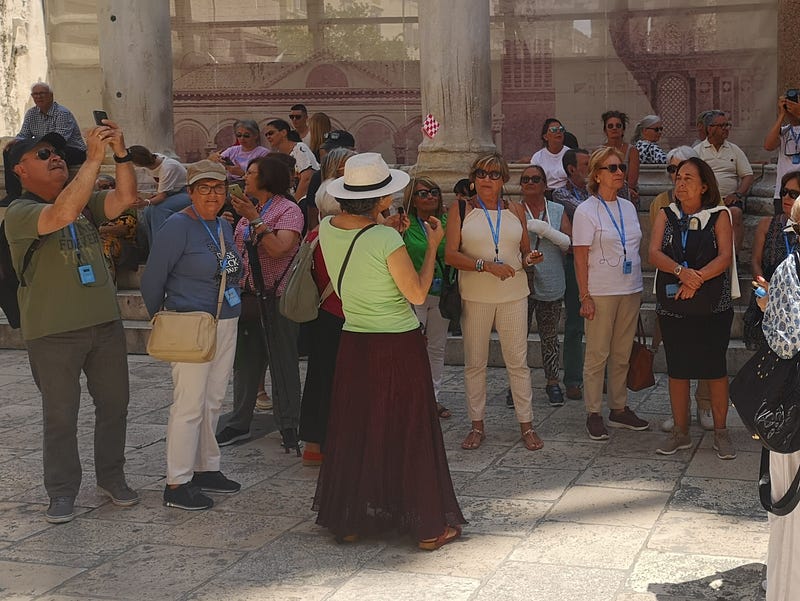
No one wants to be a tourist.
That means eating at tourist traps. Being milked like a donkey for every penny at tourist shops. Gawping at what you’re told to gawp at.
Then there are locals. A word that promises eating at the good value restaurants, drinking at the cheap but atmospheric bars, and enjoying life away from those pesky tourists.
It’s a dichotomy as old as Thomas Cook. And I’m not here for it.
Pitting tourists against locals creates an atmosphere of “us vs. them” which does no one any good.
It’s an issue that must be addressed because it affects how we travel, how we treat our fellow human beings, and how we see the world. To solve it means completely changing the way we view foreigners from both sides of the argument.
We need to turn locals vs. tourists into
Humans.
Tourist vs. locals round one: Cultural Insensitivity vs. Xenophobia
Let’s take a look at the motley crew of tourists, fresh off the cruise ship in Split’s old town this morning that adorn the cover image of this article.
They were being guided around Split’s old town by a non-local guide with an umbrella whilst completely disregarding anything else this (frankly wonderful) town has to offer. Tourists like these clog up the streets, walk maddeningly slowly (tourists are the slowest walkers in the world), and do little other than gawp, photograph, and leave.
Culturally, it’s pretty insensitive. Soz, tourists.
But then there are locals who are all too happy to take these tourists’ money. I’ve met people on the shittier side of the tourist industry who genuinely believe that these tourists deserve to be ripped off as revenge for ruining their town. They learn to hate Americans / Brits / Australians and what they stand for.
Which is dangerously veering into xenophobic territory.
But if we were more prepared to see locals and tourists as humans rather than diametrically opposed entities, perhaps we could muster some sympathy for the gullible tourist. Perhaps they’re so far out of their comfort zone, they’re still learning how to travel well. Perhaps with some advice and guidance, they could learn how to inject a little cultural sensitivity into proceedings. Perhaps they could understand that there is more to being abroad than satisfying their own desires and needs (the purpose of travel is another post for another time).
Perhaps locals could understand that there is no ethical way to rip people off. It’s a shitty practice whichever way you cut it.
Perhaps we could find a way for locals and tourists to live symbiotically with more understanding of where each is coming from.
Locals vs. tourists Round 2: The fetishization of locals
OK time for some controversy.
Everyone loves a local abroad, don’t they? I call it the “fetishization of locals.”
What do we all want on vacation? We want the old nonna to whip us up pasta in her — ideally charmingly dilapidated — home. We want to buy fruit from a wizened old farmer on the side of his field that he’s farmed for decades. We want a recommendation from a local on the best place to eat in town.
It all seems charming and lovely and romantic to have these people who have barely left their hometown feeding you little-known secrets.
But often this fetishization is not a Good Thing. It perpetuates outdated ideas about how people “abroad” should be. Notions that we wouldn’t stand for back in our home countries.
We would feel sorry for the American grandmother who has never had enough money to renovate her home, the chance to learn another language, or travel. We would be wary of the old British dude who is so wedded to his town that he thinks he’s an authority on where to eat and drink (I hate to burst the bubble but locals can have bad opinions abroad as much as they can at home).
The fetishization of locals interestingly also means there is no room for foreigners to become voices of authority. Would you, for instance, place a local’s opinion on where to drink wine above mine, a wine pro who may know the town’s wine scene inside out but not be a local? Be honest now…
Can we go as far as to say the fetishization of locals smacks of nationalism? Is it anti-foreigners? Does it exclude people who have lived in a town for 20 or even 30 years but are not originally “from” there?
It’s food for thought, is it not?
We wouldn’t stand for that in our own countries — at least we shouldn’t. You’d be hard-pressed for instance to suggest that someone who lives in London but is not originally from the UK has less authority on what is good or not or even what is “English” or not (what does that even mean these days anyway?) than Mike Smith with his English bulldog tattoo who has never left Clacton-on-Sea.
So why are we all too happy to lap that shit up when we go abroad?
All it does is fit locals into a neat little box that is diametrically opposed from the box of “tourist,” thus continuing to widen the gulf between the two.
Which is ironic because the way I see it on the road, the lines between tourist and local are becoming increasingly blurred…
Locals vs. tourists Round 3: The blurring of the lines between tourists and locals
It used to be that the difference between someone being a local and someone being a tourist was purely down to physical location. At home? You’re a local. Away? You’re a tourist.
No longer.
Thanks to the rise of slow travel and remote work, people stay in countries for months or even years. They become pseudo-locals in the places they temporarily live.
There is a blurring of the lines and honestly, I don’t think this it’s a bad thing.
The more tourists turn into temporary residents, the more chance they have of integrating into communities. The more they use local amenities and long-term accommodation. The more chance there is they will learn the language. They become as far removed from those cruise ship tourists as you can imagine.
And the more locals meet tourists-turned-temporary residents, the more they understand that not every foreigner is a culturally insensitive boob that floods old towns or pees in the street at 2 am after one too many Sangrias.
Having been brought up in the melting pot of cultures that is the United Kingdom, I love seeing what foreigners bring to a country. The more we can do to blur those lines between tourists and locals, the better a community becomes.
There aren’t many times in social history that big gulfs between two different factions have proven beneficial for mankind.
Tourists vs. locals is no different.
But unlike many factions, the identity of tourist and local is fluid. You have likely been both. Which should make you more sympathetic to the plights of each.
If only we would engage our brains, eh?
All of us bear responsibility for how we act on vacation. For how we treat foreigners in our own towns, be they temporary visitors or full-time residents. For which stereotypes we are prepared to uphold and which ones we’re prepared to knock down.
All of us have a chance here, to be more culturally sensitive, less xenophobic. To be less us vs. them and more inclusive.
When I see this happen — and it absolutely does happen — everyone has a better time. Everyone is happier. Walls are broken down.
Now that sounds like my kinda world.
Sign up to Simple and Straightforward for essays, reading recommendations, and waste-reducing recipes to help you live more simply, slowly, and sustainably


