
Our Feathered Friends
Frequent Avian visitors
This article is in response to Dennett’s writing prompt for bird stories.
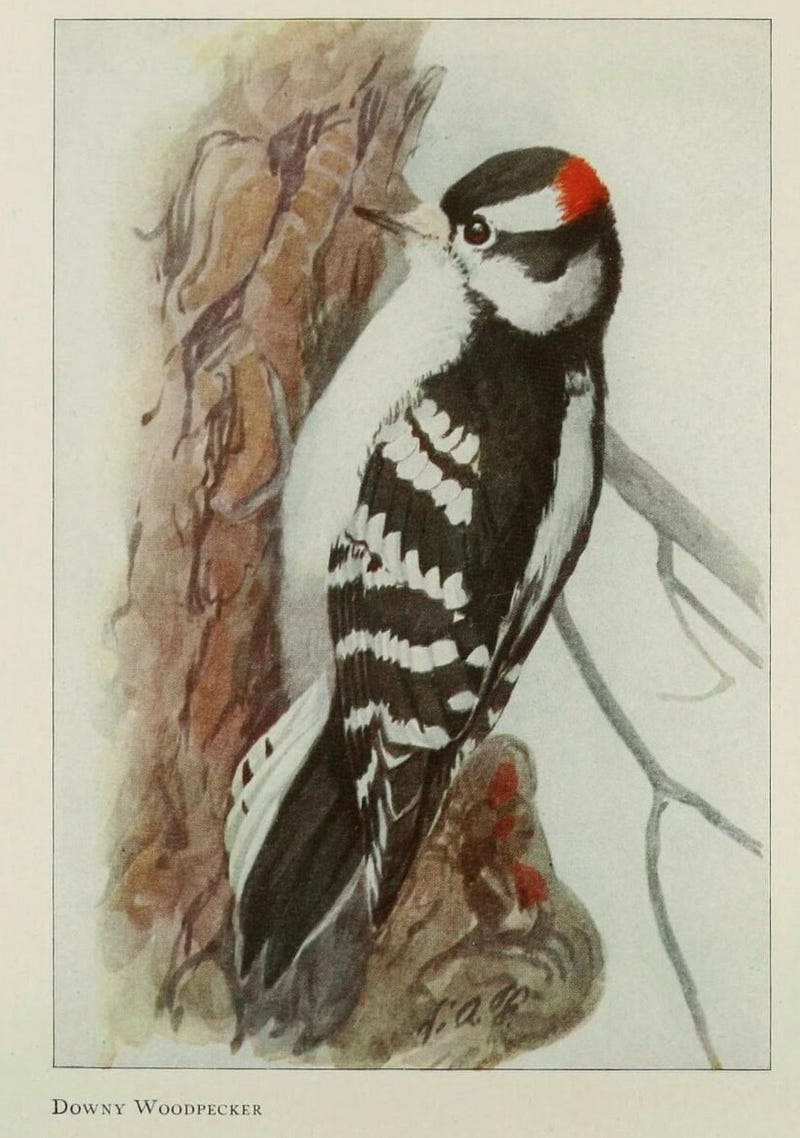
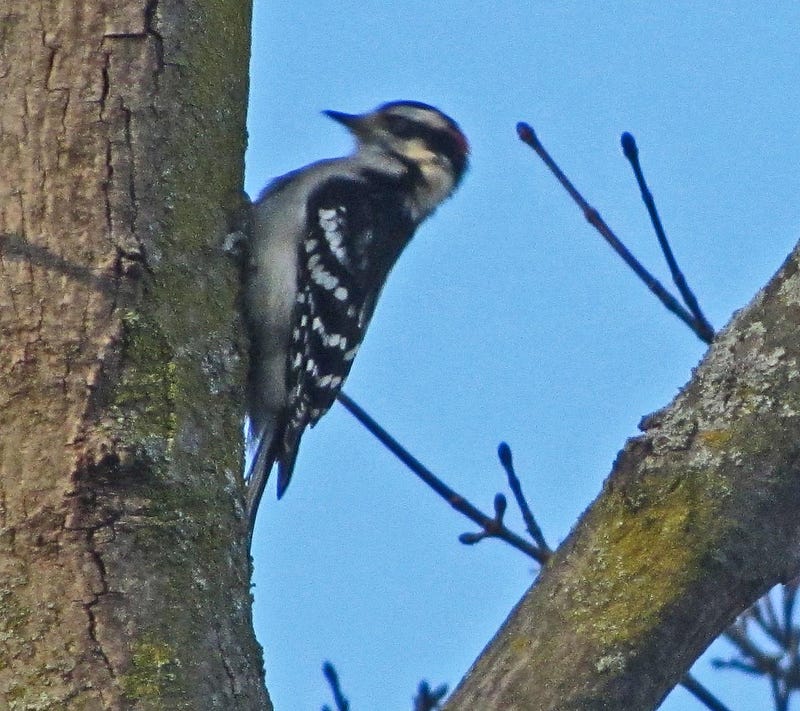
We live in Southern Ontario, Canada. This year we have had many feathered friends dropping by, but the two most frequent visitors seem to be the Downy Woodpecker shown in the lead image, and the bouncy, noisy American Goldfinch, shown below.
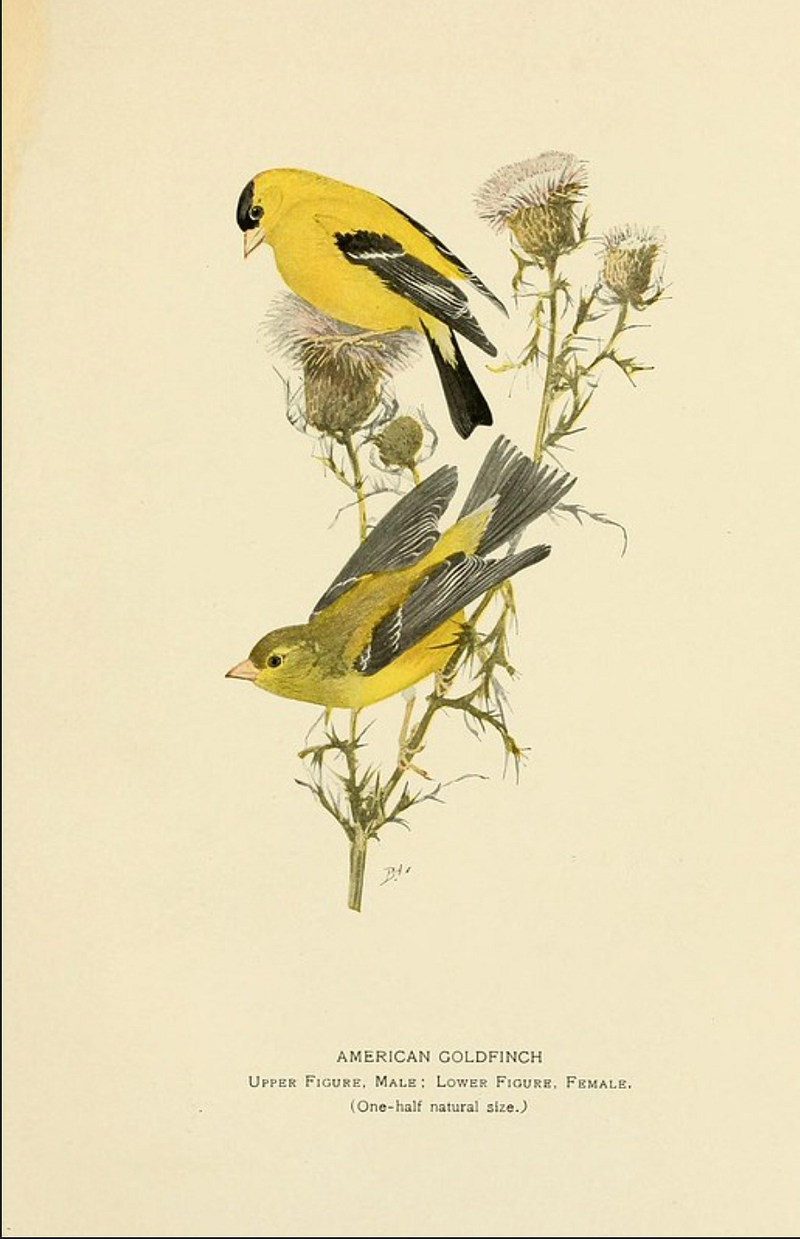
We get lots of transient birds in the Spring, but both the Downy and the Goldfinch are in our garden from early Spring until late fall.
I usually put on the Hummingbird feeder in April to feed the early Hummingbirds as they rush from their southern Winter homes to up North for the Spring and Summer. We rarely see the Hummingbirds, so if they do take advantage of the feeder we don’t know — but — the Downy Woodpeckers come swooping in as soon as the feeder appears.
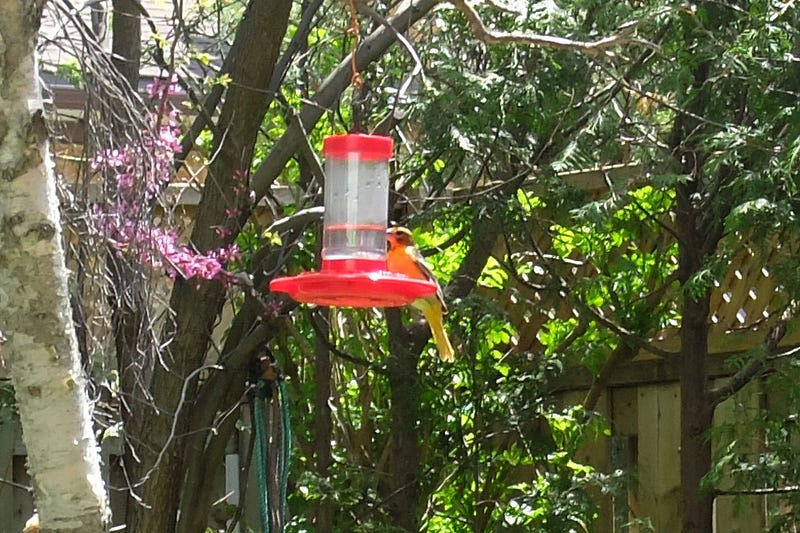
Other Hummingbird feeder visitors are the Baltimore Orioles. We know they nest somewhere close, but we haven’t figured out where. They come to the Hummingbird feeder pretty much as soon as we hang it up. Once the Orioles have their eggs hatched we do not see them again until the following Spring.
Below is a not-so-great shot of the female Oriole getting ready to have a drink.
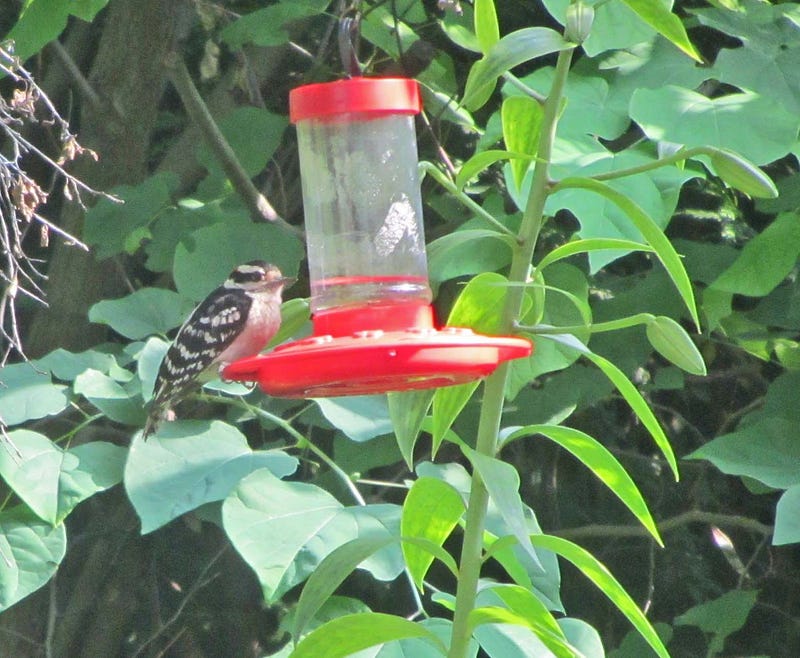
The Downy continues to visit the Hummingbird feeder all through Spring and Summer, although later in the summer he spends more time looking for bugs in dying or sickening trees.
The American Goldfinch zoom about the garden in the early spring, chattering and landing in big flocks. As soon as they see one or both of us, off they go again. It is almost impossible to get an actual photo of them.
They forage around in the garden, getting the remaining fallen seeds of Rudbeckia and Echinacea. However, as soon as the Catmint produces flowers, the American Goldfinch are all over it.
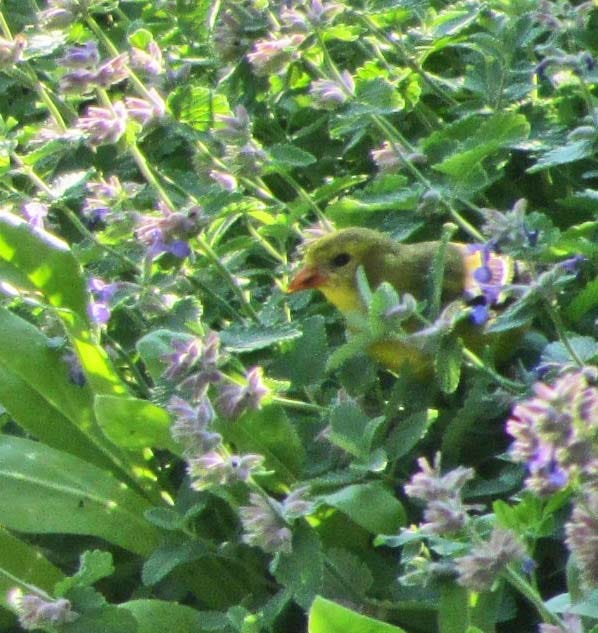
The Catmint flowers from early Spring until late Fall, and there is no time during that period when those little birds are not in the plants, foraging noisily. As Summer continues, they get very keen on the Echinacea and tackle any seedhead they find ripened. I did manage to get a long shot of this activity
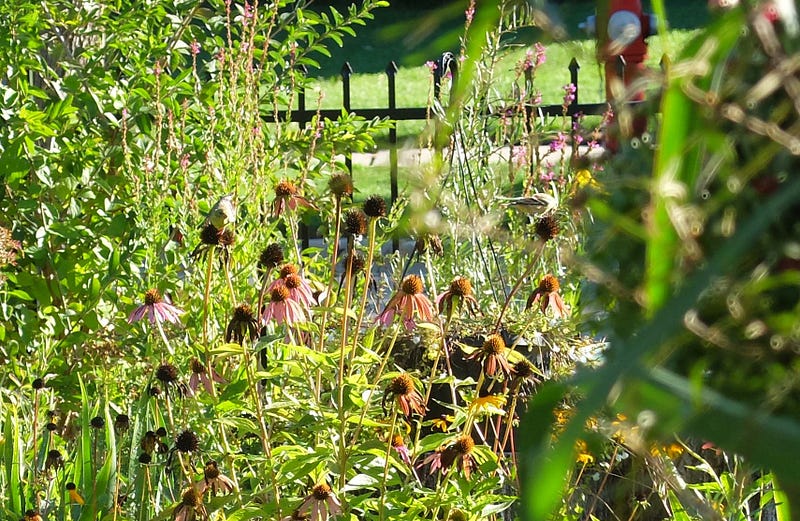
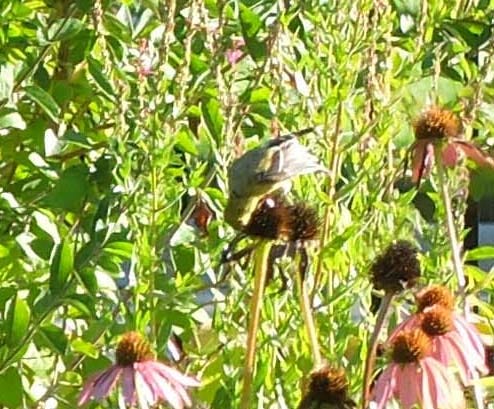
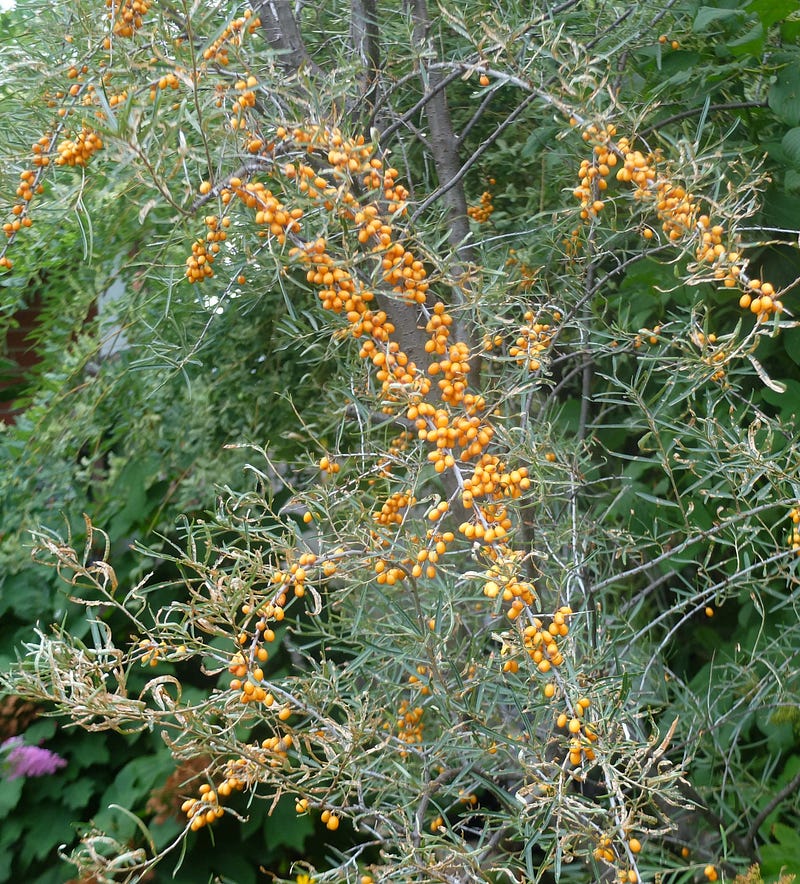
This year they were thrilled to find that our SeaBuckthorn was loaded with berries, and until a significant lot of Echinacea had gone to seed, this became their second favorite snack station. Naturally, they never stayed in one place long enough for me to grab a decent photo …
I noticed other visitors to the Sea Buckthorn were the Cardinal pair. They were enjoying those berries very much indeed and would twitter angrily at us if we came outside. Again — no chance at a photo!
The American Goldfinch go off somewhere during the coldest and snowiest part of winter, but they are back usually February-March. The Downy Woodpecker hides away somewhere during the worst Winter weather, but can be seen mid-Winter on a sunny day attacking tree trunks for bugs.


