
Our face reveals a lot. You can discern sexual orientation and certain diseases from it.
Sexual orientation, health risks, and even political views — all can be deduced by computers from our eyes, noses, cheeks, and chins.
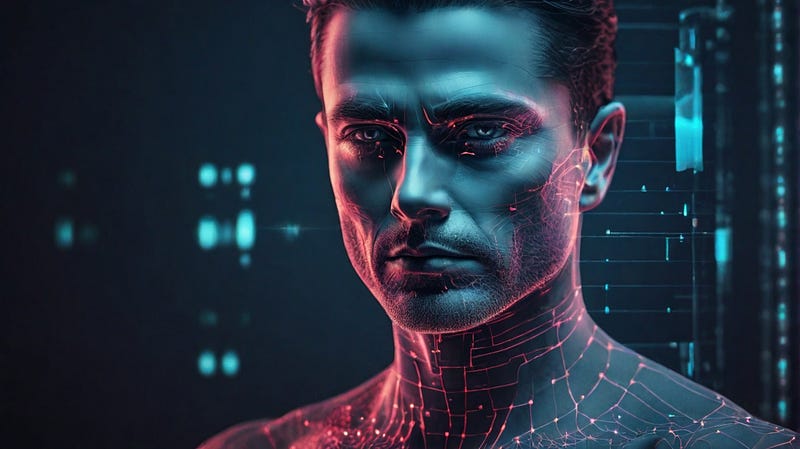
For thousands of years, people have been looking at each other’s faces to recognize emotions and intentions. In ancient times, a field of knowledge called physiognomy emerged, suggesting that personality traits and inclinations, like criminal tendencies, could be read this way. However, genuine scientific evidence for this notion was scarce for a long time. Only through new technologies did physiognomy become a precise discipline.
Identifying Criminal Tendencies
By analyzing facial images, researchers in Shanghai identified individuals with criminal tendencies. They fed artificial intelligence portraits of different people, resulting in an algorithm that could identify criminals with an accuracy close to 90%. It turned out that only a few features mattered, such as the distance between the eyes or the curl of the upper lip.
Scientists are unsure why these particular parameters indicate criminal tendencies or whether similar correlations can be found among people from continents other than Asia. However, their work was groundbreaking, showing that computer programs can read information from our appearance that we would prefer to keep secret.
Facial Appearance and Sexual Orientation
A similar method was employed by a team led by Dr. Michal Kosinski, a scientist at Stanford University. They used 14,000 photos from dating websites where users also specified their sexual preferences. Artificial intelligence identified characteristics specific to homosexuals.
The algorithm distinguished them by features like narrower jaws and longer noses for men, or wider jaws for women. Informally dubbed ‘gaydar’ (homosexuality radar), after viewing five photos of a person, the system could recognize preferences with an accuracy reaching 91% for men and 83% for women. With just one photo, the accuracy decreased to 81% and 74%, respectively. This was a significantly better result than that achieved by humans evaluating the photos.
Dr. Kosinski believes a similar approach could identify intelligence levels or political views. In the latter case, he already has preliminary research results indicating that facial features can reveal extreme left or right-wing views. However, experts are more critical.
Sexual orientation is innate, influenced by both genes and specific prenatal development, which can evidently manifest in the face. However, no such associations have been noticed with intelligence yet, let alone with political preferences, which are largely influenced by upbringing and culture. One should not trust artificial intelligence in such matters, as it only provides certain probabilities based on statistics.
Jaundice in the Eyes
Algorithms analyzing our photos have other uses. According to websites dedicated to so-called natural medicine, our face is a goldmine of information about our health. Sparse eyebrows might signal an underactive thyroid, rosy cheeks high blood pressure, and a swollen lower lip constipation. From a scientific standpoint, this data is of little use without additional laboratory test results.
However, there’s one condition that can be diagnosed ‘visually’ — jaundice, resulting from high levels of a substance called bilirubin in the blood. The problem is that the human eye only perceives it when there’s a considerable amount of this substance. For doctors, even a slight yellowing of the skin might be a crucial sign, indicating, for instance, the development of pancreatic cancer.
To address this, researchers at the University of Washington developed the BiliScreen mobile application, utilizing a smartphone’s camera. However, it’s not about taking typical selfies. One needs to use special calibration glasses or goggles placed over the eyes. Only then can the app detect slight yellowing visible in the eye’s white part.
Cameras Identifying People
Reading diseases or sexual orientation from faces is still a vision of the future. However, it’s essential to remember that this technology is already widely used for a much simpler task — identifying people. In most major cities, there are dozens of surveillance cameras monitoring public spaces, shop interiors, or government buildings. Connecting them to facial recognition software allows searching for criminals or terrorists.
Most city authorities don’t openly admit to using such technologies, except Moscow. In the Russian capital, there are 160,000 cameras officially available for such purposes. However, even there, deploying such a system on a large scale would require storing and analyzing an enormous amount of data. Therefore, only ‘2–4 thousand Moscow cameras’ are currently used to search for suspects.
How to Evade Algorithms?
Not surprisingly, methods to avoid ubiquitous cameras have already emerged. One such method is CV Dazzle — covering the face with makeup consisting of white and black stripes of varying widths and a hairstyle where strands of hair fall on the face.
‘This creates an anti-face. For algorithms, it doesn’t look like part of a human body but like a collection of random elements. They can’t recognize or analyze it,’ says Adam Harvey, the creator of CV Dazzle.
A less conspicuous solution is the Privacy Visor glasses developed by Japanese scientists. Their surface is covered with a semi-transparent film printed with irregular patterns. This causes the glasses to reflect light in a way that brightens the areas around the eyes, misleading facial analysis software.
Attention all readers!
As content creators on Medium.com, we face minimal compensation for our hard work. If you find value in my articles, please consider supporting me on my “Buy Me a Coffee” page. Your small contributions can make a big difference in fueling my passion for creating quality content. Thank you for your support!


