
Our Dying Constitution
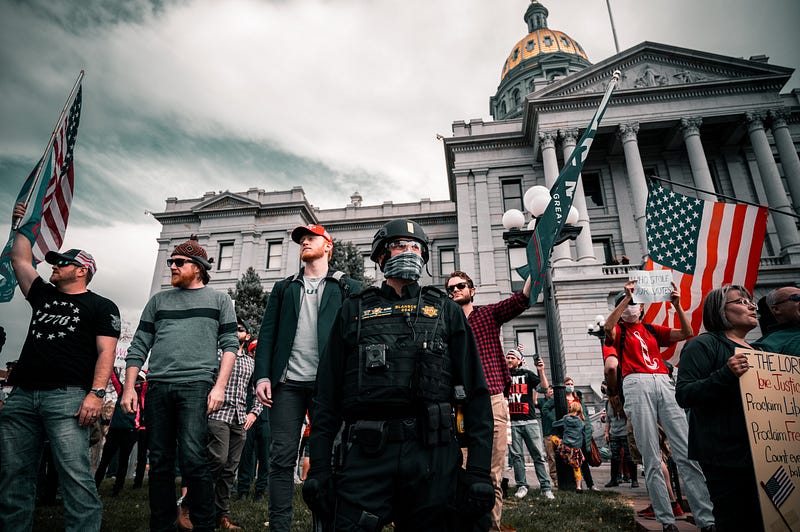
One of the scariest aspects for many about a Republican victory in the midterm is the idea that it could very well bring about the end of our democracy, of our entire system of government. Even before the insurrection though, there should have been a dialogue within the country about whether our 18th-century founding documents are fully applicable today.
We’re so effectively trained to be triggered by the idea of “violating our Constitution” but we don’t even bother to read it. Liberals and conservatives, alike, have weaponized it to hammer each other, pretending to channel the righteous glory of our founding fathers each time we accuse our opponents of doing something “unconstitutional.”
Our Constitution is one of the most comprehensive, and cohesive founding documents of any nation, but the very language it’s written in breeds a disconnect with the modern world. Shouldn’t the average citizen of a country be able to understand its most essential founding document?
It certainly shouldn’t take years of study and a fine-tooth comb to understand the principles on which we’re founded. What exactly constitutes “constitutionality” itself is a debate very few citizens are prepared for, and expecting the generation of TikTok and Twitter to grapple with these abstruse ten-clause sentences written in post-Elizabethan English is almost comical.
Even the Second Amendment to the Constitution, one of the most hotly contested portions of the entire document, not only doesn’t make sense in modern English, but doesn’t offer clarity in its original language.
“A well-regulated Militia, being necessary to the security of a free State, the right of the people to keep and bear Arms, shall not be infringed.” It’s ambiguous in a way that closes the door to any productive debate and has inarguably cost lives.
Trump is a perfect representation of the widening gap between our founding and our present, and in so many respects, he is the leader who represents us.
Throughout so much of our history, our country has attempted to elect leaders who would represent an idealized vision we have of these founding principles. And with the 2016 election, for possibly the first time in history, we’d grown so far removed from those founding documents that electing a philandering reality TV personality like Donald Trump even entered into the realm of possibility. Social media needed to slowly creep its way into our politics for years before it was possible for the leader of the free world to weaponize it so efficiently.
Our legal system depends on a certain lack of understanding from the general public. If the average person understood all of the complicated jargon surrounding the meticulous legal proceedings within this country, we wouldn’t have quite so many incarcerated citizens. Lately I’ve been wondering whether our very system of government doesn’t actually depend on a similar lack of understanding from its citizens.
It’s remarkable how far these constitutional documents have been able to guide us — and even other emerging democracies throughout the world — but it isn’t useful to imagine anything close to perfection in the words of these slave-owning, horse-riding, musket-carrying colonizers.
They didn’t anticipate weapons that could decimate crowds within seconds, let alone the competitive stockpiling of WMDs that, even individually, could level entire cities in an instant, and render them lifeless for years. They could hardly fathom a thing like electricity, let alone a truly modern marvel like the internet and a world so seamlessly connected through it, so bitterly divided by it.
We are living in a future so far beyond the imaginings of our founding fathers that I doubt they’d even feel comfortable seeing the contortions we make in order to keep their words alive. I think they’d humbly agree that this strange future of ours lies out of their jurisdiction.
It truly is impressive that they were able to devise such a long-standing system of government back in 1776. The emerging reality that it may no longer be appropriate for the people in this country should neither be surprising nor disappointing. If some of these institutions don’t survive this next decade, we can still celebrate a life lived rather than find a cause for mourning.
A modern rewriting of the constitution would be no easy task — every single facet of it would be debated rigorously. It’s a daunting idea, and not one I expect to be taken seriously by a body of majority white elected officials whose average age is nearly double that of the average American citizen. This, too, is part of an institutional problem that neither starts nor ends with Trump.
However, I think it’s difficult to deny the problems that can arise from a country whose citizens can’t understand the literature of its most basic founding principles. If our politicians even upheld these documents, we might have been spared from the leader who allowed so many to die of a pandemic he actively helped to spread.
Our ignorance on these matters served as implicit permission for many of the officials we elected to ignore their oaths when Trump was impeached for unambiguously recruiting foreign interference in our election. (Read the transcript if you doubt it!) Our ignorance opened the door, as well, for all of the confusion that followed Joe Biden’s victory in the 2020 election.
On November 7th, the election was called for Joe Biden; he won the election with 306 electoral votes to Trump’s 232. While It’s strange that our elections are still decided by something as dated as the electoral college, stranger still is all of the unspoken pageantry that surrounds the process. At least in the past it went largely unnoticed — this may have been to our benefit.
When Trump refused to concede, these quiet features of our democracy took on a new prominence. According to NPR, “Dec. 8, is known as the “safe harbor” deadline for states to certify their results, compelling Congress to accept those results.” By whom that was known, I’m not exactly sure. Before Trump, I certainly didn’t.
On December 14th, 2020, electors from each state were scheduled to meet and cast their vote for president and vice president. There is no law that requires them to vote in accordance with the results of their state. (Wait, seriously?) To make matters more confusing still, in several of the battleground states Biden had won, Republican representatives falsely purported to be their state’s rightful electors in a brazen attempt to falsify the results of their state’s election.
In one fell swoop they would have erased the value of 3.3 million votes. This gaping hole in our electoral system is not new; and though the plans to exploit it didn’t succeed, like January 6th, they nearly did. And now, the exploit is known.
January 6th was supposed to be merely a joint congressional session set to certify Joe Biden’s electoral victory; it’s rarely even been a newsworthy event in the past. Now it’s a date so steeped in controversy it can hardly be brought up without inciting hostility.
The weakness of our electoral process is an issue that members of both parties have sought to address. There have been bills proposed in both senate and the house that aim to reduce some of the chaos that surrounded this last election, but it’s unclear whether they’ll survive reconciliation and become law. It appears as though many of our elected leaders are counting on these controversies to open the door to future victories.
These vulnerabilities in our founding documents, in our democracy as a whole, predate Trump. It simply demanded a figure like Trump to shine a light on them. In a way, I can hardly blame him. Being so woefully ignorant of our own governing principles was never anything we could sustain indefinitely.
A political figure who embodied these deficits was inevitable. Our government was always going to come to an end; the seeds were planted centuries ago. Now that we’re standing atop a teetering tower of these archaic institutions and we’ve lost hold of its very foundation, it’s probably time to start preparing for the fall.
A new Constitution may not be as impossible as it sounds; the Dominican Republic has already gone through 32 of them. To even modernize it would be an incredibly difficult conversation, but a small part of me hopes we’re at least beginning to prepare for it.
Even if it’s an impossible conversation in today’s climate, it doesn’t seem any more impossible than expecting our current two-party system to come to an agreement over how to save this country. A Constitution in language accessible to everyone could be a step toward inspiring the type of informed participation in our political process that would make it difficult for Fascist leaders to take power to begin with.


