
THE NUANCE
Our Diagnosis+Drugs Approach to Youth Mental Illness Is Failing
We are not “following the science,” and young people are suffering for it.
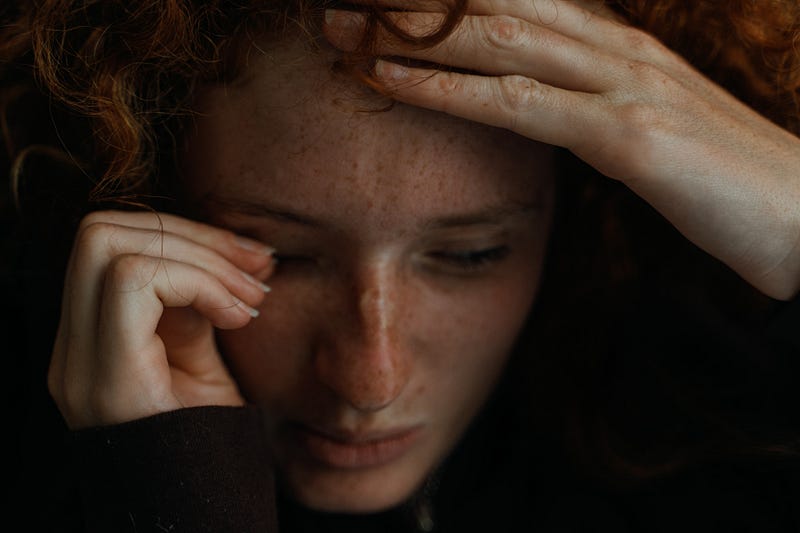
Based on current diagnostic criteria, researchers have estimated that half of all young people alive today will develop at least one diagnosable mental health disorder by the age of eighteen. Most of these young people— the vast majority — will be treated with psychiatric medications.
It’s difficult to say which of these does more harm — the diagnosis or the drug.
At first, a disorder label may not seem like a problem. In fact, young people and their parents often feel relief when a psychiatrist or other doctor says that, yes, what we’re dealing with here is a mental illness. That’s because a diagnosis provides exactly what we’re all looking for when we seek professional help: assurances that an expert knows what’s wrong with us and they know how to fix it.
Unfortunately, these assurances are often a mirage. The diagnostic criteria for most mental health disorders are so squishy and subjective that a person could see four different therapists and receive four different diagnoses. Many people have the profoundly disorienting experience of living for years with one mental illness only to find out later that, actually, they really have some other mental illness. For many, this happens over and over again.
In no other country in the world are young people so enthusiastically medicated for such a broad range of mental health problems. It’s not even close.
The confusion this causes a young person is seldom acknowledged but warrants far more attention. Neuroscientists have shown that much of our identity takes shape and hardens during our teenage years. (As the writer Jennifer Senior put it in a memorable New York magazine piece, you never truly leave high school.) Research has also taught us that when someone young is assigned a disorder label, they orient their self-concept around it. The label has gravity, in other words, and that gravity will weigh on a young person’s interpretation of themselves and their capabilities for years to come.
Youth and young adulthood are time when we should be especially prudent with disorder language. The threshold for calling something a mental illness should be high. Instead we’re shot-gunning disorder diagnoses at anything that twitches.
This rush to diagnose might be justifiable if led kids toward safe and helpful forms of care. But most don’t get that. They get pills.
Nationwide prescribing data show that, in 2021, more than six million young people (about 1 in 12 Americans under the age of eighteen) were on a psychiatric medication — primarily antidepressants, antipsychotics, and ADHD drugs. Among teens, that ratio rises to about 1 in 7.
When set aside CDC data collected in the late 2000s, roughly twice as many teens today are being treated with these drugs than were getting them just a decade ago. In no other country in the world are young people so enthusiastically medicated for such a broad range of mental health problems. It’s not even close. And early data suggest that prescription writing has further exploded — not just risen, but soared — since the start of the pandemic.
Considering how readily we’re giving these drugs to kids, any rational person (or parent) would assume that there is robust science backing their safety and efficacy. Surely, we would not be pushing chemicals into a teen or preteen’s brain unless we knew exactly what they were doing and how they would affect that child’s neurocognitive and emotional development. But again, these assumptions are wrong. Nothing like this evidence exists.
Take selective serotonin reuptake inhibitors (SSRIs), which are the most common class of drugs prescribed to adolescents with depression or anxiety disorders. A 2021 study led by researchers at the University of Oxford observed that “the effects of SSRIs in adolescence, a time when there are substantial changes in neural, cognitive, and social functioning, are not well understood.”
Furthermore, the few long-term research efforts that have looked into the efficacy of these drugs have concluded that people who take them do not end up in better shape than those who don’t.
Take depression, one of the most commonly diagnosed mental health disorder in teens. According to the authors of a 2020 paper in The Lancet: Psychiatry, a “substantial number of patients do not show improvement with treatment” while “a considerable proportion” of young people with depression get better without any treatment at all.
These sorts of findings turn up again and again in the peer-reviewed literature, especially if you’re looking beyond the kinds of temporary improvements that are more susceptible to placebo effects. In the long run, the evidence we have suggests that doing nothing is usually better than intervening with a drug.
It’s not that we don’t have efficacious treatments for depression and other mental or behavioral health challenges. There is good evidence that several forms of psychotherapy, including cognitive-behavioral therapies and mindfulness-based practices, are both safe and effective. Even for “severe” mental illnesses like schizophrenia, research has shown that these sorts of strategies may outperform drugs.
The problem is that these interventions are expensive and time-consuming. They require personalized care from a trained specialist. And so most kids — especially kids who live in low-income households — don’t get them. They get pills.
While the benefits of psychiatric drugs are dubious and the effects they have on the developing brain are largely a mystery, we do know — we are absolutely certain — that these drugs can cause serious side-effects.
When it comes to antidepressants (which, again, are used to treat a wide range of pediatric and adolescent disorders), the FDA has issued what’s known as a “black box” warning to prescribers — basically, a use-with-extreme-caution warning — because there’s evidence that these drugs increase the risk of suicide in young people.
Research in young people has also documented what’s known as “serotonin syndrome” — clusters of side-effects that include nausea, dry mouth, headache, dizziness, sweating, problems sleeping, agitation, mania, hallucinations, confusion, tremors, and an “altered level of consciousness.” But these and other adverse effects are often misidentified as signs of worsening illness. In many instances, they’re treated with increased dosing or additional drugs.
The problems with how we treat youth mental health challenges are part of a larger failure. We have adopted, as a culture, some ideas and terminology surrounding mental health that are not based in science and are doing us all harm.
For example, some of the old theories that our current approaches are based on — such as the “chemical-imbalance theory” of mental disorder — have not stood up to scrutiny.
If you ask a psychiatrist today where a mental illness comes from, you’ll get something fuzzy about genetic and biological and environmental factors all playing a part. This is often referred to as the “biopsychosocial model” of mental illness, and it’s basically a punt — a jargony substitute for “no idea.” As the Australian psychiatrist Niall McClaren has said, the biopsychosocial model is “a fig leaf which conceals the fact that psychiatry doesn’t have an established, articulated, publicly available model of mental disorder . . . and therefore modern psychiatry fails to meet the basic criteria for a science.” In other words, it’s a pseudoscience.
Influenced by this pseudoscience and desperate to help kids who are dealing with real and debilitating responses to the stresses of their lives, we are conditioning young people to believe many things that are damaging to them. These damaging beliefs are:
1. That you should be paying lots of attention to your feelings.
2. That unpleasant feelings may be symptoms of a disorder.
3. That these disorders stem from problems inside the brain.
4. That these disorders, if left untreated, are likely to get worse.
5. That these disorders are distinct, well-mapped illnesses.
6. That the drugs used to treat these illnesses are safe and effective.
These beliefs are pushed at young people from many directions. Apart from the psychiatrists who prescribe their products, drugmakers in the U.S. are permitted to produce unbranded “greater awareness” campaigns. They’re also permitted to fund mental health non-profit organizations, to bankroll social media influencers, and to pay for “native advertising” pieces on major media outlets — all of which shape our concepts of mental health and “wellness.”
The effect of all this is that young people, their parents, and the rest of us are saturated in content that ensures we over-examine our mental state and interpret our experiences with maximal distress.
Meanwhile, drugmakers can also pay for med-school and continuing-education materials that ensure doctors are bombarded with content that leads them toward diagnoses and drug treatments. “Pharmaceutical companies control every source of information,” said Adriane Fugh-Berman, MD, a professor of pharmacology at Georgetown University, when I spoke with her last year.
Everyone agrees that kids are today struggling. They need help.
Slapping a diagnostic label on them and offering them a pill is not the help they need or deserve, and it’s not the kind of help that the scientific evidence supports.
Unless we change our approach, we are going to raise generations of people who can never feel at ease in the world, with one another, or with themselves.