
Our deadly love affair with sugar.
Chocolates, desserts, drinks, can we resist them?
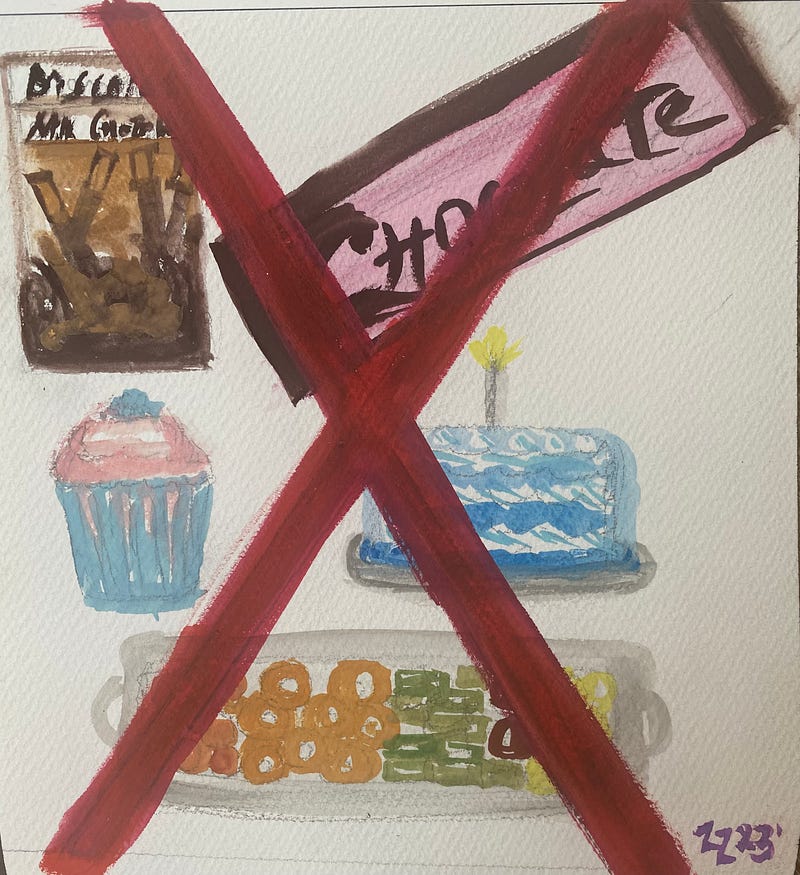
I do not have a sweet tooth, and I consider myself lucky. The attraction to sugar is and always has been a mystery to me. Maybe I should thank my father (RIP, dear dad) for that. He had a habit of walking in with a bag full of fruit daily, which he had picked up on his way home from work, and that was our dessert. Always seasonal fruit, I remember the sweetness of the grapes, the melons, and the aroma and mouth-watering taste of the ripe mangoes in the summer. In our home, sweets or desserts were a rarity to be served to guests. We would get a small piece of the cake or the very sweet jelaibe or ladoo, both sugary to the core, and today, I know, deadly to the core as well. I don’t remember anyone particularly concerned with the negative effects of these sweets, I do remember, one time a relative of my mom’s was visiting. He was thin and tall, and his feet seemed big, and at that time I wasn’t aware it was swelling, or that he suffered from a sugar disease (the layperson's word for diabetes). As he was drinking his tea, he reached for the sugar pot and almost emptied half of it into his tea, despite my mom’s objections, which he laughed off. A year later, we heard he had to amputate his one foot that got badly infected and couldn’t be saved.
When I married my dear husband, I realized he had a sweet tooth, and unlike my father, he would come home many days with chocolate or cheesecake (his favorite). My objections had little effect, and today I wonder how much of that sweet diet had to do with his onset of dementia at the relatively early age of 70. I was not well informed on diabetes, until I had my first born, and she was diagnosed with it at the tender age of 1. She had little to do with sugar consumption, but for her to have healthy eating habits and live a healthy life was my goal, and I had to change our lifestyle. Diet was a crucial factor to support that. For me, that was the point when I had to stop the flow of this deadly product into our homes and our lives. There was a ban on all candy, chocolate, desserts, and soda from entering our house. I would still get dessert and soda but only for when we would entertain and have guests over. That of course was the children’s gateway to binging until the forbidden treats were all consumed or thrown out by me. Halloween was my nightmare, as they were young and wanted to dress up and go candy collecting with friends. No amount of lectures did any good. So, each night, I would take out a handful of candy from their stash diminishing it little by little; Somehow I managed to elude getting caught, and it was worth the late-night invasion of candy stealing.
I am amazed at how we astute, well-educated humans so many times ignore the warnings and the very products that are harmful to our health and lead us many times down a miserable road of physical and mental ill health. The warnings loom in front of us, yet we pretend we don’t see them. When we knowingly ignore them, it makes me wonder how intelligent we are. We choose to slowly poison ourselves, and when the poison starts to act, the results are all kinds of disastrous health issues. Numerous studies have shown that consumption of added sugars leads to obesity, tooth decay, diabetes, cardiovascular disease, and nonalcoholic fatty liver disease, as well as cognitive decline and even some cancers. It doesn’t stop there; it leads to dull, dry skin, acne, cellular aging, and hair loss. It drains your energy and can lead to anxiety and depression. A friend of mine recently pointed to her lessening hair with worry and concern. I know she has a love for certain sugary sweets, and she promised to cut down on her sugar intake when she was told by her physician that the hair loss might be happening due to her love of sweets.
Studies say in the United States, the average adult consumes 17 teaspoons of sugar a day, which accounts for 14% of total calorie intake in adults following a 2000-calorie diet (Department of Health and Human Services). The sweet danger of sugar (www.health.harvard.edu/heart-health/the-sweet-danger-of-sugar) published 01–06–2022. 12 Ways Too Much Sugar Harms Your Body(https://www.webmd.com > diabetes) published 01–28–2023. 8 Ways Eating Too Much Sugar is bad for your health ( https://www.cnet.com) published 01–27–2020. Sweetened beverages are a major contributor to obesity. Sodas, juices, and sweet teas are loaded with fructose, a type of simple sugar, and consuming fructose increases your hunger and desire for food, more than glucose, the main type of sugar found in starchy foods. Research shows that drinking sugar-sweetened drinks is associated with weight gain and increased risk of Type 2 Diabetes. Additional studies show excessive consumption of fructose leads to resistance of leptin, an important hormone that regulates hunger. Evidence suggests a high sugar diet can lead to inflammation, high triglycerides, high blood sugar and increase in blood pressure levels, teenage and adult acne and increased risk of prostate cancer( PubMed Central).
The above-mentioned studies are a short list compared to the numerous studies that link high consumption of sugar to almost all serious diseases. Why do we ignore these studies and the knowledge that today we are facing high levels of obesity, cancer, cognitive decline leading to dementia and Alzheimer's, and the list goes on and on? The option to take care of our health and not turn a blind eye to the point of no return is our responsibility. This is a subject I am passionate about as I have two daughters who unfortunately to no fault of theirs have type 1 diabetes and have to be extremely conscious of their sugar intake (in all forms, not just simple sugars). They must take good care of themselves not only to live a long life but a healthy, quality life. The FDA should require caution labels on all such products, same as cigarettes, as they are not only harmful but addictive. It’s a lifestyle change that is necessary for longevity and a healthy life, sometimes it’s as simple as reading the labels on the food containers. Let’s not wait for an emergency or a traumatic situation to jolt us to change our habits and our lifestyle. The choice is ours; the choice is simple. Do we want a healthy life by foregoing what is dangerous for our health at times, or do we not?