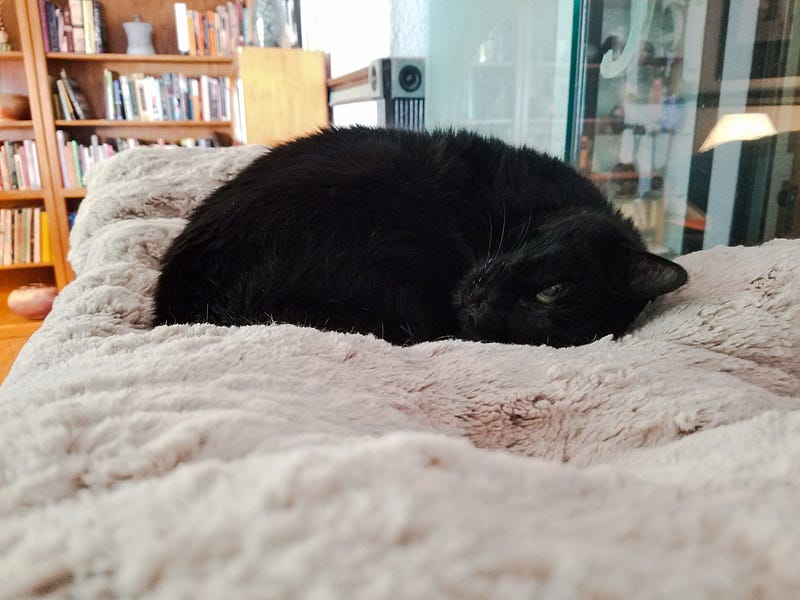
Our Cat Developed Diabetes
Clarice, the sweet old lady
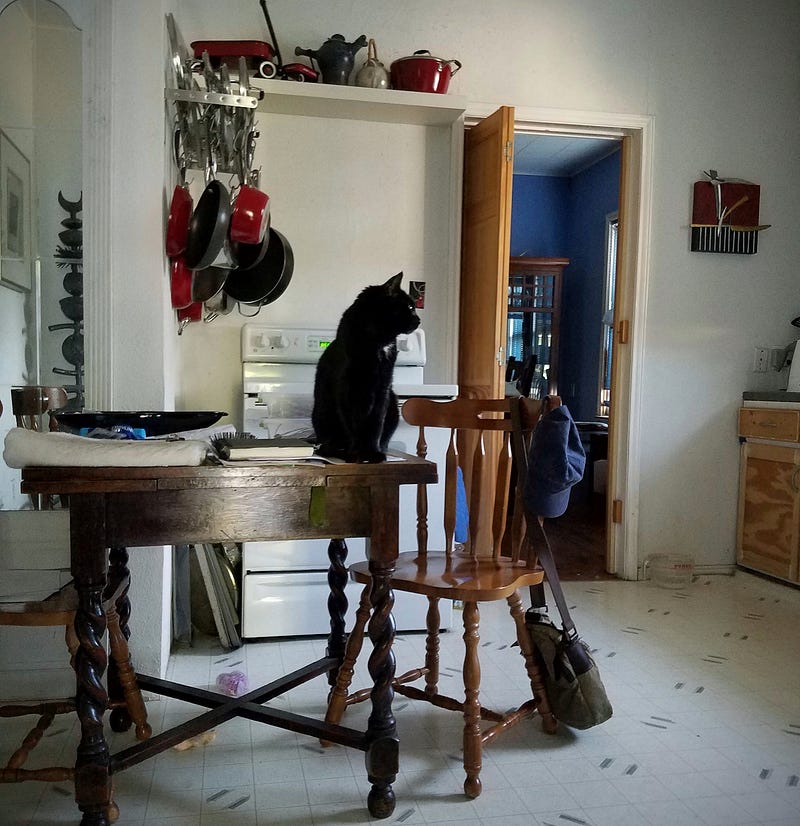
A while ago my partner, Barry, called me as I was getting ready to go to work, asking me if I could drop off one of our cats at the veterinarian’s office. So, on my way to work I took the old lady in and drop her off. Later that morning they called Barry and said that the doctor would like to speak to him, if he could come by that evening.
This is never a good sign.
I’ve had my share of “the doctor needs to see you urgently to discuss the results” conversations. It generally means that what you were afraid of is true, and possibly more. Sometimes you are worried about several possibilities, so upon hearing this request you get to spend the rest of your working day wondering which one of your worst fears is about to become reality.
So that evening Barry and I reported to the vet’s office promptly at 5:30, braced for what might be to come. Barry had noticed that Clarice had been drinking more water than usual, and eating more. He also noticed that she was going to the cat box more often, but that she wasn’t always able to urinate. Was it renal failure? Just a UTI? (Some cats get these so often that the antibiotics become like candy.) Was it diabetes? The previous year we lost a dog to congestive heart failure. We had become well versed at caring for geriatric animal patients. (Which is good, because most of our cats were about the same age, and they all became geriatric at the same time.)
We were taken to a room and told to wait for the doctor. As the attendant walked out, I thought that this staging did seem a bit melodramatic, though I’m certain there were logistical reasons for it. The staff at our local vet’s office are all very lovely people, and they took such good care of our dog while he went through his ordeal. Some of them cried as much as we did at the end of his life. So, here we were again, in the same exam room, waiting for the veterinarian that Barry has been seeing since before he met me 15 years ago.
The vet came in, as friendly as ever. She told us that Clarice has diabetes. Barry breathed a sigh of relief. He has had a diabetic cat before, and he’s also had cats who have gone through renal failure. The former is manageable; the latter is more or less a death sentence. The doctor explained how the pancreas and insulin work in cats, showed us the results (blood glucose of 633!) and explained what would be needed if we wanted to go forward with treatment.
Of course we did. So she brought Clarice in and had a kit of needles with a disposal canister with her. She taught us how to store and handle the insulin, how to draw up the proper amount and how to give the injection. She let us practice on Clarice with saline; Clarice was not amused. She grumbled threats under her breath as we practiced on her. Then we put her on the floor and all we saw was her tail disappearing as she escaped into the carrying case. She was having no more of this nonsense and please take her home immediately. Thank you, and good day.
We gathered up the case with Clarice inside it and loaded into the truck. She told us all about how the cow ate the cabbage as we rode through town. She didn’t stop until we arrived back at home—until we came back to this old house, an old house that has seen more cats than any of us will ever know. We are just characters in the story of this house, a house in a small town in Central Texas. And cats come with the property.