
Our Better Angels
We still have a chance to get one thing right in Afghanistan, but only if we act with urgency.
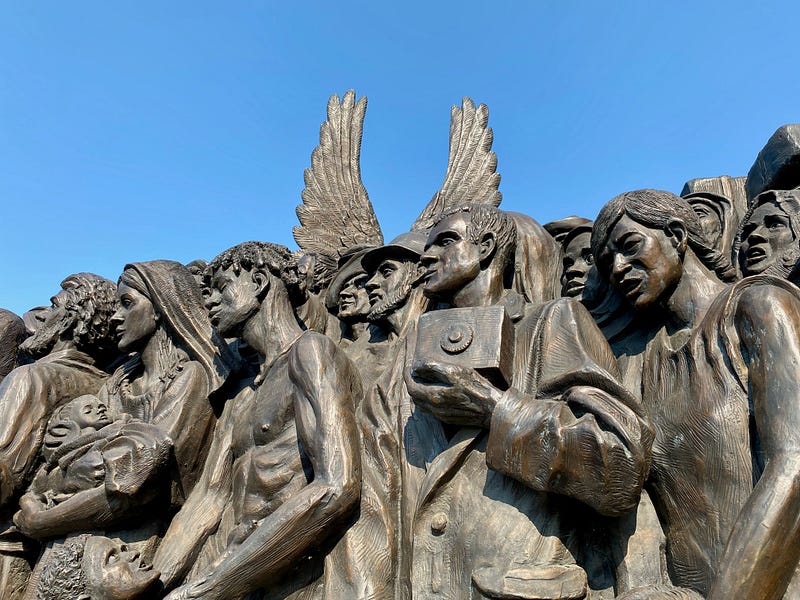
On September 29, 2019, St. Peter’s Square got its first new sculpture in 400 years, the last previous addition being a work by Bernini. Now we’ve been given Angels Unawares, commissioned by Pope Francis with the hope it would “remind everyone of the evangelical challenge of hospitality.”
The message is more than timely.
I’m sure you’ve seen the heartbreaking images out of Afghanistan following the collapse of the country’s government. Desperate families clinging to the landing gear of military transports attempting to fly out of the airport in Kabul. A baby lifted over razor wire into the arms of U.S. soldiers.
We’ve gotten a lot of things wrong during 20 years of war in Afghanistan. In the past weeks, we’ve seen a preponderance of them come back to haunt us. Our sole chance at some measure of redemption is to do all we can to save those Afghans who’ve put their faith in America and her ideals.
This should be a no-brainer, especially to the political leaders who will own the tragedy of Afghanistan for the simple reason it’s happening on their watch. Aiding those refugees created by the Taliban’s lightning takeover of the country is at the very least their chance to act decisively. Honorably.
I’m pretty sure that still counts for something. Even in politics.
The force opposing our ability to act decisively and with honor — and the prime reason the whole effort to get allies out of Afghanistan was left in such a thicket of bureaucratic red tape until it was too late — is the transformation of anything involving migration into the new third rail in politics. There was the business about the wall. Then the constant braying of a former president about caravans of migrants heading our way filled with bad intent. If you’re asking why we didn’t have a good plan for getting vulnerable people out of Afghanistan months or even years ago, that’s a big part of your answer.
So here we are. The plight of our Afghan friends faced with a murderous new regime transcends the whole debate about who should be allowed into this country. It’s easy to find good moral and strategic arguments for this, and they’re supported by the frightening images coming out of Afghanistan.
There’s also an enduring spiritual imperative. That’s what brings me back to the powerful message captured in Angels Unawares.
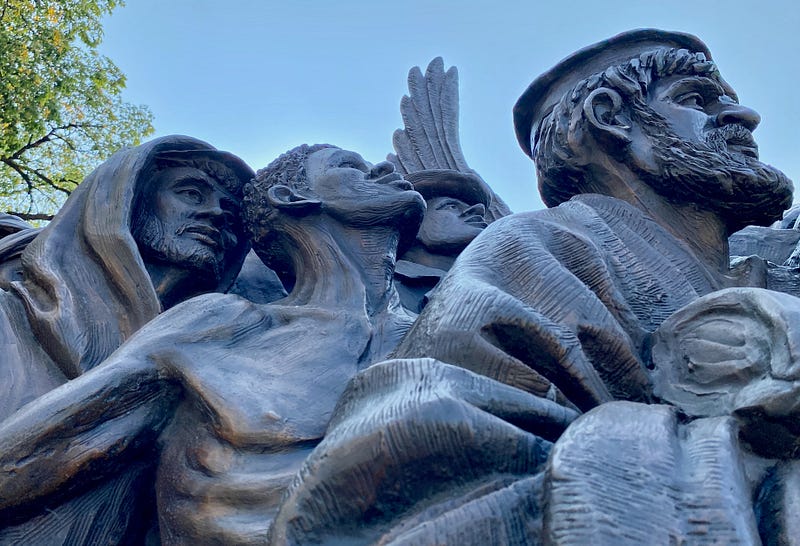
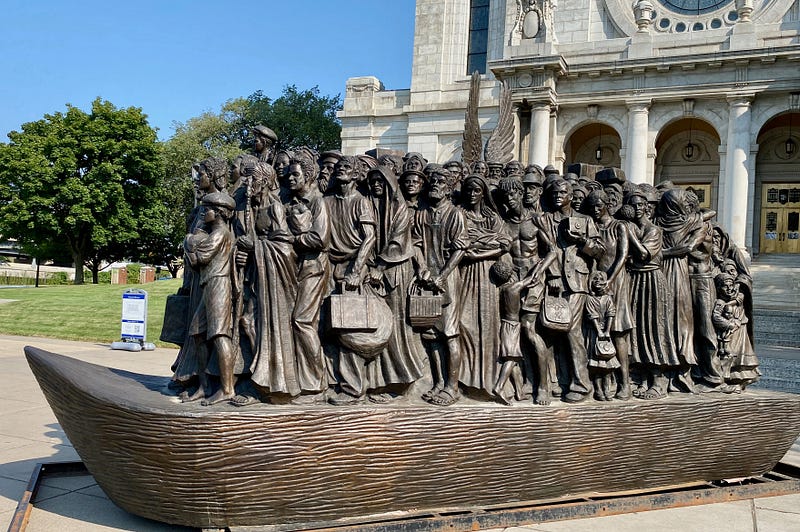
The 20-foot long, 3.5-ton bronze sculpture is the work of Canadian artist Timothy Schmalz. Its name comes from a passage in the Book of Hebrews:
“Be welcoming to strangers, many have entertained angels unawares.”
Stand far enough away to take the whole sculpture in and you see an overcrowded boat, laden with more than 140 refugees representing those who have sought escape from conflicts across the ages. A pair of angel’s wings rise at their center, in tribute to the sculpture’s Biblical inspiration.
Its real power comes when you move in closer. The more time you spend looking at the individual figures, the more you discover.
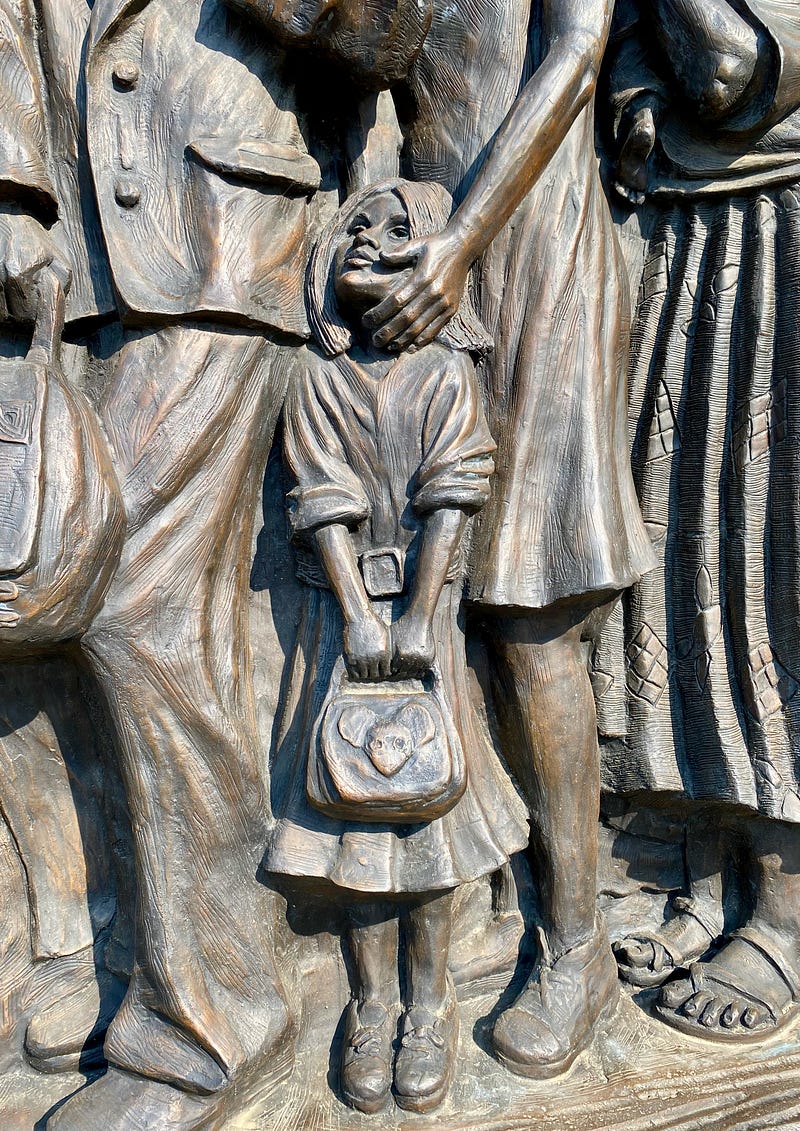
You see clues in their clothing. Some are escaping the Nazis in Germany. Others, famine in Africa. A couple with a child flee ancient Bethlehem and the grasp of King Herod.
Then you start to notice the faces. Eyes fixed on the horizon. The expressions a mix of fear and hope.
Hands clutch a few precious belongings.
Or a precious child.
The sculpture is large, but not monumental. Its real power is its ability to draw you in and connect you on a human scale, make you feel part of the refugee stories depicted.
I describe this in the hope that you might experience some measure of it yourself, or even better find an opportunity to see it. Visiting St. Peter’s Square is a hard ask in these pandemic times. Fortunately, a second casting was made and is currently on a tour of the U.S. before finding permanent installation at the Catholic University of America in Washington, DC.
I was lucky enough to see it on the plaza in front of the Basilica of St. Mary in Minneapolis. When I was a kid growing up in Minnesota one of the big stories here was the arrival of thousands of Hmong refugees following the collapse of the nation’s long military involvement in Vietnam. Not so long ago the whole town threw a parade for a daughter of the Hmong community when gymnast Suni Lee returned home after her spectacular gold-medal performance in the Olympics. She was one of us. She was the best of us.
That’s what happens when we follow what Abraham Lincoln once described as “the better angels of our nature.” That’s what we need to do now, even though we know it won’t be easy. Finding the will to find new ways to stand by the people of Afghanistan will require sharing the message as bravely and unambiguously as it’s stated in Angels Unawares. Making it right is on all of us.