avatarAndra Forbes

Free AI web copilot to create summaries, insights and extended knowledge, download it at here

2953

Abstract

age&utm_content=4798355">Pixabay</a></figcaption></figure><p id="19b1">Due to the Earth’s massive molten iron core and its rotation, a magnetic field was created around our planet, and that magnetic field has protected the Earth ever since. It deflects most of the solar wind, as those charged particles would otherwise strip away the protective ozone layer, which protects life from ultraviolet radiation.</p><p id="5cc1">It took a long time for the molten earth to cool down from its violent birth, but as it cooled, the new conditions allowed the first rain to fall from the sky, which began forming the oceans and lakes.</p><p id="aaff">It is thought that our planet contained water when it formed, and later on, incoming asteroids and comets also contributed to the water we see on Earth today. Around 3.5 to 4 billion years ago, some elements came together in the oceans and formed the key substances that would eventually create life on our planet.</p><p id="9020">You are a very advanced life form, but why are you here? Evolution is thought to be the reason.</p><p id="7fd2">Evolutionary biologists agree that humans and other living species are descended from simple bacteria-like ancestors. Bacteria can be traced back at least 3.5 billion years. Over countless generations, small modifications have taken place, and the small changes that are more favourable to life are more likely to be passed on to the next generation. This has been playing out since the first life appeared; that process is called natural selection.</p><p id="15ea">Everyone has their thoughts as to why we exist; personally, for me, evolution is the only plausible reason.</p><p id="75fb">One thing that evolution does need is plenty of time, as it is a very slow process. A human lifespan is not long enough for us to notice the tiny changes taking place in populations.</p><p id="e2ff"><b>Life is amazing, but it must be said that it is not yet fully understood why life emerged here on planet Earth.</b></p><p id="c445">Fossil stromatolites have been found in western Australia dating back 3.5 billion years. Their columns were made by Cyanobacteria, a single-cell photosynthesising microbe.</p><figure id="5cbe"><img src="https://cdn-images-1.readmedium.com/v2/resize:fit:800/1*YWXwZgiN6r5uoCO6LlIl8w.jpeg"><figcaption>Image by <a href="https://pixabay.com/users/barni1-773830/?utm_source=link-attribution&amp;utm_medium=referral&amp;utm_campaign=image&amp;utm_content=1105914">Bernd Hildebrandt</a> from <a href="https://pixabay.com/?utm_source=link-attribution&amp;utm_medium=referral&amp;utm_campaign=image&amp;utm_content=1105914">Pixabay</a></figcaption></figure><p id="5d04">That was a game-changer for the development of life because they produced the by-product oxygen, which slowly accumulated in our oceans and the atmosphere. That element eventually led to a big leap in animal evolution and diversity.</p><p id="5f89">It took about 400 million year

Options

s from the present day for insects to arrive and spread out around the globe. Dinosaurs roamed the Earth 230 million years ago and unexpectedly died out 66 million years ago when a large asteroid impacted the Earth. 130 million years ago, the first flowering plants appeared.</p><p id="3e77">Our early ancestors existed in Africa six million years ago, and modern humans named Homo sapiens have been around for over two hundred thousand years. Civilisation as we know it has existed for six thousand years.</p><figure id="dd4c"><img src="https://cdn-images-1.readmedium.com/v2/resize:fit:800/0*_STVmkR9lf-LrGti"><figcaption>Photo by <a href="https://unsplash.com/@aboodi_vm?utm_source=medium&amp;utm_medium=referral">aboodi vesakaran</a> on <a href="https://unsplash.com?utm_source=medium&amp;utm_medium=referral">Unsplash</a></figcaption></figure><p id="0b78">Some animals have evolved to be stronger, larger, and faster than we are; some can fly; and many live out their lives in water. But what sets us apart is that we have developed the most advanced brain, which has given us intelligence, curiosity, and the ability to carry out the science that is providing us with a better understanding of the universe and life itself.</p><p id="f2d3">Maybe someday we will prove that life exists somewhere else in that gargantuan area we call the universe.</p><p id="4cc2">The end.</p><p id="d08a">Come and Join Me on a Fictional Space Journey.</p><p id="f692">By the time we arrive at our final destination, you should have gained a far better understanding of how vast and ancient the universe is and how it has evolved over 13.8 billion years.</p><div id="e970" class="link-block"> <a href="https://readmedium.com/our-epic-space-journey-part-1-f481ff327f7a"> <div> <div> <h2>Come and Join Me on a Fictional Space Journey</h2> <div><h3>By the time we arrive at our final destination, you should have a far better understanding of the workings of the…</h3></div> <div><p>medium.com</p></div> </div> <div> <div style="background-image: url(https://miro.readmedium.com/v2/resize:fit:320/1*sXXVpS8S8LBicL7CO6NsAA.jpeg)"></div> </div> </div> </a> </div><div id="9a3a" class="link-block"> <a href="https://readmedium.com/my-medium-platform-experience-c26e200cee6c"> <div> <div> <h2>A Short Guide to the Medium Platform</h2> <div><h3>It is free to join the Medium Platform, all you need to do is register.</h3></div> <div><p>medium.com</p></div> </div> <div> <div style="background-image: url(https://miro.readmedium.com/v2/resize:fit:320/1*chRce8_xIGFP45mM_P1j8Q.jpeg)"></div> </div> </div> </a> </div></article></body>

Could Our Amazing World Be Unique?

That is a bold statement considering there are an estimated two trillion galaxies in the known Universe.
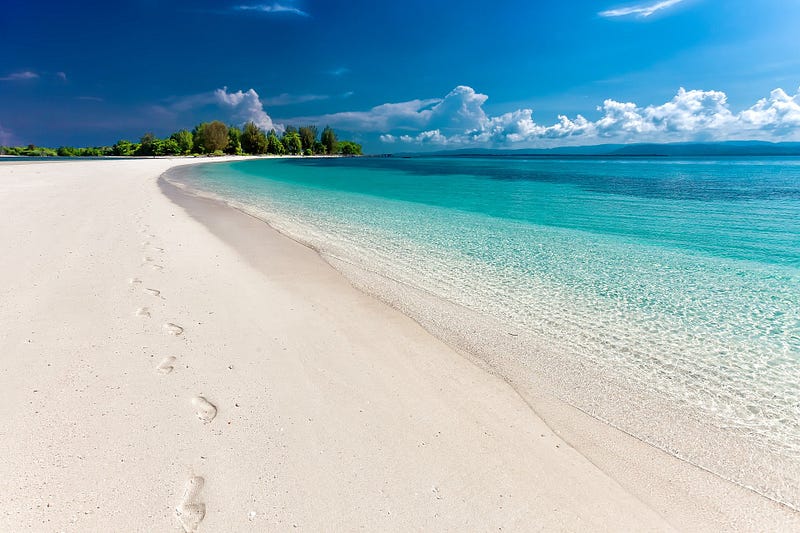
Image by Kanenori from Pixabay

British spelling.

Some of those galaxies will hold millions of stars, and others will hold billions.

The number of planets in all of those galaxies is beyond our comprehension.

Sometimes, we take our home planet for granted. This chunk of rock orbiting the sun is so special to us and the millions of other species who share our world, and as far as we know, there is no other place remotely like it.

Our beautiful world, the Earth, is the third-closest planet to the Sun, orbiting at a distance of 149.6 million kilometres.

There are countless reasons why life as we know it can live and thrive on our magical world, but one of the main reasons is that the Earth orbits the Sun at the perfect distance. That area in space is called the Goldilocks zone or habitable zone, which ensures that it is neither too hot nor too cold. Liquid water exists in the habitable zone, which is a requirement for all life on Earth.

If we were much closer to the sun, our oceans and lakes would boil dry, and if our planet were too far from the sun, all the water on Earth would be frozen solid.

Sometime in the distant future, the conditions on Earth will change and all life will end, but that will be a natural process. The sun is slowly getting warmer; maybe in a billion years, it will be so hot on the Earth’s surface that all life will be extinct. But in the meantime, I hope that mankind will treat our only home with respect for the sake of ourselves and all other living things that share our world.

The Earth is roughly 4.5 billion years old, just a little younger than the Sun. Gravity has pulled most of the heavier elements, like iron and nickel, down into its core, with the lighter elements staying at the surface and forming the crust.

Image by 99mimimi from Pixabay

Due to the Earth’s massive molten iron core and its rotation, a magnetic field was created around our planet, and that magnetic field has protected the Earth ever since. It deflects most of the solar wind, as those charged particles would otherwise strip away the protective ozone layer, which protects life from ultraviolet radiation.

It took a long time for the molten earth to cool down from its violent birth, but as it cooled, the new conditions allowed the first rain to fall from the sky, which began forming the oceans and lakes.

It is thought that our planet contained water when it formed, and later on, incoming asteroids and comets also contributed to the water we see on Earth today. Around 3.5 to 4 billion years ago, some elements came together in the oceans and formed the key substances that would eventually create life on our planet.

You are a very advanced life form, but why are you here? Evolution is thought to be the reason.

Evolutionary biologists agree that humans and other living species are descended from simple bacteria-like ancestors. Bacteria can be traced back at least 3.5 billion years. Over countless generations, small modifications have taken place, and the small changes that are more favourable to life are more likely to be passed on to the next generation. This has been playing out since the first life appeared; that process is called natural selection.

Everyone has their thoughts as to why we exist; personally, for me, evolution is the only plausible reason.

One thing that evolution does need is plenty of time, as it is a very slow process. A human lifespan is not long enough for us to notice the tiny changes taking place in populations.

Life is amazing, but it must be said that it is not yet fully understood why life emerged here on planet Earth.

Fossil stromatolites have been found in western Australia dating back 3.5 billion years. Their columns were made by Cyanobacteria, a single-cell photosynthesising microbe.
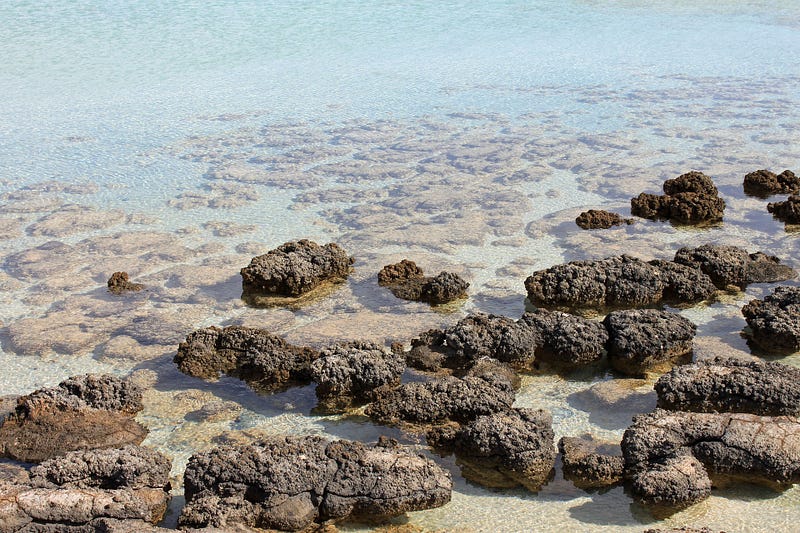
Image by Bernd Hildebrandt from Pixabay

That was a game-changer for the development of life because they produced the by-product oxygen, which slowly accumulated in our oceans and the atmosphere. That element eventually led to a big leap in animal evolution and diversity.

It took about 400 million years from the present day for insects to arrive and spread out around the globe. Dinosaurs roamed the Earth 230 million years ago and unexpectedly died out 66 million years ago when a large asteroid impacted the Earth. 130 million years ago, the first flowering plants appeared.

Our early ancestors existed in Africa six million years ago, and modern humans named Homo sapiens have been around for over two hundred thousand years. Civilisation as we know it has existed for six thousand years.
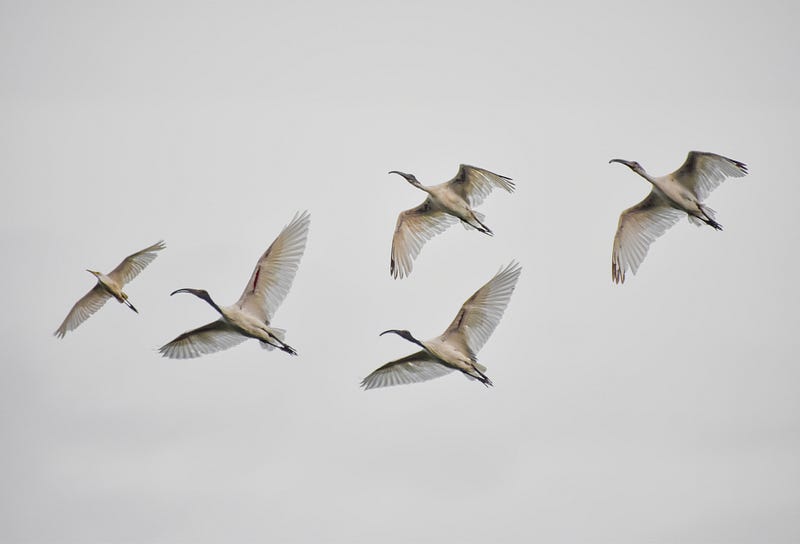
Photo by aboodi vesakaran on Unsplash

Some animals have evolved to be stronger, larger, and faster than we are; some can fly; and many live out their lives in water. But what sets us apart is that we have developed the most advanced brain, which has given us intelligence, curiosity, and the ability to carry out the science that is providing us with a better understanding of the universe and life itself.

Maybe someday we will prove that life exists somewhere else in that gargantuan area we call the universe.

The end.

Come and Join Me on a Fictional Space Journey.

By the time we arrive at our final destination, you should have gained a far better understanding of how vast and ancient the universe is and how it has evolved over 13.8 billion years.

Our World Out Of Balance
Our World Game
Countries Of The World
Care For Our World
The World In Danger
Recommended from ReadMedium