
Oscar Wilde Doesn’t Care About Your Opinion
On the true value of education
Education is supremely misunderstood. Both by those of whom we think are lucky enough to have acquired ‘it’, and by the less lucky masses whom we deign to call ‘uneducated’.
In the minds of many, to be educated equals a degree or two gained and a healthy quantity of information accrued. It is a social allure as much as an intellectual one.
The educated man or woman can then stroll about town, dipping in and out of the workforce to dispense the knowledge they have so diligently gathered.
They are full of opinions and they know it. And we know it too — for that is what makes them seem so intelligent. International politics? History? Cryptocurrency? Philosophy? They have their two cents on everything.
And yet, being highly opinionated, I will argue, is proof of a failure of education. It is education forgetting its most crucial aspect. That aspect which Oscar Wilde so eloquently termed, ‘the Oxford temper’.
The Oxford temper
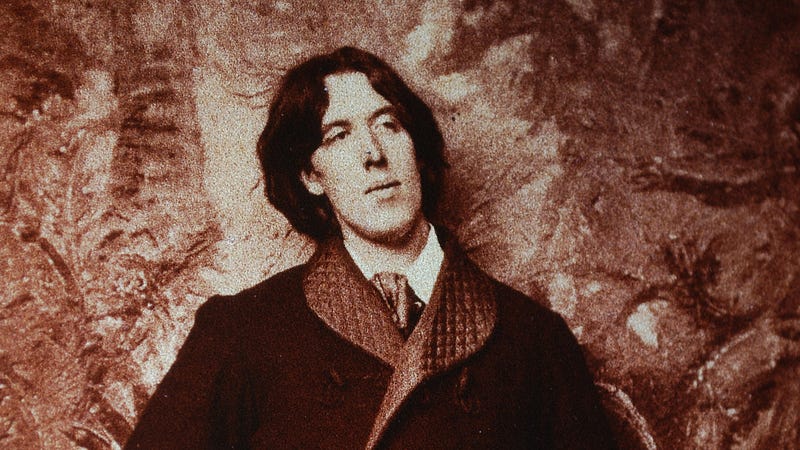
In De Profundis, a letter Wilde wrote while imprisoned at Reading Gaol, the poet lambasts his estranged lover, Lord Alfred Douglas, for failing to properly educate himself.
‘You had not yet been able to acquire the ‘Oxford temper’ in intellectual matters, never, I mean, been one who could play gracefully with ideas but had arrived at violence of opinion merely.’ — De Profundis, p. 20
The violence of opinion: the intellectual commingling of greed and ignorance; it is one of the oldest traps to enmesh our mental lives. It is unskillful thinking; a mind at the mercy of its own whims.
The Oxford temper, by contrast, is the ability to hold, with equanimity, multiple viewpoints at the same time.
It is thinking with a lightness of touch.
The mind that possesses this quality is multidisciplinary by nature — it is foremost concerned with questions that lead it towards the attainment of Truth and Beauty.
Education today
Since Wilde’s time, our educational institutions have certainly not moved closer to this ideal. If anything, the constant emphasis on rote memorization and regurgitation has only magnified the issue.
By inculcating our children this way, we have let the spotlight shine only on Information, neglecting Methodology in the process. We see the consequences of this bias writ large in the spheres of social media every day.
‘There are more things in heaven and earth, Horatio, than are dreamt of in your philosophy’ — Hamlet, Act 1 Scene 5
The remedy, if one exists, must include changing our collective attitude towards schooling.
Public schools should ensure that students have a firm grounding in the scientific method and philosophy. These equip students with meta-skills that are applicable to every corner of their lives.
The real sign of education is dispassionate and deliberate thinking. It is asking the right questions, all the while knowing that the answer — if you even reach one — is likely not wholly correct.
We would all be better off with a little more doubt in the world.
Thank you for reading. Please consider subscribing by email so you never miss another piece.