avatarNichola Scurry

Free AI web copilot to create summaries, insights and extended knowledge, download it at here

3296

Abstract

s’ lead singer, David Crosby, wanted to record “Hey Joe” as early as 1964, but the other band members were unenthusiastic. So it wasn’t until 1966 that The Byrds released a version of “Hey Joe” on their album <i>Fifth Dimension</i>.</p><p id="9b79">Some claim The Surfaris’ recording of “Hey Joe”, released on the B-side of their single “So Get Out”, was the original recording of the song. But its catalogue number places the release at mid-1966, before The Leaves’ version.</p><p id="f427">“Hey Joe” was popular in the mid-1960s for many reasons. “Old Americana and romantic gloom” were going through a resurgence and the song fit in nicely with these themes. The chord pattern C-G-D-A-E, a circle of reversed fifths, sounds great and the lyrics tell a timeless story.</p><h1 id="b5f3">The Leaves’ version</h1><p id="1cd1">The Leaves released their recording of “Hey Joe” in late 1965. But it didn’t sell well, so they re-recorded and re-released in 1966. This version of “Hey Joe” became a US hit. In fact, this version by The Leaves was the only version of “Hey Joe” to reach the Top 40 on the Billboard charts.</p><p id="631c">The Leaves’ “Hey Joe” is fast-paced with a screaming guitar and thumping bass, pure garage rock. It’s completely different from the Hendrix version, but a cracking good tune.</p> <figure id="818e"> <div> <div> <img class="ratio" src="http://placehold.it/16x9"> <iframe class="" src="https://cdn.embedly.com/widgets/media.html?src=https%3A%2F%2Fwww.youtube.com%2Fembed%2FKWv03Wgz0PQ%3Ffeature%3Doembed&amp;display_name=YouTube&amp;url=https%3A%2F%2Fwww.youtube.com%2Fwatch%3Fv%3DKWv03Wgz0PQ&amp;image=https%3A%2F%2Fi.ytimg.com%2Fvi%2FKWv03Wgz0PQ%2Fhqdefault.jpg&amp;key=a19fcc184b9711e1b4764040d3dc5c07&amp;type=text%2Fhtml&amp;schema=youtube" allowfullscreen="" frameborder="0" height="480" width="640"> </div> </div> </figure></iframe></div></div></figure><h1 id="4a0f">Hendrix and “Hey Joe”</h1><p id="a757">In 1966, former Animals bassist, Chas Chandler, saw Hendrix perform “Hey Joe” at the Greenwich Village club Cafe Wha? with his band Jimmy James and the Blue Flames. Chandler loved their version of the song and persuaded Hendrix to join him in England. In England, Chandler became Hendrix’s producer and manager.</p><p id="d77e">Hendrix, with Noel Redding and Mitch Mitchell, formed the Jimi Hendrix Experience. In October 1966, they recorded their first single, “Hey Joe”, with backing vocals performed by the Breakaways (Jean Hawker, Margot Newman and Vicki Brown).</p><p id="e4e5">The single was released in December 1966. It instantly became a hit in England. “Hey Joe” entered the Top 10 of the UK Singles Chart in January 1967, peaking at number six. Hendrix and his band became sensations. “Hey Joe” was released in the US in May 1967 but failed to chart.</p><p id="0e56">Today Hendrix’s “Hey Joe” is widely considered the best version of the song. It’s listed as number 201 in <i>Rolling Stone</i> magazine’s <i>The 500 Greatest Songs of All Time</i>. In 2000, <i>Total Guitar</i> magazine ranked it as the 13th greatest cover version ever and in 2009 VH1 listed it as the 22nd greatest hard rock song.</p><p id="45c0">Probably the most memorable

Options

performance of “Hey Joe” took place around 9 am on Monday 18 August 1969. Hendrix closed the Woodstock festival with “Hey Joe” song to a crowd of 80,000 people, all cheering for more.</p><p id="a800">Compared with earlier versions of “Hey Joe”, Hendrix’s version is slower-paced. It’s a transition from garage rock to blues rock. And of course, Hendrix’s guitaring is magical.</p> <figure id="7400"> <div> <div> <img class="ratio" src="http://placehold.it/16x9"> <iframe class="" src="https://cdn.embedly.com/widgets/media.html?src=https%3A%2F%2Fwww.youtube.com%2Fembed%2FTBSi7vMP17c%3Ffeature%3Doembed&amp;display_name=YouTube&amp;url=https%3A%2F%2Fwww.youtube.com%2Fwatch%3Fv%3DTBSi7vMP17c&amp;image=https%3A%2F%2Fi.ytimg.com%2Fvi%2FTBSi7vMP17c%2Fhqdefault.jpg&amp;key=a19fcc184b9711e1b4764040d3dc5c07&amp;type=text%2Fhtml&amp;schema=youtube" allowfullscreen="" frameborder="0" height="480" width="640"> </div> </div> </figure></iframe></div></div></figure><h1 id="e27e">Other versions of “Hey Joe”</h1><p id="b5c6">“Hey Joe” is one of the most-played songs of the twentieth century. It was a staple in coffeehouses, garages, rock clubs and festivals. This song seems to sum up the mid-to-late 60s in a way no other song does.</p><p id="a0c0">Many artists released versions of “Hey Joe”, including:</p><ul><li>Cher in 1966</li><li>Johnny Hallyday in 1966</li><li>Johnny Rivers in 1968</li><li>Deep Purple in 1968</li><li>Marmalade in 1968</li><li>Wilson Pickett in 1969</li><li>Patti Smith in 1974</li><li>Soft Cell in 1983 (worth a <a href="https://youtu.be/YLoDVpg8kek">listen</a> if you like your synth)</li><li>Nick Cave and the Bad Seeds in 1986</li><li>Willy DeVille’s <a href="https://youtu.be/0lUJLXMSYkg">mariachi version</a> in 1992</li><li>Eddie Murphy in 1993 (yep, the comedian)</li><li>The Offspring in 2001</li><li>Robert Plant in 2002</li></ul><p id="ac4a">In 2006, 1572 guitarists played “Hey Joe” in the town square of Wrocław, Poland, setting a Guinness record. They then upped it to 1881 guitarists in 2007, 1951 in 2008, 6346 in 2009 and 7273 in 2012. An achievement as monumental as the song itself.</p><p id="fbbf"><b><i>References</i></b></p><p id="88be"><a href="https://www.discogs.com/artist/347895-Billy-Roberts"><i>Billy Roberts</i></a></p><p id="94f9"><a href="https://en.wikipedia.org/wiki/Hey_Joe"><i>Hey Joe</i></a></p><p id="0766"><a href="https://www.songfacts.com/facts/jimi-hendrix/hey-joe"><i>Hey Joe by Jimi Hendrix</i></a></p><p id="8d64"><a href="https://www.avclub.com/hey-joe-didn-t-start-or-end-with-jimi-hendrix-1798282081"><i>“Hey Joe” didn’t start or end with Jimi Hendrix</i></a></p><p id="7546"><a href="https://www.azlyrics.com/lyrics/jimihendrix/heyjoe.html"><i>“Hey Joe” Lyrics</i></a></p><p id="822b"><a href="https://genius.com/The-jimi-hendrix-experience-hey-joe-lyrics"><i>The Jimi Hendrix Experience Hey Joe Lyrics</i></a></p><p id="769f"><i>If supporting writers is on your agenda,</i></p><p id="7075"><i>Why not become a <a href="https://nicscurry.medium.com/membership">Medium member</a>?</i></p><p id="5966"><i>Nic receives a wee commission,</i></p><p id="63ea"><i>And your praises soon she’ll be a-whistlin’.</i></p></article></body>

Origins of the Song “Hey Joe”

From Greenwich Village coffeehouses to 7000 Polish guitarists
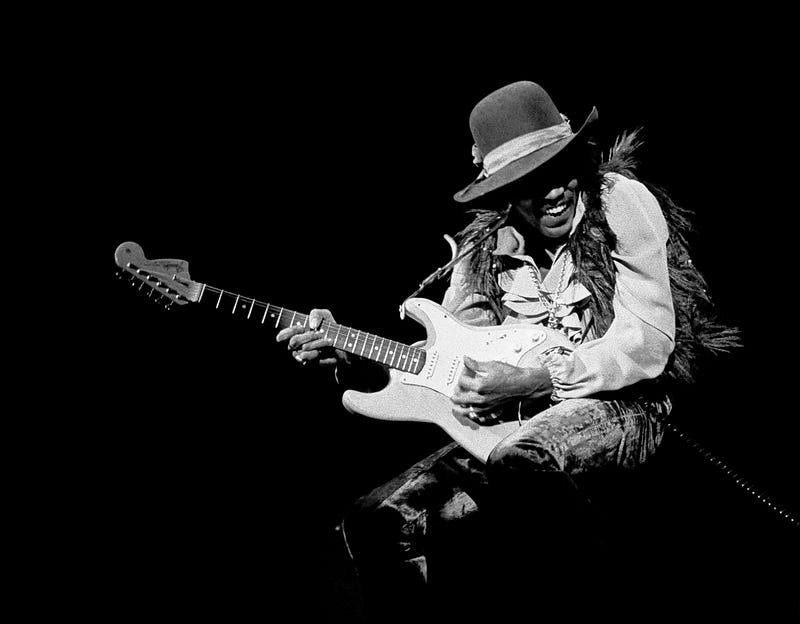
Jimi Hendrix, 10 May 1968. Photo by Steve Banks, CC BY-SA 4.0 via Wikimedia Commons

“Hey Joe” is a song about a man on the run to Mexico after shooting his unfaithful wife. It was a 1960s rock standard and it was the song that turned Jimi Hendrix into a star.

Some claim that “Hey Joe” is a traditional song. However, no documentary evidence backs this up, and folk singer Billy Roberts is generally credited with authorship. In late 1965, Los Angeles garage band, The Leaves, recorded the earliest-known commercial release of “Hey Joe.

Billy Roberts’ authorship rights

In the early 1960s, Roberts played in coffeehouses and on the streets of Greenwich Village, New York City. There it’s said he composed “Hey Joe”, registering it for copyright in 1962. He performed the song on the Greenwich Village hootenanny scene and later in San Francisco.

Before Roberts could record and release “Hey Joe”, he heard that a musician friend from New York, Chet Powers (also known as Dino Valenti), had listed himself as songwriter on some early releases of “Hey Joe”. Then in 1965, Roberts’ friend and producer, Hillel Resner, told him about The Leaves’ recording of “Hey Joe”.

It turned out that Valenti had signed a publishing contract with Third Story Music (now Third Palm Music). With help from Resner’s attorney father, Roberts retrieved his authorship rights. But this didn’t stop the release of recordings of “Hey Joe” with other songwriters listed as the author.

Roberts was injured in a serious car accident in the 90s and didn’t perform or record after that time. He passed away in 2017. Royalties from “Hey Joe” continued to be paid to Roberts through Third Palm Music.

Online you can find folksy, banjo-plucking versions of “Hey Joe” that some people say are original Roberts recordings. However, the consensus is these are fakes.

Another Greenwich Village musician, Tim Rose, performed “Hey Joe” and said it was a traditional song he’d learned as a boy. The actual origin and authorship of “Hey Joe” isn’t clear, but credit tends to be given to Roberts, who has the strongest claim.

LA garage rock versions

By the mid-1960s, “Hey Joe” had become popular on the Los Angeles music scene. Bands like The Leaves, The Standells, The Surfaris, Love, The Music Machine and The Byrds all recorded garage rock versions of the song. Love’s and The Byrds’ recordings of “Hey Joe” feature slightly different lyrics than the other versions.

Love’s lead singer, Arthur Lee, claimed that his band’s version brought “Hey Joe” to Hendrix’s attention, as well as to most of the other LA bands who covered the song. In 1966, Rose recorded a slower version of “Hey Joe” which he said influenced Hendrix.

The Byrds’ lead singer, David Crosby, wanted to record “Hey Joe” as early as 1964, but the other band members were unenthusiastic. So it wasn’t until 1966 that The Byrds released a version of “Hey Joe” on their album Fifth Dimension.

Some claim The Surfaris’ recording of “Hey Joe”, released on the B-side of their single “So Get Out”, was the original recording of the song. But its catalogue number places the release at mid-1966, before The Leaves’ version.

“Hey Joe” was popular in the mid-1960s for many reasons. “Old Americana and romantic gloom” were going through a resurgence and the song fit in nicely with these themes. The chord pattern C-G-D-A-E, a circle of reversed fifths, sounds great and the lyrics tell a timeless story.

The Leaves’ version

The Leaves released their recording of “Hey Joe” in late 1965. But it didn’t sell well, so they re-recorded and re-released in 1966. This version of “Hey Joe” became a US hit. In fact, this version by The Leaves was the only version of “Hey Joe” to reach the Top 40 on the Billboard charts.

The Leaves’ “Hey Joe” is fast-paced with a screaming guitar and thumping bass, pure garage rock. It’s completely different from the Hendrix version, but a cracking good tune.

Hendrix and “Hey Joe”

In 1966, former Animals bassist, Chas Chandler, saw Hendrix perform “Hey Joe” at the Greenwich Village club Cafe Wha? with his band Jimmy James and the Blue Flames. Chandler loved their version of the song and persuaded Hendrix to join him in England. In England, Chandler became Hendrix’s producer and manager.

Hendrix, with Noel Redding and Mitch Mitchell, formed the Jimi Hendrix Experience. In October 1966, they recorded their first single, “Hey Joe”, with backing vocals performed by the Breakaways (Jean Hawker, Margot Newman and Vicki Brown).

The single was released in December 1966. It instantly became a hit in England. “Hey Joe” entered the Top 10 of the UK Singles Chart in January 1967, peaking at number six. Hendrix and his band became sensations. “Hey Joe” was released in the US in May 1967 but failed to chart.

Today Hendrix’s “Hey Joe” is widely considered the best version of the song. It’s listed as number 201 in Rolling Stone magazine’s The 500 Greatest Songs of All Time. In 2000, Total Guitar magazine ranked it as the 13th greatest cover version ever and in 2009 VH1 listed it as the 22nd greatest hard rock song.

Probably the most memorable performance of “Hey Joe” took place around 9 am on Monday 18 August 1969. Hendrix closed the Woodstock festival with “Hey Joe” song to a crowd of 80,000 people, all cheering for more.

Compared with earlier versions of “Hey Joe”, Hendrix’s version is slower-paced. It’s a transition from garage rock to blues rock. And of course, Hendrix’s guitaring is magical.

Other versions of “Hey Joe”

“Hey Joe” is one of the most-played songs of the twentieth century. It was a staple in coffeehouses, garages, rock clubs and festivals. This song seems to sum up the mid-to-late 60s in a way no other song does.

Many artists released versions of “Hey Joe”, including:

  • Cher in 1966
  • Johnny Hallyday in 1966
  • Johnny Rivers in 1968
  • Deep Purple in 1968
  • Marmalade in 1968
  • Wilson Pickett in 1969
  • Patti Smith in 1974
  • Soft Cell in 1983 (worth a listen if you like your synth)
  • Nick Cave and the Bad Seeds in 1986
  • Willy DeVille’s mariachi version in 1992
  • Eddie Murphy in 1993 (yep, the comedian)
  • The Offspring in 2001
  • Robert Plant in 2002

In 2006, 1572 guitarists played “Hey Joe” in the town square of Wrocław, Poland, setting a Guinness record. They then upped it to 1881 guitarists in 2007, 1951 in 2008, 6346 in 2009 and 7273 in 2012. An achievement as monumental as the song itself.

References

Billy Roberts

Hey Joe

Hey Joe by Jimi Hendrix

“Hey Joe” didn’t start or end with Jimi Hendrix

“Hey Joe” Lyrics

The Jimi Hendrix Experience Hey Joe Lyrics

If supporting writers is on your agenda,

Why not become a Medium member?

Nic receives a wee commission,

And your praises soon she’ll be a-whistlin’.

Music
1960s Music
Jimi Hendrix
Culture
Rock
Recommended from ReadMedium