
Origin of Democracy and the Problem of Power
Was preferring to settle in the cities was a bad idea?
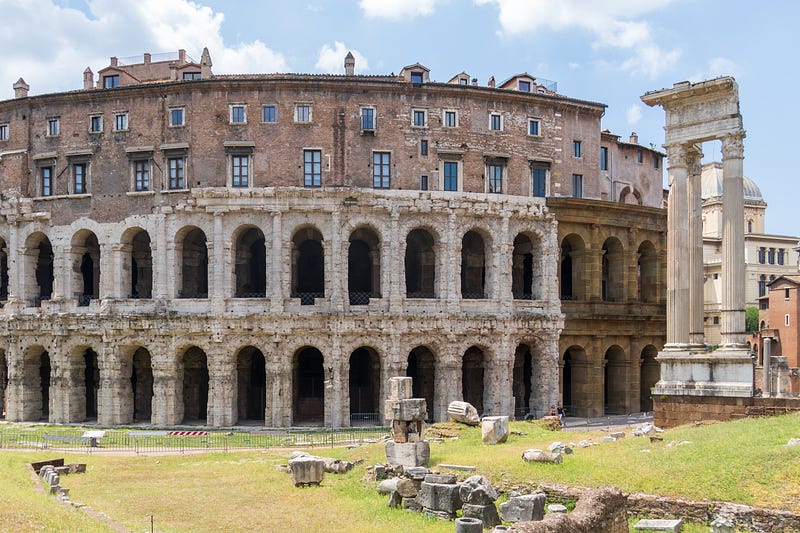
Origin of cities in 4000 BC Mesopotamia led to a troublesome question. To this date, human civilizations are battling to find a solution for.
How to manage a group of diverse human living within a limited territory?
Across the world, along great rivers, farming societies settled from the Nile to Tigris, Euphrates and Indus. This condensed many people in limited space and thus created what we know as cities. These huge settlements of humans opened new opportunities and additional problems. Central to such problem remained the question of how to make so many people live and work in coordination.
To manage humans with such massive numbers, an unseen force was created simultaneously. We recognise this dominant force as the “state”. In theory, the State is an organization which comprises a group of people responsible to maintain order and welfare of its subjects. The power of the state comes from its subjects who comply to merge their individual forces in hands of a committed individual often called King or Ruler.
Traditions, norms, and culture keep the ruler focused on public issues.
Once armed with power, the ruler had a choice to make. He could either act according to the wishes of people or work to increase his power and wealth. Traditions, norms, and culture were the weapons to keep the ruler focused on public issues. But these weak checks often failed to serve the purpose. The Kings often abused their power and acted against the will of people.
For the ruler and people, the need to protect the land from other ambitious rulers created the space for an institution named military. The military promised to guard the land and freedom at the risk of their lives. People often volunteered to join the force. In theory, the military commanders were loyal to the state and its narrative. But in the practical world, they often protected the narrative of the ruler. This helped the ruler to protect himself from competing aspirants of control and ambitious armies outside the border.
The force of nature often disrupted daily life in cities and threatened the future. The dependency on rains for farming and sun for light urged people to seek understanding of the phenomenon. They came to believe that some invisible forces were governing the cycle of seasonal crops. This imagination gave birth to another force named religion. The religion laid down a set of rules and principles. Adhering to these rules, vowed to win favour from invisible forces of nature to protect from its wrath.
The people who formed the link between society and natural forces were known as priests. By annexing the force of religion, these people became powerful and important in matters of state running. Their influence on ruler and subjects grew vastly. They brought people under a common set of rules and guided their destiny. They also cooperated with the rulers and benefited from each other support. These men were used to make laws which favoured and legitimize the rule and power. They also served to justify the unlawful actions of rulers such as oppression, conflict and war.
Where the King had all the right on the rights of his subjects
When a ruler failed to act according to aspirations of society, they faced a difficult decision to make. They either had to act against the monarch and put in someone more trustworthy. Or remain enslaved to him and settle for a life where the state is not receptive to their issues. Opting, the second, gave birth to the authoritarian ruling regimens, where the king had all the right on rights of his subjects.
After centuries of being ruled, the ordinary people rose to exert their will. The Roman republic witnessed such efforts taking shape. They formed a new body named senate to hear the voice of people through representatives. Although far from perfect, this allowed some checks on rulers and led to prosperity. Later this redefined relation between people and state continued to develop with power trickling down more and more in the hands of people. In today’s world, Europe and the USA are centres of such systems of state running known as democracy.
Democracy promise to balance the relationship between state and society, with ultimate power tilted toward later.
In a democratic system, the core of power lies within the people. The people by organizing in different forms as society act to control the state and keep it focused on their own core problems. The state threatened by people’s power remains on the path and not divulge from issues of public interest.
There is a continuous drift of state away from people issues.
However, practically things do not move as smooth as envisioned. There is a continuous drift of state away from people’s issues. Elites who act to serve their own interests are often behind these attempts. Their interests often collide with public interests, and if the state is not facing pressure from people, it will surely act to serve the elites.
When human lived as hunter-gatherer societies, life was simple. A small group of people were easy to manage. There were no complex relations between people of different occupations. Minor disputes to resolve. No borders to protect. Little surplus, so everyone had to work. Little direct dependence on natural forces for harvest and food. However, life was dangerous and short. Diseases and predators always threatened human in the open jungle.
Settling in cities made life secure and prosperous, but created complex issues to resolve. We have not yet found the solution to managing power in society. Concentrating the power in fewer hands makes the state machinery efficient, but serves to further strengthen the powerful. Decentralizing the power makes the state machinery works inefficient and painfully slow.
Ordinary people are interested in making daily life prosperous and often cannot look into the long term consequenes.
When people are tasked to make complex decisions, they often fall short of selecting the best solution. Often more resources are wasted when solutions are brought up by a group of people with little knowledge about the subject. Ordinary people are interested in making daily life prosperous and often cannot look into the long-term consequences of their choices.
So, what should be the best way to manage people in large numbers?
The actual answer lies somewhere between central powerful authority (communism) and the decentralized power of people (democracy). The active participation of both state and people in matters of public interests hold the future.
The collective wisdom of people is the fundamental force which will determine the future of mankind.
Read more from the same author:


