
Oregon and the Madness of White Supremacy
Americans Have No Idea How Racist America Is
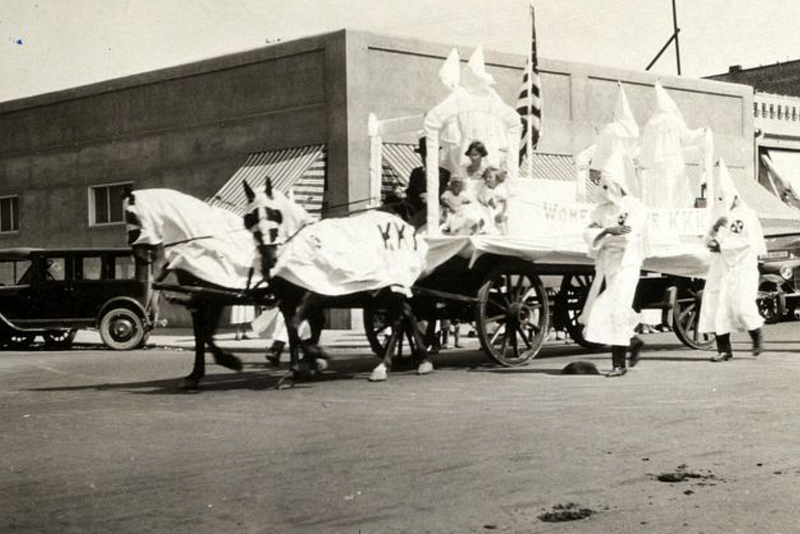
I read a very good friend’s social media feed recently and the talk was secession in the Pacific Northwest.
My friend travels in conservative circles and the talk amongst some in the circle was that Oregon and Idaho should secede from the union and form their own state taking a piece of each state.
The city of Portland, for example, is ruined according to them. So is Northern California. Here is one of the post — poster’s handle removed for privacy.

This post above was followed by the following post:

After reading the posts and others, it made me recall a movie I saw a few years ago about police brutality in Portland. The film, Arresting Power, breaks down the history of some of these killings by police.
While many whites were killed by police, some Black men were killed as well.
Most Americans don’t know that Portland has been the setting for multiple killings of individuals by police officers of many races. Black men have been some of those victims but not in an overwhelming way.
But Oregon overall has an ugly racial history. The police killings are just a small part of a story steeped in white supremacy, colonialism, and violence.
Oregon originally was established as a racial homeland for white people. A Sundown state. When the sun went down (as the saying goes), it was prohibited by law for a person of color to be in the state.
In fact, from the moment the provisional government of the Oregon territory was formed in 1843, the goal of Oregon being a white homeland was pursued vigorously. All of the laws passed were “designed to exclude racial minorities.”
This included Black Americans, Native Americans, and persons of “Chinese descent.” The goal from the onset was to exclude them all from “civic life” equally in Oregon and “from living among White Oregonians.”
Upon arriving in Oregon, the colonial invaders began forcing the existing Native population off of the lands they occupied. Some Native Americans were killed by the spread of diseases; others were forcibly removed.
In 1844, the state passed Black exclusion laws excluding Black people from living in the state. In 1859, when the state drafted its state constitution, it was pretty clear what the state was born as— a white racist state.
In that constitution, the following is included:

The same document extended the right to vote to white males and foreign white people were immediately and instantly granted the rights of native-born white people. Oregon was, it must be noted, accepted into the United States as a free state.
Additionally, the state of Oregon didn’t ratify the Fourteenth Amendment (Equal Protection) until 1973. The Fourteenth Amendment was passed in 1868 and is one of the key constitutional corrections to U.S. racial history. Yet, somehow, Oregon didn’t ratify one of the key post-Civil War amendments that sought to equalize society until 105 years after the law was passed.
This might explain why the two posters above feel the way they do. The claim that the state was beautiful in 1970 fits with their racist hopes that the state would remain white forever or return to its overt racist control over persons of color.
The state of Oregon also overwhelmingly opposed the right of Blacks to vote as well. In 1870, the state legislature opposed the ratification of the Fifteenth Amendment.
However, because the necessary three-fourths ratification requirement had already been achieved by the states, Oregon’s attempt to curtail black voting was unsuccessful, at least legally. “Intimidation at the ballot box” was practiced in more “rural areas” and a “five-dollar poll tax” in order to stop the vote by Black people was also implemented in these areas.
With such a dirty, racial history it is no wonder the racist beliefs were (and are) endemic in the state.
Now, those people I saw online from Oregon who are sick of the state are probably not responding to the presence of Black people. I suspect they are responding to protests against their dark past, the expanding ethnic and cultural diversity of the region, and the rise of progressive voices in Portland.
The state is still only 2 percent Black when all is said and done. But again, history is instructive in explaining these entrenched bigoted beliefs.
After Black people somehow gained the right to vote in the state no thanks to the state itself, the Whites turned their racist anger towards Asians. This relationship is just as bad and puts race and Oregon into even deeper connections.
Considering that African-Americans were barred from working in the state and even residing in the state, Chinese and Japanese workers soon became the workers of choice for the white settlers.
Yet, the workers could not become citizens by law in Oregon, and in 1882 when the U.S. passed the Chinese Exclusion Act, Oregon’s history as far as racism and white supremacy was concerned was all set.
But perhaps Oregon’s strong historical connections to white supremacy are best explained by the killing of Mulageta Seraw, an Ethiopian immigrant on November 13, 1988.
Mr. Seraw, who was only one of approximately 200 Ethiopians living in a “tight-knit” community, was beaten to death by three Neo-Nazin skinheads with a baseball bat that day.
They were motivated and spurred into their evil acts by a white supremacist, Tom Metzger, and an organization known as the White Aryan Resistance (or WAR).
The perpetrators of Seraw’s murder were imprisoned for their actions but most importantly, the case led to important legal action. Morris Dees, the long-time Southern Poverty Law Center lawyer, would eventually sue WAR and Tom Metzger for their involvement in the murder.
The judgments he obtained against Metzger bankrupted Metzger personally and put WAR financially out of business.
But despite the success against specific white supremacist organizers in Oregon, the tragedy of Mr. Seraw is instructive of the racist history in the state. White supremacists felt comfortable in Oregon and welcome more so than in other states. The history of the state provided that comfort level.
Elden Rosenthal called the murder of Mr. Seraw a “continuum of violence that began with the brutality of slavery” and “continued through Jim Crow and lynchings…”
I doubt many Americans even know the story of Oregon and how white supremacy is an integral part of that tale. It also does not surprise me that some Oregonians think the Oregon of old was “absolutely beautiful” even though the state’s history had been guided totally by white supremacy and racism.
References & Sources
Katrine Barber, “We Were At Our Journey’s End: Settler Sovereignty Formation in Oregon,” Oregon Voices — Oregon Historical Quarterly, Winter 2019
Cheryl A. Brooks, “Why Oregon Forgot To Ratift The Fourteenth Amendment,” Oregon Law Review, Vol 83, 731 (2004)
Tiffany Camhi, A racist history is why Oregon is still so white, Oregon Public Radio, June 9, 2020, found at https://www.opb.org/news/article/oregon-white-history-racist-foundations-black-exclusion-laws/
Jodi Darby, Julie Perini and Erin Yanke (co-directors), Arresting Power: Resisting Police Violence in Portland, Oregon (film), found at http://www.arrestingpower.com
James W. Loewen, Sundown Towns: A Hidden Dimension of American Racism, Touchstone 2006
Elden Rosenthal, “White Supremacy and Hatred In the Streets Of Portland: The Murder of Mulageta Seraw,” Oregon Voices — Oregon Historical Quarterly, Winter 2019
Phillip Theonnes & Jack Landau, “Constitutionalizing Racism:George H. Williams’ Appeal for a White Utopia,” Oregon Voices — Oregon Historical Quarterly, Winter 2019
Angela Wilson, The Black Vote in the Northwest: Then and Now, Portland Skanner, Feb. 28, 1996, available at 1996 WL 158219221996 WL 15821922 (quoting Darrell Millner, Professor of Black Studies, Portland State University).


