avatarRhonda Carrier

Free AI web copilot to create summaries, insights and extended knowledge, download it at here

2371

Abstract

fact that the orangutans did come in for a free handout of food means they are successfully managing on their own. Awesome.</p><p id="851a"><b>Longhouse Visit:</b> Next Drika took us to visit a Dayak longhouse. It was almost a 2-hour drive from the orangutan center to the longhouse, but it was a very pleasant drive. Drika’s English was excellent and his knowledge of the history and culture of the area was fantastic so the conversation flowed throughout the drive.</p><p id="8233">The Bidayah or Land Dayak are the second largest Dayak tribe in Sarawak. The visit to the <a href="https://sarawaktourism.com/blog/visit-annah-rais-longhouse">Annah Rais</a> Bidayah Longhouse Village was a very personal tour since it is Drika’s village.</p><p id="1b48">We registered as guests in the village and paid a small entry fee. This registration in the village included giving us a taste of Tuak, a savory fermented wine made from rice produced in the village. Drika said there was caramelized sugar in it which added to the sweet fruity flavor. We later bought a bottle from one of his aunties.</p><figure id="36b6"><img src="https://cdn-images-1.readmedium.com/v2/resize:fit:800/1*GVKiX5Q3Bbnh9nIFBCUKyw.jpeg"><figcaption>Buying a bottle of Tuak from Drika’s auntie (photo by author)</figcaption></figure><p id="5c68">Traditionally the longhouse of the Dayak people was one long communal space. Now there are small houses for each family lining the two sides of the open communal space. The flooring of the communal area is bamboo, although there are sections that have metal supports under the bamboo to provide more secure support.</p><p id="1af7">In the lower photo below, Drika and Gerad stand on steps leading up to the longhouse village. Drika explained that the stairway on the left is carved out of a log of ironwood. Each time the floor and foundation of the longhouse are updated and repaired, the ironwood steps are removed temporarily, but always reinstalled again.</p><figure id="078c"><img src="https://cdn-images-1.readmedium.com/v2/resize:fit:800/1*tm9pCXQCUX1tix0fLyVLzA.jpeg"><figcaption>AnnahRais Longhouse entrance and village (photos by author)</figcaption></figure><p id="c474">He addressed everyone he met by name as he showed us around. He explained that village tradition was that a younger person must first greet an older person, who would then res

Options

pond with a greeting.</p><p id="a0fd">We walked around the village. They had a small section of ducks and chickens and there were pots of vegetables growing. We stopped to visit with another auntie who showed us mats she had woven and was selling. Some of the houses are more modern than others. Some have even replaced the bamboo floor with wood planks.</p><figure id="436e"><img src="https://cdn-images-1.readmedium.com/v2/resize:fit:800/1*c2sV0zwvqZ0qsHyg7lBtoQ.jpeg"><figcaption>Painting on a wall in the village by Lithuanian artist Ernest Zacharevic. (photo by author)</figcaption></figure><p id="e6b6">Our most important stop of the day was in the space that was still a central communal space. The Dayak tribe were headhunters. In the center of this space hung a basket of skulls. Drika said that they did not do any headhunting any longer and hadn’t for generations but they kept these skulls. He said the Dayaks believed the heads housed the warrior’s spiritual strength that would transfer to the village. Thus the early practice of headhunting. This communal space was still used by the bachelors in the community for traditional rituals.</p><figure id="02c7"><img src="https://cdn-images-1.readmedium.com/v2/resize:fit:800/1*n2qyK1UFAdzHw__oqYEbtg.jpeg"><figcaption>Skulls in the Dayak longhouse (photo bu author)</figcaption></figure><p id="5931">Drika also pointed out this large log hanging about the skulls. He said it is no longer used but it was used to send signals and messages to people of the village. He called it the “WhatsApp” of the past.</p><figure id="9c34"><img src="https://cdn-images-1.readmedium.com/v2/resize:fit:800/1*Z1WmLON04bstEfQGGoC9Xg.jpeg"><figcaption>Log used for sending messages to the village. (photo by author)</figcaption></figure><p id="9d48">Then we stopped for lunch. His uncle cooked chicken in a large piece of bamboo over an open fire. He also added some spices and vegetables. When it was done, he poured the chicken soup into a bamboo bowl to serve. It was delicious.</p><figure id="386f"><img src="https://cdn-images-1.readmedium.com/v2/resize:fit:800/1*Z6niKOSrO0LXjCDwjTGKqw.jpeg"><figcaption>Cooking and serving chicken soup. (photos by author)</figcaption></figure><p id="5739">After lunch, it was time to leave the village. We still had a long drive ahead of us, but that’s another story.</p></article></body>

Orangutans and a Longhouse Village

Kuching, Sarawak, Malaysia, Borneo
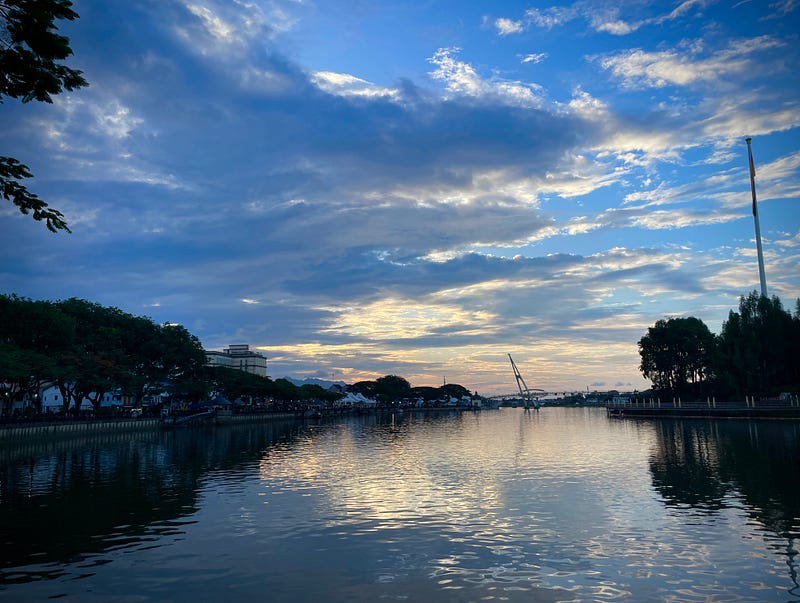
Sarawak River in Kuching, Sarawak (photo by author)

On day 2 of our visit to Kuching, Sarawak in Malaysia on the island of Borneo, we hired a driver named Drika to drive us around. We wanted to see orangutans and a traditional Dayak longhouse village.

Orangutans: We drove to see the orangutans. The Semenggoh Wildlife Center took over an hour to reach from Kuching. The Center rehabilitates orangutans that have been orphaned or captured and often physically harmed. As each rehabilitated orangutan is healthy enough to live in the jungle again, it is released into the rainforest surrounding the center.
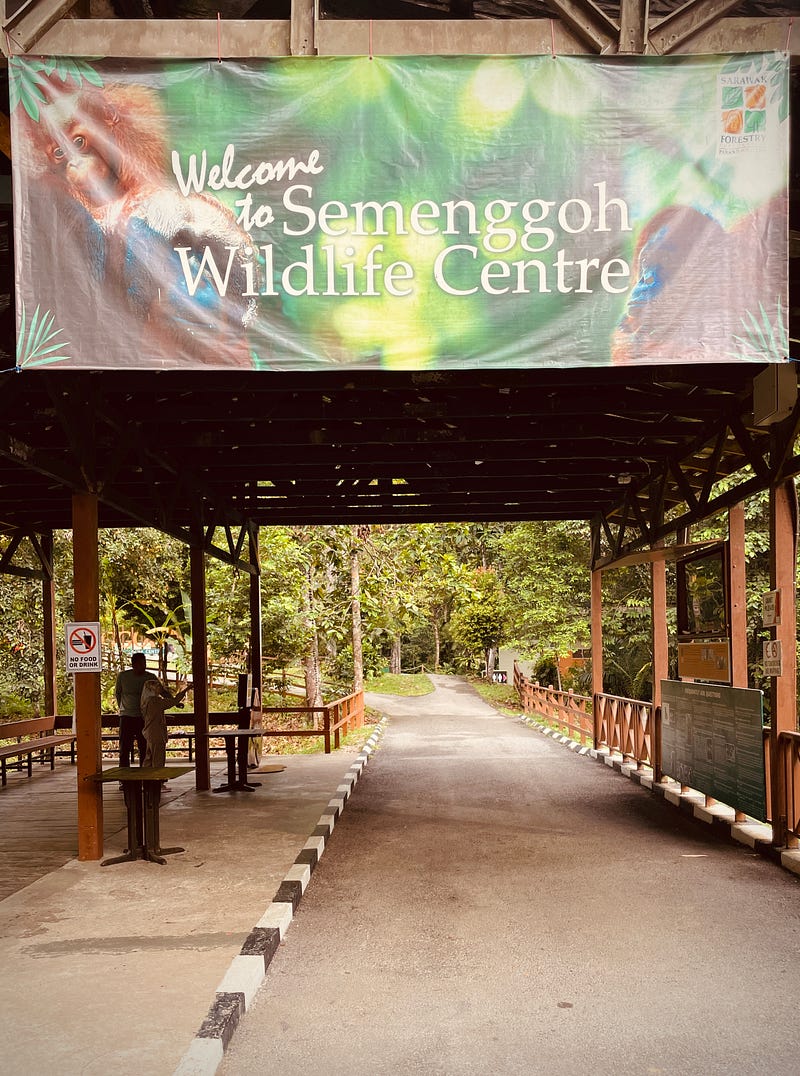
When we reached the Center, we paid to enter. The money is used to fund the care of the orangutans. At 9:00 AM we heard a talk by one of the rangers that explained their program and told us about some of the individual orangutans that were living in the forest. He also explained that many of the fruits of the rainforest are ripe now so the orangutans are getting a lot of food in the forest on their own and may not come in for a feeding.

About 40 people were watching and listening. He told us to follow him on a short jungle trail but to stay silent because our voices would keep the orangutans from coming in. We all silently followed him. He showed us where to wait while he went a little deeper into the forest area.
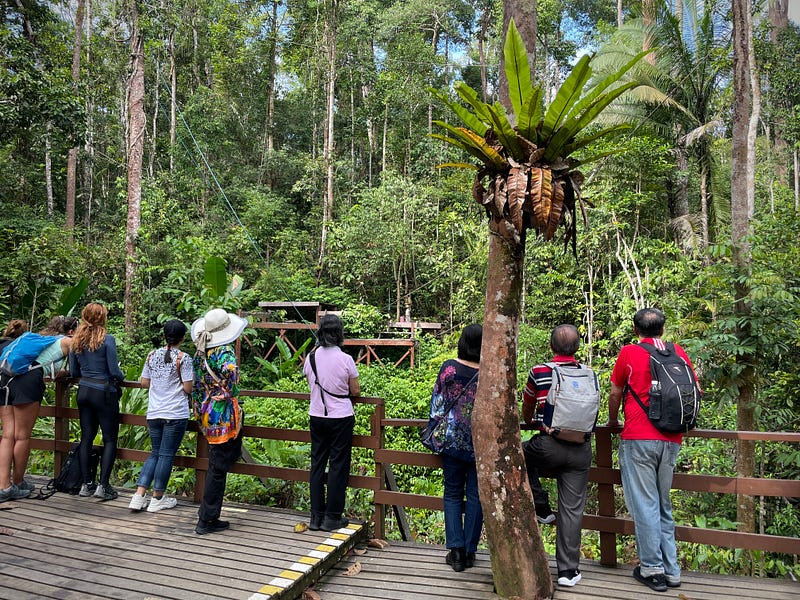
Silently waiting for orangutans (photo by author)

He called the orangutans for over an hour. We all waited silently and patiently. Finally, he turned back and announced that they would try again in the afternoon but that was all for now.

We returned to our car and our driver. We were disappointed but at the same time very content and happy. The fact that the orangutans did come in for a free handout of food means they are successfully managing on their own. Awesome.

Longhouse Visit: Next Drika took us to visit a Dayak longhouse. It was almost a 2-hour drive from the orangutan center to the longhouse, but it was a very pleasant drive. Drika’s English was excellent and his knowledge of the history and culture of the area was fantastic so the conversation flowed throughout the drive.

The Bidayah or Land Dayak are the second largest Dayak tribe in Sarawak. The visit to the Annah Rais Bidayah Longhouse Village was a very personal tour since it is Drika’s village.

We registered as guests in the village and paid a small entry fee. This registration in the village included giving us a taste of Tuak, a savory fermented wine made from rice produced in the village. Drika said there was caramelized sugar in it which added to the sweet fruity flavor. We later bought a bottle from one of his aunties.
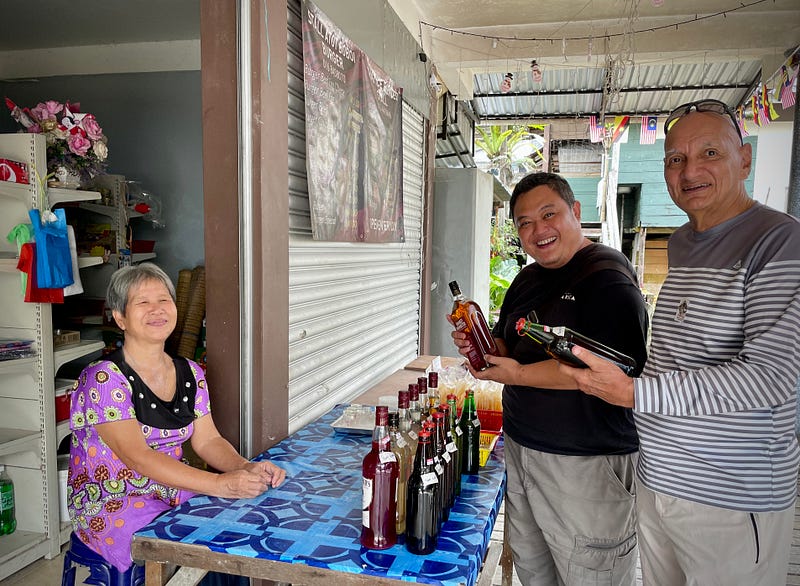
Buying a bottle of Tuak from Drika’s auntie (photo by author)

Traditionally the longhouse of the Dayak people was one long communal space. Now there are small houses for each family lining the two sides of the open communal space. The flooring of the communal area is bamboo, although there are sections that have metal supports under the bamboo to provide more secure support.

In the lower photo below, Drika and Gerad stand on steps leading up to the longhouse village. Drika explained that the stairway on the left is carved out of a log of ironwood. Each time the floor and foundation of the longhouse are updated and repaired, the ironwood steps are removed temporarily, but always reinstalled again.
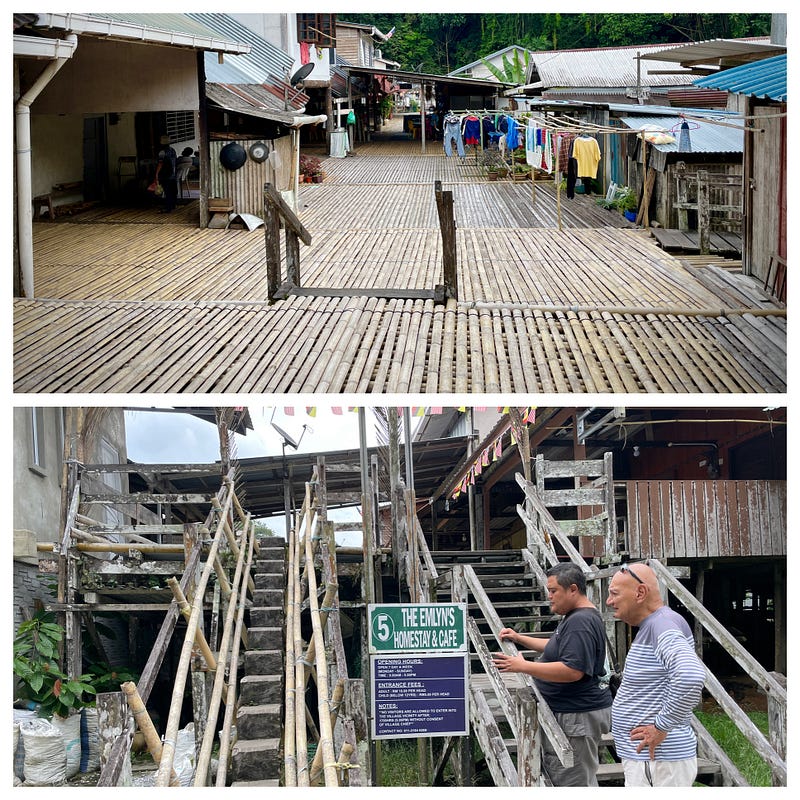
AnnahRais Longhouse entrance and village (photos by author)

He addressed everyone he met by name as he showed us around. He explained that village tradition was that a younger person must first greet an older person, who would then respond with a greeting.

We walked around the village. They had a small section of ducks and chickens and there were pots of vegetables growing. We stopped to visit with another auntie who showed us mats she had woven and was selling. Some of the houses are more modern than others. Some have even replaced the bamboo floor with wood planks.
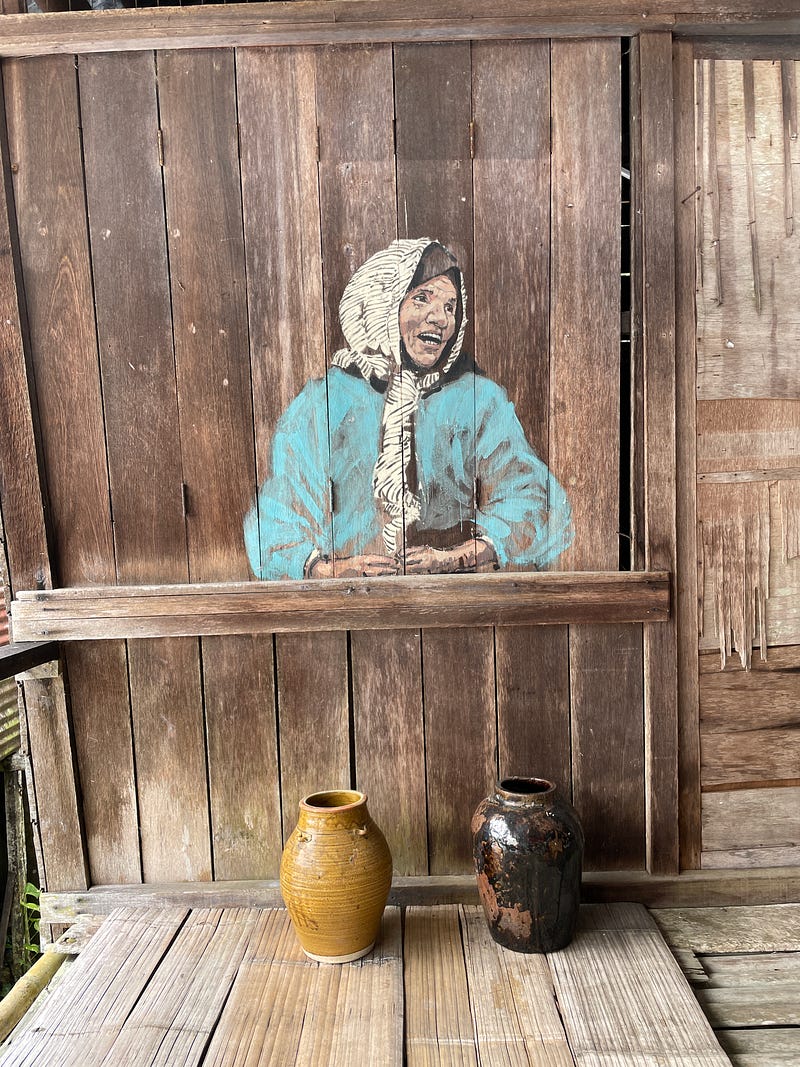
Painting on a wall in the village by Lithuanian artist Ernest Zacharevic. (photo by author)

Our most important stop of the day was in the space that was still a central communal space. The Dayak tribe were headhunters. In the center of this space hung a basket of skulls. Drika said that they did not do any headhunting any longer and hadn’t for generations but they kept these skulls. He said the Dayaks believed the heads housed the warrior’s spiritual strength that would transfer to the village. Thus the early practice of headhunting. This communal space was still used by the bachelors in the community for traditional rituals.
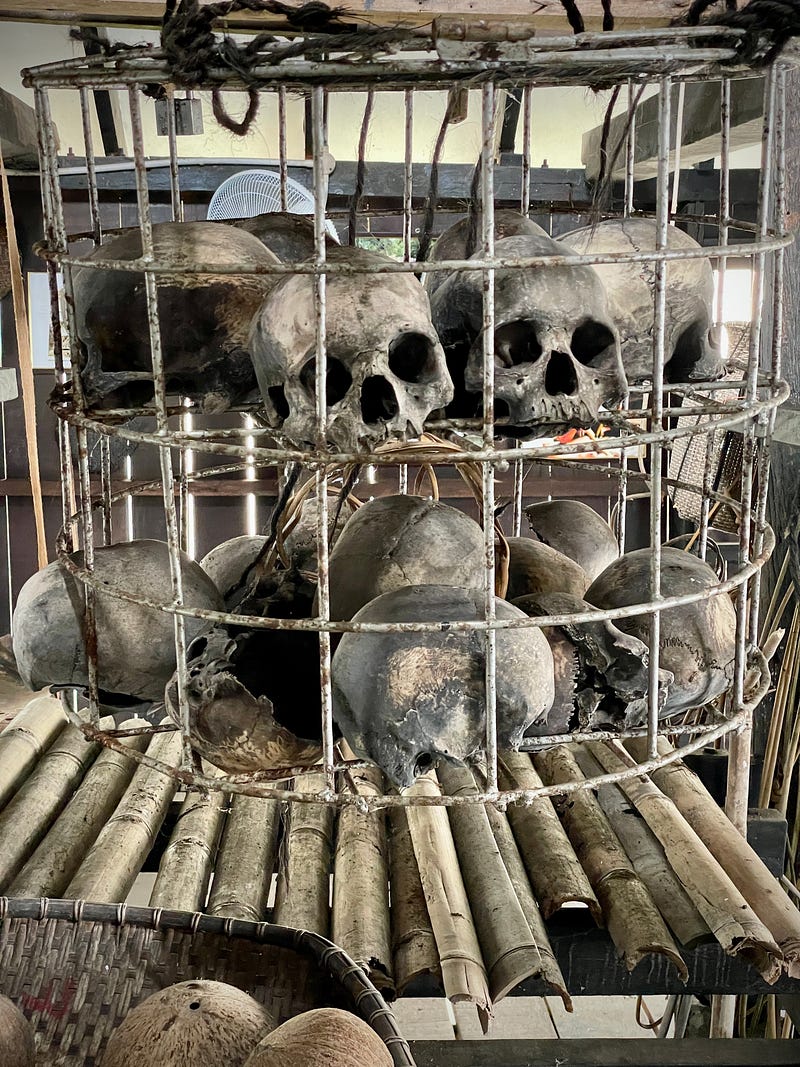
Skulls in the Dayak longhouse (photo bu author)

Drika also pointed out this large log hanging about the skulls. He said it is no longer used but it was used to send signals and messages to people of the village. He called it the “WhatsApp” of the past.
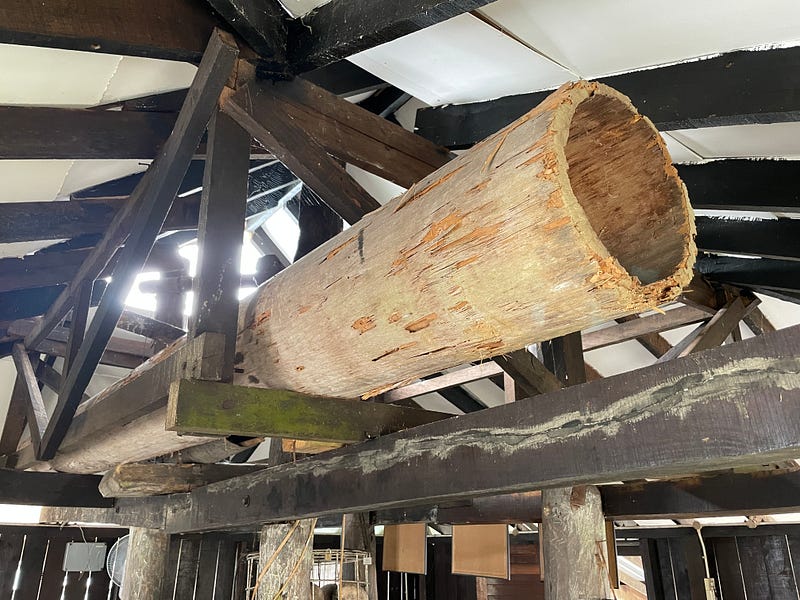
Log used for sending messages to the village. (photo by author)

Then we stopped for lunch. His uncle cooked chicken in a large piece of bamboo over an open fire. He also added some spices and vegetables. When it was done, he poured the chicken soup into a bamboo bowl to serve. It was delicious.
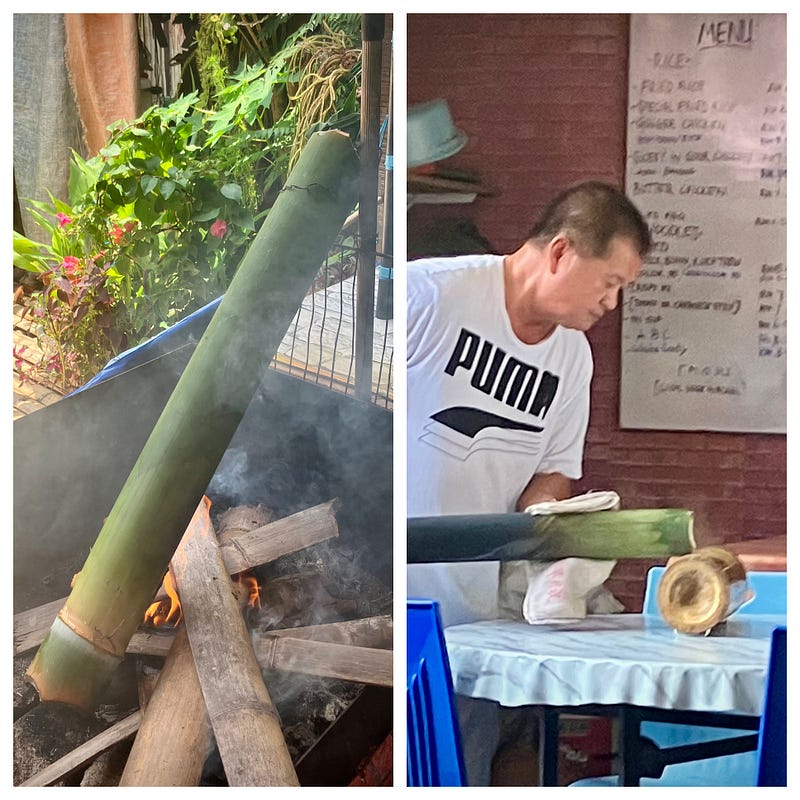
Cooking and serving chicken soup. (photos by author)

After lunch, it was time to leave the village. We still had a long drive ahead of us, but that’s another story.

Travel
Sarawak
Culture
Orangutans
Longhouse
Recommended from ReadMedium