avatarFarhad Malik

Free AI web copilot to create summaries, insights and extended knowledge, download it at here

1572

Abstract

ho buys (longs) an option is the option holder.</p><p id="6666">2. Seller side — one who sells (shorts) an option is the option writer.</p><h2 id="f785">Option Buyer:</h2><p id="33fa">Has the right to buy an underlying asset at a set price on or before a certain date. <b>It is important to note that the buyer of an option does not have an obligation to buy the asset.</b></p><h2 id="0fd5">Option Seller:</h2><p id="eb99">Has the right to sell an underlying asset at a set price on or before a certain date. <b>It is important to note that the seller of an option does not have an obligation to sell the asset.</b></p><h1 id="a69d">Options In A Nutshell</h1><p id="02ab">The image below illustrates four types of options positions and their characteristics:</p><figure id="82d2"><img src="https://cdn-images-1.readmedium.com/v2/resize:fit:800/0*MbFFWsX-C2_JJEkG.png"><figcaption></figcaption></figure><h1 id="aabb">Option Payoffs</h1><p id="b570">Payoff of an option is dependent on whether an option is a put or a call option. If we draw the pay-off profiles where x-axis is the stock price and y-axis is the profit, we can see that shorting an option has mirror image on x-axis of longing an option. These profiles are known as <i>hockey sticks</i>:</p><figure id="ede4"><img src="https://cdn-images-1.readmedium.com/v2/resize:fit:800/1*jHG6MmfiSHNwelZwlJ_TzQ.png"><figcaption></figcaption></figure><h2 id="1908">Option Pay-Off Calculations</h2><p id="b980">To further explain the concept above, the table below is created to explain how we calculate pay offs of put an

Options

d call options.

For example, let’s assume that an investor pays £100 premium to buy an option with a strike price of £3000. Let’s analyse how stock price impacts the profit:</p><figure id="ce98"><img src="https://cdn-images-1.readmedium.com/v2/resize:fit:800/1*yvsIczXzMuVBIbUBQYlV-Q.png"><figcaption></figcaption></figure><p id="c668">We can see that call option holder benefits when stock price increases and put option holder benefits when stock price decreases. Option holder limits the loss by the premium amount.</p><h1 id="de1f">Common Option Trading Strategies</h1><p id="747a">The table below explains structure of a strategy and when to use it:</p><figure id="47e5"><img src="https://cdn-images-1.readmedium.com/v2/resize:fit:800/1*f70-0ksePrkGN3BLWEo6Ng.png"><figcaption></figcaption></figure><p id="739d">There are also a number of other option strategies including iron condor strategy which is a combination of bull put spread and bear put spread; and iron butterfly which is a combination of buying or selling straddle with purchase or sale of a strangle. These strategies can also be combined dependent on the market conditions.</p><h1 id="0a05">Summary</h1><p id="2742">This article explained foundation of options financial contracts and different trading option strategies.</p><p id="dd74">It is important to understand behaviour of options and various strategies to limit the risk and further increase the returns. Please always invest wisely and consult a financial adviser.</p><p id="26e3">Let me know if you have any feedback.</p></article></body>

Be In The Money — Understanding Trading Strategies

Options are one of the most important financial derivative contracts. This article outlines a number of trading strategies which can be employed to increase your investment value.

It is important to understand behaviour of options and various strategies to limit the risk and further increase the returns. Please always invest wisely and consult a financial adviser.

I have outlined basics of options in my article “The Story Of Option Products”.

This article mainly discusses common options trading strategies.

Please read FinTechExplained disclaimer.

What Is An Option?

Think of an option as a contract that lets option holder buy or sell an asset. The underlying asset of an option could be stocks, foreign currency or indexes (cash settled on indexes e.g. S&P) or interest rates or commodities or futures etc. Option holder pays premium to buy option contract.

Value of an option is derived from price of its underlying asset e.g. commodity, cash, interest rate swap etc.

Two Sides Of Options

There are two sides or legs of an option deal: 1. Buyer side — one who buys (longs) an option is the option holder.

2. Seller side — one who sells (shorts) an option is the option writer.

Option Buyer:

Has the right to buy an underlying asset at a set price on or before a certain date. It is important to note that the buyer of an option does not have an obligation to buy the asset.

Option Seller:

Has the right to sell an underlying asset at a set price on or before a certain date. It is important to note that the seller of an option does not have an obligation to sell the asset.

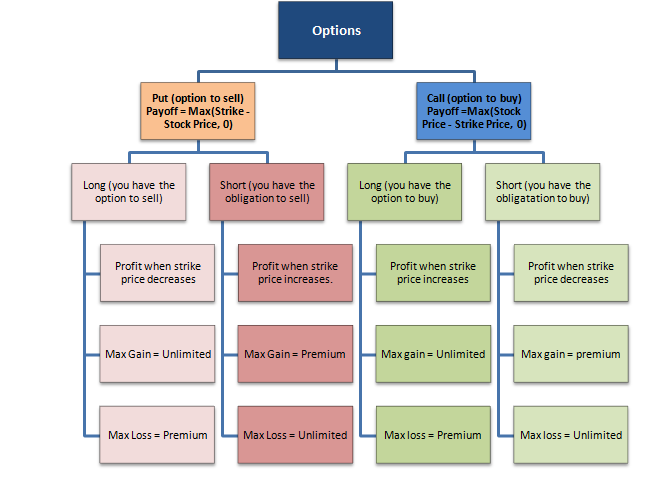
Options In A Nutshell

The image below illustrates four types of options positions and their characteristics:
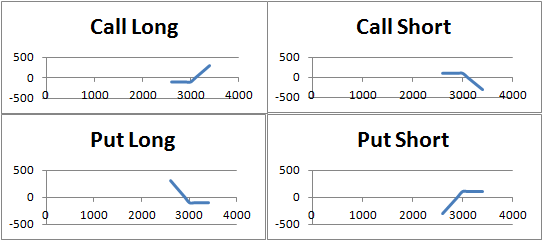
Option Payoffs

Payoff of an option is dependent on whether an option is a put or a call option. If we draw the pay-off profiles where x-axis is the stock price and y-axis is the profit, we can see that shorting an option has mirror image on x-axis of longing an option. These profiles are known as hockey sticks:
Option Pay-Off Calculations

To further explain the concept above, the table below is created to explain how we calculate pay offs of put and call options. For example, let’s assume that an investor pays £100 premium to buy an option with a strike price of £3000. Let’s analyse how stock price impacts the profit:
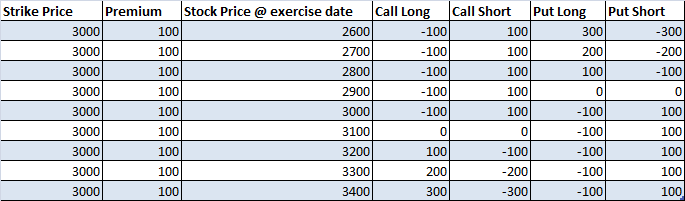
We can see that call option holder benefits when stock price increases and put option holder benefits when stock price decreases. Option holder limits the loss by the premium amount.

Common Option Trading Strategies

The table below explains structure of a strategy and when to use it:
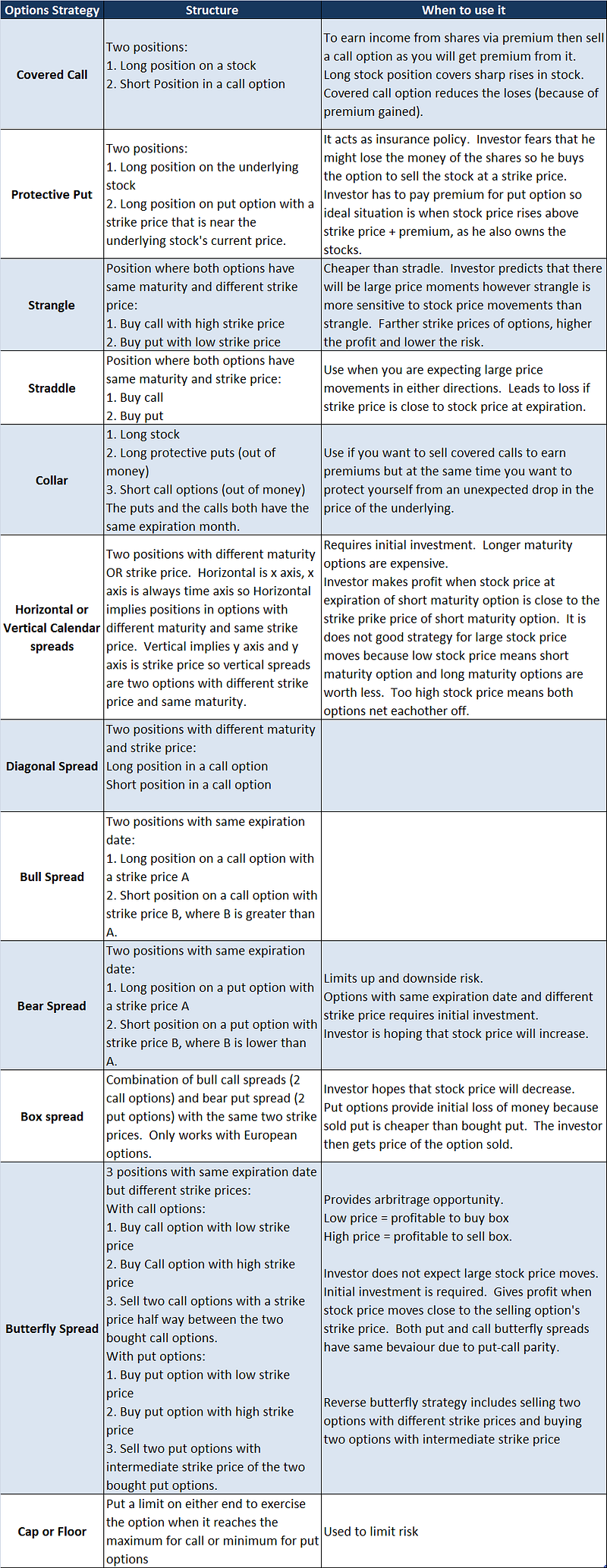
There are also a number of other option strategies including iron condor strategy which is a combination of bull put spread and bear put spread; and iron butterfly which is a combination of buying or selling straddle with purchase or sale of a strangle. These strategies can also be combined dependent on the market conditions.

Summary

This article explained foundation of options financial contracts and different trading option strategies.

It is important to understand behaviour of options and various strategies to limit the risk and further increase the returns. Please always invest wisely and consult a financial adviser.

Let me know if you have any feedback.

Finance
Options
Risk Management
Fintech
Money
Recommended from ReadMedium