
Opting Out of Corporate Servitude
The 9–5 Grind Is Not For Everyone

In my youth, I never questioned the school to corporate funnel that I was conditioned to fit into.
I eagerly stacked up excellent grades year after year. Once I graduated from college I was ecstatic to see my corporate dreams take off. My stellar academic credentials made good on the promise of landing me roles in major international shipping, retail & investment banks and Oil & Gas companies on three different continents.
I should have been happy…this is what I am all my classmates aspired to. An Ivy League education and a six-figure salary to work and live in a most popular metropolis in the work — New York.
Instead, I was more miserable than any time I can remember, before or since.
I am not going to pretend that my education has not opened doors for me. It has and continues to do so. I have access to places that are shut to the majority of people with my background — first-generation West African and female. Ironically, the privilege to pen this essay can be directly traced to my academically intensive upbringing.
But preserving privilege is not a justifiable reason to avoid speaking out. Particularly when countless others are marching steadily towards the same fate.
Thousands of young, aspiring talent from all over the world have their sights set on climbing a crumbling corporate ladder. With hopes of an elusive corporate utopia at the top of the skyscraper.
We are a couple of generations past the point where being a lifelong company man lived up to the hype. In today’s world, this model is less and less feasible.
Times have changed.
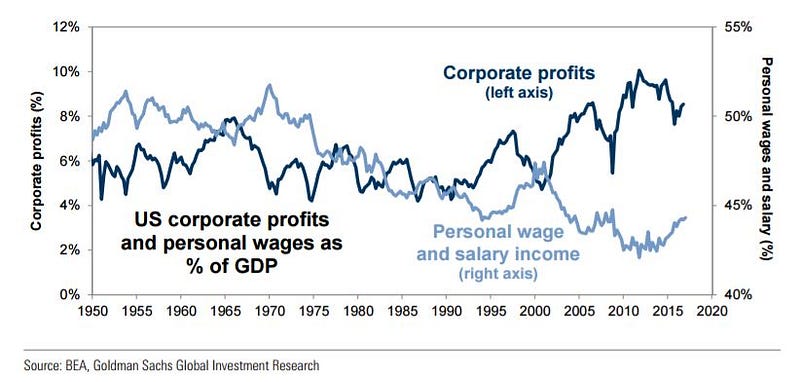
Governments the world over are in bed with big business to the detriment of workers and consumers alike.
Companies are quick to turnover workers at the first hint of in-coming headwinds. There are no jobs-for-life, no-one is indispensable and job security is a myth.
Similarly, regulations protecting workers and the general public at large from predatory practices have been gutted. Unions are largely non-existent or have been essentially de-toothed and rendered ineffective.
The Uncanny Similarities Between Pyramid Schemes and Corporations
If you have spent a long carer working in corporate and never felt like you have been given your due, are constantly being screwed out of promotions, have not been offered adequate development opportunities, that’s because the game has been rigged for this very purpose.
Pyramid schemes continue to flourish because they are based on the very same structure as corporations — only with less flare for sophisticated camouflage.
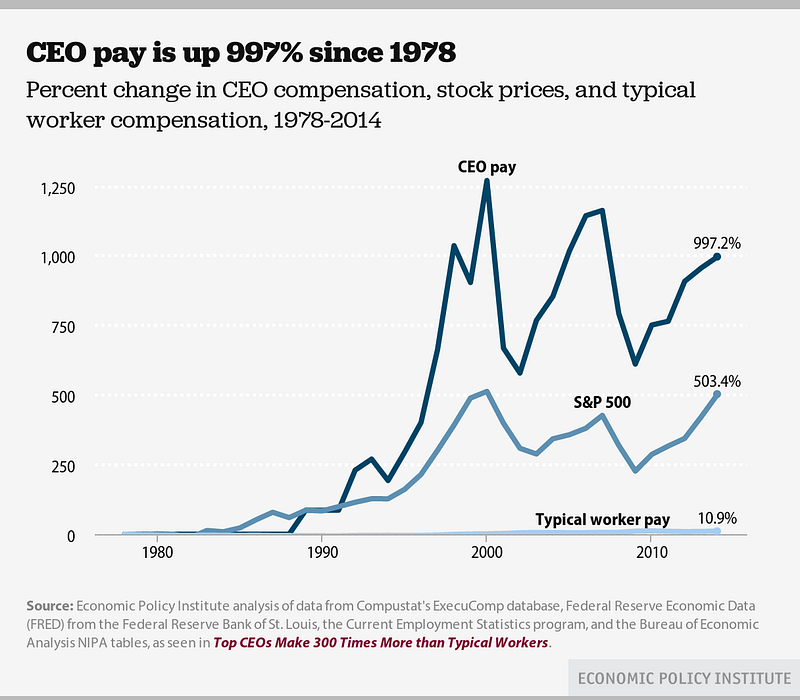
- The Top Takes It All: In a corporation, the company executives/directors and the board divvy up the spoils along with shareholders. Likewise, those atop a pyramid scheme are the progenitors — who get all the spoils with minimal effort.
- The Bottom Slave Away: This is self-explanatory. If you are classed as an individual contributor, you can substitute your role in the hierarchy for workhorse. Your job is essentially to subsidise the lifestyle of the top. Just in case there is any misunderstanding, middle management is often a strategy to make low-earning employees self-police. Often your manager is working longer hours for marginally better pay.
- Upward Mobility is A Myth (Unless): The latest game of the corporate world is to employ expertise and spend little to no resources developing them. Soon enough their skills are atrophied. But no bother, just hire the next genius to replace them. This way those on the top remain there and have no credible challenge to their positions.
If you will not knowingly sign up to be exploited by a pyramid scheme, network marketing or Multi-Level Marketing scam, you really should know what you are getting into by keeping a corporate job.
A White Man’s World
Like with almost every man-made construct there are exceptions.

Yes, corporations are mostly out to scoop you up, wring you dry and toss you away like a used tissue — with an important caveat — unless you are made of the right stuff.
What is this right stuff?
Simply be white and male (or as adjacent to it as you can be).
Stereotypes can be positive, negative or neutral and are pervasive for a reason. At base level, they serve to corroborate some belief that society holds about a group of people. Put it this way, if you wanted to be a basketball legend it does not hurt to be as Michael Jordan-esque as possible.
The trouble with stereotyping is when they fail to evolve with the people they purport to describe.
This is not to say that every white man will succeed or that every non-white man will fail.
The secret ingredient to hack a corporate career is to look the part, talk the part and act the part in the first instance. Do this and the future starts to look somewhat bright.
- Diversity As A Trendy Gimmick: I do not care to count the number of times I have read or heard diversity touted in corporate settings as a value driver. Yet more than 50 years since this issue became a hot-button little has changed in the gender split of company boards, executive and management teams. Lately, ‘diversity of thought’ is the new get-out-of-jail-free card used to escape responsibility.
- Talk is NOT cheap: Corporations like people who speak their language. There might as well be a running script for executive-speak. Listen to enough and you start to catch wind of the inherent commonality in expression.
- Fabricated Tales of Meritocracy: Rising through the ranks is not about being the most competent.
The Future is Skills-based

Chasing jobs with name branded companies is slowly falling out of fashion among the masses. Many are taking the leap towards becoming self-employed for several reasons:
- Greater flexibility
- Higher job satisfaction
- Stronger motivation
- More autonomy
According to McKinsey, workers of the future will spend more time on activities that machines are less capable of, such as managing people, applying expertise, and communicating with others.
All skills that lend themselves readily to consultancy and various outsourcing models. Rather than spend your day watching the clock or trying to appease a changeable boss, your work should about being productive and efficient.
And of course being compensated fairly for your output.
It is never to late to explore different ways to improve the quality of your work life. There is no time like the present to consider consulting, contracting/freelancing or setting up that business you’ve been meaning to for years.
The corporate grind is not for every one.


