avatarCathy Coombs

Free AI web copilot to create summaries, insights and extended knowledge, download it at here

4131

Abstract

content=attributionCopyText&utm_medium=referral&utm_source=pexels">Mikhail Nilov</a> from <a href="https://www.pexels.com/photo/man-person-people-woman-6893801/?utm_content=attributionCopyText&amp;utm_medium=referral&amp;utm_source=pexels">Pexels</a>.</figcaption></figure><h2 id="fca7">What is the benefit of having longer content in your article?</h2><p id="59f9">When you write on a subject, sometimes it involves time and hard work. You strive for rich content making your writing both credible <i>and interesting</i>. Sometimes you can’t reach that goal in a short article. You might include some links to help your reader further research your subject.</p><blockquote id="b10c"><p>It’s clear that longer content tends to be more useful, more impressive, and more comprehensive than short content, causing it to earn more backlinks.²</p></blockquote><p id="e9a7">Whether your article is short or long, don’t underestimate your audience. The article providing the information or story that’s desired is where a reader will go.</p><p id="725a">According to <a href="https://yoast.com/blog-post-word-count-seo/">yoast.com</a>, the longer your text, the more clues Google has to figure out what your article is about. That’s why you insert your keyphrase in more places in a longer article. This further optimizes your article. A keyword best describes what your article is about while performing a word search. The keyphrase is a search term that also best describes your article.</p><figure id="0e9b"><img src="https://cdn-images-1.readmedium.com/v2/resize:fit:800/1*zYrfMvU293vtBL8uXl_YVw.jpeg"><figcaption><b>Success! I have your attention if you’re still reading!</b> <a href="https://www.freepik.com/free-vector/pay-attention-concept-illustration_8252021.htm#page=1&amp;query=attention&amp;position=9&amp;from_view=search">Source</a>.</figcaption></figure><h2 id="1d9c">What about those challenging attention spans?</h2><p id="c604">I’m inclined to believe serious writers are not writing to just fulfill attention spans although it plays a key role to create a viable product. In Anne Janzer’s <i>The (Not Really) Shrinking Reader Attention Span, </i>she brings up the goldfish myth. This myth circulated in major publications and indicates “the dwindling human attention span is now less than that of a goldfish.”</p><blockquote id="5fc4"><p>Remember the Microsoft study about attention spans? It was written for marketers and advertisers — the people most likely to interrupt your reading and grab your attention. Protect your attention and evaluate your sources.³</p></blockquote><p id="515f">In 2015, <a href="https://time.com/3858309/attention-spans-goldfish/">Time Magazine</a> wrote about Microsoft’s 2015 report on dwindling attention spans. Yet, <a href="https://theoutline.com/post/5969/we-never-had-attention-spans-to-begin-with#:~:text=In%202015%2C%20Microsoft%20released%20a,apparently%20more%20distracted%20than%20goldfish.">The Outline</a> brought up a study suggesting something different. Princeton University and the University of California-Berkeley conducted the study. The study involved both monkeys and humans resulting in a 2018 peer-reviewed publication. “The spotlight of attention is more like a strobe,<i></i>states<i> </i>“attention pulses in and out four times per second.”</p><p id="0f48">The rhythms in your brain allow you to focus on one thing while multi-tasking on other things. Some people can only focus on one task at a time. (Example: I’m writing this and also noting I have to get more bags for all the leaves in the backyard!) On reading articles, we know there’s attention value with the title, the sub-title if any, and a striking image. These will entice the reader to become interested in the content.</p><p id="7bde">It’s true everything we do now seems to be technology-induced. Instead of picking up a hard copy novel, we read on a piece of equipment whether that’s a desktop, iPad, or cell phone. A lot of readers are more prone to look at the pictures in an article before deciding they’re going to actually read it. They’ll read the title, scroll and read any s

Options

ubheadings while the brain is thinking, <i>hmmm, is this worth my time? </i>Those elements along with writing proficiency and prolific writing bring me in every time!</p><p id="b4e8">If I can digress for a moment, I’m a perfectionist, so I automatically eyeball spelling errors, unnecessary words like “that,” and misuse of punctuation.</p><p id="d30d">In a Medium article in the publication, Data Lab in 2013, <i>The Optimal Post is 7 Minutes</i>, <a href="https://medium.com/@sall">Mike Sall</a> writes:</p><blockquote id="16e5"><p>This doesn’t mean we should all start forcing our posts to be 7 minutes! …. Great posts perform well regardless of length, and bad posts certainly don’t get better when you stretch them out.</p></blockquote><blockquote id="5b81"><p>What it does mean is that it’s worth writing however much you really need. <b>Don’t feel constrained by presumed short attention spans.</b> If you put in the effort, so will your audience. It’s just math.</p></blockquote><p id="5dd4">(Emphasis added.)</p><div id="bd4c" class="link-block"> <a href="https://readmedium.com/the-optimal-post-is-7-minutes-74b9f41509b"> <div> <div> <h2>The Optimal Post is 7 Minutes</h2> <div><h3>Understanding which Medium posts get the most attention</h3></div> <div><p>medium.com</p></div> </div> <div> <div style="background-image: url(https://miro.readmedium.com/v2/resize:fit:320/1*nMPCUH8IXEMjzCIL3VEGoA.jpeg)"></div> </div> </div> </a> </div><h2 id="b032">Pointers</h2><ol><li>Short articles usually contain less than 1,000 words whereas long articles are generally between 1,500–2,500 words or higher. Either option is a writer’s choice but longer articles can attract a wider audience online.</li><li>Avoid lots of fluff in your article, and remember that it doesn’t need to be lengthy to be memorable. The goal is to keep an audience, not steer them away, true?</li><li>What stimulates our attention spans is quickly prioritized by our brains. Whether we read an article is dependent on the elements that pull us into it, and choice. Don’t assume everyone has a short attention span.</li></ol><p id="8bb5">References: ¹<a href="https://copyblogger.com/short-form-content/">Copyblogge</a>r; ²<a href="https://www.sweor.com/seocontentlength">SWEOR</a>; <a href="https://www.semrush.com/blog/short-form-vs-long-form/">Semrush Blog</a>; ³<a href="https://annejanzer.com/shrinking-reader-attention-span/">AnneJanzer.com</a></p><p id="6f01">© Cathy Coombs</p><h2 id="bc01">About the Author</h2><p id="3f00">I retired early from a 9 to 5 job as a senior-level legal secretary to write full time. I have a B.A. in English Journalism & Creative Writing which confirmed my love of literature and a drive to read and write 10 hours a day. I churn five decades of living experience into redefining perspectives.</p><p id="be55">Some of the publications I have written for include <a href="https://medium.com/illuminations-mirror">Illumination’s Mirror</a>, <a href="https://medium.com/the-mystery-box">The Mystery Box</a>, <a href="https://medium.com/thewritingprof">Writing Prof</a>, <a href="https://medium.com/new-writers-welcome">New Writers Welcome</a>, <a href="https://medium.com/the-shortform">The Shortform</a>, and <a href="https://medium.com/what-is-love-to-you">What is Love to You</a>.</p><div id="1227" class="link-block"> <a href="https://medium.com/subscribe/@cjcwriter04"> <div> <div> <h2>Get an email whenever Cathy Coombs publishes.</h2> <div><h3>Get an email whenever Cathy Coombs publishes. I welcome your feedback! By signing up, you will create a Medium account…</h3></div> <div><p>medium.com</p></div> </div> <div> <div style="background-image: url(https://miro.readmedium.com/v2/resize:fit:320/0*yuzy2jPxdM1Y29R-)"></div> </div> </div> </a> </div></article></body>

Optimization Factors on the Length of Articles

Sometimes redundant advice is qualified and helpful
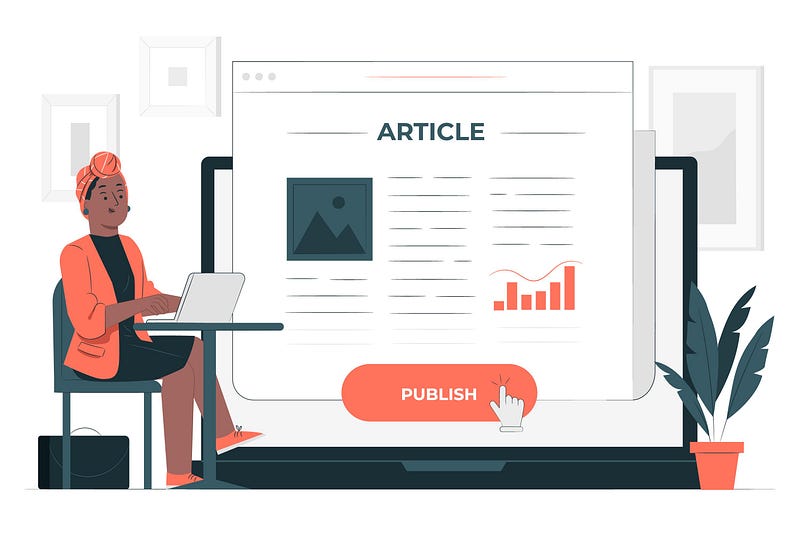
Think about your content before you hit that “Publish” button. Source.

Advice on word count for short or long articles

The word count for an article is up to you. As one consideration, the choice is dependent on what you hope to achieve. Longer articles have the potential for greater searchability with extra keyphrases. General consensus is longer content ranks higher in Google search results. This invites an opportunity for a reader to join a platform like Medium!

Short articles contain less than 1,000 words. Some online resources suggest less than 1,200 words. Short articles aren’t arduous for your reading audience. The downside is the limitation of details. If you want to test your skills, try the 150 word limit for Medium’s The Shortform. It can be challenging, but it’s a way to learn how to make your point in short order (especially if you’re a chatty Cathy like I can be!)

Your long blogs or articles might run between 1,500 to 2,500 words or even higher. The subject in a long article usually involves more details and isn’t intended to be a fast read. If the audience engages with your content, the length won’t matter. For more in-depth and data details, see Matthew Royce’s article, What’s the Ideal Length for an Article? below. He also indicates that the length could be dependent on your goals.

Advice on what to avoid in your articles whether short or long

Avoid adding meaningless content for the sole purpose of making your article longer. You know, the fluffy stuff. That’s the kind of filler you add to a pillow to make it firmer, when you may not need that extra stuff at all. Don’t add the fluff for your readers.

If you delivered your message in your article, then stop writing. The thing about writing is that you can choose to go on and on. If you don’t need to, think about stopping before your reading audience leaves you. Think of it like this, too, in a conversation where you’ve made your point, you stop talking, right? The problem with either method is when you’re asked, “what’s your point?”

All writers have meaningful, emotional, touching, or informing stories to share. Sometimes those stories need to be longer. An experienced writer knows how to trim unnecessary language. A good writer knows where to cut out sentences and when an article needs to be short or long.

Online content does not need to be lengthy in order to be substantial. Stop writing once you’ve fully communicated your point — don’t keep writing for the sake of getting to some prescribed word count.¹

(Emphasis added.)

The joy of hitting “Publish” after six hours of writing. Photo by Mikhail Nilov from Pexels.

What is the benefit of having longer content in your article?

When you write on a subject, sometimes it involves time and hard work. You strive for rich content making your writing both credible and interesting. Sometimes you can’t reach that goal in a short article. You might include some links to help your reader further research your subject.

It’s clear that longer content tends to be more useful, more impressive, and more comprehensive than short content, causing it to earn more backlinks.²

Whether your article is short or long, don’t underestimate your audience. The article providing the information or story that’s desired is where a reader will go.

According to yoast.com, the longer your text, the more clues Google has to figure out what your article is about. That’s why you insert your keyphrase in more places in a longer article. This further optimizes your article. A keyword best describes what your article is about while performing a word search. The keyphrase is a search term that also best describes your article.
Success! I have your attention if you’re still reading! Source.

What about those challenging attention spans?

I’m inclined to believe serious writers are not writing to just fulfill attention spans although it plays a key role to create a viable product. In Anne Janzer’s The (Not Really) Shrinking Reader Attention Span, she brings up the goldfish myth. This myth circulated in major publications and indicates “the dwindling human attention span is now less than that of a goldfish.”

Remember the Microsoft study about attention spans? It was written for marketers and advertisers — the people most likely to interrupt your reading and grab your attention. Protect your attention and evaluate your sources.³

In 2015, Time Magazine wrote about Microsoft’s 2015 report on dwindling attention spans. Yet, The Outline brought up a study suggesting something different. Princeton University and the University of California-Berkeley conducted the study. The study involved both monkeys and humans resulting in a 2018 peer-reviewed publication. “The spotlight of attention is more like a strobe,states “attention pulses in and out four times per second.”

The rhythms in your brain allow you to focus on one thing while multi-tasking on other things. Some people can only focus on one task at a time. (Example: I’m writing this and also noting I have to get more bags for all the leaves in the backyard!) On reading articles, we know there’s attention value with the title, the sub-title if any, and a striking image. These will entice the reader to become interested in the content.

It’s true everything we do now seems to be technology-induced. Instead of picking up a hard copy novel, we read on a piece of equipment whether that’s a desktop, iPad, or cell phone. A lot of readers are more prone to look at the pictures in an article before deciding they’re going to actually read it. They’ll read the title, scroll and read any subheadings while the brain is thinking, hmmm, is this worth my time? Those elements along with writing proficiency and prolific writing bring me in every time!

If I can digress for a moment, I’m a perfectionist, so I automatically eyeball spelling errors, unnecessary words like “that,” and misuse of punctuation.

In a Medium article in the publication, Data Lab in 2013, The Optimal Post is 7 Minutes, Mike Sall writes:

This doesn’t mean we should all start forcing our posts to be 7 minutes! …. Great posts perform well regardless of length, and bad posts certainly don’t get better when you stretch them out.

What it does mean is that it’s worth writing however much you really need. Don’t feel constrained by presumed short attention spans. If you put in the effort, so will your audience. It’s just math.

(Emphasis added.)

Pointers

  1. Short articles usually contain less than 1,000 words whereas long articles are generally between 1,500–2,500 words or higher. Either option is a writer’s choice but longer articles can attract a wider audience online.
  2. Avoid lots of fluff in your article, and remember that it doesn’t need to be lengthy to be memorable. The goal is to keep an audience, not steer them away, true?
  3. What stimulates our attention spans is quickly prioritized by our brains. Whether we read an article is dependent on the elements that pull us into it, and choice. Don’t assume everyone has a short attention span.

References: ¹Copyblogger; ²SWEOR; Semrush Blog; ³AnneJanzer.com

© Cathy Coombs

About the Author

I retired early from a 9 to 5 job as a senior-level legal secretary to write full time. I have a B.A. in English Journalism & Creative Writing which confirmed my love of literature and a drive to read and write 10 hours a day. I churn five decades of living experience into redefining perspectives.

Some of the publications I have written for include Illumination’s Mirror, The Mystery Box, Writing Prof, New Writers Welcome, The Shortform, and What is Love to You.

Synergy
Advice
Writing
Writing Tips
Optimization
Recommended from ReadMedium