
Opinion: You don’t really like vintage lenses. You like the idea of them.
Disclaimer: This was written by a human, who doesn’t know you, who you don’t know either, and isn’t personally attacking you. Let’s try to keep the conversation civil. Cool? Cool.
Intro
Adapting vintage lenses to modern camera bodies can be a creative and exciting endeavor, but it’s important to be aware of the potential challenges that can arise.
Many blogs and Youtubers will make it seem like vintage lenses are the cure to your “bad” photos. They’ll promise your photos will look like film if you just switch to some obscure 50mm lens (or any Fuji camera for that matter). Some even more brazen trend-riders will try to sneak in an advertisement for their Lightroom presets at the same time.
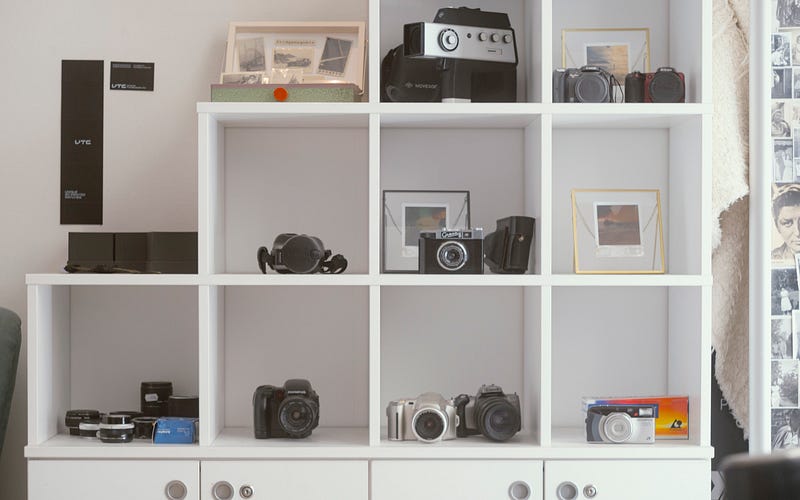
Don’t get me wrong, I love my old lenses. I own about 30+ vintage lenses myself, and I regularly use all of them (except for, of course, the ones that I never use).
I think for many though, these lenses will be less of a long term love, and more of a summer fling.
To truly love someone, or something, you must accept their flaws…and in some ways, you fall in love with the flaws too. This is the part that the trendy posts and videos skip over. They only talk about the dreamy honeymoon photos with insane bokeh, they ignore the commitment vows and less than perfect quirks.
The “Value” Myth
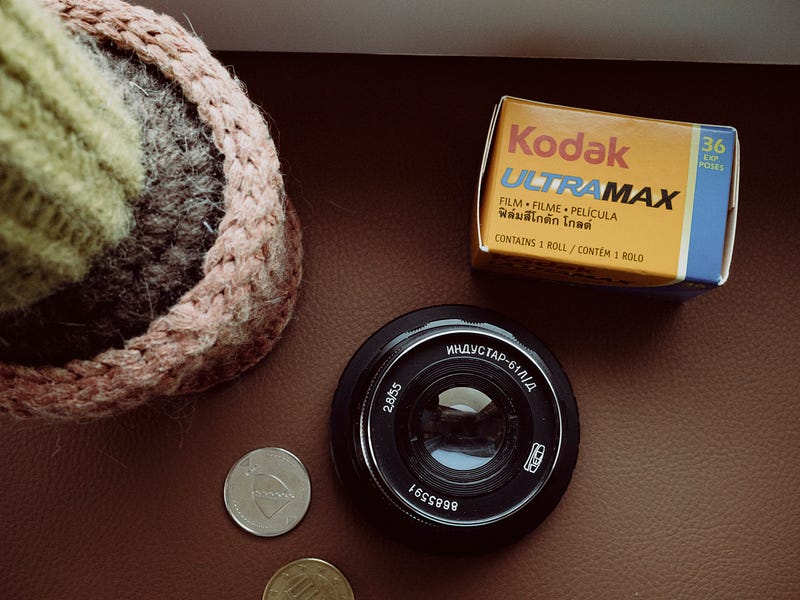
There seems to be a half-truth that’s pushed around about the cheap prices of vintage lenses. How they “represent a tremendous value”.
That was true a few years ago, but like a counter-fulfilling prophecy, this has become less true. Many people have scooped up the cheap AND good lenses, so in many cases, you’ll find either cheap garbage OR expensive gems on marketplaces like Ebay or Facebook Marketplace.
That’s not to say you cannot still find great deals in your local shops or garage/estate sales, but the common online storefronts aren’t the bargain they used to be.
Now, you might countern with “but it’s still way cheaper to buy vintage Canon 50mm f1.4 than the comparable modern version”. You’re right. It’s also not the same product. The modern lens won’t *necessarily* have the vintage character we love, but it will be sharper, it will have phenomenal autofocus, include stabilization, and it will handle harsh lighting conditions better with modern coatings and glass.
Maybe those benefits aren’t worth the extra price to YOU, but they are still there, and the price reflects that.
The “Builds Skill” Myth
Many vintage lenses were designed for manual focus, and they lack the autofocus capabilities of modern lenses. This can be challenging, especially for fast-moving subjects or when shooting in low light.
A lot of new photographers will bawk at the more expensive modern lenses. They will stumble upon a blog or video about old manual lenses for “cheaper” and subsequently hit an unnecessary steeper learning curve with the manual controls.
Some would argue that you NEED to struggle with the manual lenses to build your skills. Sure, a lot of the old timers started film photography with an even steeper curve, but having a stiff barrier of entry to a hobby that we all (supposedly ) love…seems like a negative to me.
I don’t care if someone shoots on all auto-settings, with autofocus, and stabilization, if they end up with the photo they like. If they’re truly passionate about the art, they will probably explore the more difficult and niche methods later, but they might not ever get there if it was too intimidating initially.
There is a satisfying feeling that I personally get from using manual lenses. I feel like I have more control over the experience, and I feel like I “made” the photo. I’m not, however, convinced that this makes the photo objectively better though.
I’m certainly not convinced that I’m a better photographer or that my art is any more valid.
In contrast, there seems to be an odd snobbery that comes from the film guys (and even the holdout DSLR guys nowadays) about how they are better photographers than their younger digital/autofocus counter-parts.
However, in my experience, practice makes improvement.
Many of these younger “kids” with autofocus lenses and mirrorless cameras are making higher quality photos (by any critical standard) in their first 2 years than many of the old pros made in their first 10 years. They’re making improvements daily simply by way of volume. In engineering this process is sometimes called “rapid prototyping”. They make thousands of mistakes and hopefully learn from them.
I think a “difficult” to use vintage lens could stand in the way of those improvements early on in someone’s photography journey.
The “Adapt Anything” Myth
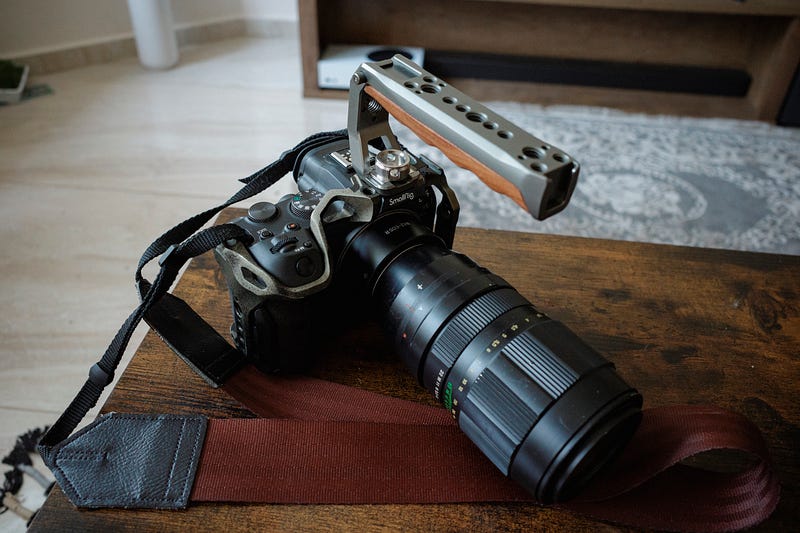
Also, adapters might not be available for every combination, or they might not provide full functionality. Losing infinity focus can be a common side effect of adapters, even on the “better” ones.
Sometimes the adapters are just too bulky and downright ugly too.
Adapter quality can be suspect at times, and often the interior surface is overlooked by 95% of shooters. Neglecting the fact that their adapters’ interior walls are glossy black, bouncing light around inside the adapter instead of being absorbed or otherwise directly reaching the sensor. This can sometimes result in sub-par results, like loss of contrast, and odd flares/ghosting.
The adapter problem can be overcome, but it simply isn’t a problem anyone has to deal with on native lenses. Again, I and others, we can overlook this issue, but it is there from the start. It’s also not often conveyed to prospective vintage lens buyers.
The “Character” Myth
While many vintage lenses have unique character and qualities, they might also exhibit optical issues such as chromatic aberration, distortion, or softness at certain apertures. Some people enjoy these imperfections for artistic purposes (I do), but they might not suit all photography styles.
Using vintage lenses can result in a distinct look that might not suit every photographic style. Vintage and “filmic” vibes, while trendy, might not be your true style, and it would be a shame to box yourself in just because something seems cool on social media right now.
While some photographers appreciate the nostalgic or unique aesthetic, others might prefer the consistent look of modern lenses.
These artistic imperfections…well…they’re still imperfections. They might work for some situations, or for some people, but the more niche a tool becomes, the less universal it is too. This should be obvious, but it seems like a lot of photographers miss this. A painter doesn’t use the same brush for every painting, and your weird crazy bokeh 85mm lens isn’t great (or meant to be great) at everything.
It is impossible to rationally recognize and praise the artistic imperfections of these old lenses, and then simultaneously overlook their technical lower performance BECAUSE of those same artistic imperfections.
It seems like many photographers will claim they love the unique character, and then quietly shove the chromatic aberration, low contrast, and inconsistent sharpness issues into the cluttered back of their mind-closet. This is the behavior of someone in denial.
I’m in a bit of denial too at times, but…ha…at least I admit it. So it’s okay. I think. Probably not.

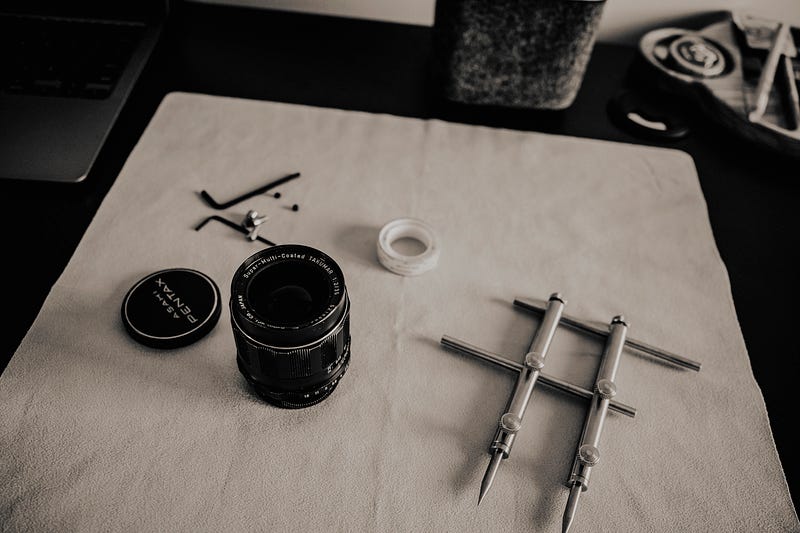
Vintage lenses can also vary greatly in terms of build quality and condition. Some might exhibit wear and tear, fungus, or other defects that can affect image quality.
This could also fall into the “character” category, the faded paint, retro type fonts and vintage coatings.
This is something I do enjoy myself. You can buy 5 of the same vintage lens, and get 5 different experiences. It’s unique, and it makes your lens feel special to you.
It could also be that you got unlucky with a poorly cared for version of a garbage lens. The cool retro experience isn’t so cool now.
You don’t like this experience. Your lens itself looks trashy and worn out, not vintage and charming. Your photos look bad. In fact, your photos don’t even look at all like the one’s your favorite Youtuber posted on their Instagram.
These lenses are old, they’ve had full lives already, many would be retired if they were people. Some have had harsh lives. Many of these lenses are 40+ years old, and there is quite a bit of variation between 40 year old humans too.
Closure
I wrote this in about an hour. It’s been a compilation of thoughts that’s been bouncing around inside my head for a few months. I could probably edit this down to be a bit more concise and tidy up any holes in my argument, but I don’t think that would be very purposeful.
I think some people reading this will get offended, or try to defend one side or another, but I’ll implore you to understand that I’m not placing myself as some higher-than-thou authority here.
Many of the criticisms I have made about vintage lens proponents and users …they can be applied right back onto myself as well.
I just think it would be a disservice to write all my own glowing reviews (50% of the content on this blog) of my favorite vintage lenses…and not address their inherent flaws.
It really seems like people get excited about these lenses, seeing the vintage style photos on social media, and they fall in love with the idea, but not the reality.
I’m not seeking to push people away from vintage lenses (unless of course it caused the price of some Zeiss monsters to drop a bit) I just hope that maybe this article will help future users moderate their expectations a bit.
There is a lot to love in the vintage world, but love requires a bit of work sometimes, it’s not always just a lovely photo-walk in the park.
Happy shooting y’all.
Thank you for reading; follow us and clap a couple of times (it’s free).
Also, if you like what we’re doing, consider supporting us by signing up for a Medium subscription, part of your subscription fee goes to us each month and also supports all the other writers you read on the platform as well. All at no extra cost to you.


