
Operation Cactus
How India prevented a coup d'état in the Maldives in 1988
Two years after India successfully averted a coup d’état in the Seychelles, a storm was brewing in the Maldives. Abdulla Luthufi, a disgraced Maldivian businessman wanted to take revenge against the incumbent President, Abdul Gayoom.
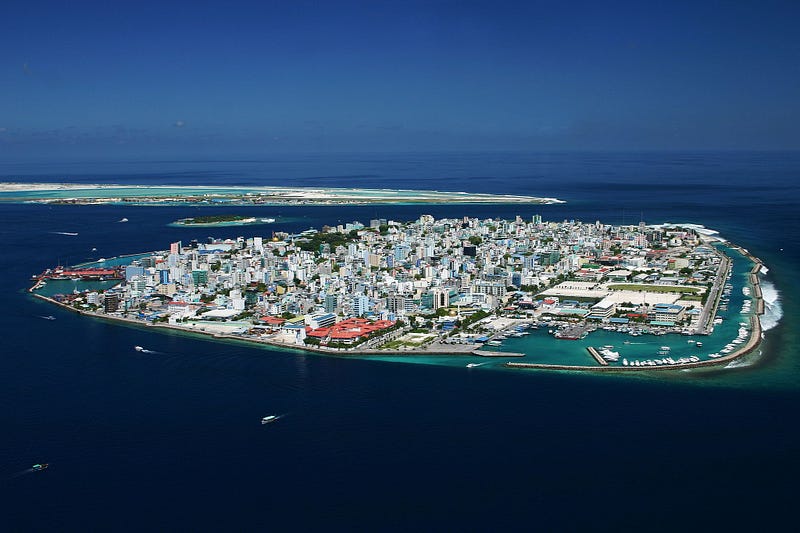
In November 1988, around two hundred Sri Lankan militants affiliated to the People’s Liberation Organization of Tamil Eelam (PLOTE) penetrated Malé, the capital of the Maldives, with full support from Luthufi. They scattered across the city and captured crucial localities and buildings. They marched towards the Mulee’aage, the President’s official residence. But they were unable to find Gayoom.
The President had retreated to the Maldives National Security Service headquarters. Ibrahim Zaki, the foreign secretary rushed to the telephone exchange and contacted other countries for help. Pakistan and Sri Lanka said that they could not assist the President. Singapore and Malaysia were too far away to send reinforcements soon. The US base at Diego Garcia cited the same reason. The United Kingdom declined as the Maldives was outside its sphere of influence and suggested that Zaki should approach India instead. He telephoned Prime Minister Rajiv Gandhi’s office at once. The PM’s secretary responded. Zaki explained the situation to him, stating that the PLOTE militants were outside the telephone exchange and communications could get cut anytime. Both decided not to hang up the call to keep communications running. The call went on for eighteen hours.
Gandhi agreed to help Gayoom and on the 3rd of November, Operation Cactus was born. Less than 16 hours after the call, three hundred Indian paratroopers were dispatched to Malé from Agra on an Ilyushin aircraft of the 44th Squadron of the Indian Air Force (IAF). By this time, the PLOTE militants had besieged three-quarters of the city. However, they had made a strategic mistake. The paratroopers landed at Hulhule airport, a pivotal location the militants had forgotten to capture. Reinforcements arrived from Kochi and IAF mirages were deployed to scare the militants. The paratroopers soon gained control of the city and rescued Gayoom. They did all this with having barely any experience or knowledge about the Maldives. In fact, information about the Maldives was so scarce, that the paratroopers had to rely on a coffee-table book for a map of the country.
The PLOTE militants launched a desperate attempt to escape the capital. They tried to leave the city with around thirty hostages on a merchant ship. However, INS Godavari and INS Betwa cornered the ships along with assistance from planes that had arrived from Diego Garcia. The next day, the hostages were freed, and the militants were arrested. Luthufi was tracked down and was off the Sri Lankan coast. The insurgency was successfully quelled. One year later, the captured militants and Luthufi were handed over to the Maldivian government and received death sentences.
Indo-Maldivian Relations have always been positive since 1988. Every 3rd of November, Victory Day is celebrated in the Maldives as a public holiday to commemorate the efforts of the Indian paratroopers. This incident cemented India’s influence in the Indian Ocean region and showed its capability to aid neighbouring countries on such short notice.
Works Cited
Times of India. 2018. Operation Cactus: How Indian troops went to Maldives and helped quell a coup. February 7. https://timesofindia.indiatimes.com/world/south-asia/operation-cactus-how-indian-troops-went-to-maldives-and-helped-quell-a-coup/articleshow/62816787.cms.
Brewster, David. 2014. Operation Cactus: India’s 1988 intervention in the Maldives. April 18. http://pragati.nationalinterest.in/2014/04/operation-cactus-indias-1988-intervention-in-the-maldives/.
Joshi, Manoj. 2016. Operation Cactus: India’s Mission Impossible in the Maldives. June 13. https://thewire.in/books/operation-cactus-indias-mission-impossible-in-the-maldives.
Sen, Ronen, interview by Discovery Channel. 2018. The Phone Call That Went on for 18 Hours (11 February).
Eurasian Times. 2019. Operation Cactus: Maldives Celebrates Victory Day; Thanks India For Operation Cactus. November 4. https://eurasiantimes.com/operation-cactus-maldives-celebrates-victory-day-thanks-india-for-operation-cactus/.


