
Oops, Am I The Narcissist?
Are you projecting your own narcissism onto others? Here’s some advice, along with a checklist.

Carl Jung once said:
“Whatever is rejected from the self, appears in the world as an event.”
… which can be roughly paraphrased to: Your internal world can manifest as something that’s outside of you.
It’s an odd thing, really.
- Someone with a low self-esteem might constantly be looking for flaws in others.
- Someone who is about to cheat on their spouse might suspect their spouse, friends and family of infidelity or disloyalty.
- Someone who feels moral superiority over narcissists might be displaying the I’m better than others attitude, which happens to be a narcissistic trait.
Do you see where I’m going with this?
It seems so easy to spot the narcissist — the manipulative coworker, the self-obsessed social media personality, the relative who sees the world only in terms of how it serves them.
But the deeper, more unsettling question is rarely considered:
What if I carry some of those same narcissistic tendencies within myself?
Psychoanalysts, from Carl Jung onwards, have explored the phenomenon of projection.
PS: Here’s something I wrote about projection:
Projection is a defense mechanism; it makes us unconsciously attribute our own unacceptable qualities or impulses onto others.
In the case of narcissism, if you’re quick to identify and condemn narcissists, you may very well yourself be harboring elements of it.
“Everything that irritates us about others can lead us to an understanding of ourselves.” — Carl Jung
This Jung quote has inspired me a lot. It feels like it has opened a door to something unpleasant, but extremely profound.
I tend to be annoyed by certain things, and my irritation might point to my own unresolved conflicts.
It’s like looking into a mirror — the irritating behavior triggers a reaction that reveals something about yourself you may not have been aware of.
Herein lies a big opportunity to grow as a person — if you’re willing to unpack your triggers.
The Scary Narcissist Is Always Someone Else (But Me)
So many people are painting bleak pictures and telling us campfire horror stories about narcissists and dark empaths.
“We see things not as they are, but as we are.” — Anaïs Nin
I can almost visualize their wide eyes and an expression of terror on their faces as they’re warning us of those soul-sucking vampires.
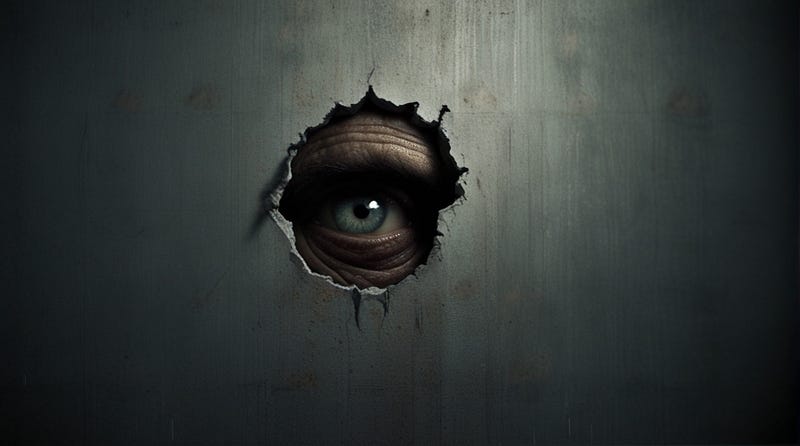
There is a collective pattern there.
Why are you talking about narcissists so much?
It almost comes across like an obsession.
That’s why I’m inviting you to think about yourself.
For a moment, disregard those “toxic” people you know, stop vilifying others, and look within your own self.
Am I The Narcissist? — A Checklist
Try to be honest when answering these questions. I’d recommend taking some quiet time to think about these aspects.
If it helps, assign a number on a scale from 1 to 10 to each question. I love to measure everything like that, even the need to go to the toilet (it helps others understand how urgently I need to pee).
Anyhow, here we go:
Sense of Self
- Do you often compare yourself to others, or feel a strong need to be seen as superior?
- Do you have an underlying sense that you’re not good enough, but overcompensate for it with something else?
- Is your self-esteem easily moved by external validation (praise, likes, success)?
- Do you sometimes fantasize about being admired or recognized for your special qualities?
Relationships
- Do you crave attention and feel frustrated or unseen if you’re not the center of it?
- Do you find it difficult to genuinely celebrate the successes of friends or family?
- When someone disagrees with you, is your first reaction to defend your position rather than try to see theirs?
- Do you tend to choose friends or partners who reflect positively on you or boost your image?
Responding to Challenges
- Are you quick to take things personally, even if they aren’t meant as an attack?
- Do you struggle to admit mistakes or see them as an opportunity for growth?
- If someone offers constructive feedback, do you feel a need to explain yourself or deflect blame?
- Do you sometimes silently put others down in your mind to feel better about yourself?
Things to Consider
- Be honest with yourself. It’s natural to have some defensiveness when answering these. The more honest you are, the more potential for self-awareness.
- Context matters. Consider how frequent these feelings/behaviors are and the impact they have on your relationships.
- Like with so many things, it’s a spectrum. Some of these tendencies can exist on a mild level without being a full-blown disorder.
This is still meant for reflection, not self-diagnosis. If these questions raise concerns, consider a therapy to explore this further. A therapy is something everybody needs anyway (I think).
Recognizing Your Narcissism
Narcissism isn’t always overt, so it can be challenging to identify within yourself.
Our mind likes to defend itself with all types of means. Try to observe yourself neutrally, without judgment.
Use the following points to think about the more subtle signs. Keep in mind, though, that we likely all exhibit these tendencies to varying degrees:
- Do you feel entitled to something? Entitlement is a feeling that you deserve special treatment or that rules don’t apply to you in the same way.
- Do you use others to achieve your goals? Exploitation of others (without regard for their needs) is a narcissism trait.
- Are you busy thinking/fantasizing about power, brilliance or achievement? In subtler form: are you preoccupied with the idea of your personal success?
- What’s your relationship with criticism like? Can you accept feedback, or see differing viewpoints? Do you take disagreement personally?
- How do you feel about other people’s success? Can you be truly happy for them? Can you emotionally connect to their joy when they achieve something?
How To Overcome Your Narcissistic Tendencies
If you recognize some of these traits in yourself, there are ways to deal with them:
- Cultivate some good ol’ self-awareness. Honest introspection is difficult, but essential. Mindfulness practices or journaling can help you identify patterns in your behavior. Reserve some alone time for yourself — regularly.
- Ask people who know you well & look at yourself from alternative perspectives. Actively ask close friends, family, or even a therapist, for their perceptions. Be genuinely open to hearing things you might not like. Make sure to choose the right person to ask, before you accidentally start a fight in case e.g. a family member is condescending.
- Practice empathy towards others. Make conscious efforts to put yourself in others’ shoes. Consider their feelings and needs separate from your own. This is probably easier said than done, but it’s the effort that counts.
- Be humble (like Kendrick Lamar said). Accept that you don’t always have to be right, or the center of attention. Value other people’s contributions.
A Word of Caution
It’s also possible that you’re already being critical (too critical?) with yourself.
In that case: Don’t overcorrect and label healthy self-respect and ambition as narcissism.
The goal is balance, along with understanding that we all exist on a spectrum of narcissistic traits.
As psychoanalyst Erich Fromm said:
“Selfishness and self-love, far from being identical, are actually opposites.”
Healthy self-love involves genuine self-regard, while narcissism is an attempt to compensate for a deep underlying insecurity.
Thank you for reading. I’d love to hear your views on this. Do you think it’s possible that you have narcissistic tendencies? Let me know in the comments.