
Oolong Tea in a New America
How I navigate the Buddhist Path as a multiracial upasikha in the United States
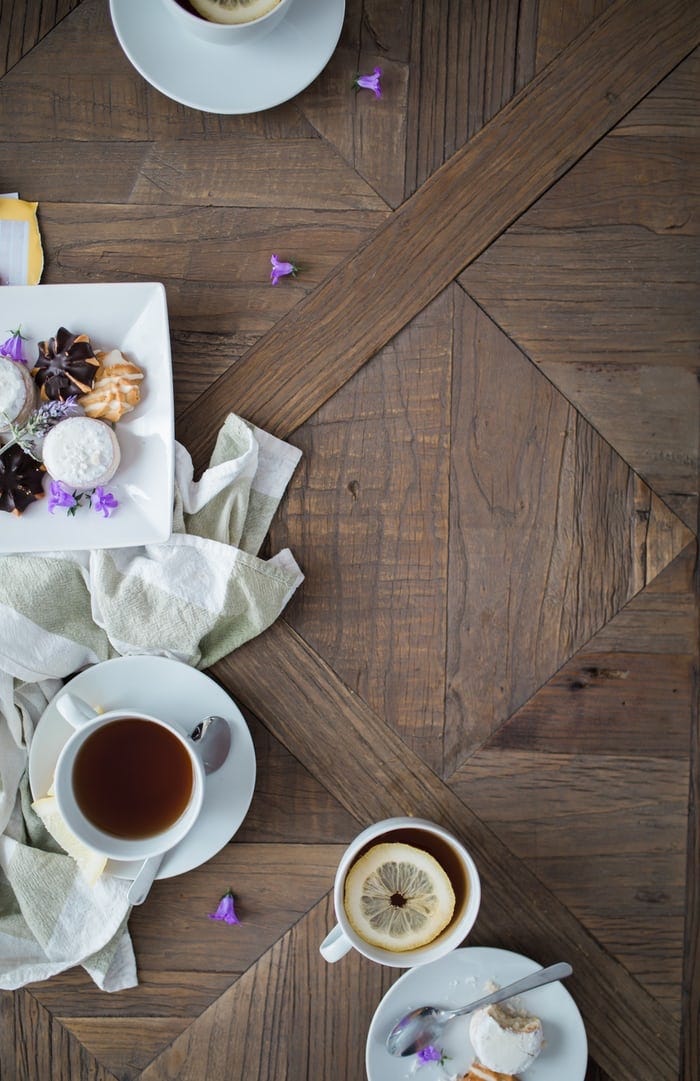
There’s none of that bitter after-taste when you’ve had a sip of oolong tea, since the delicate leaves have been only partially fermented. I turn to it now with a greedy cup, eager for its tranquilizing effects. In the meantime, the world cheers the ending of a president’s brutal reign — a president whose government made it nearly fashionable to humiliate, demean, and pathologize American BIPOC.
Each warm, ceramic mug fosters an inner relief, reminiscent of Earth’s comfort. I take solace in oolong when the reality of a cold, bitter, xenophobic society hits close to home. Now, for the first time in what seems like forever, hope blooms.
With trembling fingers, I wrestle open a tea sachet as I scroll through my feed and see President Trump’s desperate yellow veneer. A few shaky breaths later, I snatch the tea-kettle and dunk my oolong under freshly-boiled water.
In conjunction with my daily tea-time, a crucial tool that helps me to stay healthy is the Buddha’s Noble 8-Fold Path. For me as an upasikha (lay practitioner), these gilded instructions are as important as the air I breathe.
The eight paths are right speech, right view, right conduct, right intention, right concentration, right livelihood, right mindfulness, and right effort.
Using the Path as a frame of reference, I try to transcend a uniquely cruel — and uniquely American — system of oppression that has flourished unchecked for centuries.
Successfully navigating this path is far from simple, yet its unique approach to human suffering is just as relevant in the era of Black Lives Matter and the fall of a corrosive regime as it was over two millennia ago.
I’ll try to explain how I follow this Path, and the stash of oolong in my desk drawer altar will help me do it.
Right Speech
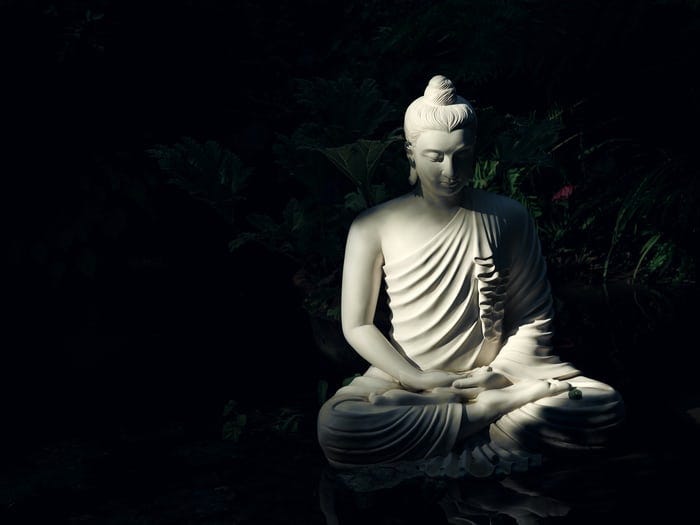
On the surface it seems simple: no name-calling, no berating, no belittling, no gossip. What most people don’t consider, though, is that we need to carefully cultivate the place where words are born: the mind. Everything we do comes from mind. If the mind is not stable and calm, a single moment of anger can produce words that ruin somebody’s life and drive them to suicide. Taking care to think before we speak can extinguish the flames of anger before they become a war.
Better than a thousand hollow words is one word that brings peace. ~Buddha~
No longer is it okay it to let racial slurs roll casually off our tongues: wet-back, camel-jockey, rag-head, tranny. It isn’t okay to mis-gender someone, use the wrong pronouns, or seethe internally with poisonous thoughts under the hidden excuse of ‘I’m just thinking! Aren’t my thoughts my own?’ It is precisely these thoughts that will solidify, stripping a humiliated person of their humanity.
The now infamous Amy Cooper used the power of her speech to terrorize an African-American bird-watcher in New York, who’d asked her to leash her dog in Central Park. Because he had dared to ‘impose’ upon her, Cooper took out her cell phone and dialed the police, openly referencing her victim’s race because she knew that law enforcement officers would question him, harass him, or maybe even kill him.
I believe she did it because she could.
The Buddha taught that words are echoes, mere empty explosions of sound. But he knew that behind words lies power we give them: the power to uplift a grieving widow, embarass an awkward teenager, and cause an immigrant to recoil because, while driven to the United States with her children by war in her homeland, she nonetheless finds herself reduced to a stereotype, a piece of colorful cloth, and the cinnamon-brown skin she was born with.
I know the power of such words, dripping from the lips of their utterers like the froth of a slathering bull. I ponder them in the dark, with oolong heavy on my tongue.
My husband, our four children, and I live in a semi-rural Ohio town, where the fields are green and corn-stuffed cows abound. Unfortunately, not all of the people who live nearby are friendly. In one incident related to me by my husband a few years back, a ‘neighbor’ who lived a couple of houses down saw me leave for work one day and noticed my hijab.
“Why do you have a sand-n****r living in your house?” are the words he uttered to my husband Michael, who is Caucasian.
Sand-n****r.
That despicable word burned a hole in the pit of my stomach, simultaneously filling me with the cold dread of doom. [I’m not sure exactly what words Mike used in response, but they had something to do with the offender’s life and whether he would like to keep it or lose it in short order.] The mere fact that someone could say such a thing to a person he didn’t even know well was too difficult for my brain to analyze. It stung like nothing had before and hasn’t since.
So living without restraint in my speech isn’t an option for me; I know the chaos unchecked words can bring. With gradual training, we can all program ourselves to use harmful words less often. Sometimes, it’s as simple as just trying to imagine ourselves in the other person’s shoes.
Right View
Even beneath the timid glow of Joe Biden’s presidential win, it remains difficult to be an American in the United States right now, and even more so for Americans of color. We’re fighting a seemingly endless battle with COVID-19, preparing for possible civil unrest in the wake of Trump’s loss, and screaming for our voices to be heard after George Floyd’s horrific murder.
This exhausting mixture of torments can drive someone into depression and worse, so it helps me to recall one of the Buddha’s most critical teachings: the law of cause-and-effect. More populary known as karma, this law offers an up-front way of viewing our place in the world by reminding us of our personal responsibility for what goes on in our environment.
Those two words are an allergen to too many people in the US, but there’s no need for it to be that way. All we have to do is recognize that when we think, say, or do something good, those beautiful vibrations reverberate throughout the universe and eventually return to us. When we inevitably say or do foolish and dangerous things, those too will come back to haunt us. In other words, once it’s out there, it’s out there, and there’s nothing we can do to take it back. Even seemingly harmless things, like a white lie or sarcastic comment, create a negative energy with the potential to mushroom out, like the plume of a nuclear blast.
So when I have a negative interaction with someone, I’ve trained myself to remember that it’s the result of my own previous bad behavior. Had I not created this negative potential by being cruel to someone else in the past, then I wouldn’t be experiencing its effects in the present.
Conquer the angry one by not getting angry; conquer the wicked by goodness; conquer the stingy by generosity, and the liar by speaking the truth. ~Buddha~
There’s no constructive use for simmering over whether something is a micro-aggression or if the person who spoke rudely to me hates brown-skinned hijabis. I can’t change this person by myself, so I go about my day without holding on to the situation or identifying with it in any way. I hold my own until I get back home and break out the oolong. I do my best to adhere to the Buddhist precepts. In so doing, I can rest assured that I am not accumulating any unnecessary bad karmic actions. That means I can’t experience their negative effects later on, whether in this life or five hundred lives from now.
Right Conduct

Much is being said about the way people of color in America have to ‘behave’ while in the presence of the (mostly Caucasian) majority. In order to make co-workers, fellow students, teachers and law enforcement officials comfortable, BIPOC must smile more, quiet their voices, alter their diction, even hold back their political/religious views. In other words, it’s hard to be ourselves, and we’ve been sick and tired of others policing our behavior for several hundred years. But as an upasikha, I can’t trouble myself with oppressive thought patterns about what other people think.
We are the heirs of our own actions. ~Buddha~
To keep myself sane, I follow the Buddha’s tranquil instructions. Those unfamiliar with his teachings might expect some deep, esoteric explanation, but really it’s very basic. I believe in being an honest, simple person, having patience with anyone who might be hostile toward POC like me.
In no way does this mean I never encounter difficulties, but a peaceful lens through which to view the world provides a type of solace that is rare to find. I think of the soft taste of oolong and smile when a person asks me where I’m from. It’s easy to do this — smiling, that is — because I know that most people are genuinely curious. They may have lived their entire lives in majority-white neighborhoods without meeting a brown-skinned person, and curiosity is natural. So I search the space behind their eyes, on the look-out for bitterness or distaste, and I answer their endless questions as gently as I can:
Yes, ma’am, I was born overseas.
Yes, ma’am, I am an American.
I’m actually mixed.
Yes, I wear hijab, but I am also Buddhist.
Yes, I’m really from Germany, ma’am.
Then I finish my grocery trip, slice some fresh ginger, and slip the pieces into my oolong mug. The exchange is always pleasant, and I can come away from the experience knowing that I’ve educated someone new…someone who, for the first time in her life, might not have a dark thought the next time she passes someone like me in the aisles of Walmart. I might feel exhausted, but I know I don’t have to be. There is oolong to calm me. Oolong, and the sacred name of Amituofo [Buddha].
Right Intention
Intention is everything in this world. So when I go to the market, I set my intention before my foot passes through the automated doors:
I’m here to shop for my family. I will move in as much serenity as I can, inoffensive in my actions and with a bright countenance. For those who engage with me, I will try to make the encounter as pleasant as possible.
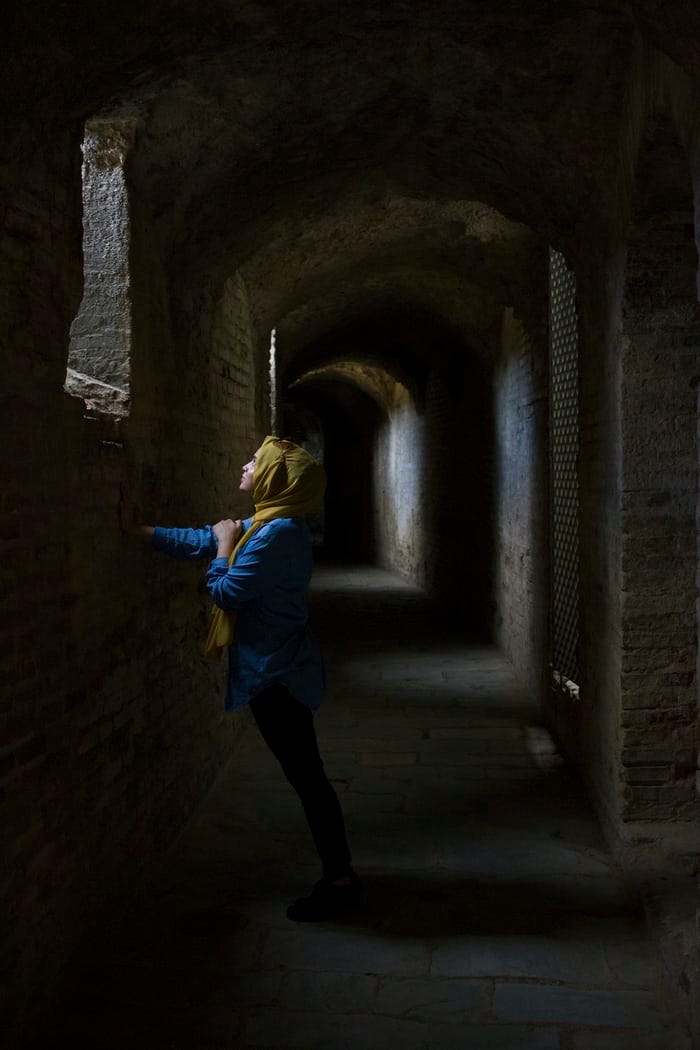
I enter the store in my neon-pink hijab. I’ve biked there and will need to carry everything I buy back home with me, so both my Vera Bradley purse and my son’s old National Guard backpack are strapped firmly to my body. The first few times I’ve entered the store like this I tip-toed along hesitantly, thinking someone would surely stop me under the suspicion that I’d put something pilfered into the bags. After a few visits without being accosted I eventually loosened up, but the scrutiny that tends to attach itself to BIPOC for simply entering an establishment has not been lost upon me.
Practice the principle of good conduct, not evil conduct. One who observes this practice lives happily in this world, and beyond. ~Buddha~
I cruise the aisles with my mini-cart, seeking fresh ginger and my precious oolong. Along the way, I pass the citizens with whom I share the small city of Monroe: a soccer-mom with an adorable, grubby little toddler in her cart; an African-American teenager and her fellow students giggling behind their masks; an elderly woman collecting caffeine-free tea and some wet dog food for a furry little canine waiting for her at home.
I take in the generous expanse of the market, the bright lights and happy colors, the dutiful workers unloading frozen food items while irritated customers wait for the popcorn shrimp that is just out of reach. I nearly crash into a middle-aged woman and we both mumble polite “I’m sorrys” before going our separate ways. I think of how many choices there are just for things like coffee and tea, and how struggling families in different parts of the world would think themselves to be in heaven just for a spoonful of Nescafé.
I head to the pharmacy to pick up my daughter’s medicine and wait patiently in line. I look down, reading the bright-blue ‘Six Feet Apart’ stickers on the floor. It’s taking a while, so I slip the mala beads off my shoulders and begin quietly reciting the name of the Buddha as I wait: Amituofo, Amituofo, Amituofo.
A tall Caucasian man in a mask and ball-cap takes a spot behind me. When it’s my turn, the pharmacist apologetically explains that the medicine needs a prior authorization. He says that with the Good Rx App the co-pay will be eleven dollars, but I don’t have it. I tell him I’ll have to come back on payday, and I resume my shopping.
I’m just about to reach for some popcorn when the tall man in the ball-cap approaches me. At first I ignore him, but when he doesn’t leave my space I tense up for half a second.
What does he want? What is his intention?
“Excuse me, did he say your co-pay for the medicine was eleven dollars?”
I nod numbly.
“I’ll pay for it,” he says. “Do you want me to help?”
For a moment I am speechless. We walk back to the pharmacy and he strides toward the counter with authority. He speaks with the pharmacist, and in a minute the transaction is over. A tall stranger, gaining or seeking nothing, has just made it possible for my teen-age daughter to be medicated, and I want to cry.
I entered the store with the intention of practicing equanimity as I shopped, and ended up receiving an unimaginable courtesy from someone who had no reason to help a little brown woman in a small Ohio city.
For me, this is proof of the truth of the Buddha’s gilded words.
Right Samadhi (Concentration)

When I worked as a Respiratory Therapist, I used to be able to collect arterial blood gas samples with ease, no matter if the patient was healthy, a ‘difficult stick’, or even coding. For those who don’t know, collecting ABGs isn’t exactly a painless procedure. Because arteries are more distal than veins, the needle must be directed deeper than when someone’s receiving a shot or an IV. The artery must be located, palpated, and its location maintained to the best of one’s ability before that needle is positioned. It required a level of concentration that drowned out everything but myself, the patient, and that needle. There was literally nothing else — no sound, no speech, not even other staff members.
Part of the reason I resigned from my position is because my ability to concentrate was impaired for medical reasons. No-one really wants you to take blood from them when you can’t steady your visibly shaking hands.
Six years later, my concentration skills are mediocre at best.
There are three schools of Buddhism: Theravada, Mahayana, and Vajrayana. According to the Dharma (Buddhist teachings), there are more than 84,000 different ways that people can practice the Buddha’s teachings. Some people focus on koans, recite mantras, listen to teachings from revered teachers, and make offerings of food or money at the temple.
Another way to develop proper concentration is to meditate, but given my fragile mentality and familial circumstances it’s extremely difficult. I have too many children in the house, too many chores (moms and dads, can you relate?), too many house-hold responsibilities and too little time to meditate for even 20 minutes.
My lack of being able to practice meditation left me feeling hopeless most days. Then, I began research on the Pure Land school of Buddhism. It explains that because of the power of Amituofo Buddha’s 48 vows, all one needs to do is recite the Buddha’s name if other forms of practice are difficult.
So I’ve made it a habit to treat my mala beads as a tangible connection to the ethereal Buddha and use them to recite his name every hour, if I can remember. (Many times I don’t.)
This shedding of an invisible spiritual ‘load’ and new way to practice was like relaxing in a pool meant for goddesses. Now, there isn’t a day that goes by in which I don’t recite the Buddha’s name with a cup of oolong waiting in the wings.
Life goes on as before. We are still financially poor. I am an insecure, fallible human being with too much attachment to laziness and procrastination. Yet the prospect of being reborn in a lotus, never again to take root in a human womb and a depraved, violent realm, has been the treasure that keeps me going.
I yearn for my mother’s embrace, like a little girl. During these times, I concentrate on the Buddha’s name. During periods of intense pain, I concentrate on the Buddha’s name. Draped with the uncertainty of being an ethnic, veiled woman in the United States, I concentrate on the Buddha’s name.
Right Livelihood

Buddhist culture is pacifist by its nature. As followers, we’re advised not to take up jobs that require us to harm or kill other sentient beings, even indirectly. A few vocations come immediately to mind: executioners, for example, or those who work as butchers, weapons manufacturers, or tear apart the bodies of livestock and poultry in slaughterhouses for human consumption.
It is better not to do an evil deed. A misdeed torments one hereafter. It is better to do a good deed. One does not grieve after doing it. ~Buddha~
Let me be clear: people who do have such jobs are not considered by Buddhists to be evil or malicious in any way. We acknowledge that people working in these fields are are eking out a living, just as worthy of rights, love, and family as the rest of the world.
The reasons we’re discouraged from having these jobs is because of the proximity to which workers are exposed to the machine guns and machetes that take human lives, and the contraptions designed to slash at the bodies of half-dead cattle and the poorly-operational ‘electric baths’ meant to kill chickens.
Buddhist culture conditions us to recognize that, by taking up such jobs, we risk accumulating the negative energy that comes along with them, which in turn causes us to be reborn and suffer the same tortures that we are now visiting upon POWs and animals used for their meat, milk, and fur.
It’s why I’m glad to be a mother, with the opportunity to stay home and nurture my children every day. By tending to these little ones, I am practicing ahimsa, non-violence. I take solace in the fact that even if they don’t share the same beliefs that I do, they’re still growing up to be intelligent, bright, amazing American citizens.
I can nourish them spiritually with stories and anecdotes about the Buddha. I can nourish them nutritionally via the finely-sliced ginger that I slip into my oolong cup and their night-time tea. I am teaching them to love others, to save the spider rather than step on it, and to have a general kind regard to life of all kinds.
A mother’s job is to love above all else. That love came into play when my teen-aged son made supportive comments for former President Trump’s re-election campaign. I knew he’d probably gotten the sentiments from his church, his friends, and the Boy Scout troop he’s dedicated to. This is, after all, Ohio.
But I didn’t get upset. I didn’t even bother questioning him. At the end of the day, he is my son. Everything else is superficial, like the clothes he wears or his favorite foods, which seem to change every three months as he ventures further into puberty.
I believe firmly in education, a free press, free speech, and the principles of science. But I don’t see the need to ‘draw a line’ between those who rooted for Trump or for Biden. I don’t feel the need to sever friendships or familial bonds. Not only is it unnecessary, it is dangerous; every person wants to be happy and free from suffering, whether they are racist, anti-racist, or something in-between. This doesn’t mean that I don’t support advocacy for change. Without a doubt, there must be protests and demands for human rights. Yet it is precisely because we draw so many lines that our Earth is embroiled in as much hatred and poison as it is. At some point, we need to stop. We need to detach. If we don’t, our decisions will be muddled and our thinking will be unclear.
Right Mindfulness

I have a tendency to put things off All. The. Time. My bed is comfortable, so I’m frequently lazy. Once I begin a project it’s not a guarantee that I’ll finish it. During breaks between chores, I relax with a cup of oolong. Very often, I’m tempted to have another cup, thinking that I ‘deserve’ it — and then another cup, and one after that. Before I realize it, two hours have passed and neither the dishes nor the laundry has been tended to.
Mental illness, which runs in my family, is an explanation for some of these flaws, but not all of them. As a Buddhist, I am exhorted not to make excuses for my own lazy behavior. Although it is reasonable to rest, refresh, and cleanse, I try not to make a selfish ritual out of it.
The mindful people exert themselves, and do not like to remain in the same place, like swans that leave their pools and go home after home. ~Buddha~
To keep myself from drowning in a sea of habitual self-pity, I keep certain things at the mind’s forefront: that I must not steal, lie, cheat, or impair my senses and endanger others by using illicit drugs. I am not irresponsible with my sexuality, and never do I take a life. But because it is so easy for ordinary human beings to fall back into these habits, I check my intention frequently. If I find myself wanting to share a salacious revelation from the tabloids with my daughter, I’ll bite my tongue if I can help it, even though we both like to keep up with pop culture. Each time a new ‘Karen’ becomes infamous due to her over-zealousness in policing the lives of BIPOC, I try to resist running to the nearest family member and sticking my phone into their faces, urging them to “Look! Look! Look what’s happened this time!”
If I hate-watch something or revel in a celebrity’s or politician’s down-fall, then I’m part what’s wrong with America today. Schadenfreude is toxic and plants the seeds for me to experience public humiliation myself, whether it be in this life or the ones to follow.
Right Effort

The gist of proper effort is to prevent unwholesome states from arising in the consciousness. An unwholesome state could be anything: sadness, jealousy, irritation, or anger.
Admittedly, as a multiracial POC it is often very difficult to get through my day without feeling disheartened at new reports of police violence, blatant racism and the maddening tendency of nearly half the US population to support ‘Trumpism’, no matter how many dangerous, lethal, and inconsiderate things the former president enacted during his four years of tyranny.
Do not associate with evil friends, and do not associate with mean men. Do associate with good friends and do associate with noblemen. ~Buddha~
Feelings of shame, hatred, desperation, and fatigue plague the minds of BIPOC and their allies on an hourly basis. There is the near-constant stress of wondering who will be profiled next, who will have a negative interaction with a police officer or a ‘Karen’, and the ever-present terror of fearing which family member will next be the victim of violence and/or state-sanctioned murder.
At the same time, however, we must also be kinder to ourselves.
The Buddha taught that it’s perfectly natural for unhealthy states to loom over us. Everyone has inherent buddha-nature; that is, each one of our minds is as bright and expansive as a beautiful blue sky. Sometimes, weather patterns allow clouds to form in that sky. There may be just a few clouds, or enough to blot out the sky entirely. In this analogy, the clouds are representative of turbulent human emotion.
When we feel lost and mired in despair or anger, we have to learn how to be tender towards our own hearts. Just as clouds form naturally and spontaneously, it is natural for all kinds of thoughts to float in and out of the human consciousness. Even the Bodhisattvas and other enlightened beings experience this phenomena, but unlike most people, they recognize that these feelings are absolutely temporary and can never snuff out their minds completely.
So it is with racial battle fatique. Part of my mental illness includes depression (for which I’m medicated). That made it difficult for me to have a healthy mental outlook for years. I recall beginning to feel moody when I was just eleven years old, and I’m 39 now. What I didn’t have back then was the name of the precious Buddha, or the oolong tea that now soothes me when all I want is Mother.
Today, due to the grace of Amituofo and the vows he made to protect those who cry out his name, I’ve been able to better understand that my difficult emotions are just like storm clouds. They arise spontaneously and naturally, so I can rest assured I’m not ‘at fault’ or ‘weak’ when they invade my mental quietude. Just like a hurricane, which can last for many days, my dark emotions sometimes keep me from healthy sleep for what seems like an eon. What I understand now is that the emotional turbulence won’t last. Like a storm, it will die, and beneath it the clear brilliance of buddha-nature which has been there all along will shine without obstruction.
No matter what kind of world I will wake up in tomorrow, I know that I am still a mother. I am a nurturer, a healer, and a woman of no homeland.
Also, there is oolong. It waits for me in a stash that I’ve designed to be never-ending.