
Only The Fit Will Survive
And rest will become dinosaurs
“Just one great idea can change your life dramatically. Look for it. It’s there somewhere!” ~ Ernie J Zelinski
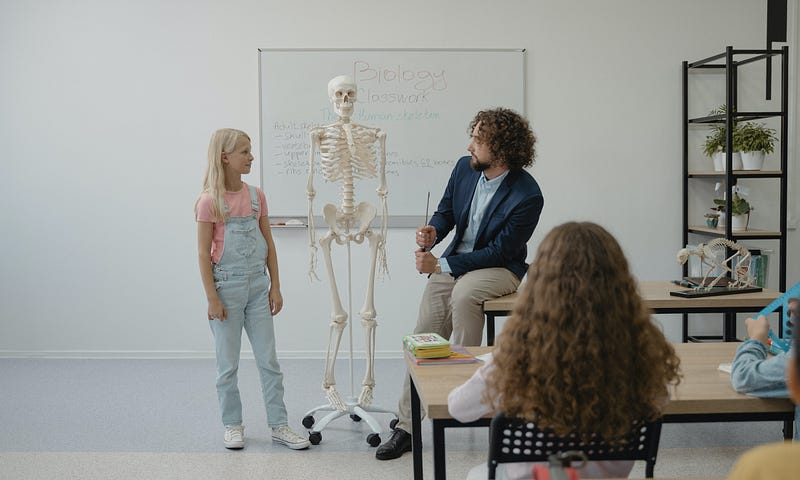
I was in the VIIIth grade biology class. Our wise teacher was teaching the evolution of the human skeleton. Little did I know that the next hour would change my perception of life forever.
He taught something about evolution and nature that influenced the way I look at things and surroundings even today.
The teacher mentioned Charles Robert Darwin and his book On the Origin of Species
Darwin(12 February 1809–19 April 1882) was an English naturalist, geologist, and biologist, famous for his contributions to the science of evolution.
In this book, he mentioned a theory, Survival of the fittest. It is about how Nature selects who will survive and who will perish over a course of time. Nature selects what is best and discards what is not necessary.
Darwin quoted that nature will select only those species to survive who are the fittest. Here fit does not mean the smartest, strongest, or the most intelligent. By fit, he meant the best suited/adaptive to the immediate environment.
By fit, he meant as a key fits in a lock.
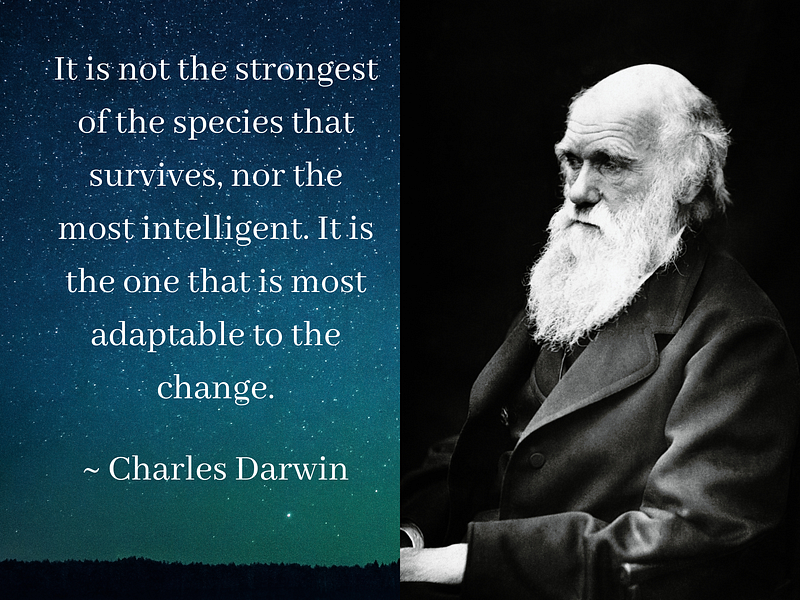
Darwin’s theory says that to survive, we have to be fit. Fit in the terms that best is suited for the immediate environment. As you all know change is the only constant and environments change. Therefore, we must adapt ourselves to the changing environment to survive and continuously evolve to thrive.
This Natural Selection and the idea of Survival of the fittest has been my anchor since then. I learned that if we have to survive in any sphere, we ought to be fit. Again, here fit means most well suited/adapted to the immediate environment.
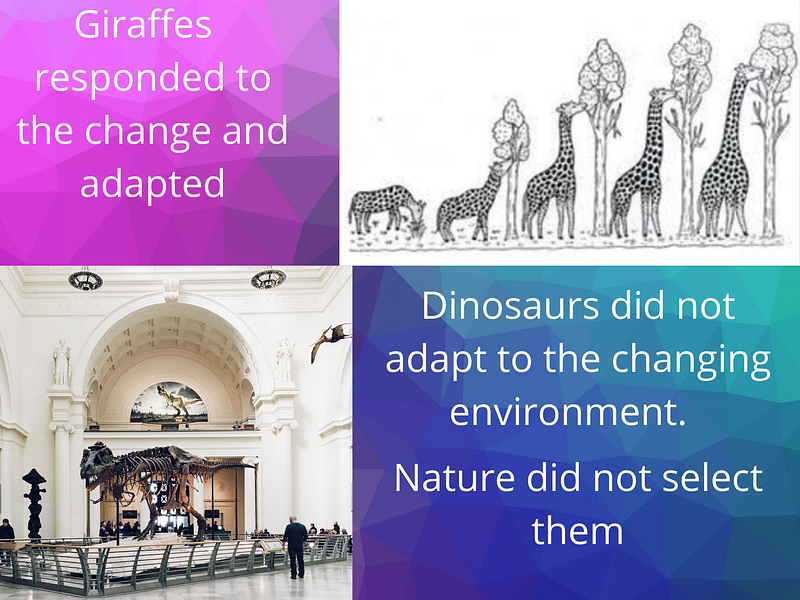
We have seen the mighty dinosaurs perish and giraffes evolving from a smaller size to a size and a long neck as we see them today.
Realization
The realization dawned over me that Nature is all-powerful, a self-reliant entity. We all are mere puppets in the hands of the mighty nature. We have a place in here only until we are compliant and fit for its perusal.
Adapting and being responsive to change in our environment is the only antidote for survival. Let it be Tsunami, earthquake, tornado, social unrest, political crisis, or a nasty virus.
Let us see a few examples of survival of the fittest.
Nature Heals Itself
Nature selects only what is needed and discards the clutter.
Whenever there is an imbalance in nature, Nature corrects it in its unique way. Tsunami, earthquakes, wildfires, glacier meltdowns are nature’s ways of showing its wrath to the atrocities we as humans cast on nature. It endures to a limit and then just discards off what all is unnecessary via natural calamities.

Nature heals itself by slowing down and pausing. There is great power in a pause. This big human pause by the pandemic has helped heal nature enormously. The trees and leaves are greener. Nature is supplying more oxygen to breathe. Water is cleaner. Air is healthier. Pollution has decreased. More stars are visible in the night.
As per bbc.com, the ozone layer, which protects us from ultraviolet light, is healing. The Northern Hemisphere could be fully fixed by the 2030s and Antarctica by the 2060s.
What we can do best is be in harmony with nature. And not tamper with it. for our selfish interest. Elsewhen the breaking point is crossed, nature will reclaim its space, select the best and discard the rest. Nature is All-mighty.
Survival Success Stories
“I survived because the fire inside me burned brighter than the fire around me.” ~ Joshua Graham
We often find ourselves complaining about how our colleague got promoted despite working less than us or having lesser experience or knowledge in a particular domain.
Don’t fret, introspect. Cry babies don’t win. Survivors win because they make themself fit in their immediate environment or have the mettle to mold the environment to suit them.
“One day you will tell your story of how you overcame what you went through and it will be someone else's survival guide” ~ Brené Brown
This is about a time when higher education was not for girls in Poland. To pursue the same, young Maria Salomea Skłodowsk in 1891 moved from Poland to Paris to study further amidst academic social and gender bias. She persisted even after many struggles.
For starters, she was not allowed admission to school because of her gender. She persisted. She stood tall and strong and won scholarships in the era when females were forbidden from power and education.
Later, Sorbonne University enrolled her to study physics and mathematics.
She later won the Nobel Prize in Physics(1903) and the Nobel Prize in Chemistry (1911) and was known to the world as Madame Curie.
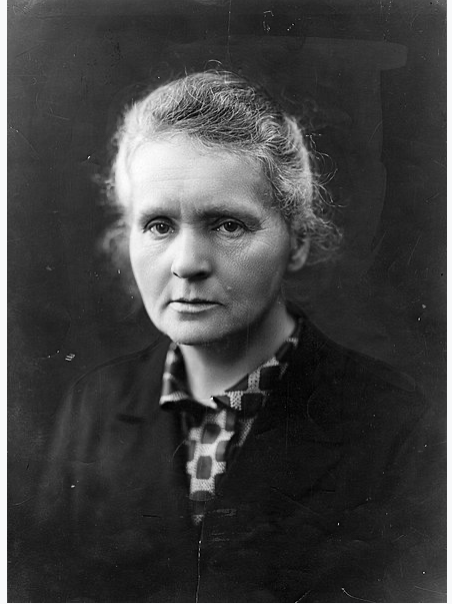
A few months before receiving the Nobel Prize, Marie was awarded her Ph.D. from the University of Paris. She along with her husband Pierre Curie was invited to the Royal Institution in London to present their work. As a woman, Marie was not allowed to speak, and Pierre did all the talking on the stage.
She still persisted and won a 2nd Nobel prize.
Narrating one more story about Colonel Sanders. At the age of 65, he felt like a failure and decided to commit suicide. He decided to write down his will. Instead, he wrote about what he would have accomplished with his life and thought about his good culinary skills.
Motivated, he borrowed $87, fried some chicken with his recipe, went door to door to sell. At age 88, Colonel Sanders, founder of Kentucky Fried Chicken (KFC) was a billionaire
There are so many success stories where people persisted amidst hardships. Survived and thrived. Because they were fit. They were not written off.
Behind every scar, there is an untold story of survival.
Theatrical Evidence
There are numerous movies on survival that attest to this concept.
My favorite amongst them is Cast Away featuring Tom Hanks which won many awards and accolades. Chuck Nolan (Tom Hanks) is a FedEx troubleshooter and on a trip to Malaysia. His plane crashes in the South Pacific. He gets stranded alone on an uninhabited island for four long years.
The movie depicts his desperate attempts to survive. With no company around, he carved his companionship in a football and named him Wilson. He molds and makes himself fit to survive in this new unfamiliar, secluded environment. And Voila! comes back home to lead a normal life.
In another attempt to make my point clear, I would like to narrate an old Bollywood movie in short. Mind you, it was quite a hit.
In colonial India, an all-powerful tax collector rides into a rural village with his troop of soldiers. He was a sinistral rich man. They’re here for the village’s money and women. The tax collector has his eye on a beautiful lady(Smita Patil). She publicly rejects his advances and hides in a local red chili powder-making factory where she works.
The tax collector planned to encroach and attack to own her forcibly. All the workers in the chili powder factory were women. They were helpless, weak women. No match for the powerful, mighty goons.
Picture a few powerful men coming on horsebacks with weapons to attack the factory and the women inside. The ladies locked themselves in. The goons came marching and forced open the door. The man was super confident of his triumph, after all, what helpless women working in a chili powder factory could ever do!
As he stomped inside, the man and his entourage gave a loud shrill. So what happened? The ladies did not have sticks to fight with let alone weapons! As they broke open the door and entered, super confident of their victory, they were attacked with loads of red chili powder all over them. Their eyes, mouth, nose, face everything was covered with scintillating red chili powder.
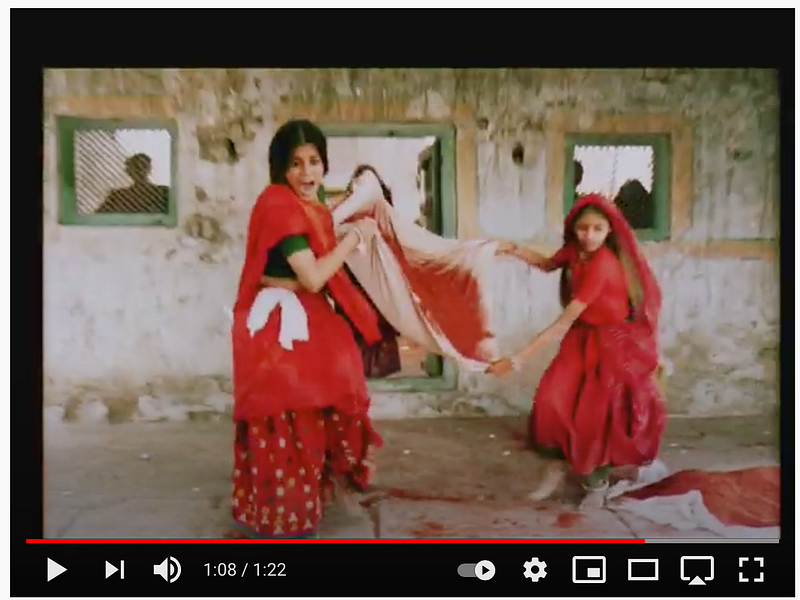
The ladies made use of use of whatever was in their hands. They survived because they responded to their changing environment. They metamorphosed from being mere feeble women to fiesty women when their survival was at stake.
They responded quickly to their changed immediate environment.
The gist is we need to make the best use of whatever is in our hands to survive and eventually thrive.
Relationships
No relationship is perfect. There is no such thing as finding the perfect partner. Happily ever after means holding onto tight in good times and tighter while trudging troubled waters.
No one of us is easy to deal with so many rights, privileges, and individuality today’s world promises.
The secret sauce for a happy and long-lasting relationship is striking a balance and willingness to stay strong through the crisis. The fittest relationship survives the roller coaster ride.

P.S: Having said this I strongly advocate, desperate situations need desperate measures. There is no point in dragging a relationship. If a relationship is lethal, appropriate actions must be taken which are best for survival.
Corporate Methodologies
All the software development and project management methodologies today have one thing in common, continuous improvement. Because the business today knows that the consumers have myriad choices for products and services to choose from.
The customer is the king. To keep him happy and loyal, they continuously keep improving and evolving their products and strategies.
Successful businesspeople know the secret of the survival of the fittest.
Lean, Agile, Scrum, Kanban, Kaizen all boil down to continuous improvement which implies an ongoing effort to improve products, services, or processes.
Evolution over revolution stands a chance of progress
Dr. W. Edwards Deming gave PDCA a management method used in business for the control and continuous improvement of processes and products. It is also known as the Deming cycle.
PLAN →DO →CHECK →ACT

Competitive World
Let’s look at some stats of how competitive the world is today.
7.5 million blog posts are published every day.
399,055 patents were granted at the U.S. Patent and Trademark Office in 2020. That means roughly 1121 patents are issued each day. Extensive and Intensive research and equivalent competition.
Google Play Store released 88.5 thousand mobile apps alone in February 2021, which was the lowest number of releases!
If you see the chart of the Olympic games, some athletes lose by just 0.1 seconds. That’s the competition
Amidst such cutthroat competition, only the fit survives. It is survival of the fittest in every sphere of life.
The Idea
This singularity of nature to declutter itself and select the best is what inspires me every moment. It motivates me to be the best version of myself at a personal and professional level.
Takeaways
- In all walks of life and at all times, it is always survival of the fittest.
- Fittest means most responsive and adaptive to the immediate environment, not the strongest, powerful and intelligent.
- Nature is all-mighty and self-reliant. It doesn’t need us for its survival. We need nature.
- Nature always selects the best and discards the rest.
- Be your best version. Nature will take care of you.
This article is written in response to Trista Signe Ainsworth’s prompt on something in nature that was a turning point in your life.
Details of the prompt can be found here:
Thank you Trista for channelizing and creatively challenging us via delightful prompts every week.
You might also like the below poem about surviving when surrounded by darkness. After all, it is the Survival of the fittest.
© All Rights Reserved 2021 Indubala Kachhawa