
To Stop Reading a Book. Only Once In A Blue Moon
Counter Arts Book Club — April — ‘How We Disappeared’ (Jing-Jing Lee)
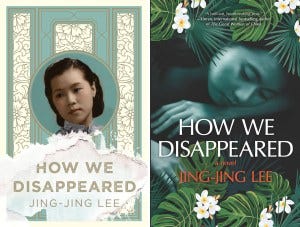
I just couldn’t do it.
Having struggled through chapter eight, after much thought and consultation with the book club people (Jess the Avocado and Carlos Garbiras), I decided to stop reading this month’s novel.
I hardly ever do that, I could probably tell you the titles of the scant few books with which it’s happened — but then, I’m not a random reader, I choose my reading material very deliberately. Books are researched before I read them, aside from those I pick up in second hand shops and the like they’re usually researched before I buy them. Each book is chosen for a particular reason, something specific that interests me, and I purposely avoid certain subjects that I know would adversely affect my mental and emotional equilibrium. So it’s extremely unlikely that I won’t persevere, even if I’m disappointed in the writing quality.
Jing-Jing Lee’s ‘How We Disappeared’ was chosen for the Counter Arts Book Club by yesnodunno. It’s a good choice, one I was extremely happy to start reading as the novel is so well written.
I felt ill, I was shaking.
I knew the story of this novel dealt with Singapore under Japanese occupation during the Second World War. I knew it was, at least in part, the story of women and girls who were taken and used as ‘comfort women’ by the Japanese soldiers. I know what ‘comfort woman’ means, I’m not naïve — and I certainly understand that these women were kept against their will and used in ways which would have been violently non-consensual. However, I thought this particular historical novel was important and worth pushing the boundaries of my comfort zone for.
All that said — and it’s probably a compliment to the author, to the skill of her writing — once we actually got to the point where one of our main characters, in her teenage years (sixteen to be exact), was ripped from her family and village; driven, bound to an army truck with other women and girls, to a place where the Japanese officers would seem to be billeted; then deposited in a cell containing only a sleeping mat, a bottle of disinfectant liquid and a rag for cleaning herself…. I felt ill, I was shaking.
Essentially, first-hand experience with sexual violence (which plays a significant part in my diagnosis of C-PTSD) was kicking my body into a panic response. My mind was freezing, my breathing was shallow and racing, I thought I might vomit.
This was an historical event which nobody talks about here (in the UK)
In the end, for the sake of my mental health, I had to take the decision to stop reading this novel.
However, there are still things I would like to write about for a book club piece, based upon the third of ‘How We Disappeared’ I did read and the reviews I looked at before starting.
As already mentioned, Jing-Jing Lee writes extremely well. Regardless of the topic, her style is very engaging — we are told stories from three (actually four, as one character has both past and present plotlines running) perspectives and all are interesting, realistic and believable. I was certainly keen to learn more and be able to engage further with the author’s insightful story-telling. This was an historical event which nobody talks about here (in the UK). I think we concentrate on remembering war in Europe — where in the US I suspect it’s more about the Japanese, but I’m going to guess that the occupation of Singapore still isn’t much discussed.
In the part of ‘How We Disappeared’ that I read, we learned how Japanese forces swept down through Malaysia into the peninsula, and that the British allies who were in Singapore providing defensive aid surrendered as New Year dawned on 1942.
The city was taken over, not taking long for Japanese soldiers to begin moving outwards to the villages on the outskirts. All of the men were made to register and had to wear a label on their shirts. Then some, chosen by a man wearing an executioner’s mask, were rounded up and taken away in what was called ‘The Purge’.
Women and girls are so commonly assaulted by the Japanese that it became a widespread practice to cut the hair of daughters, bind their chests and dress them as boys
Hospitals were stormed and everyone within found and slaughtered. At the villages everyone was ordered out of their houses while the soldiers rampaged through, raiding for anything of any use to them — taking every little bit of food, chickens, bedding, everything.
In the city, there was nothing left in the shops. Any supplies coming in were taken by the Japanese on route, with what little that made it through being priced at five times what it used to be.
The severed heads of men who had resisted were placed on spikes in the city centre as a warning and deterrent.
The Japanese issued ration cards with which people could collect a few meagre scraps of food, which grew less as time went by, whole households having to share a single bowl of rice a day. People grew their own crops wherever they could, in whatever scrap of earth could be found that was in a suitable condition to even attempt to cultivate anything, but it was nowhere near enough. Women became ill because they starved themselves so they could give their share to their children.
Women and girls are so commonly assaulted by the Japanese that it became a widespread practice to cut the hair of daughters, bind their chests and dress them as boys in an effort to protect them from that particular horror, but then the trucks came back to round up young women and teenage girls to be kept in brothels as ‘comfort women’ for the soldiers.
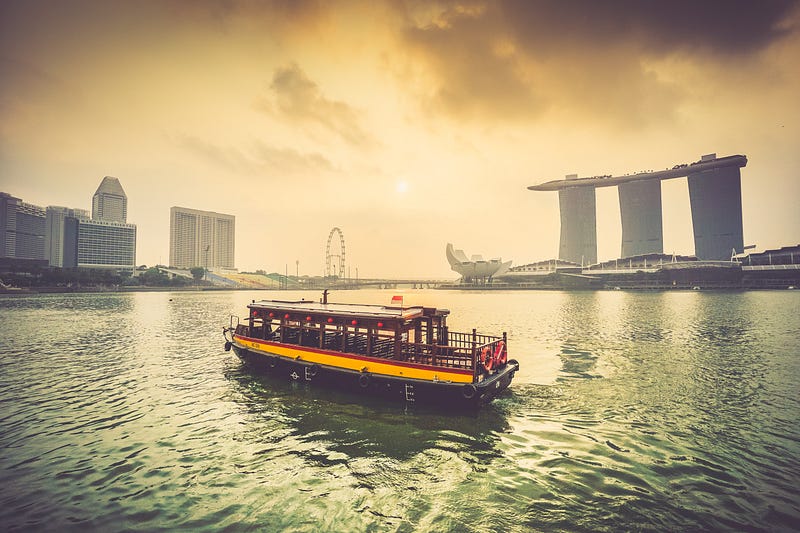
Wound around this story of past terror, though, are present day threads. We are seeing that there was life after the Occupation, but also that there are some subjects which are never (have never been) talked about. As old ladies now, those who had been ‘comfort women’ and survived the experience, have children and grandchildren who have no idea about what they went through. So for the contemporary time lines of ‘How We Disappeared’ it was really interesting to see that along with two older women there was also chapters about Kevin who is a twelve year old who hears the whispers of his ailing grandmother and decides there is a secret about his family that needs to be uncovered.
The novel is intense and compelling, lending a great deal of dignity to it’s subject. I would say this book is to be highly recommended, so long as you don’t have trauma and mental health issues centred around sexual assault — in which case, enter at your own risk.
Thank you for reading.
For the list of books selected for the year and a collation of review pieces to be update as we move along, please see the link below: