
Only love can do that.
Martin Luther King, Jr. on loving your enemies. (The Commonplace Book Project)
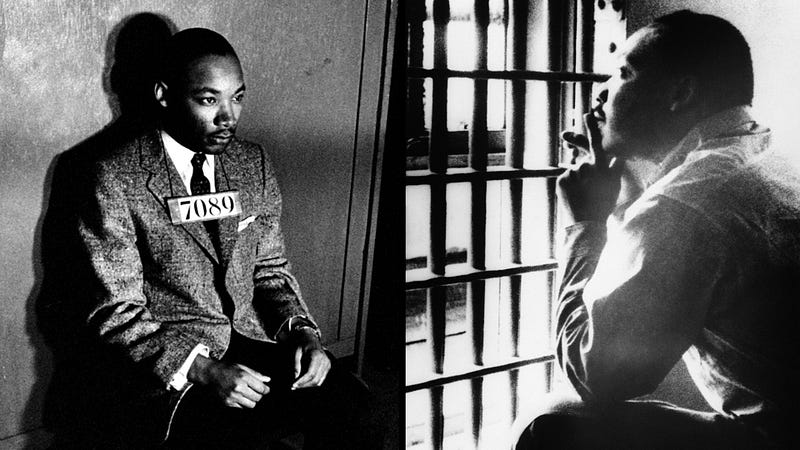
“Darkness cannot drive out darkness; only light can do that. Hate cannot drive out hate; only love can do that.” — Martin Luther King, Jr. in his speech, Loving Your Enemies.
I’ve shared one of the MLK’s most well known, well loved quotes. I want to share it again, below, with a little more context.
Why should we love our enemies? The first reason is fairly obvious. Returning hate for hate multiplies hate, adding deeper darkness to a night already devoid of stars. Darkness cannot drive out darkness; only light can do that. Hate cannot drive out hate; only love can do that. Hate multiplies hate, violence multiplies violence, and toughness multiplies toughness in a descending spiral of destruction.
Here’s an audio recording of his speech.
It is interesting to me that King did not say that you should not have enemies.
He does not say that we should agree with everyone, that we should capitulate our believes in the name of peace.
The United States gets a long weekend, this time every year, to celebrate King’s birthday. His message is so important to our national culture that, as a people, we celebrate him. (Even if you disagree with him, your bank will be closed Monday and your kids will have the day off school.)
And as that happens in 2019, our government is partially closed. Millions of people are impacted by hundreds of thousands working without pay. Division and that, lets face it, was always there has an uncomfortable spotlight shining on it. It is widening.
Things are falling apart.
So what if we take MLK’s advice (and come on, Jesus’s advice, too) and love our enemies? What if instead of hating racist (or misogynistic, or xenophobic, or homophobic, or any or all of the above) assholes, we love them?
What does that even look like?
Here’s what MLK says it doesn’t mean:
Now we can see what Jesus meant when he said, “Love your enemies.” We should be happy that he did not say, “Like your enemies.” It is almost impossible to like some people.”Like” is a sentimental and affectionate word. How can we be affectionate toward a person whose avowed aim is to crush our very being and place innumerable stumbling blocks in our path? How can we like a person who is threatening our children and bombing our homes? This is impossible. But Jesus recognized that love is greater that like.
Here is how King meant to end segregation in America.
To our most bitter opponents we say: “We shall match your capacity to inflict suffering by our capacity to endure suffering. We shall meet your physical force with soul force. Do to us what you will, and we shall continue to love you. We cannot in all good conscience obey your unjust laws, because noncooperation with evil is as much a moral obligation as is cooperation with good. Throw us in jail, and we shall still love you. Bomb our homes and threaten our children, and we shall still love you. Send your hooded perpetrators of violence into our community at the midnight hour and beat us and leave us half dead, and we shall still love you. But be ye assured that we will wear you down by our capacity to suffer. One day we shall win freedom, but not only for ourselves. We shall so appeal to your heart and conscience that we shall win you in the process, and our victory will be a double victory.”
We shall match your capacity to inflict suffering by our capacity to endure suffering. God. That’s hard to hear. It’s hard to type. It’s harder to do. It seems impossible, even.
And, in truth, I’m not even suffering much. I’m white. I have enough money. I’m healthy and straight and typical in just about every single way. For the most part, I have the privilege of only being outraged on behalf of suffering people.
If it’s this hard for me to even think about, I can’t imagine how difficult it must be for someone who is actively suffering to hear the advice to love their enemies.
But if you keep reading, you see the thing that was at the heart of King’s message. We cannot in all good conscience obey your unjust laws, because noncooperation with evil as much a moral obligation as is cooperation with good.
Loving your enemy does not mean condoning them.
It does not mean giving horrific behavior a pass. What it does mean is finding the capacity to love — to wear down hate with love.
I really enjoyed this post in The Atlantic about King and the role of television in the Civil Rights Movement. I think it’s especially important, when our current administration seems at war with the media.
Not only did King love his enemies. He loved them publicly. And he forced their behavior into the open, into the public eye.
Only in the aftermath of a sheriff’s posse’s brutal repression of Selma marchers in March of 1965 did King lay out the strategy that underlay the moral dramas he’d been creating in America. “We are here to say to the white men that we no longer will let them use clubs on us in the dark corners,” King said. “We’re going to make them do it in the glaring light of television.”
If Martin Luther King, Jr could love his enemies, could change the world with his impressive ability to love the person and hate what they do, then maybe I can do it, too.
I wonder what it would look like, if every liberal, progressive American loved Donald Trump, a man who positively thrives on love. You only have to see video of him at a rally to know that’s true.
What if we loved him, loved all of our enemies, drowned them in love, and also as one forcefully, peacefully objected? Because I’m not sure things will ever change if we can’t figure that out. The pendulum will swing — but it will come right back, if both sides are mired in hate.
Today’s poem:
The Revolution Will Not Be Televised by Gil Scott-Heron.
Here’s my secret weapon for sticking with whatever your thing is.
Shaunta Grimes is a writer and teacher. She is an out-of-place Nevadan living in Northwestern PA with her husband, three superstar kids, two dementia patients, a good friend, Alfred the cat, and a yellow rescue dog named Maybelline Scout. She’s on Twitter @shauntagrimes and is the author of Viral Nation and Rebel Nation and the upcoming novel The Astonishing Maybe. She is the original Ninja Writer.


