
Only 15 Years of Peace In The History of the United States of America
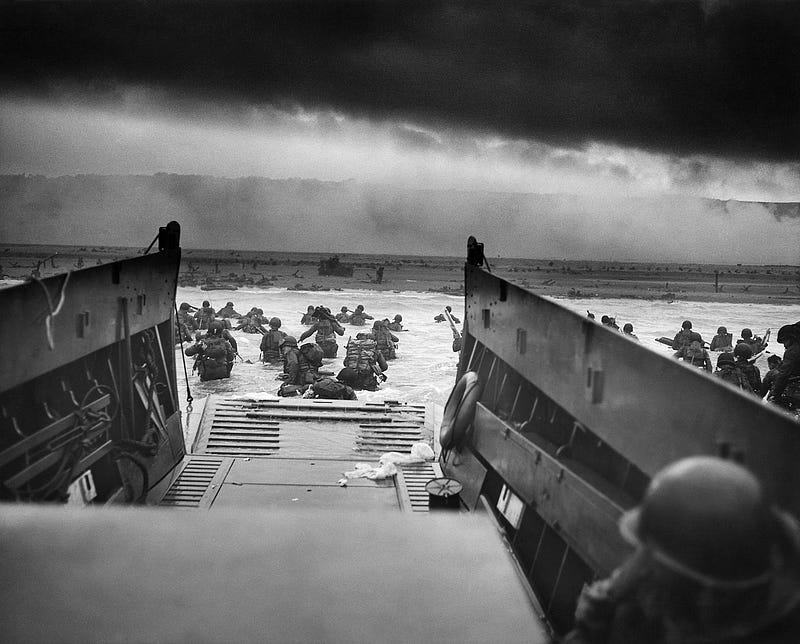
In the entire history of the United States of America there has been a grand total of 15 years when we have not been at war with someone. Big wars. Small wars. Wars waged on the open seas, in small rivers, across sandy hills, through dense trees, and high in the sky. The United States has engaged in the all.
From its founding in 1776, the United States was engaged in a war for its survival against Great Britain until peace was finally reached in 1783. Unbeknownst to many, this wasn’t the end of war for the fledgling United States. No, that wouldn’t come for more than a decade. Also beginning in 1776 were the Cherokee-American wars, also known as the Chickamauga Wars, which were a series of back-and-forth conflicts between American settlers moving into the Old Southwest and the Cherokee tribes calling this land home. Until the end of 1795, this violence would rage what is now Tennessee, as well as the colonies (and eventually states of) Virginia, North Carolina, South Carolina, Georgia, and Kentucky. Justifiably concerned that they would lose still more land to the expanding white settlers, the Cherokee struggled long and hard against the fledgling United States, only to eventually sue for peace and give up much of the land they had so long fought for.
There would be two peaceful years in 1796 and 1797. Before the United States could get more than a breath, the Quasi War with France would break out in 1798.
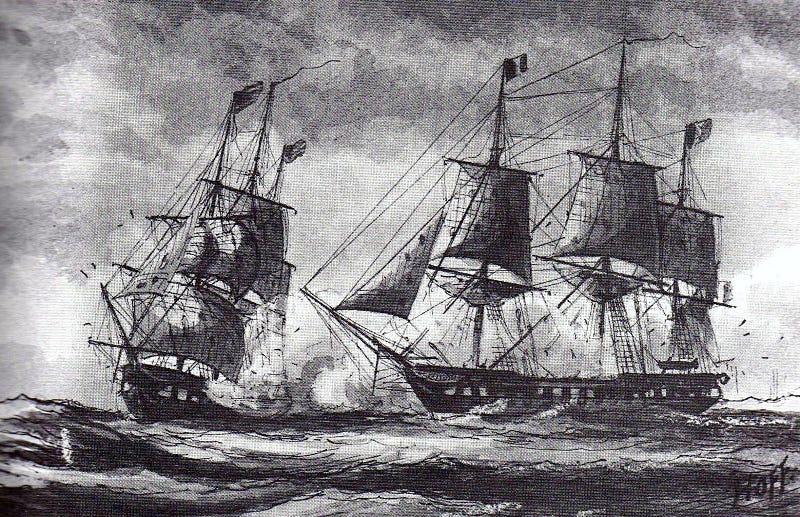
The Quasi-War between the United States and France was an undeclared war, but all the more violent for it. Waged primarily across the high seas, it broke out following the fall of the French Monarchy when the United States refused to continue to pay back the debt it had accrued during the Revolutionay War. Combined with outrage over the Jay Treaty and the United States’ engagement with Great Britain in trade, despite French engagement in war with them, it comes as little surprise that the new leaders of France authorized privateers to conduct attacks on American shipping, up to and including the outright seizures of merchant ships. It would not be until 1800 that the French Foreign Minister Talleyrand would reopen negotiations with the United States for peace (this is partly due to the fall of the French Directory, giving way to Napoleon’s Empire).
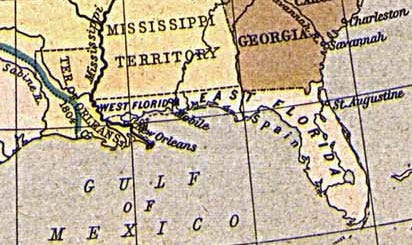
That being said, it would not be until the year of 1807 that the United States would again see peace. Sadly it would not last long, for in 1810 the United States would act to seize control over Spanish-held West Florida. President James Madison at the time claimed that this part of the Spanish territory (actually at the time of annexation it was a short lived independent state called the Republic of West Florida) actually belonged to the United States following the Louisiana Purchase from France.
For the next two decades the United States would engage in a number of conflicts against Native American tribes (i.e. Tecumseh’s war, the Seminole Wars, the Creek War…) and a number of anti-piracy efforts. Peace would again occur from 1826 to 1830, with only a brief spat of violence in 1827 known as the Winnebago War. Not really a war, this conflict was the result of the Ho-Chunk tribe launching several attacks against white settlers due to a number of lead miners tresspassing onto their lands, and some rumors that a number of Ho-Chunk prisoners were given by the United States to a rival tribe to be executed (the rumors were eventually proved false).
The year 1831 would set off over 60 years of new conflicts for the United States. Somewhat depressingly, the list of wars during this decade are too many to list out here, much less go into any meaningful detail (perhaps later articles will do so). Suffice to say, these decades would see continued expansionist efforts by the United States to expand its territory West which contributed to a number of wars with numerous Native American tribes (i.e. new Cherokee Indian Wars, the Texas-Indian War, Navajo Wars, the Apache Wars, among others) the invasion of Mexico in the Mexican American War. Surprising to me when I first learned of this period of war in American history, the United States in time six decade long time period was also engaged in conflicts in South America as well as conflicts against China and Korea.
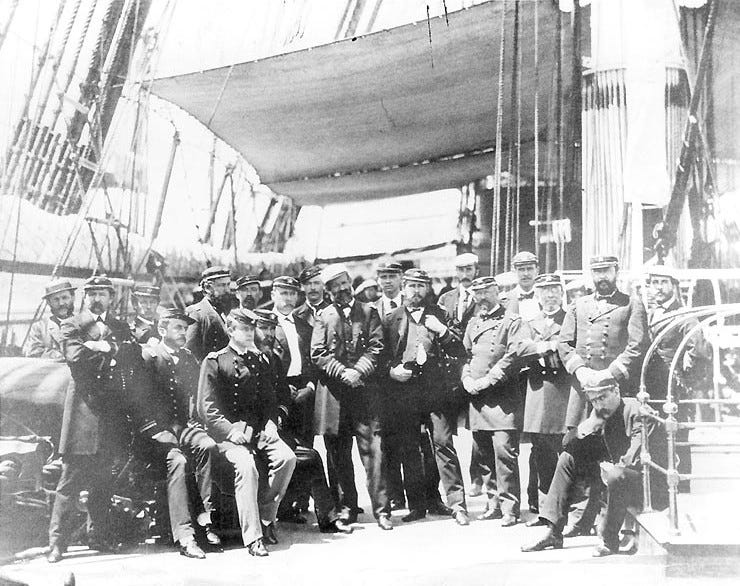
The Korean Expedition of 1871 was the first military action undertaken by the United States in Korea. American forces were originally present to support a diplomatic expedition to establish trade and political relations with the Kingdom of Joseon (Korea), to learn of what happened to a missing merchant ship, and to create a treaty guaranteeing aid for shipwrecked sailors. The situation spiraled into violence when Korean shore batteries attacked two American Warships and, when no apology was given, 650 American troops seized control over several forts and killed more than 230 Korean troops ten days later.
The year of 1897 would be a brief pause before the United States fought the brief Spanish-American War, Philippine-American War, and the Banana Wars (yes, that it what they were really called). The Spanish-American War would result in an American victory that would see the aquisition of Puerto Rico, Guam, and the Philippine Islands by the United States from Spanish control. The Philippine-American War followed closely on the heels of the Spanish-American War, as the First Philippine Republic (who had been struggling against Spain for independence) refused to recognize the terms of the Treaty of Paris. For several years the conflict would wage with tens of thousands dead, but eventually the First Philippine Republic was dissolved and the Philippines would become first an unincorporated territory of the United States, and then later a U.S. Commonwealth (which it would remain until 1946).
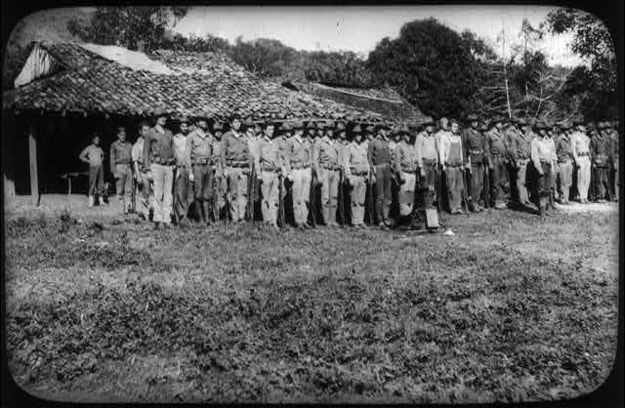
The Banana Wars were an additional series of occupations, police actions, and interventions in Central America and the Caribbean following the end of the Spanish-American War. Over three decades Cuba, Nicaragua, Haiti, and the Dominican Republic would all be occupied at some point, with a number of lesser actions occurring as well.
Sadly the peaceful period of 1935 to 1940 was the result of prevailing isolationist policies in the United States. The sentiment largely was to let European Wars be fought by Europeans. In a twist of fate, had the United States not gotten involved in World War II the Nazi Reich would have come knocking soon enough. As far back as 1928, Hitler already recognized that the United States would be the next great foe for the Third Reich that he was planning, following the destruction of the Soviet Union (see book: Germany and the Two World Wars).
Even after the end of World War II, the launching of the Cold War between the capitalist United States and the communist Soviet Union would ensure proxy conflicts and wars would continue unabated from 1946 all the way until 1975. It would only be the defeat in the Vietnam War that would see three brief years of peace from 1976 to 1978, until the CIA launched their proxy war in Afghanistan following the Soviet invasion of that country.
In my lifetime, only in 1997 and 2000 was the United States not been involved in a war or conflict somewhere. For the majority of my life, the United States has been engaged in the War on Terror with invasions into Afghanistan and Iraq, and additional presence of troops in Pakistan, Yemen, Somalia, Libya, Syria, Yemen, and other countries.
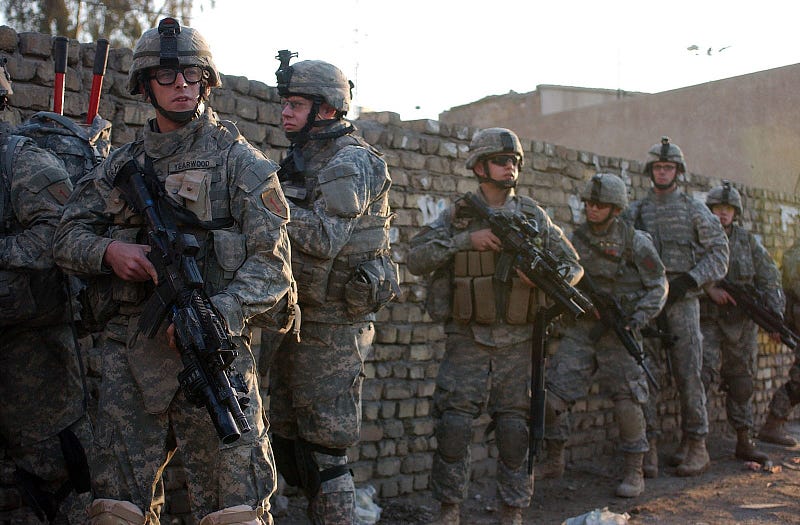
Only 15 years out of the entirety of the 244 years the United States has been in existence have been peaceful. Only 15 years without conflict.
Looking back over the wars we have been engaged in four distinct periods stick out to me. The first is the line period of conflicts waged to expand the borders of the United States to cover the distance between the Atlantic and Pacific oceans. The second is a period of conflict that saw greater engagement with the world beyond North America, up to and including outright acts of colonization in mimicry of what European powers had been doing for centuries. The third period deals with outright intervention in the affairs of the states in Europe, with the United States eventually seeking to take the reins of the global community while fighting off challenges from the Soviet Union.
Mostly recently the fourth period has been taking shape. This last period is the most worrisome of all in my opinion, as there is little direct engagement between armies and navies or between tanks and jets. The Global War on Terror has stretched on over 18 years now. More than $2.4 trillion in debt for the United States alone. More than 500,000 deaths in Afghanistan, Pakistan and Irag alone from 2001 until 2018. The costs in wealth and life go ever higher.
What has become most clear to me in reading over the history of the engagement of the United States in wars is that we will likely not experience the 16th year of peace for some time yet. More likely we will experience our 229th year of War.
For More Information
- American Invovement in Wars from Colonial Times to the Present (An article)
- Americas Wars: All the Major Wars that the United States has fought (On the Website: History Central)
- General facts about the wars the United States has been involved in, such as costs and casualties (On the Website: Gettysburg Flag Works)
Books
- Battles of The Revolutionary War: 1775–1781: Examination of many of the battles of the Revolutionary War, wherein the author makes the case that the Americans won not by outlasting the British but by employing superior strategies, tactics, and outstanding leadership.
- The American Revolution: A Visual History: A complete overview of the war, this work is also notable for including gallery spreads of weapons, uniforms, and additional features on the politics of the war such as those dealing with prisoners of war, women, Native Americans, and African Americans.
- Stoddert’s War: Naval Operations During the Quasi-War with France, 1798–1801: An award-winning and comprehensive study of the undeclared naval war between these former allies.
- The Barbary Wars: American Independence in the Atlantic: An engagement with America’s conflict in the Arabic world for economic advantage instead of religious or cultural dominance.
- The Earth Is Weeping: The Epic Story of the Indian Wars for the American West: A sweeping and definitive guide to the history of these wars, battles, and eventual negotiations that destroyed the Native American way of life and opened the way to the expansion of the United States we know today.
- The Roughest Riders: The Untold Story of the Black Soldiers in the Spanish-American War: The inspiring story of the first African American soldiers to serve during the post-slavery era.
- The Banana Wars: A History of United States Military Intervention in Latin America from the Spanish-American War to the Invasion of Panama: A thick tome investigating the different engagements with Latin America by the United States following the Spanish-American War.
- World War I: The Definitive Visual History: An essential eye-witness account of the day-to-day life of World War I, and covers such people and events as Mata Hari, trench warfare, Armistance Day and more.
- World War II: The Definitive Visual History from Blitzkreig to the Atom Bomb: Much like the previous title, this work provides a comprehensive and informative guide to the people, politics, events, and ultimate impacts of the Second World War.
- A Military History of Afghanistan: From the Great Game to the Global War on Terror: Covers the wars that occurred in and over Afghanistan from antiquity all the war to the recent United States invasion.
- America’s War for the Greater Middle East: A Military History: A comprehensive examination and study as to United States involvement in the Greater Middle East from the 1980s onwards to when the book was written. An excellent and engaging read that will cause you to look at the recent conflicts in the Greater Middle East differently.
Want to learn more about topics like war, art, and/or history? Follow this new publication to get regular updates on articles:
This article contains affiliate links to books that I recommend as references to the wars and conflcits the United States has engaged in over its history. If you choose to purchase these books via my affiliate links, you will help support my writing and research at no additional cost to you.


