
Online Ads Will Still Suck Even With AI
A primer on online ads and why more irrelevant ones are coming
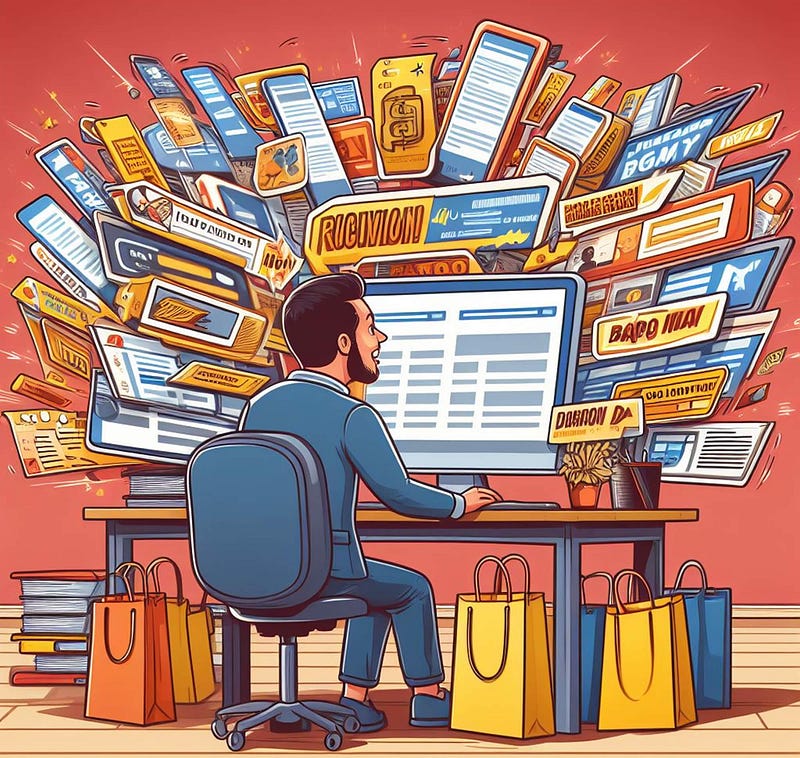
With all this talk of AI, you’d think that someone would finally solve the “ad problem” — you know, the one where you see the same damn advertisement on YouTube fifty times for something you never plan on buying.
A concept marketers often like to tout is “getting the right product in front of the right person, at the right time.” But in reality, this is really a bowl of bulls*t. The companies willing to spend the most “getting to you” are the same ones that get no interest from you.
My wife lovingly refers to my Grinch habits saying most companies and celebrities would never survive if they relied on getting attention from people like me. I’m different or from another planet as she says:
Car wrecks, and personal injury lawyers advertising on the radio eight times a day would go out of business. Someone uses them, just not me, and I haven’t found anyone else yet either.
The entire pet industry would not exist. I’ve had severe allergies to just about everything (including cats and dogs) since I was six and have a hard enough time taking care of myself. I would make a terrible pet owner.
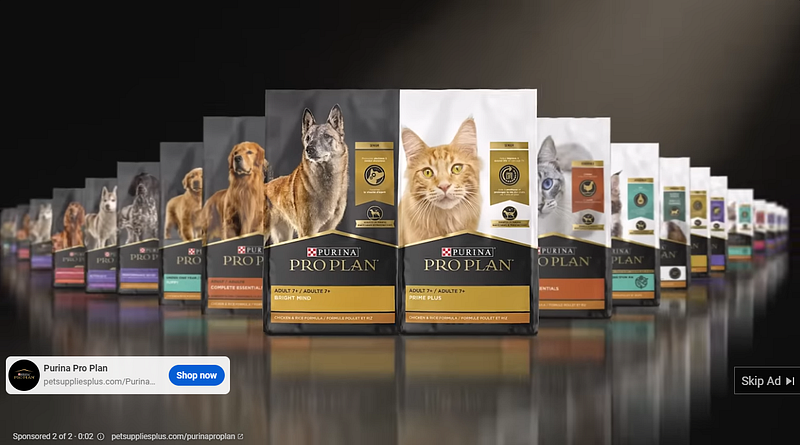
As punishment, I imagine one day my son living in a house with a bunch of dogs, which I can never go visit. Yet, YouTube continues to show me Purina ads.
And yes… sad to say… our beloved Tay Tay would probably be stuck still singing in her bedroom as there would not be enough Swifties to fill the stadiums. She seems like an awesome person, but I’m not spending hundreds of dollars to see her or Queen Bey in concert.
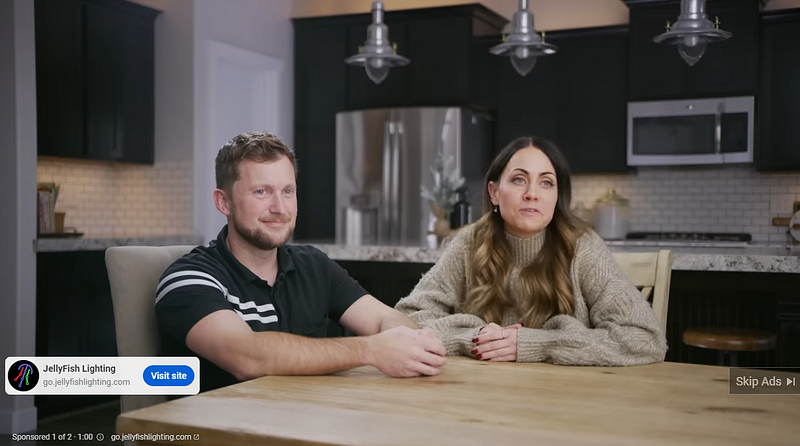
My latest nemesis is JellyFish Lighting. It’s a small business, owned by a husband and wife team that installs permanent roof lighting on your home where you can change colors. Green and red for Christmas, blue and white for Hanukkah, orange and purple for Halloween, the holiday possibilities are endless. Unfortunately, I now hate the Skaggs family. I’m sick of seeing their commercials day in, and day out on YouTube. No matter how fast (or how many times) I click the “Skip Ad” button, they just keep popping up on my screen to tell me about their amazing lighting system.
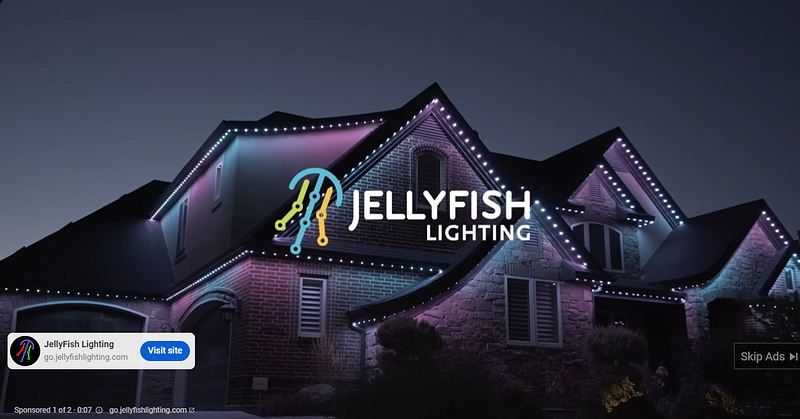
Ironically, this is probably one of the easiest things that AI could fix. If YouTube really cared, they would already know (and probably do know), I live in a rundown twenty-year-old house. I’m between jobs with a child in college. My HVAC needs to be replaced, but who has the $12,000 USD for that right now?
There is absolutely nothing in my current state that gives even a snowball’s chance in hell of me buying JellyFish lights now or ever while I live in this property. Even simple cookies in my web browser should have excluded me from these ads just based on how many job boards and financial aid sites I’ve visited in the past six months.
So, how does this happen?
The answer is usually the same… money!
The advertisement model is broken but fixing it would mean too much lost revenue. If you’re not familiar with how online ads work, there are typically two models: 1) pay-per-click and 2) pay-per-impression.
The first model simply means an ad is shown multiple times, but the business owner taking the ad out (buying the ad placement) doesn’t pay unless someone actually clicks on the advertisement. For every click, there is a charge. This model is what made Google a trillion-dollar company. The text ads you see at the top of your Google search results are pay-per-click ads. In this scenario, YouTube would make zero dollars from me, and therefore collect zero dollars from JellyFish, because I would never click on their text ad.
The second model, pay-per-impression, in simplest terms means the business owner pays a fee every time the ad is shown (displayed) on a user’s screen. Commercials like the ones on YouTube are ideal for impression-based advertising. The business owner wants their product/service to be shown to as many people as possible, and YouTube is more than happy to load that ad thousands of times, collecting a fee every time it’s shown.
In this model, YouTube (i.e. Google) makes a lot more money and hopefully, the Skaggs are happy that now everyone in the city knows about them. Except, if you’re the poor guy in the good zip code — all you’ve done is piss me off.
The second model in and of itself is not bad, but the promise of hyper-local and truly personalized ads has never come and frankly, never will.
Google needs to make as much money as possible through YouTube. The expense of hosting millions of hours of videos (for free) from user uploads is astronomical. Ads are how they make their billions back.
In this simple example, if I have no interest in JellyFish lights… did I mention, I didn’t… then YouTube needs to put another advertiser in that slot. Unfilled slots are lost revenue. But what if YouTube shows me another commercial, like the dog food one from Purina? Well, again, if ad personalization was true to its intent, then this one couldn’t be shown to me either. Multiply this scenario a million times across the country and you quickly realize there are not enough businesses who can afford to get their ads in front of the right eyeballs day after day. So, you end up with a few companies willing to spend a lot of money on YouTube commercials, and many of them don’t match your interests.
The gate to my backyard fence broke a few weeks ago and I didn’t like any of the hardware at Home Depot. Somewhere in Wyoming, there may be an awesome small business that makes really cool hardware for wooden fences, but YouTube doesn’t know that, and more importantly is whether that small business in Wyoming is even advertising online? And if they are, how much would they be willing to pay for my eyeballs to see their ad on a Saturday night while catching up on financial podcasts.
AI could solve this, but for now it’s easier for Google to just keep shoving Matthew Skaggs and his wife down my throat with his JellyFish lights.
Now with rising costs companies have found another way to try and “help” you keep expenses down. The $20 Netflix bill is getting a bit much… guess what… now you can have the ad-supported version with more irrelevant impression-based commercials.
From Hulu to MAX, every streaming platform now offers an ad-supported version and businesses will be happy to shop their wares on it.
The truth is nobody really likes ads, but they have become a necessary evil. The game of cat and mouse continues where now you can have ad blockers to stop seeing the JellyFish ad on YouTube, but Google will just find another area where they can serve ads to you. Publishers want to increase ad revenue and consumers are more discerning than ever, making it harder for businesses to get in front of them.
The end result is more impression-based video ads to catch your attention — which you can also blame on faster Internet speeds.
Conclusion
While AI could make for a really wonderful ad experience, a new model would have to be created to match niche interests with the right person at the right time and allow Amazon, Microsoft, and Google to still make lots of money.
The focus of AI right now seems to be more on the ability to create the actual content of the ads even faster, which of course, will mean more irrelevant ads for you.
Imagine an auto manufacturer saying to Bing Image Creator, “Build me a commercial featuring a happy family riding in our new SUV for someone living in Atlanta.” The platform would already know that most video ads are 30-seconds, but it could build a 15-second for social media and a 30-second for Netflix. It would also know that there is a large percentage of African Americans living in Atlanta and proceed accordingly with who was featured in the video. Imagine a platform that could dynamically change the people in the commercial on the fly based on who was watching the ad at that time.
The former scenario of just creating basic one-audience ads more quickly is what currently gets all the glory, but it does nothing for me if YouTube doesn’t realize I just purchased a brand-new car six months ago.
Ads will always be the fastest way to get a product marketed to the masses, especially when it’s a new company trying to build a customer base. A good ad for something you really want is like the cute guy asking the girl for her number, but if the man is unattractive it can feel like borderline harassment.
I’m sure the Skaggs family are really nice people, but I really need them off my screen.
Visit my profile to read more viewpoints and stories from me!