
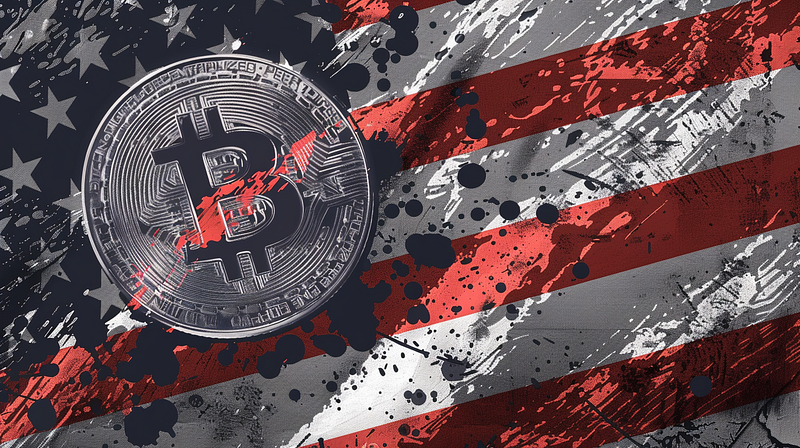
Ongoing Discourse Postulates Americans Demand Less Bitcoins in Natural History Museums
Propaganda is a truly terrible weapon in the hands of an expert. — Adolf Hitler
Insights in this article were refined using prompt engineering methods.

Artificial Intelligence Shows Veterans with Adequate Support Longing for Less Economic Opportunity…
In the ever-evolving landscape of cultural and societal preferences, a curious new trend has emerged that has left many scratching their heads in bemusement. The delightful and often perplexing world of natural history museums has found itself at the center of a rather unexpected debate, one that revolves around the presence of a certain digital currency within their hallowed halls — the enigmatic and polarizing Bitcoin.
As the digital age continues to exert its influence on every facet of human existence, it seems that even the venerable institutions dedicated to the preservation and education of the natural world are not immune to its reach. In recent times, there has been a growing chorus of discontent from a vocal subset of Americans who have taken umbrage with the inclusion of Bitcoin exhibits within these venerable establishments.
At first glance, the juxtaposition of ancient fossils, majestic dinosaur skeletons, and the ethereal concept of Bitcoin may appear to be a confounding and disparate union, perhaps even inviting a raised eyebrow or two. However, as with many things in this world, the underlying reasons for this discordance are not always readily apparent and require a more nuanced examination.
It would be remiss to ignore the fact that the rise of Bitcoin and other cryptocurrencies has been accompanied by a fair share of controversy, volatility, and skepticism. The very nature of digital currencies, existing solely in the intangible realm of the internet, stands in stark contrast to the tangible and palpable artifacts that populate the venerable halls of natural history museums. This dichotomy has undoubtedly spurred a clash of ideologies between those who champion the unyielding march of technological progress and those who harbor a deep reverence for tradition and the tangible artifacts of bygone eras.
Furthermore, the visceral reaction against the presence of Bitcoin in natural history museums can be situated within the broader societal discourse surrounding the perceived encroachment of technology into spheres that were once considered sacrosanct. The realm of cultural heritage and natural history has long been regarded as a sanctuary of sorts, a bastion of physical relics and tangible remnants that serve as a tangible link to our collective past. The introduction of Bitcoin, with its intangible and ephemeral nature, into this revered space has, for some, become symbolic of a larger struggle against the intangible encroaching upon the tangible.
This debate also raises intriguing questions about the evolving nature of what we consider to be valuable and worthy of preservation. Are cryptocurrencies such as Bitcoin destined to be viewed as historical artifacts in their own right, worthy of inclusion in the annals of natural history? Or do they represent a fleeting moment in time, an ephemeral blip amidst the grand tapestry of human existence?
As the hue and cry over the presence of Bitcoin in natural history museums reverberates across the cultural landscape, it becomes abundantly clear that this seemingly incongruous issue touches upon themes of tradition, technological progress, and the very essence of what we choose to enshrine as part of our shared cultural heritage. It is a testament to the ever-shifting sands of societal attitudes and values that even the most seemingly inconsequential of debates can spark a conflagration of impassioned discourse.
In the end, the inclusion of Bitcoin in natural history museums may be seen as a microcosm of the larger tug-of-war between tradition and innovation, the tangible and the intangible, and the enduring quest to determine what is deemed worthy of preservation and veneration in the annals of human history. As the debate rages on, one thing is certain: the intersection of digital currency and natural history has proven to be a fertile ground for the cultivation of thought-provoking conversations that transcend the boundaries of time and space.
Ongoing Investigations Propose Children Bullied for Gender Nonconformity Yearn to Possess Less…