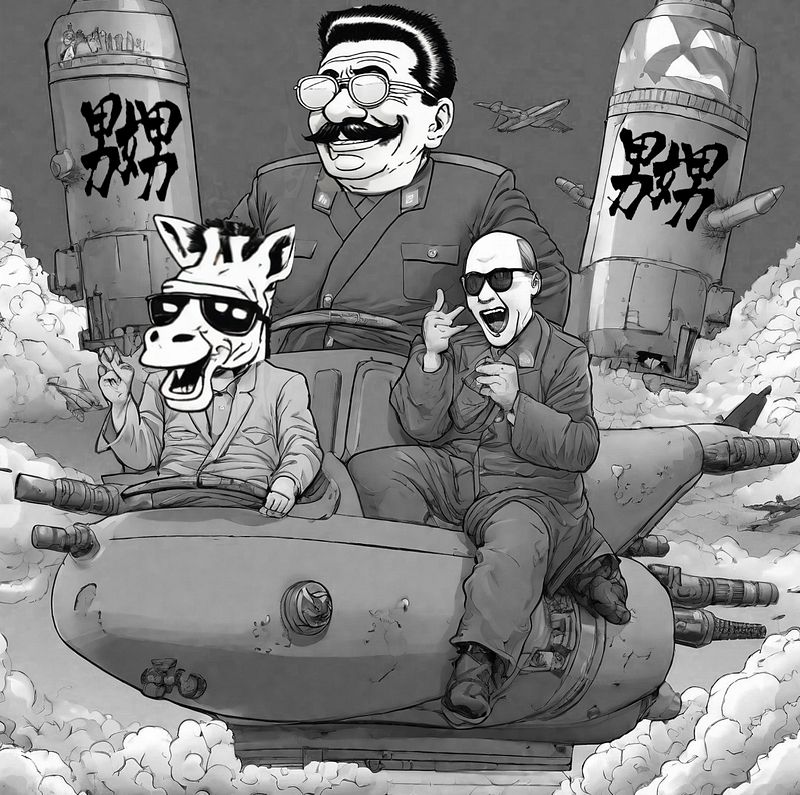
One word, One Story Per Week[嬲]一周一字一故事
The Bread Shop’s Mysterious “嬲” Puzzle: A Tale of Deception and Laughter
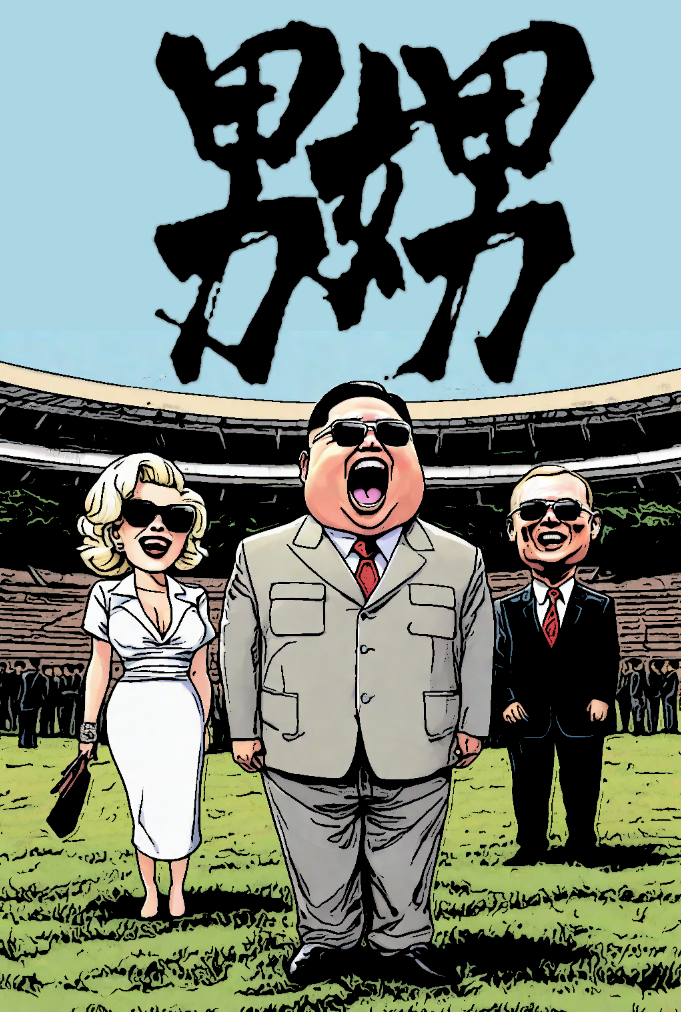
It’s time for my weekly “One word, One Story Per Week” session with RUDY, and I’m here to grab a front-row seat to listen to the story! Haha.
Let me start by translating the information you provided about the Chinese character “嬲”.
嬲 is a Chinese character pronounced as “niǎo.” In its original meaning, it refers to teasing or playing tricks on someone. In colloquial usage, it is often used as a vulgar term, similar to the term “bastard.”

The above is a written meaning, and I don’t think it’s interesting myself. Let me talk about the interesting everyday meaning of the word “嬲”. Chinese characters are usually combined from words that are interesting in themselves into more interesting characters, such as the character “嬲” that we will talk about today. Example: 嬲 = male + female + male, slot, two brothers and men like a woman at the same time, in this case, as long as the word “嬲” is vividly expressed in this situation, do you say it is amazing?

Now, let’s proceed with the story:
The story takes place in a small town on Kunashir Island in 1945. In the town, there is a bakery where people line up every day to buy fresh bread. Due to limited supply, customers often have to wait for a long time to get their bread.
One day, a clever young man decides to come up with a solution to this problem. He thinks for a while and finally devises a unique plan.
The young man decides to place a note at the entrance of the bakery that reads,“Bread is only sold to people who know the secret of ‘嬲’.” He believes that this mysterious requirement will pique people’s curiosity and reduce the number of people in the queue.

As expected, the appearance of the note sparks widespread attention and speculation among the townspeople. Everyone starts discussing and debating the meaning of the character “嬲.”
Some people believe that “嬲” is a special password, and only those who know the password can buy bread. Others think that “嬲” represents some kind of exclusive membership, and only members can enjoy the bread.
As a result, people start desperately guessing the meaning of the character “嬲.” Some people speculate that it is a secret code, while others believe it is a symbol of secrecy.

In the midst of this guessing game and anticipation, people begin trying various methods to prove that they are the ones who understand the secret of “嬲.” Some try pronouncing it in different dialects, others write down various strange symbols, and some even attempt to communicate through gestures.
However, the young man’s plan was not about verifying who understood the secret of “嬲.” It was simply intended to make the waiting for bread more fun and enjoyable for everyone.
Finally, two men wearing Soviet-style sunglasses and accompanied by a beautiful woman arrive at the bakery. The young man announces that the three of them have won the championship and reveals the explanation: “嬲” is a humorous word puzzle formed by combining the characters for ‘man + woman + man.’ I wanted to bring some laughter to everyone while waiting in line.”

When people read this explanation, they burst into laughter, realizing that they had been fooled.
A few days later, the bakery closed down, and it was rumored that the young man who played the joke was sent to the Prague Islands by the Soviet authorities.
Historical background: In 1945, as World War II was coming to an end, the Soviet Union launched the August Storm operation and occupied the entire Kunashir Island. Japan relinquished its sovereignty over the southern part of the island (south of 50°N) in the San Francisco Peace Treaty (although it was not transferred, so the southern region remains blank on Japanese maps).

Thus, Kunashir Island came under complete Soviet control. After the dissolution of the Soviet Union, the island remained under Russian control. Presently, Kunashir Island, along with the Kuril Islands, constitutes Sakhalin Oblast, the only Russian region composed primarily of islands.
The Soviet Union and Russia carried out large-scale migration to Sakhalin Oblast, and the majority of the population in the region is now Russian, with a total population of over 500,000. The indigenous populations such as the Tatars and the Nivkh have significantly diminished, and the Ainu people, the original inhabitants, have nearly disappeared.