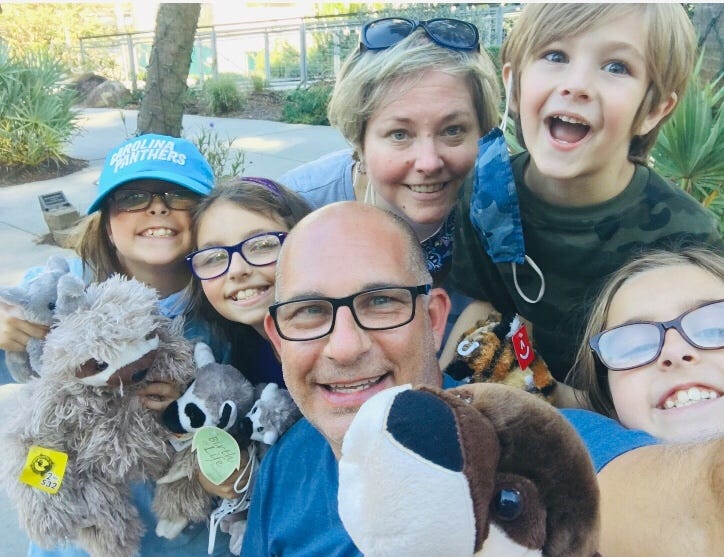
One Woman’s Journey Through Infertility — And Beyond
She shares because she wishes she had known more along the way

Soon after Mandy got married in 2002, she began to feel as though something just wasn’t right with her body.
A lifetime athlete who then was running over three miles every other day, she paid closer attention to her body than most and knew something was off. Her menstrual cycle had changed, though that wasn’t unusual for an athlete. She was tired, too. But mostly she just didn’t feel like herself.
The first doctor she went to said it was either normal athletic irregularities or possibly because she was sitting down too much in her profession as a graphic designer.
Those explanations did not seem to fit. In 2003 she made an appointment to see if a fertility specialist could help get her body ovulating normally.
Without much of an examination, that doctor put her on the drug Clomid. It is a drug often used to treat infertility, as well as regulating ovulation, but since Mandy and her husband Matt definitely wanted a family, pregnancy was not a concern.
Mandy said she now looks back amazed at how much she didn’t know then and how little she questioned.
“I didn’t know anyone who had gone through this, because no one talked about it,” says Mandy.
Women just didn’t discuss this kind of problem openly. It was whispered about non-specifically as “female problems”. It often still is.
In May of 2005, Mandy conceived but had a miscarriage.
A random conversation with an acquaintance led her to a different ob-gyn practice. It was there she finally found a doctor willing to look more closely into what was going on with her body.
They discovered she had polycystic ovaries. An ultrasound showed what looked like a string of pearls wrapped around her ovaries, keeping her hormones out of balance and her body from producing viable eggs.
They tried different medications and diets to fix it, but she was eventually put back on Clomid. Not only did she not find success with it, but she started having vision problems. She went off of it and for about three years took a break.
Throughout her adult life, Mandy has kept a prayer journal. One pivotal day she prayed and knew whatever way God wanted them to build a family, or even if they would never have children of their own, was going to be OK.
Interventions
In April of 2009, Mandy and her husband Matt decided they would try IUI (Intrauterine Insemination.) They did three cycles in May, June, and July. When that didn’t work, Mandy’s ob-gyn suggested she see a new fertility specialist about IVF (In Vitro Fertilization.) She would have to have it done before age 35, because after then costs escalated.
All of their options for having children were costly. Their insurance had only covered costs for diagnosis of her condition, not treatment for infertility. Since this was not covered by the plan, they had to pay the cost themselves.
During this time the couple was also looking into all kinds of adoption. They learned that at age 42 Matt was considered too old to adopt a child in the US and a baby in other countries. Private adoption was too costly. They started looking into adopting older children internationally.
As they drove to a clinic for the consultation about IVF, they learned Matt’s company’s new insurance plan covered infertility treatment at 100%, to a maximum of $100,000. It was an unexpected and happy surprise. After the consultation, the signs seemed clear that IVF was their next step.
They began IVF at the end of 2009. The process was brutal. Mandy’s weight could not go over a certain BMI (Body Mass Index) or the clinic would not do the treatment. One month was spent preparing Mandy’s body for the process. The first results were three viable eggs out of 20 in early December. They fertilized two. It was not successful.
After testing, the specialist found the sperm did not attach to Mandy’s eggs and they would have to add some extra intervention to the process. The change would help the chance of fertilization.
On February 13, 2010, they did another egg retrieval. Once again they implanted two viable eggs.
On their anniversary, March 23, Mandy prayed that the implantation would be successful and specifically prayed any baby that resulted from the procedure would have their own sac, placenta, and fetal pole.
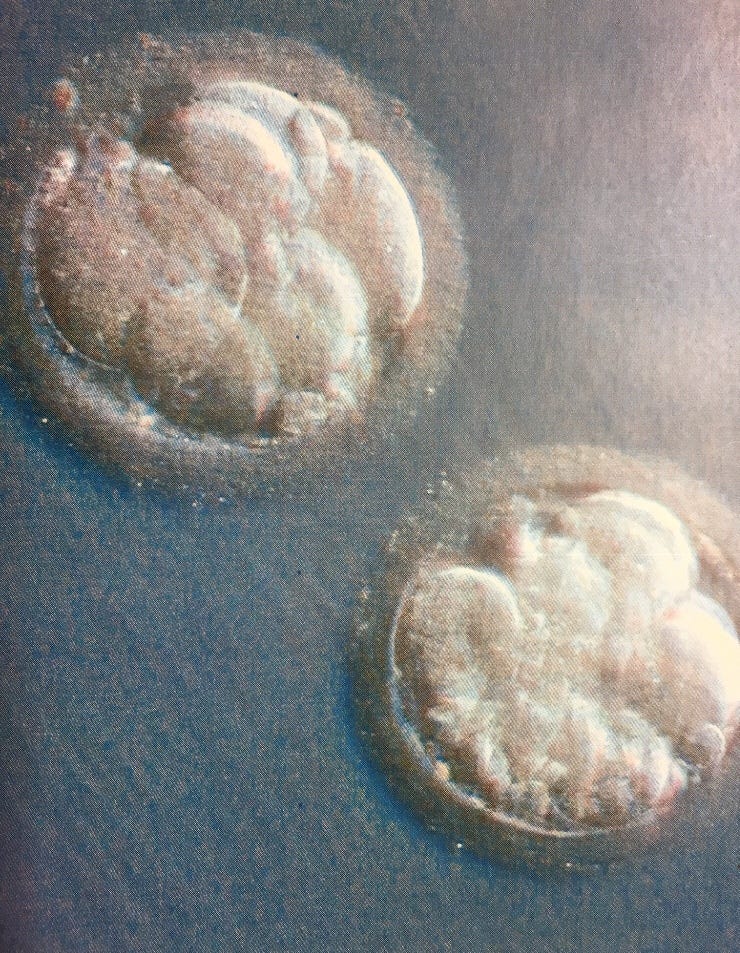
The next day, March 24, they found out that the numbers looked good and an ultrasound was performed. Mandy could not see the screen at first but could see Matt’s face. She could tell that something unusual was going on.
Matt first said “Wow, that’s amazing,” then “Is my wife going to be OK?”
There was only a one percent chance of an egg splitting. Not only did that happen, but they defied the odds even more. Mandy was pregnant with triplets. Each baby had its own sac, placenta, and fetal pole, the exact thing for which Mandy had prayed so specifically.
The Pregnancy and Births
Mandy had a well-monitored pregnancy and carried the babies 35 weeks. A C-section was scheduled at 36 weeks, on Monday, October 4, 2010.
Matt, a sportscaster, was scheduled to work a game in Chapel Hill, North Carolina for ESPN on Saturday, October 2. That was about a two-hour drive from their home in Statesville with another 30 minutes to the hospital. Mandy had encouraged Matt to work the game. ESPN made accommodations to get him to the hospital if Mandy went into labor. Two state troopers were at the ready but were never needed as Matt never made it to Chapel Hill.
Mandy had made an appointment with her obstetrician on Friday, October 1, just as a precaution. He sent her to the hospital. The staff greeted her enthusiastically. Knowing she was having triplets they had expected her to visit sooner.
Mandy knew her blood pressure was going a bit crazy but wasn’t concerned. In fact, she hadn’t told Matt she was in the hospital, thinking they would send her home. It turned out she had developed pre-eclampsia, which hastened the delivery. Matt had not yet left for Chapel Hill and was summoned to the hospital. Mandy walked into the delivery room for her emergency C-section.
It was more serious than she knew. If Mandy hadn’t gone in early for her doctor’s appointment because of Matt’s game in Chapel Hill, she could have had a stroke.
Mandy doesn’t remember much about the next five days. The after-effects of the preeclampsia made her very sick, unable to walk and see. She has vague memories of Matt bringing Baby B, to her after she was born and touching her hand. Then the baby joined her sisters in the Special Care Nursery.
Matt went with the babies while Mandy had surgery to close her up after delivery. Touching Baby B’s hand is her only strong memory of the babies until Day 4. She made a short trip to the nursery to see them then but had to return to her room too quickly. She was finally well enough to look at each baby with Matt on Day 5 to name them. In those five days before they were named because the Babies had been called Baby A, B, and C throughout Mandy’s pregnancy, the nurses called them Abigail, Beatrice, and Clemantine.
The Triplets Come Home
On Day 13 Mandy came home with babies Chapel, Isla, and Maty. All babies were quite healthy, though two had minor issues that were dealt with quickly. Though Mandy’s family lives close by them, she and Matt were on their own for nights from the start, preferring to wait until Matt was back at work to use the family’s help. Mandy’s mother joined them often during the day.
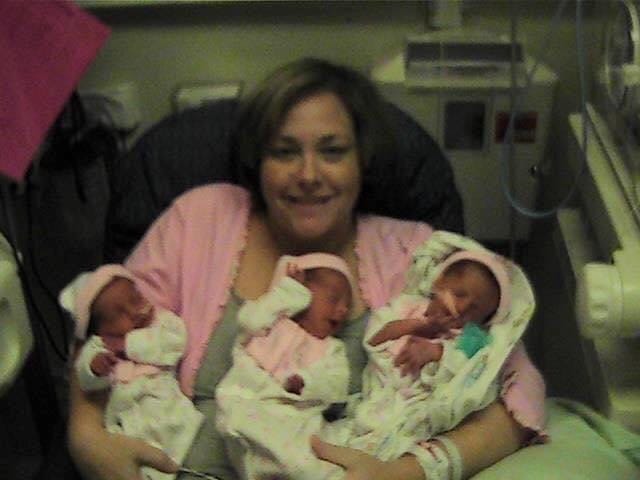
As new parents, Mandy said they often had no idea what they should do with these three baby girls. The cycle of keeping them fed and changed took up most of each day. They finally relaxed into what worked for them and didn’t worry about what the experts said about schedules.
Delighted with their family the couple has worked hard to stay bonded as a family, difficult the confines of Matt’s job and travel schedule. Mandy would load up the girls and travel to many of Matt’s games. Even home games were an hour away. Matt, in turn, would get a day off between games and would fly to the beach, where the children and Mandy spent a lot of time with her family.
Mandy and Matt had been told having a child without intervention was impossible. They surpassed the odds again. Their son Hobbs was born in January of 2014.
Adding one more to the family, with three toddlers, meant more chaos but more joy. Mandy said the experience of his birth, far less chaotic, gave her an idea of what a “normal birth” felt like. She and Matt would just sit and stare at him for hours in the hospital, something not possible with the triplets.
Present Day
The girls are ten now, and Hobbs is seven. All of them love sports and art, and Mandy works hard to make sure that each is exposed to many different possibilities as she helps them discover what they love. They still travel more than most kids, growing up in ballparks and stadiums.
Mandy and Matt light up as they talk about their children and it is obvious that they have learned through the journey that their four gifts are precious and to be cherished. Their children are happy and healthy.
Mandy says as much as she does she still suffers “Mom guilt”, especially for the triplets. She wants them each to get the same life experiences and explore all the avenues they would get even if they were the only child.
Today Mandy looks back to her prayer journal and remembers her promise to be satisfied with whatever family God gave them. She marvels at how that prayer was answered in abundance — four healthy and happy babies.
Because she knew so little about how to work her way through the journey of figuring out what was going on with her body, Mandy tries to talk openly about it so other women know they are not alone and learn from her experience so they are better prepared to ask questions to medical professionals and make the right decisions for themselves and their family.
Mandy always wanted to be a mom. She got more than she ever expected.