
One Way I’ve Embodied White Supremacy Culture Is Through My Perfectionism
Perfectionism is so engrained in my body that I feel it living in my bones
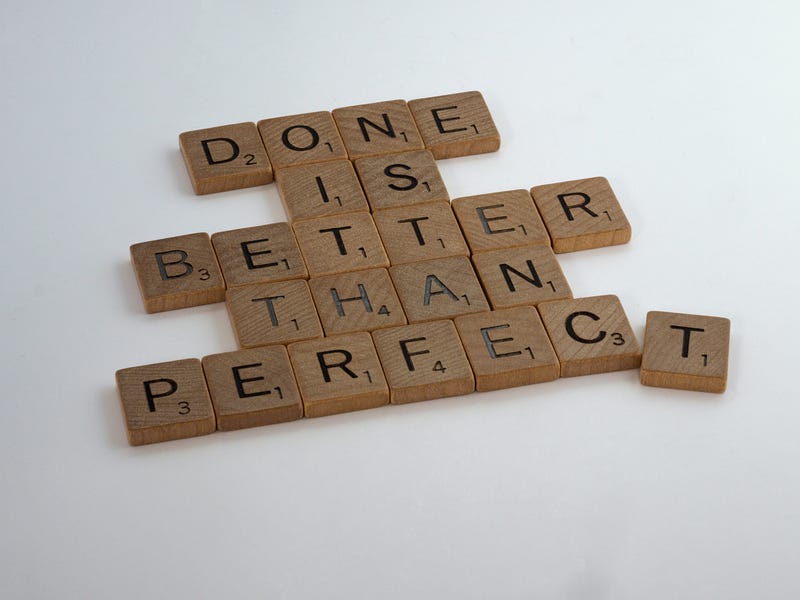
I have a confession to make: I am a perfectionist.
I often find myself being critical of everything I do: my creativity, writing, and antiracist practice. I am very critical of my writing right now! I’ve written two sentences and deleted three — I’m not sure how that happened. My mind is constantly telling me that I can do better; that’s the tiring position from which I begin everything.
My perfectionism is often debilitating, mainly when I’m not mindful. I’ve realized that my subconscious mantra has been “you are not good enough.” This mantra is my automatic starting point from which I begin new projects, and I feel it most intensely with my writing and antiracism work. It’s a wonder I can get anything done. I spend more time second-guessing my professional and personal work than I am happy to admit. But why do I need to be perfect? Why do I overthink? Where did I learn to be so self-critical to the point where I’m mentally flogging myself?
White Supremacy Culture
It turns out that perfectionism is one of the many characteristics of white supremacy culture. Sure, I can say that I learned it from my stepfather; however, he also grew up in American white supremacy. White supremacy culture is the hegemonic and pathological traits of our American society that are taken for granted and unquestioned. And perfectionism is one of those damaging traits that manages to creep its way into my everyday activities. Showing up for racial justice (SURJ) summarizes perfectionism as the following points:
little appreciation expressed among people for the work that others are doing; appreciation that is expressed usually directed to those who get most of the credit anyway
more common is to point out either how the person or work is inadequate
or even more common, to talk to others about the inadequacies of a person or their work without ever talking directly to them
mistakes are seen as personal, i.e. they reflect badly on the person making them as opposed to being seen for what they are — mistakes
making a mistake is confused with being a mistake, doing wrong with being wrong
little time, energy, or money put into reflection or identifying lessons learned that can improve practice, in other words little or no learning from mistakes
tendency to identify whatís wrong; little ability to identify, name, and appreciate whatís right
Did you notice the “mistakes” in the last bullet point? I did after I copied it from SURJ’s website and pasted it onto my word document. I took the liberty of correcting the mistakes without questioning what I was doing. For a hot minute, I was on auto-pilot. I needed to fix what I thought was wrong, and it was so visceral for me. I quickly realized what I did, though, and it occurred to me that perhaps that mistake was intentional. (I honestly don’t know how I managed to pilot myself and be mindful so swiftly, but I did). More importantly, why did I feel the need to correct it? The overall message was not lost on me. I understood it perfectly. *wink*
Perfectionism is so engrained in my body that I feel it living in my bones. It’s traveled from my skin, through my muscles, and seeped its way into my bones and all the way to the marrow. It’s so embedded in me that I can feel it oozing out of me again as I write this portion of my piece. My perfectionism has gone unchecked for several years now that it’s hard to break the constant criticism. But, I do have my successful moments. I managed to catch myself live as I wrote this piece, so there’s a light at the end of the perfect tunnel.
I’ve tried reading several articles about how to combat perfectionism, but quite honestly, I’ve repeated a few simple phrases that are effective for me:
1) I forgive you for not being perfect.
2) I give you permission to be human.
3) I don’t have to have everything figured out; I can just do and be.
I don’t have to be a caged hamster spinning in an endless wheel of false perfection. Nor do I have to let the characteristics of white supremacy rule me. I don’t need to be a robot. I can just be human, and that’s enough.
Joey Pierre is a race & class researcher, scholar, writer, and an amateur astronomer. He is evolving before your eyes, one article at a time. You can follow him here on Instagram.