
Stoicism | Self-improvement
One of The Most Powerful Pieces of Stoic Advice Consists of Two Words
Applying it and seeing the results feels like a cheat code
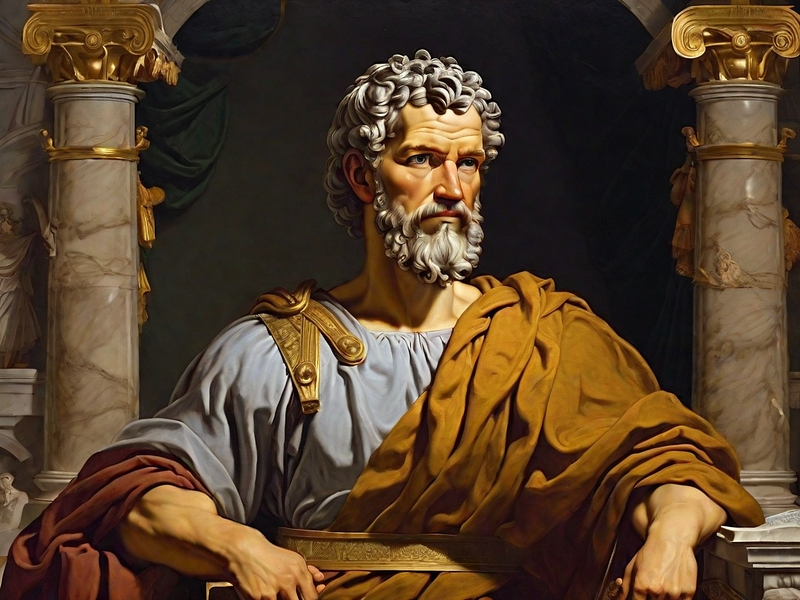
According to Epictetus, one of the three most influential stoics, the most powerful advice you can follow to live an “untroubled life” is this:
Persist and resist.
Modern research is starting to heed this advice and finally bring some awareness to it.
Yet the Stoics knew this millennia ago. They used this information to enrich the lives of everyone around them.
They didn’t spew out average advice to cajole you into clicking on a link to buy their £297 course. They had a genuine mission to make your life better.
They wanted to spread an ethos of living with true virtue.
So, let’s dive into what the Stoics meant by this doctrine and how you can apply it to make your life better.
What is persistence and resistance?
Stoic philosophy is gnarly.
Its core objective is to help people lead less troubled and stressful lives.
It achieves this by teaching people how to persevere through hardship and reject all the nasty stuff in life that isn’t helpful.
In modern terms, it means learning to focus and removing all the bs and unnecessary noise from your life so you can do what is purposeful.
It’s the remedy to statements like “Imagine if I spent my time applying myself and committing myself to a worthy cause”.
Imagine.
What they mean by persistence
Stoicism dismantles many of the perceived “sufferings” we face using logic.
Once we remove the gravitas from the things we fear most, the idea of persisting seems more possible. We learn to outwork adversity and self-doubt with a cheerful attitude.
That’s what persistence means in most cases: never giving up in the face of adversity.
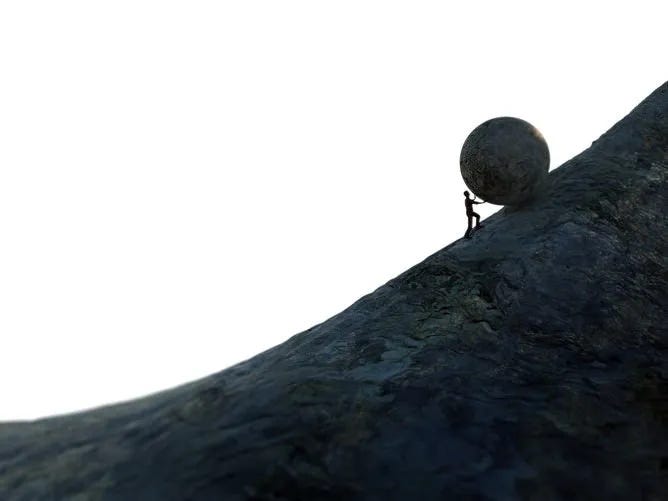
One of the core teachings of stoicism is that things are neither good nor bad and that suffering is a product of the imagination.
Understanding and applying this helps you remove fears and irrational thinking from your mission.
- Remove the power that fears and negative beliefs have over you
- Live knowing they exist but cannot affect you
How many times have you given up or discontinued a project because of fears, distractions, or insecurities?
Most of the battle with becoming good at anything is simply being able to stick with it.
As Bruce Lee so elegantly put it, you must develop “life kung-fu”.
Stoicism and learned persistence help get you there.
Resistance and its consequences
Being able to persist means nothing.
Unless you also can resist impulses, distractions, and everything else in life that serves no purpose or meaning.
You need self-control.
The less able you are to resist the multiple distractions and impulses that plague you, the less time and energy you have to persist.
The two words interweave in a dance of sorts, complimenting each other in harmony. Without one, it is difficult to have the other.
Self-control without persistence = giving up at every challenge. Persistence without self-control = being pulled in every direction.
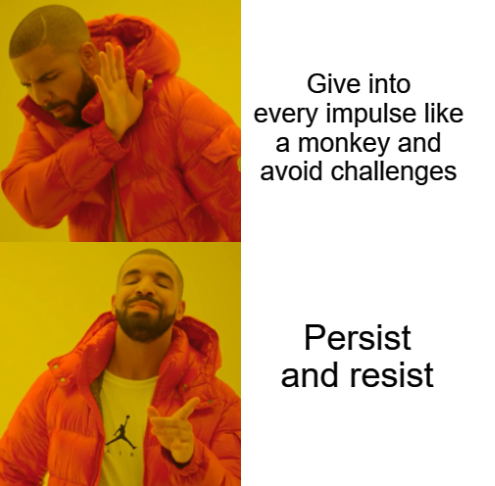
Persist and resist is a wombo-combo; a powerful duo that, once paired, allows you to focus without faltering to impulses or fear.
I recommend using it as a mantra.
It’s what I say to myself when I go jogging (I’m not weird, I swear).
Modern applications and importance
The world has become a distracting place.
More than ever, people are struggling to find their place in society.
Is it any surprise? It is impossible to go anywhere without your senses being attacked by:
- Vibrant ads for fast food that make you fat, bloated, and lazy
- Hyperrealities such as films, games, and p*rn that snatch your energy and time
- Social media and news networks intricately engineered to steal your attention

Distractions are rising in volume and becoming more optimised.
An optimised society has, ironically, made us unoptimised. It has made us weak.
It has done this by applying the opposite of the advice stoics were trying to provide: to persist and resist.
Society is teaching us to give up and give in.
All this noise prevents people from finding out what matters, what their purpose is, and how to pursue it.
Consequently, people are becoming increasingly complacent and hooked to meaningless consumption.
We’re now being engineered to lack self-control and purpose.
Then, when they do find a purpose, they struggle to persist because they have become weak and conditioned to give up in challenging moments.
Epictetus often talked about how people used to give in to impulses too easily by engaging in hedonism, hitting slaves, and seeking vast wealth.
And that was 2000+ years ago.
Before the internet, “here in my garage” videos, photoshop, butt lifts, JustEat, social media likes & followers, and all the other insufferable temptations we put on a pedestal and glorify.
“Persist and resist”, as far as advice goes, is more needed than ever.
How to learn to resist and persist
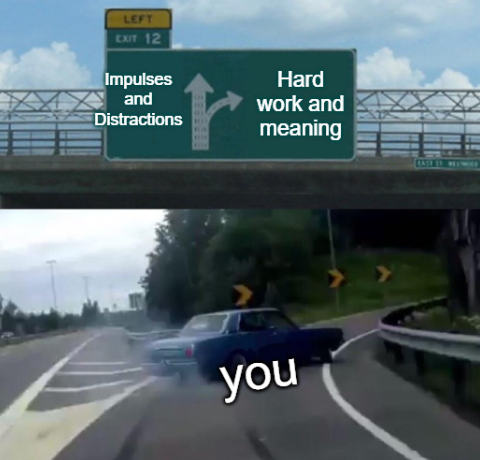
Distractions and impulses
Avoiding distractions is simple.
The best way to avoid distractions is limit your exposure to them in the first place.
Pick out the three biggest drains of your concentration and energy.
Now, make them less available: if it’s sh*t food, bin it or put it away from easy access; if it’s social media, delete the app or your account; if it’s games, remove them from your device.
One of the greatest subjects of the Stoics was time and death.
You have a finite amount of time in this little meat suit you call a body; your life trickles away every day as you find yourself closer to death. Do you want to waste the little time you have indulging in stupidity?
“You could die tomorrow”, wrote Marcus Aurelius, “let that determine what you do and say and think”.
The more aware you are of how little time you’re given on Earth, the more likely you are to find distractions intolerable.
As a result, you’ll spend more time working towards meaningful pursuits, resisting impulses, and changing your habits.
Resilience and not giving up
There is nothing neither good nor bad, but thinking makes it so ~ Hamlet
Suffering, according to the Stoics, is imagined.
It is commonly believed that when an action occurs, a reaction is all that follows.
However, there is a part of the process missing: judgment.
When something upsetting appears or something troubling occurs, we have the power to judge whether or not we want that to harm us.
We have the power to judge before we react to something.
As a result, all harm is done unto ourselves.
We can use this lesson to understand that when we feel we cannot proceed due to an event that might cause suffering, we can conclude that the event is not doing the suffering: it is our perception of it.
We can choose how to react — calmly, logically, and with prudence.
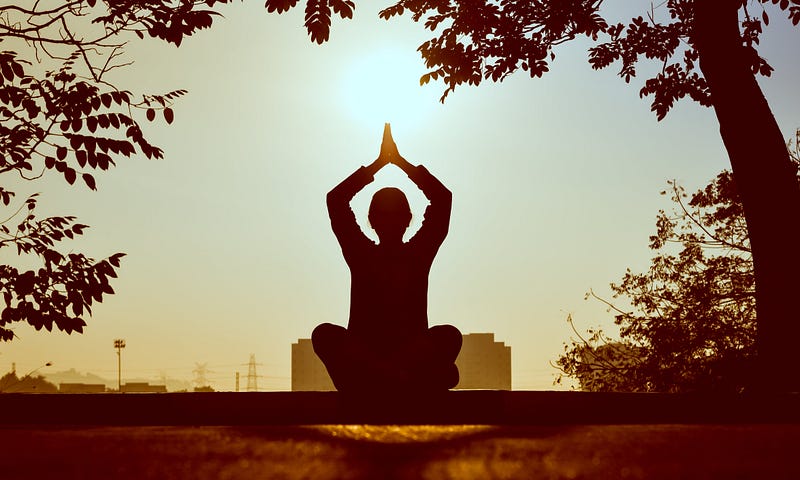
Ask yourself when you’re facing/ about to face a difficult situation: am I incapable of dealing with life at this very moment?
A step-by-step framework to take action
Here are some concise steps you can take to build self-control and resistance.
- Observe and journal: what distractions and impulses take up most of your time? What impulses do you find yourself conceding to the most? What goals or visions do you wish to attain; what is stopping you?
- Remove: remove the unnecessary noise from your life that provides no meaning. Freeing your mind of pernicious stimuli will also reduce the frequency of impulses.
- Paradigm shift: see your fears for what they are. Alter your sense of reality so it aligns with one that is logical and serves you. Google “Stoic advice on [insert fear/worry]”.
- Dedicate: dedicate your time to the actions that help you achieve your vision. Learn to persist with your actions using thought experiments and reflection; how much is your time worth?
- Practice: at times you will forget, falter, and fail. This is okay! Ironically, this is the most important time to learn to persist.
Conclusion
It’s easier than ever to feel lost and distracted.
The world teaches us to numb our abilities and give in to oppressive distractions. As a result, we find ourselves miserable.
But imagine 3–5 years where you are distraction-free.
Years where you work doggedly — with passion — on a task that brings you meaning and joy.
Do you think it is impossible to build something great?
Do you think all that time wouldn’t inevitably lead towards a worthwhile outcome or the attainment of a better future?
Persist and resist. Find out for yourself.
Here’s another cool article you’ll enjoy, probably:


